
“28 Years Later: The Bone Temple” (2026) may not have taken the same stylistic risks as its direct predecessor, which converged from Hollywood standards with Danny Boyle’s digital expressionism, but it’s just as thematically rich. The original “28 Days Later” pinpointed an inflection point in both filmmaking and British history that launched a dense, probing analysis of how a devastating virus could inspire humanity to resort to its most primal urges.
Last year’s “28 Years Later” was a propulsive shockwave of all that had transpired since the first film’s release, but the newest sequel from Nia DeCosta makes the powerful observation that life moves on. The more streamlined narrative takes advantage of the rich groundwork laid by Boyle and screenwriter Alex Garland, becoming a compelling journey into the way individuals choose their obligations.
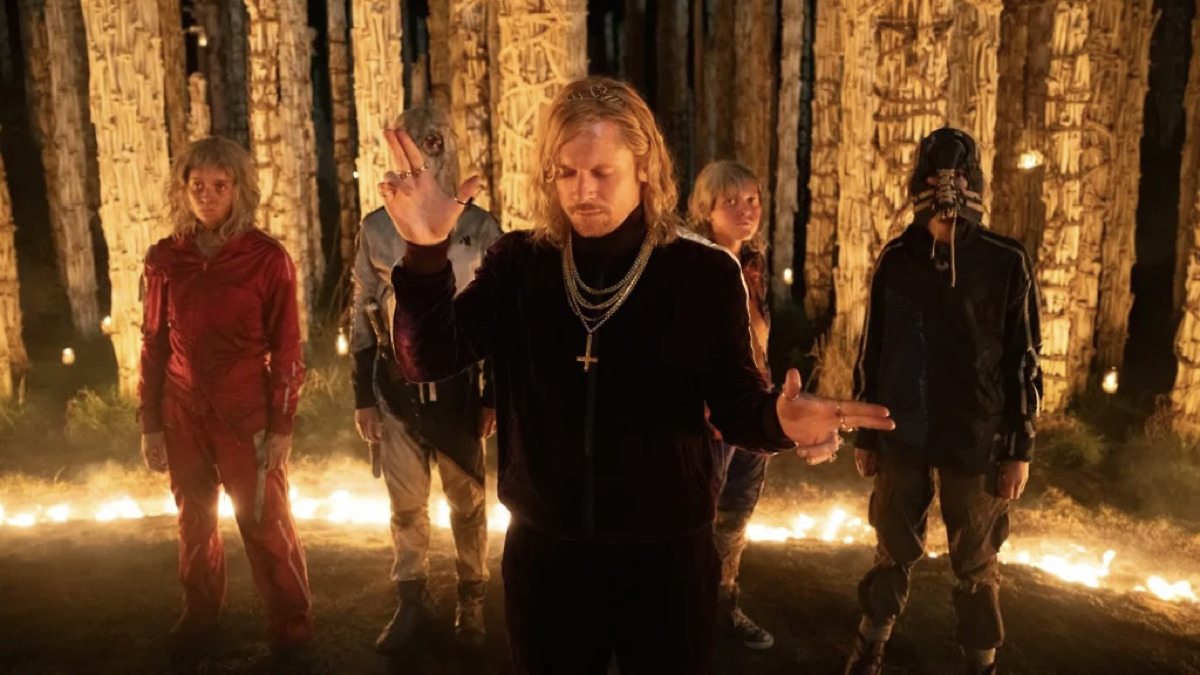
Shortly after the loss of his mother (Jodie Comer), Spike (Alex Williams) has been reluctantly forced to join the terrifying group of cultists known as the “Jimmies,” who follow the command of the idiosyncratic leader Jimmy Crystal (Jack O’Connell). Although Crystal has a tragic past of his own, he has modeled himself after the shamed British media personality Jimmy Savile and claims to be the son of Satan himself.
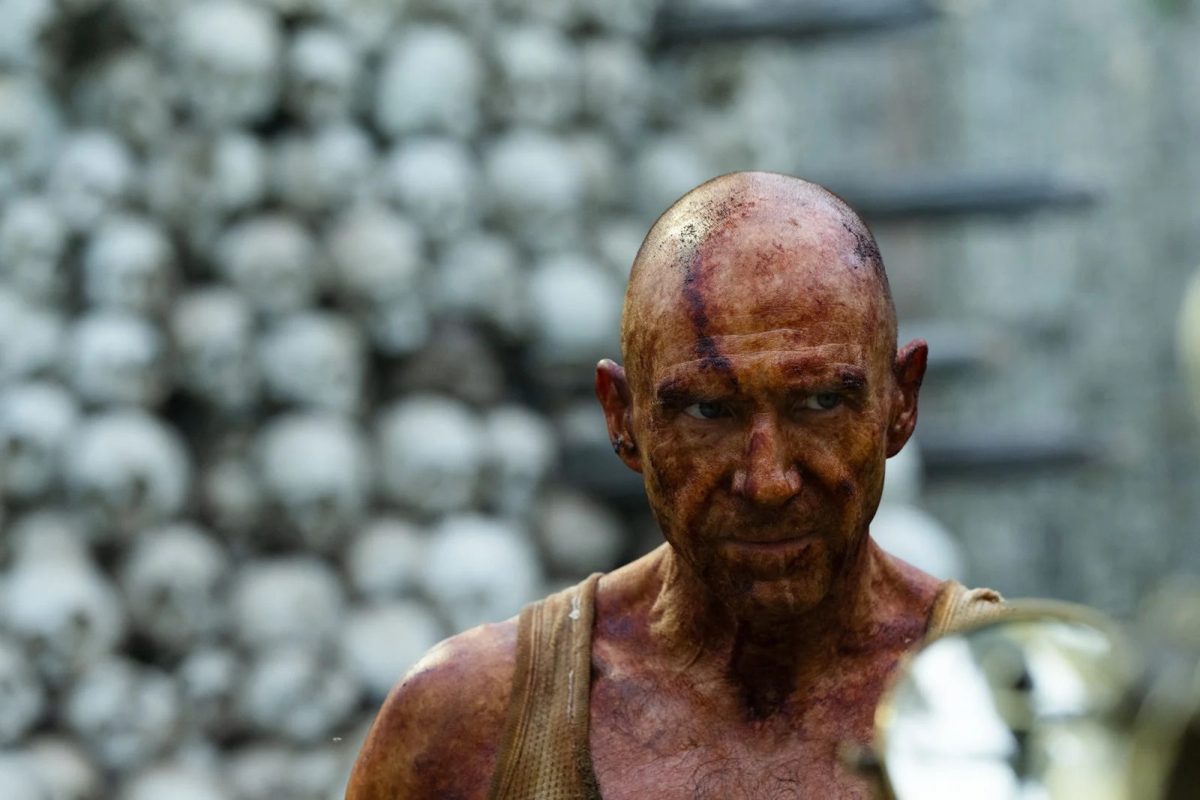
It was after the passing of Spike’s mother that the isolated scientist Dr. Ian Kelson (Ralph Fiennes) discovered that there might be a secret to reversing the virus that caused the undead to become “zombiefied.” However, Crystal’s violent and reckless odyssey to claim lives on behalf of his demonic father threatens to impede Kelson’s research, which could potentially doom humanity’s capacity for recovery.
Fiennes gave an extraordinary performance in the film’s predecessor as an unusual, cantankerous former GP who was fascinated and bewildered by the natural cycles of life and death. While it’s presumed that some of his peculiarities were a result of his removal from human society, Fiennes uses the sequel to show that Kelson was always an unusual character whose obsession, warmth, and respect for all living creatures would seem spiritual if he weren’t a professed atheist.
“28 Years Later: The Bone Temple” wastes no time in building suspense, but the time dedicated to Kelson’s routine as an effective means of worldbuilding that rationalizes his capacity for hope. Kelson puts an inordinate pressure on himself to tend to the wounds of Samson (Chi Lewis-Parry), the hulking “Alpha” zombie who shows slightly humanistic qualities. However, the theme of every individual life being worth fighting for has been integral to the franchise from the beginning, and it’s befitting of a character as humane as Kelson.
Opposing Fiennes is O’Connell in a performance that could very well go down as one of the signature villains of the decade. Although O’Connell’s transformation into the sarcastic, self-absorbed renegade was teased during the final moments of “28 Years Later,” the sequel takes a blatant look at the grasp he has held over his followers. Crystal is a character who has clung to his ideals as a means of attracting power, but is too smug to ever admit sincerity when it wouldn’t suit him.
Although there is something performatively ridiculous about his mannerisms, he’s also become so isolated from criticism that he has become ignorant of how ridiculous he sounds. All of the films in the franchise are smart in drawing parallels to current societal trends without stating them outright, but it would be easy to see Crystal as the extension of contemporary populists who use charisma to conflate their entertainment value with legitimate insight. It’s effective because O’Connell is ruthlessly entertaining, and at times quite funny with his performance, which makes Crystal’s outbursts of violence more upsetting.
Also Check: 50 Most Anticipated Movies of 2026
Although there are some instances of brutality that DeCosta chooses to leave open to interpretation, including a particularly gruesome moment that is only witnessed through Spike’s reaction, “28 Years Later: The Bone Temple” is among the most twisted, visceral horror studio films of the decade. While some of the violence might be played for shock value, DeCosta does not degenerate the franchise with jump scares because of how blunt the film is with human anatomy.
This grounded approach extends to the emotional exchanges, as these are clearly characters who have trouble expressing themselves in words. The simplicity of the language makes for many witty and engaging exchanges, but there are enough profound declarations from both Crystal and Kelson to take advantage of Garland’s brilliant wordplay.
If the previous film examined how survivalism became a crutch in which to sacrifice empathy, a clear allusion to Britain in the post-Brexit era, then “28 Years Later: The Bone Temple” explores the sharp contrast between unwavering faith and frank honesty. Kelson, Crystal, Spike, and the other Jimmies have all been resolved to perceptions about their roles in society that result from some sort of projection, but it’s the degree to which they delude themselves that defines their moral standards.
Kelson’s method, which is one of uncomplicated honesty, may seem strident when looking at the time it takes his conclusions to be put into effect. However, the consequence of Crystal’s self-mythology is that it can be constantly amended and manipulated, and will eventually be free from his control.
“28 Years Later: The Bone Temple” is more sparse in its setpieces because the overwhelming submersion into the post-apocalyptic world is no longer as jarring as it was in Boyle’s previous film, and DeCosta is smart to take her time in putting together the most memorable standoffs. The film’s most radical stylistic hallmark is its patience, as there is no hurried sense to reach conclusions when the characters’ soul-searching is so engaging.
Williams gives another terrific performance, as Spike is still very much a mournful child who has been forced to adapt quickly, but the sequel also gives a juicy role to Erin Kellyman as Jimmy Ink. While she does show a degree of self-awareness and restraint that is absent in other “Jimmies,” the loaded conversations she shares with Spike reveal just how different their upbringings were.
“28 Years Later: The Bone Temple” is by far DeCosta’s best film to date and builds upon Boyle’s tendencies without feeling derivative. Although it is part of a larger story and will be weightless to those who haven’t seen its predecessor, “28 Years Later: The Bone Temple” is also unafraid to create purely cinematic moments of synergy, including a few needle drops that would seem instantly iconic. There may not be a post-credit scene, but the final moments that tease what the inevitable third film might be are enticing because of the flexibility DeCosta proved that this franchise is capable of.



![Welcome Home [2019] Review: A Cerebral Deconstruction of The Institutions](https://www.highonfilms.com/wp-content/uploads/2019/06/Screenshot-156-768x322.jpg)
![Nirmal Pathak Ki Ghar Wapsi [2022] Review: The Tale of a Man’s Homecoming Is Shoddy & Pretentious](https://www.highonfilms.com/wp-content/uploads/2022/06/nirmal-pathak-ki-ghar-wapsi-768x427.jpg)
![Shadows [2021]: ‘NYAFF’ Review – An Uninventive Thriller that barely flares](https://www.highonfilms.com/wp-content/uploads/2021/08/Shadows-2021.jpeg)