
Capitalism, often claimed to breed innovation, breeds newer ways to justify traditional forms of hierarchy, which includes casteism. It maintains the status quo by keeping any form of innovation in the service of sustaining it. Honey Trehan’s “Raat Akeli Hai: The Bansal Murders” understands that and presents it even within the constraints of a genre piece.
The entire premise hinges on the notion that nothing is as it seems, which makes the whodunit mystery an ideal genre choice. Whodunits are supposed to keep us hooked to the screen by constantly subverting our expectations about their characters. That offers just the kind of narrative tools to dissect societal prejudices, where the pre-determined ‘usual suspects’ are rarely the culprits.
Trehan’s film, written by Smita Singh, utilizes that framework to blend a socially conscious drama with a police procedural tale. It serves as a follow-up to their 2020 film, “Raat Akeli Hai,” which introduced Nawazuddin Siddiqui as a police officer trying to do the right thing despite everything and everyone trying to stop him. So, besides the case, the story was also about him and his internal journey. That isn’t the case with “The Bansal Murders,” which uses him almost entirely as a vessel to reveal the facts about a murder investigation.
Siddiqui returns as Jatil Yadav to solve the case of a string of sudden deaths in a privileged family. Unlike before, the family is in the public eye. They run a family business that treats journalism as a corporate practice. Hence, they sustain their privilege by maintaining their public perception, which makes the murder more than just a personal malady. If not handled well, the case can be a PR disaster for them and their family’s legacy. Hence, it can taint their legacy and impact their brand positioning, making people doubt them as the purveyors of truth, which would in turn affect their revenue stream.

Also Read: The 25 Best Bollywood Movies on Netflix Right Now
It all comes into play as Meera (Chitrangda Singh) becomes one of the three survivors in the tragic incident. She gears the investigation in a particular direction that makes Jatil and us question her intentions. As always, there’s someone who ‘fits the profile’ of the culprit, but it doesn’t satisfy Jatil. He keeps finding threads that can lead the investigation to entirely different directions. Unlike others, he isn’t comfortable with ending the case with the simplest answers. He doesn’t want to do the job as just another cog in the bureaucratic machine, but to find the truth.
By refusing to simply do what he’s told, Jatil clashes with the system around him, and that conflict drives the drama forward. Yet, unlike the 2020 film, we don’t get a closer look at his psyche. We don’t see him battling his misogynistic notions, expecting a ‘well-behaved’ woman as his wife. Instead, Radhika Apte’s Radha ends up resorting to a similar role, devoid of the unapologetic assertiveness that we witness in the first film. The sequel retains the entertaining banter between Siddiqui and Ila Arun’s characters, but it becomes simply a backdrop for its investigative thriller.
We don’t witness much of Jatil’s internal transformation. Instead, for the most part, he becomes the truth-seeker that the Bansal family empire claims to be. He often comes across as a know-it-all character, always a step ahead of everyone else. That may work in the case of Benoic Blanc or Hercule Poirot, since they are portrayed through that elevated notion. However, it seems odd in the case of Jatil’s story, which is rooted in a gritty, realistic setting. Hence, the character lacks the complexity that partly made “Raat Akeli Hai” a rewarding experience.
Must Check Out: The 20 Best Indian Movies of 2025
Furthermore, Jatil ends up being a tool for the expositional dump in the sequel’s story, where almost everything feels on-the-nose. Earlier, we could see a quote lying in plain sight, claiming that ‘the truth prevails,’ moments after Jatil realized the complete opposite. Sadly, the sequel goes for a subtext-as-text approach, which takes away the charm of lingering mystery.
Yet, there’s still plenty to praise in this sequel, which analyzes the nature of truth in the modern world and the costs of fighting for it. The murder becomes a means to investigate classism and casteism, whether through the characters’ manufactured sympathies and willful ignorance. The script subtly underlines how the upper echelons create problems to emerge as a solution.
Here, we see it through carefully orchestrated PR campaigns from the Bansal family. It helps them boost their image while masking the issues they could have highlighted, uprooted, or prevented. We also witness the critique of spirituality-based capitalism, where journalism acts as a pillar to maintain it, rather than questioning the intrinsic exploitation.
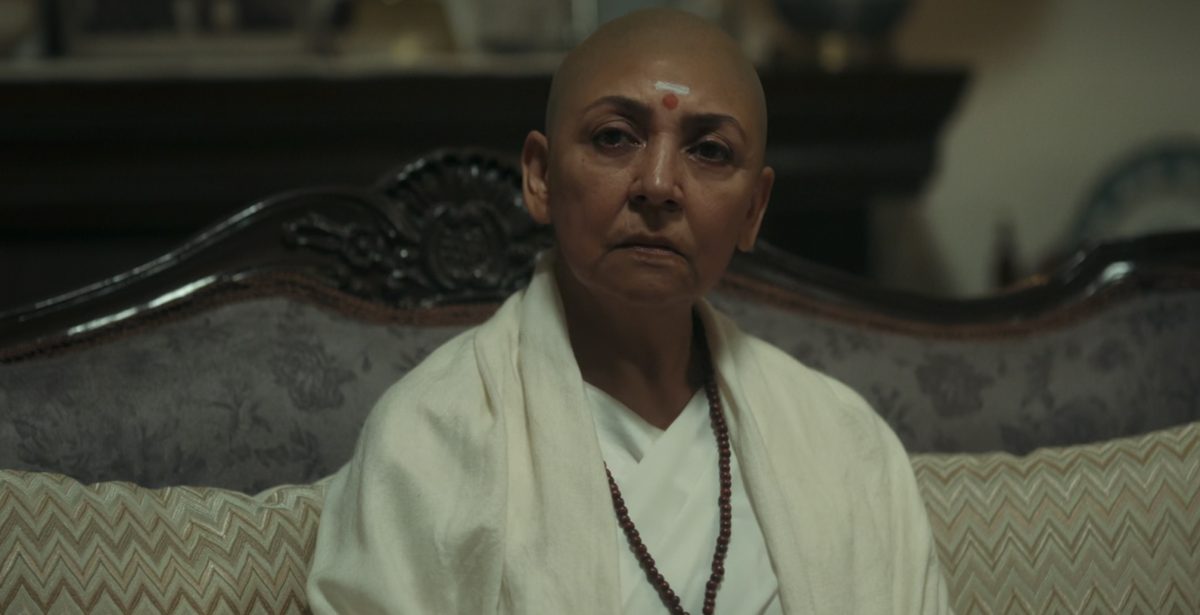
Speaking about the performances, Revathi is the highlight of the film as Dr. Rosie Panicker, a self-assured forensic officer, serving as a perfect yin to Jatil’s yang. Chitrangda Singh is also impressive in exploring Meera’s deceptive duality, thus rewarding us with another layer of mystery about her character. Siddiqui is also reliable as Jatil, a formidable force against a system trying to silence him.
The script, although lacking in character depth, makes up for it through a creative choice. Instead of leading the narrative simply toward finding the culprit, it spends time on decoding every suspect’s motivations, tied to their socio-economic status. So, the script doesn’t end with Jatil’s sense of victory in discovering the truth. Instead, it shows the cost of striving for it.



![Padman [2018]: An Honourable Film Justifying the Praiseworthy Efforts of a Common man](https://www.highonfilms.com/wp-content/uploads/2018/02/MV5BNWI2MzRmYmYtMWMzOS00YTE2LWE2N2QtMmIyNzAwNjg4M2Y5XkEyXkFqcGdeQXVyNjY1MTg4Mzc@._V1_QL50_SY1000_CR0015001000_AL_-768x512.jpg)