In a bold move that’s got cinephiles buzzing, Richard Linklater’s latest project, Nouvelle Vague, is reviving the French New Wave’s rebellious spirit and aesthetic, particularly echoing the vibe of Jean-Luc Godard’s iconic Breathless.
This film doesn’t just pay homage; it immerses you in the chaos, charm, and groundbreaking techniques that made the movement legendary. But how did Linklater pull off such a convincing revival? Let’s break down his process and how he managed to make it feel so authentically Godard-esque.
The Linklater Approach: Recreating the French New Wave
Linklater didn’t approach Nouvelle Vague as a straightforward homage. Instead, he aimed to recreate the era from the inside out. He emphasizes immersive authenticity — shooting in black and white, adopting the grainy film quality, and emphasizing spontaneous, improvisational dialogue that echoes Godard’s approach.
He even meticulously cast relatively unknown actors, resembling the real-life counterparts of the French New Wave icons, ensuring the characters’ raw energy matched that of the originals.
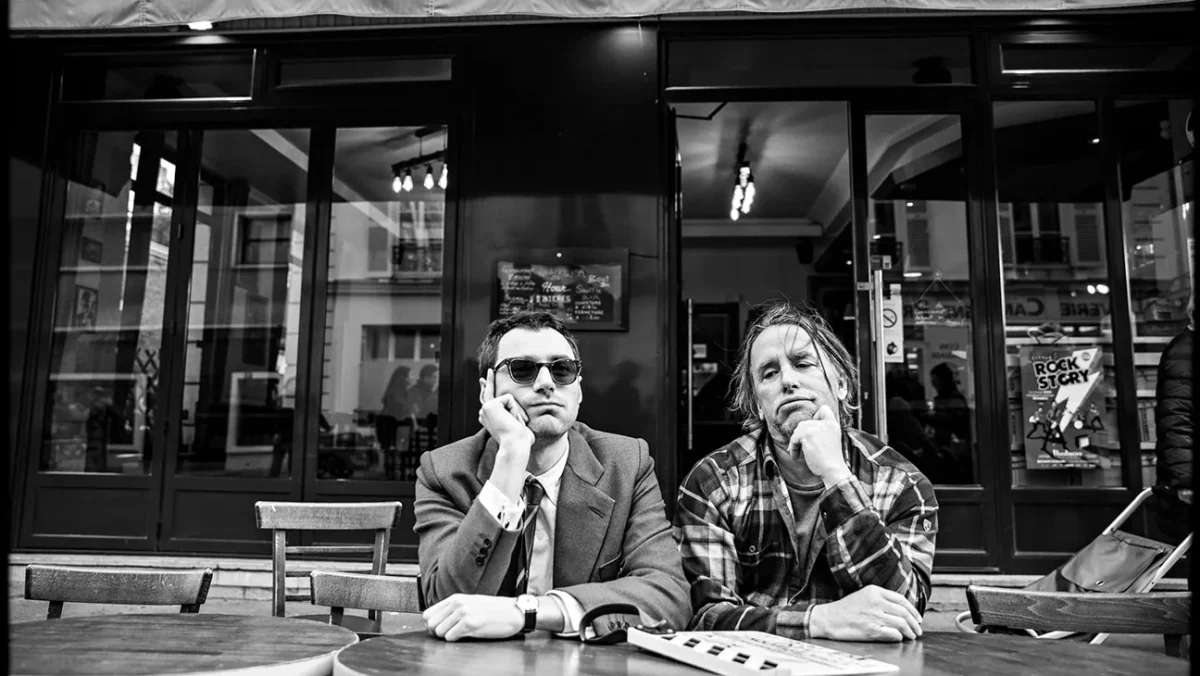
What’s especially interesting is Linklater’s focus on capturing the creative chaos that defined that era. As he explains, he wanted to transport viewers back to 1959 Paris in a way that feels visceral and genuine. The film’s visual style, with its jump cuts, handheld camera work, and vintage look, mirrors Godard’s revolutionary techniques, making the audience feel like they’re right in the middle of that cinematic upheaval.
Making It Feel Like a Jean-Luc Godard Film
To evoke Godard’s genius, Linklater studied the director’s signature techniques and philosophy. He emphasizes improvisation, spontaneity, and a sense of freedom — hallmarks of Godard’s work. For instance, during the guerrilla-style Parisian filming, fake mail carts and wobbly shots replicate the look and feel of Breathless.
Plus, he’s dedicated to the process — bloopers, long walk-and-talk scenes, and the dialogue that often feels off-the-cuff but was carefully scrutinized to seem effortless.
Linklater also infused the film with a sense of youthful rebellion, emphasizing the mood and attitude of the French New Wave rather than just static reproductions. By using a minimalist soundtrack, film grain, and black-and-white imagery, he channels the era’s aesthetics and ethos. Essentially, he made a film that’s not just a tribute but a living, breathing style — a true nod to Godard’s unapologetic, rule-breaking cinema.
In summary, Linklater’s Nouvelle Vague succeeds because it’s a meticulous yet spirited reimagining of the French New Wave, blending technical authenticity with a deep understanding of its rebellious spirit. It’s a love letter that doesn’t just look like a Godard film — it feels like one, capturing the chaos, freedom, and revolutionary passion that changed cinema forever.