A word of warning must be sounded before recommending “Little, Big, and Far” to anyone. This is an art film. It is not made for multiplexes or Netflix accounts. There is little attempt at anything approaching a conventional narrative. There are a few instances of dialogue between characters, but for the most part, it is in monologue, delivered slowly and deliberately, and the entire film is made the same way. It’s not exactly a documentary, but it certainly feels like one.
As a youngster, I hated art films, but as an adult, I’ve learned to appreciate them. There were times I was able to similarly appreciate “Little, Big, and Far” on its own merits, but there were also moments where it made me yearn for adolescence again.
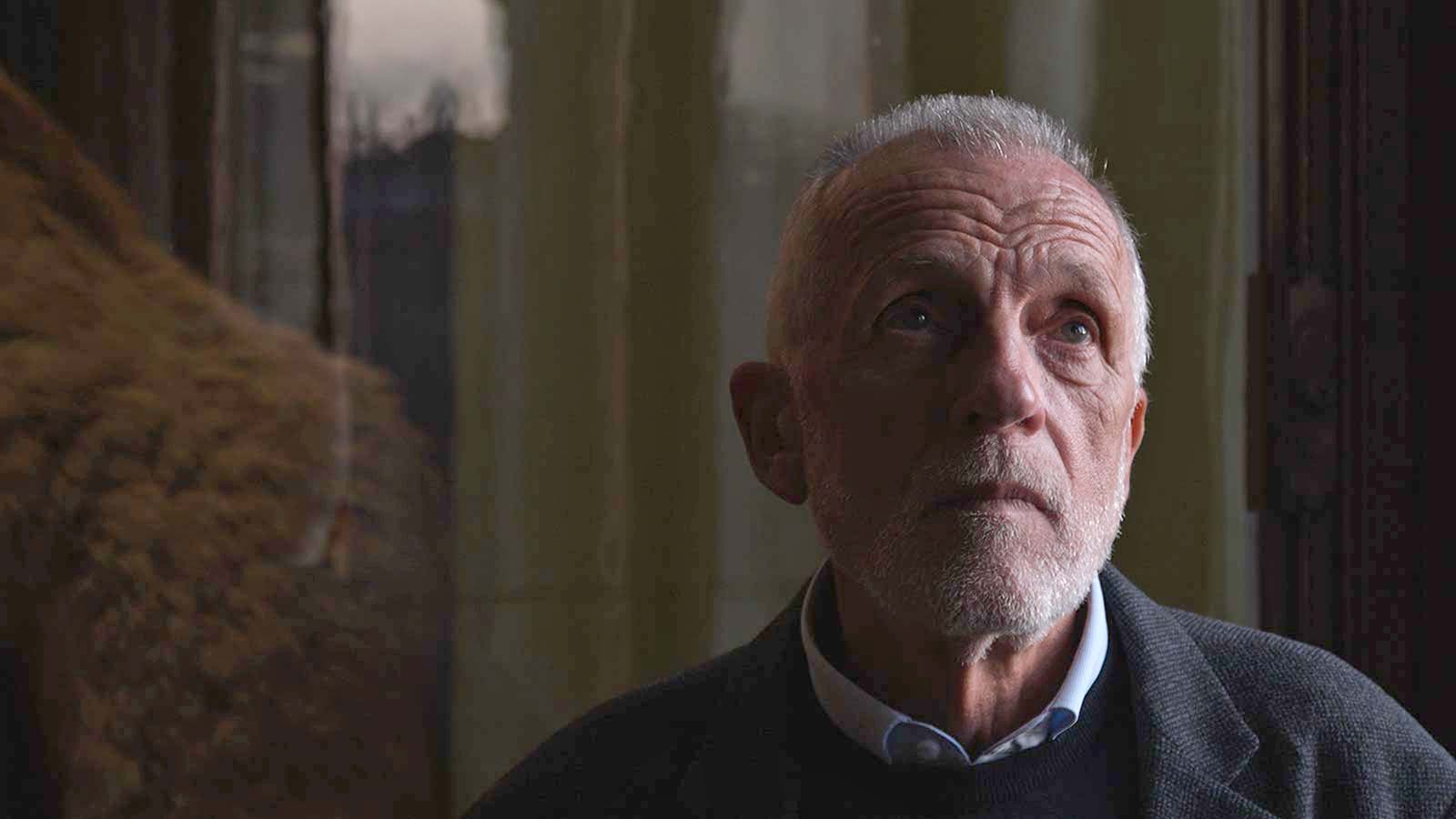
How do I describe the film itself? Okay, I’ll try my best: We open with seventyish Austrian astronomer Karl (Franz Schwartz) musing about his life and work….he puts on the classic jazz record Cosmic Music by Alice and John Coltrane and muses further about the similarities between music and astronomy… he writes letters to his physicist wife, Eleanor, and reads them to us…Eleanor writes back and reads her letters to him… a car trip to a particularly depressed and rundown section of New Jersey, where two of Karl’s colleagues visit the Holmdel Horn Antenna, the apparatus by which Arno Wilson and Robert W. Wilson discovered the cosmic background radiation that definitely proved the existence of the Big Bang…
A pan over the famous picture of Père Georges Lemaître, originator of the Big Bang theory, flanked by fellow geniuses Einstein and Millikan… Karl ponders the literal cosmic irony (or is it appropriateness?) of a pious Catholic priest discovering the origins of the universe… Karl’s colleagues handle a meteorite fragment much the same way Steve McQueen and his friends did in “The Blob” (1958), marvelling that it’s older than the Earth itself… a visit to a German museum where the Rosetta Mission probe, which was the first human-made object to land on a comet, is on exhibit…Karl goes to a conference in Greece… decides to stay to watch the stars…
Don’t feel too bad if you stumble out of “Little, Big, and Far” with your senses numbed and wondering if there is something wrong with you for not being able to appreciate it. I saw it in an auditorium full of scientists, most of whom said they neither liked nor understood it either. And if it wasn’t made for scientists themselves, then who exactly was it made for? The first impulse is to classify it as an educational or informative film, but director Jem Cohen seems intent to put as much distance between himself and the audience as there is between the stars themselves, limiting its appeal to the general public.
If you’ve never heard of Georges Lemaître or are unfamiliar with the discovery of Penzias and Wilson, you might find yourself interested in learning more. And you’d have to go read up on your own because the film offers only the most cursory information, without going into sufficient detail about the scientific importance of their work. You may find yourself thinking about your own place in the cosmos throughout, but you may also find yourself frustrated that you still don’t know enough. Off to the library, you go.
The movie then serves, in a way, as the cinematic equivalent of the museum exhibits it lingers over so lovingly, intent on provoking sufficient interest in its audience to explore the issues it raises further. It’s trying to do for science what Cohen’s earlier “Museum Hours” (2012) did for the fine arts.
Museums have long been a favorite topic for rhetorical scholars, trying to explain how they construct, manufacture, and manipulate our mental images of the world, our histories, and ourselves.
Cohen seems to be attempting a similar interrogation in filmic terms, bringing the exhibits, the landmarks, and their subjects to our movie screens and trying to explore them with the camera, all the time asking us questions: “What do you think of this? ” “How is this relevant to you?”
Unfortunately, this particular cinematic exhibit is not a very attractive one. My main visual memories of the film are of shadowy brownish orange hues and muddy bluish grey tones, which will likely turn off viewers already annoyed by the slow pace. Then there’s the matter of what sort of message the film is trying to convey, and how it makes its arguments.
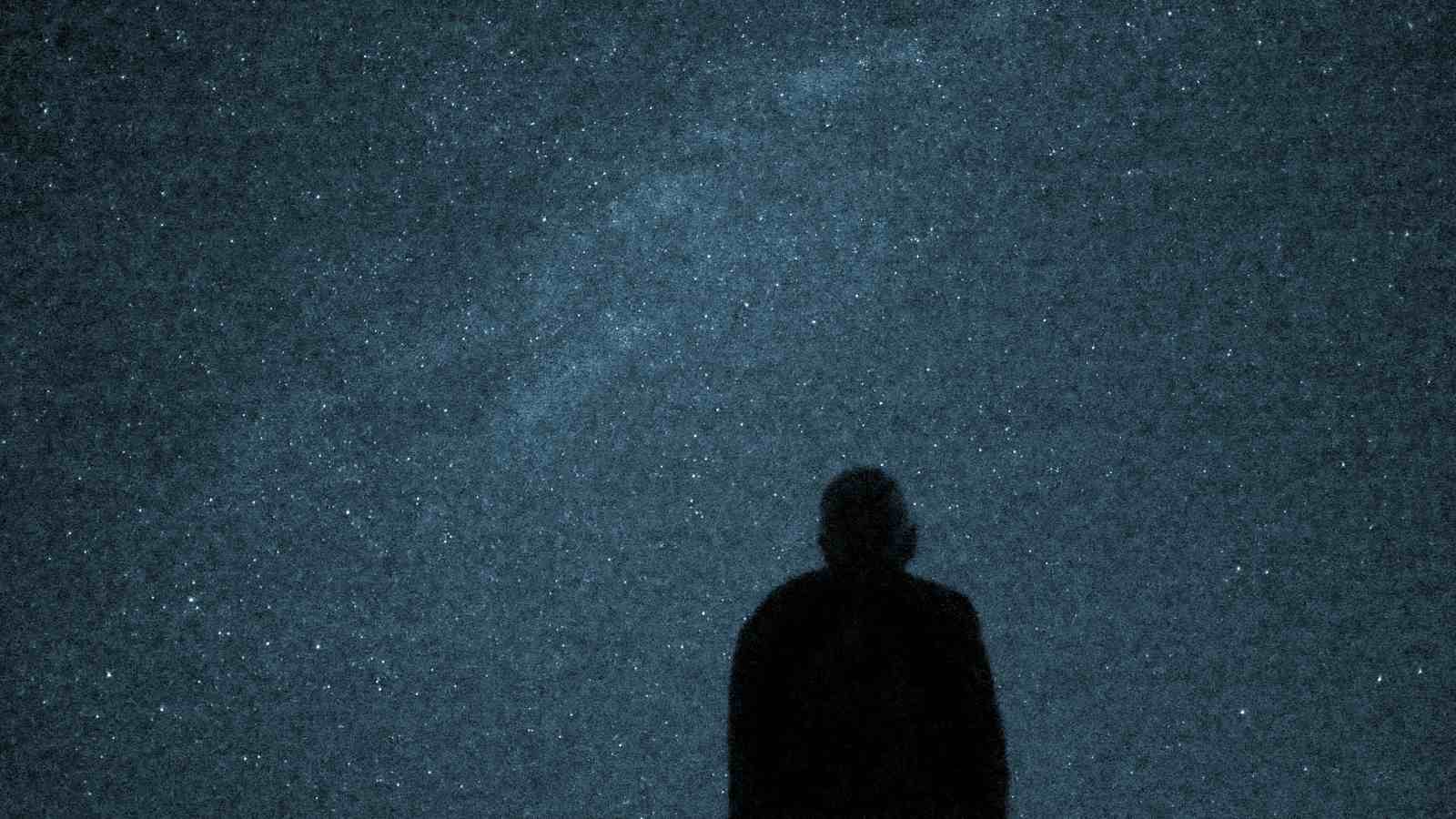
There’s clearly an overriding concern throughout about keeping the skies clear, not just for the sake of astronomy itself but to continue to inspire public interest in science. How will we be able to instill a sense of wonder in future generations if they can’t even glimpse the stars above them?
But like a college lecturer who insists on going on irrelevant tangents, the film sprawls into other issues, political and otherwise, and fails to successfully build them into a coherent unifying argument. That’s something some museums themselves have done better, as I was reminded by a recent visit to the Tyrell Museum of Paleontology in Alberta.
Cohen could have attempted a more straightforward narrative along the lines of Krzysztof Zanussi’s own fascinating movies about scientists and their social roles. Unfortunately, he has insisted that even at feature length, he continues to make experimental films done in a demi-doc style. You can praise Cohen for his artistic integrity and sticking to his stylistic guns while also questioning the success of his cinematic experiment.
“Little, Big, and Far” definitely could have used some judicious pruning and might have worked better as a short or featurette. Some sequences run for a painfully long period of time. One sequence panning over taxidermized wildlife exhibits while Eleanor rambles on about mass extinction and climate change is so deadening, I recommend treating it as an intermission. Off to the lobby, you go.
Let me then try to justify my giving the film three and a half stars and a half-hearted recommendation this way: the subject matter intrigued me enough to keep me watching. Years of watching Tarkovsky films have further helped to steel my ability to watch even the most ponderous of films, ones which move as quickly as molasses in a Minneapolis winter.
You should probably take my recommendation as a dare, then, to test the limits of your own patience and to see if you’re similarly willing to allow the sheer intelligence of a film to pull you in even as the rest of it fights you most of the way. Returning to the question of who it was made for, the best answer is probably film critics themselves.



![The Kid [1921] Review – The Most Poignant of Chaplin’s Silent Masterpieces](https://www.highonfilms.com/wp-content/uploads/2020/02/The-Kid-1921-768x575.jpg)