If Assamese cinema were a person, 2025 would have been the year it showed up late, spoke too much, embarrassed itself publicly, but also, for once, walked into the room and brought the house down. The year saw two monumental blockbusters, a handful of respectable mid-range performers, and a long list of films that barely survived long enough to be reviewed. Some releases struggled for screens, others for relevance, and a few seemed to exist only because someone somewhere forgot to cancel the booking.
The following is a month-by-month post-mortem of Assamese films that released theatrically in the year 2025. The analysis reveals an uncomfortable truth that cinema, no matter how sincere, cannot survive without viewers.
January: A Strong but Confused Start
The year opened on a promising note with Raktim Kamal Baruah’s “Gulai Soor” (January 17), a well-crafted period comedy-heist set across the 1940s and 1980s. With its colourful production design, cultural detailing, and a mischievous narrative centred on the legendary thief Diga Soor, the film felt refreshingly confident and genuine.
Released on around 60 screens, “Gulai Soor” stayed in the theatres for nearly three weeks—a decent run by Assamese standards. In monetary terms, it wasn’t very highly successful, but it was a reminder that craft and humour still matter.
Then came the exceptional case of Prashanta Kalita’s “Kuhipath – Life’s First Lessons,” released on the same week. Shot in 2022, premiered in 2024, and released online before its theatrical release in 2025, the film raised a very existential question: Why release a film in the theatres after the interested ones have streamed it already?
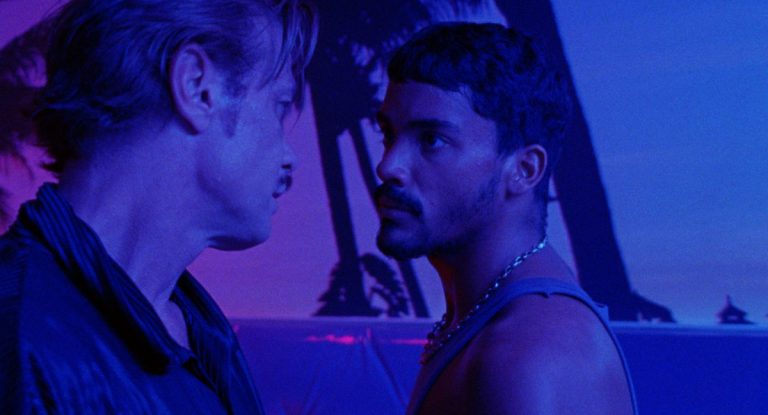
Predictably, “Kuhipath” was dead on arrival. Not because it lacked heart, but because its release strategy lacked logic. By January 31, Dipankar Kashyap’s “Xitore Xemeka Rati – The Winter Rain” arrived with ambition but little originality. A thinly veiled Assamese queer story that also works as a reinterpretation of “Call Me by Your Name” (2017), the film came under its weak writing and soporific treatment. Released on 16 screens (plus one in Delhi), it disappeared within a week.
February: Ideology without Depth
Bikash Mochahary’s “The Mirage” (February 21) followed a disillusioned youth entering an underground rebel movement. The premise had urgency, but the film refused to interrogate its own politics better, settling instead for surface-level commentary. Released on 15 screens, it couldn’t last beyond two weeks.
Then came February 28, a date best forgotten. Bikul Dutta’s “Xopune Pakhi Mele,” shot in Assam and Thailand, managed to secure a big release and played on 53 screens, but it still failed. With no promotion and a catastrophic execution, shows were cancelled within three days, with some theatres failing to complete even a single successful screening. It was a spectacular flop.
March & April: Melodrama, Misfires, and Complete Disasters
March offered only one release: Chandra Mudoi’s “Gomon: The Last Journey” (March 14). A family drama exploring loss and tradition in the face of modernity, the film drowned its sincerity in predictable storytelling and excessively loud melodrama. It somehow survived for a week.
April, however, was ruthless. Rubul Das’s “Rakshak – The Saviour” (April 4) came to test the patience of Assamese viewers. Vigilante justice, police inspectors, evil ministers, poor acting, shoddy editing, amateur filmmaking—it had everything but coherence. Shows were cancelled within days.
April 25 brought Hem Chandra Bora’s “Jhankar: The Melody of Resonance” to the screens. It was a film so outdated in form and content that it felt specifically designed for a television serial slot from two decades ago. With its small-screen aesthetics and sensibility, “Jhankar” lost its screens within a week. An aged and ailing Bora should now take rest for his best.
May–June: When Assamese Cinema Finally Showed Up
After months of creative drought, May arrived like a refreshing rainfall to console the worried audiences and wash away all the impurities. Dhanjit Das’s “Casetu Nagen” (May 11), released on 62 screens, delivered some fun entertainment with humour and a twisted mystery. While slightly overlong, it ran for four weeks in the cinema halls, proving that audiences will definitely show up if a film is good.
Then came the ultimate juggernaut on May 23, Sasanka Samir’s “Bhaimon Da.” A biopic on filmmaker Munin Barua, the film tapped into nostalgia, memory, and Assamese cinema’s collective journey from its early days. Released on 66 screens, it ran for two months straight and earned approximately ₹14 crore, making it one of the biggest hits in Assamese film history.
Its promotional campaign was relentless, and its emotional pull, undeniable. And its success also reshaped the future release calendar. So much so that Roopak Gogoi postponed “Rudra” from June 6 to June 27.
When action-thriller “Rudra” finally arrived on 67 screens across Assam and multiple metros of India, expectations were sky-high. But its formulaic writing and weak emotional stakes ensured it fell well short. It only registered a decent run at the box office.
July Proved Once Again that Comedy Films Work
In theory, Mrinl Deka’s “Malamal Boyyyz” (July 18) shouldn’t have worked. Bloated screenplay? Yes. Overlong runtime? Absolutely. Weak writing? Without question. And yet, audiences seem to have loved it. The buddy-comedy ran for five weeks, returned for re-releases, completed seven weeks, and even announced a sequel (“Malamal Bhootz”). Proof that when audiences love something, nothing can stop it.
Read More: Malamal Boyyyz (2025) Movie Review: Laughter, Lapses, and the Changing Face of Assamese Cinema
But the July 25 release, Rajen Das’s “Iron Girls,” didn’t share the same fate. Focused on Deodhani dance and the folk culture of Assam, the film collapsed due to its weak execution and poor promotion. Pulled away from the theatres by day four, it sparked a lot of criticism against cinema hall owners before being quietly re-released on January 16, 2026, in Silver Cineplex, Pathsala.
August: A Full-Packed Month
View this post on Instagram
August was Assamese cinema at its most unhinged. “Collage” and “Keyo?” clashed on August 1. While “Keyo?” reduced the artist’s existential crisis to preachy monologues and staged theatrics, “Collage,” despite its structural jumps, attempted a more ambitious undertaking of representing diverse perspectives of the Assam Agitation and the shadow of the Naxalite movement.
“Collage,” directed by Amardeep Gogoi, was the more thoughtful and cinematically sincere of the two. But unfortunately, both were gone within a week. Perhaps the most daredevil of all acts was performed by Gagan Kumar Sarma’s “Kuhelika” (August 8). It was released without any poster, trailers, or logic—and disappeared the same day. Not a single soul could watch that film. An important case study of how not to release a film.
Himjyoti Talukdar’s “Taarikh” (August 22), released only on 9 screens, moved the audiences with its narrative of grief based on the 2008 Assam bomb blasts and stayed for a few weeks, but Bhaskar Goswami’s “Joddha,” released on 52 screens on the same day, survived purely on scale despite its poor making and emotional shallowness.
Later, “Dr. Nishant” (August 29) collapsed under the weight of its cringeworthy performances and unintentionally comic excess. It was a cringe‑laden attempt at a noble doctor’s battle against greed and corruption in the medical sector.
September–October: Mourning and Memory
Chandra Mudoi’s “Swahid Pranamo Tumak” (September 19), the Assamese version of his 2017 film “Purab Ki Awaaz,” released on 25 screens. But its theatrical run was tragically cut short due to the untimely death of Zubeen Garg on the same day. All the screenings of the film were cancelled after a few afternoon shows, leaving the film almost entirely unseen by audiences. Later, all further releases were halted until October 10’s “Krondon,” which was a reminder that social messaging cannot compensate for terrible filmmaking.
Also Read: Zubeen Garg’s Roi Roi Binale (2025): A Turning Point for Assamese Cinema?
Then came October 31. Zubeen Garg’s final film rewrote every rule in the book. The show started at 4 am. Seats sold out across Assam and beyond. International release was also on the cards. But despite being a flawed film on many fronts, “Roi Roi Binale” became the highest-grossing Assamese film of all time, running exclusively for two weeks in Assam and continuing till January 2026.
December: A Quiet, Ignored End
The year ended with Rukmini Borah’s “Srikrishna Leela – 2” (December 5), a sequel to the 2023 film, “Shree Krishna Leela.” A filmed stage play released with remarkable indifference had the same reciprocation from the audiences. It failed to complete a week.
Final Takeaway: What 2025 Taught Assamese Cinema
2025 proved one thing clearly – that audiences are selective, promotion matters, and the market is unforgiving. Sentiment can move mountains, but not forever. With two massive successes, a few respectable performers, and a sea of failures, Assamese cinema stands at a new crossroad. The question is no longer “Can we make good films?” It is “Can we make films that people actually want to watch?” 2025 answered that question. Filmmakers, did you take note?