Netflix’s big adaptation of the 2021 bestseller People We Meet on Vacation by Emily Henry is finally here, and it’s already a massive hit. Since its release on January 9, 2026, the movie has rocketed to the top of the charts, pulling in 17.2 million views and over 33 million hours watched in just its first few days. Starring Emily Bader as the wild-child Poppy and Tom Blyth (of Hunger Games fame) as the stiff-collared Alex, the story follows two best friends who are total opposites but spend every summer on a trip together. That is, until a huge fight in Croatia (or Tuscany, depending on who you ask) ends their friendship for two years. Now, they are reuniting for one last trip to see if they can fix things.
While the movie captures that cozy rom-com vibe, fans of the book might notice some pretty big changes. Here is a breakdown of the differences between the movie and the original book.
7 Ways Netflix Flipped the People We Meet on Vacation Script

The Big Move: From Palm Springs to Barcelona
In the book, the main “present-day” trip happens in Palm Springs, California. It’s supposed to be a budget trip because Poppy pays for it herself, which explains why they stay in a terrible, hot apartment with a broken AC. In the Netflix movie, they swap the desert for Barcelona, Spain. While the “broken AC” plot is still there, it feels a bit weird in the movie because Poppy’s rich travel magazine is supposed to be paying for it. It makes you wonder why a professional travel writer would stay in a sauna-like room if her job is footing the bill!
The Missing Vasectomy
This is probably the most controversial part of the book that didn’t make it to the screen. In the novel, Alex gets a vasectomy after a pregnancy scare with Poppy. He does it because he’s terrified of her dying in childbirth, just like his mother did. It was a huge, life-altering choice he made because of his feelings for her. The movie skips this entirely. Instead of that heavy plot point, the movie focuses more on Alex’s relationship with his girlfriend Sarah, making the conflict more about a standard love triangle than a deep, personal medical decision.
Where They Went to School
Book fans remember Poppy and Alex meeting at the University of Chicago. Their long car ride home to Ohio is where their friendship really starts. In the film, the writers moved them to Boston College. It doesn’t change the plot too much, but for people who loved the specific “Chicago” vibes of the book, it’s a noticeable swap. It seems the movie wanted to lean into that “New England” look for the college years.
A Proposal That Didn’t Happen (in the book)
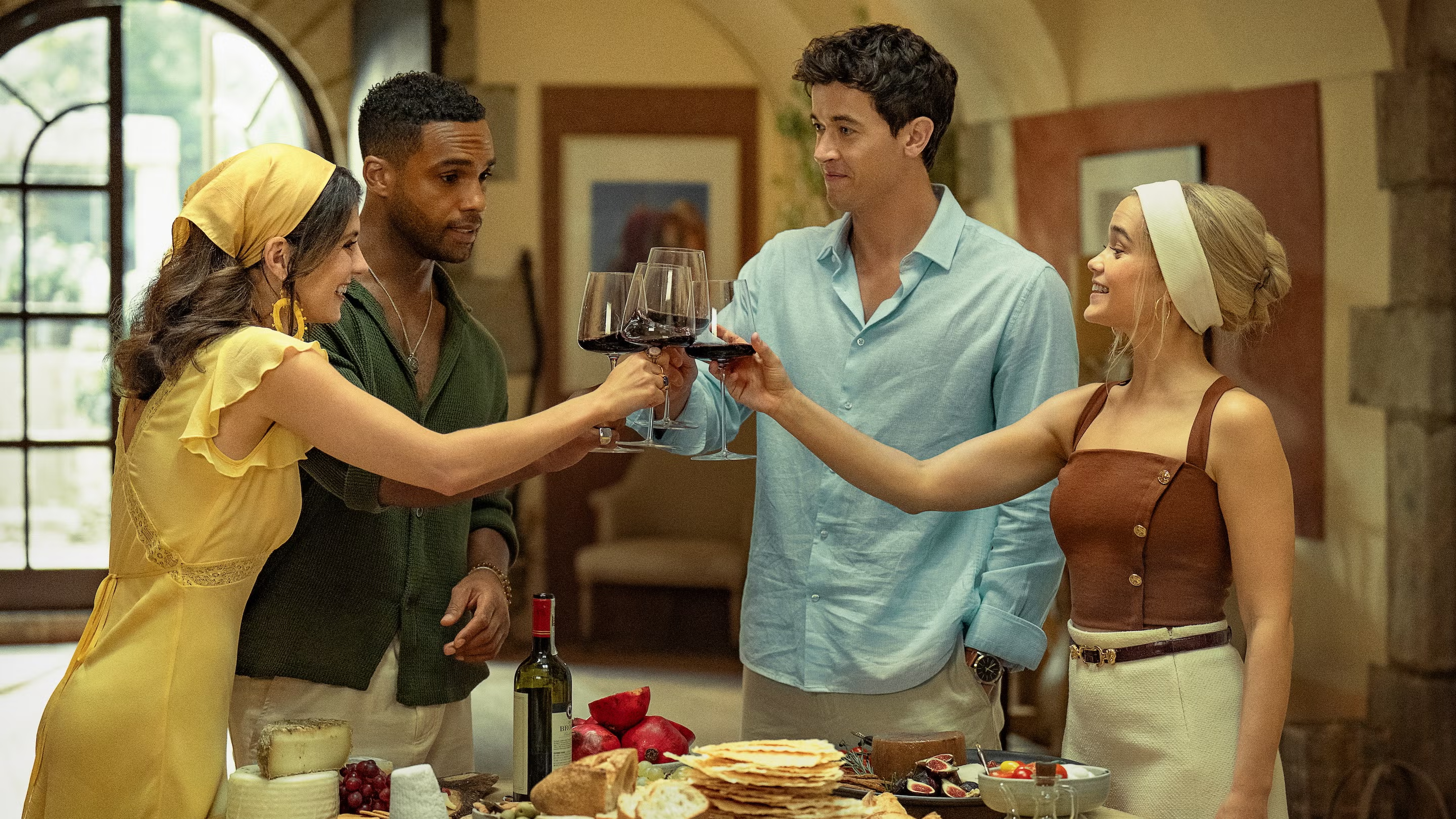
In the Netflix version, Alex actually proposes to Sarah during the Tuscany trip. This makes the rift between him and Poppy feel much more final, because he’s literally about to get married to someone else. However, in the book, Alex never actually pops the question. He thinks about it and even buys a ring, but he realizes he’s in love with Poppy before he ever asks Sarah to marry him. The movie adds the proposal to make the drama even higher.
The Family Tree Shrinkage
Poppy and Alex both have much smaller families in the movie. In the book, Alex is the oldest of four brothers, but in the movie, we only see his brother David. Poppy also has two brothers in the book, Prince and Parker, who are completely gone from the film. Even her parents, played by Molly Shannon and Alan Ruck, are a bit more “normal” in the movie. In the book, they are portrayed as eccentric hoarders, which is a big reason why Poppy felt like an outsider in her hometown.
[you_may_also_like count=”3″]
The Trauma and the Bullying
A big part of Poppy’s character in the book is her history of being bullied. She was nicknamed “Porny Poppy” because of a mean rumor, and that’s why she hates her hometown of Linfield so much. The movie mentions the nickname once, but it doesn’t really show how much it hurt her. Because the movie tones down her trauma, some viewers find “Movie Poppy” a little harder to understand. In the book, her return to the high school to find Alex is a huge deal because she’s facing her old bullies, but the movie keeps her big romantic gesture a bit more simple.
Courtesy: Slate