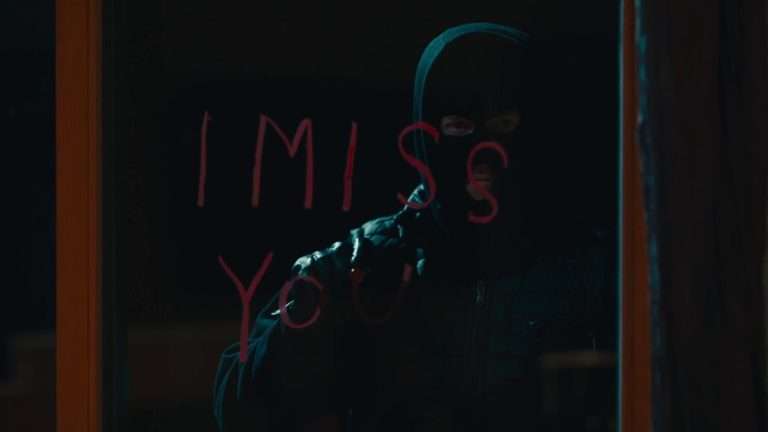
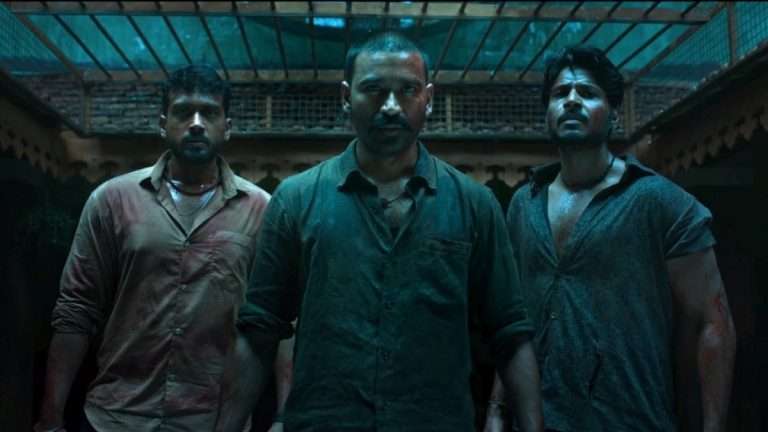
RJ Collins’s “Hunting Season” (2025) presents itself like a familiar survival thriller. Remote cabins. Criminals with nothing to lose. A father armed with instinct and violence. But beneath the grit lies a quieter, more uncomfortable question: when does protection stop being love, and when does it become control?
The film is less interested in action as spectacle and more in action as consequence. Every violent choice Bo makes echoes back into his relationship with his daughter, Tag. Every secret he keeps is rooted in fear disguised as care. And every bond Tag forms threatens the fragile world Bo has built around her. This is not a story about heroes and villains in the clean sense. It is about people who believe they are doing the right thing, even when those choices leave scars that cannot be undone.
Spoilers Ahead
Hunting Season (2025) Plot Summary & Movie Synopsis:
How Does Lizzie’s Night at the Pub Set the Tone for the Entire Film?
The opening scene does not rush. It lingers. Lizzie serves drinks in a pub, comfortable in her routine, flirting casually with a stranger who initially seems harmless. The banter is light, almost playful. This is how danger enters in “Hunting Season,” not through force, but familiarity. The stranger’s tone shifts quietly. A name slips into the conversation: Jensen. Lizzie’s reaction is instant and involuntary. Fear replaces flirtation. The man does not raise his voice or make a scene. He simply tells her he knows she is lying. The knife under the table is not used, only implied. It is power without spectacle.
What makes this moment chilling is not the threat itself, but its precision. The man knows where to cut emotionally. He knows Lizzie’s secrets. He knows who she has been protecting. By the time he leaves, Lizzie is already defeated. The violence has not happened yet, but the damage is done. This scene establishes the film’s core idea: danger does not always announce itself.
Sometimes it arrives smiling, asking you to choose a drink. Lizzie and January share an apartment, but their lives are unevenly balanced. Lizzie is entangled with Jensen, a man connected to the Brotherhood cartel. January is quieter, more guarded, already carrying the weight of knowing too much. When Alejandro breaks into their apartment, the violence is swift and impersonal.
They are not attacked out of rage. They are erased. Both women are shot and dumped into the river, treated as loose ends rather than people. Lizzie dies immediately, her body caught in the branches like evidence the world is trying to hide. January survives by chance, not strength. Her rescue is accidental. Tag, fishing near her family’s cabin, spots something unnatural in the water and realizes it is a body. Survival here is not triumph. It is a burden. January wakes up knowing that staying alive has made her a target. Lizzie’s death is final. January’s life is conditional.
Why Does Bo Take January In Despite the Risk?
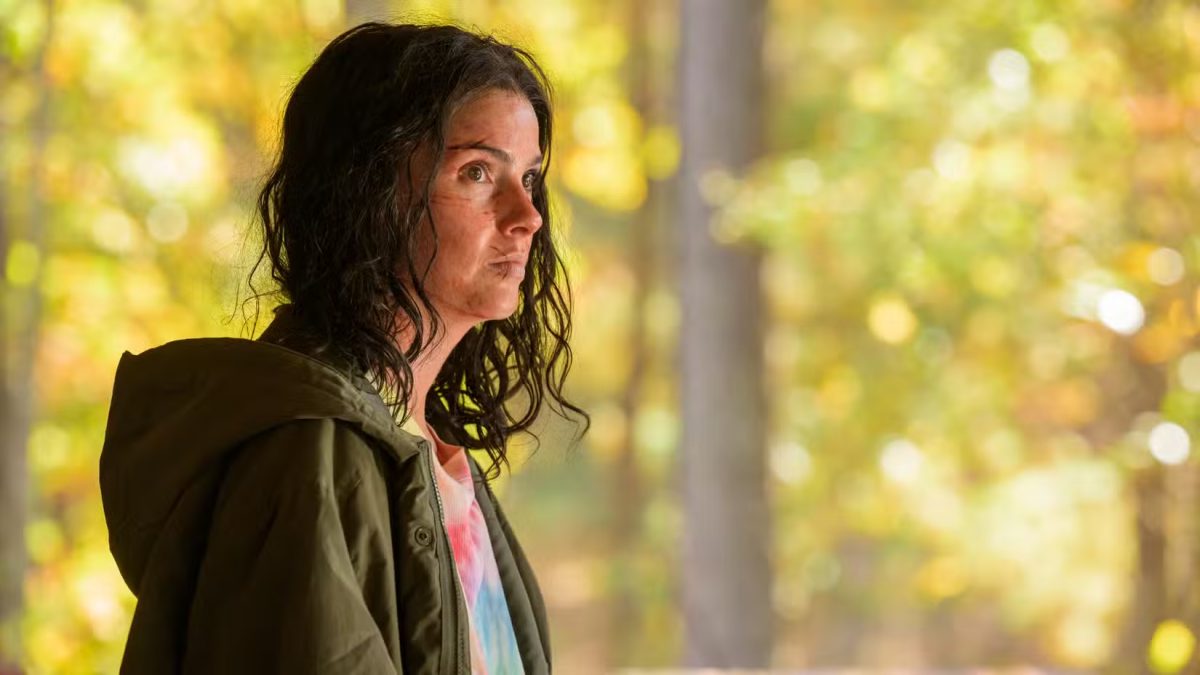
Bo is introduced not as a hero, but as a routine-driven man who has raised his daughter in isolation. The cabin is not just a home. It is a controlled environment: predictable, safe, or at least it has been. When Tag pulls January from the river, Bo reacts with practicality. He wants to call the sheriff. He wants to hand responsibility to the system. January stops him. Her refusal feels suspicious, but it is rooted in survival logic. If the Brotherhood knows she lived, they will finish what they started.
Bo is caught between reason and instinct. Reporting January protects his legal responsibility. Hiding her protects her life. What tips the balance is Tag. She has already attached herself to January. In January, Tag finds companionship she has never had. Someone who listens. Someone who does not see her as fragile. Bo allows January to stay, not because it is safe, but because it keeps his daughter emotionally stable. This is the first compromise. It will not be the last.
What Does Bo Discover at the River?
Tag has grown up with only one emotional constant: her father. Her mother’s absence is a wound Bo has never allowed to heal properly. January disrupts this dynamic. She brings stories from outside. Fear, yes, but also connection. Tag begins to open up in ways she never has with Bo. She asks questions, challenges him, and senses that he hides things from her. January’s presence gives her the courage to push. Bo watches this shift with discomfort. He does not resent January. He resents what she represents: independence, choice, and the possibility that Tag may one day leave.
The cabin becomes emotionally crowded. Bo is no longer the sole protector. And that threatens the identity he has built around fatherhood. January sends Bo back to the river under the pretense of checking the area. What she truly wants is confirmation and closure. Bo finds Lizzie’s body tangled and decomposing, unmistakably dead. He does not tell Tag immediately. The lie is small at first, then a deflection. Finally, a confession forced by Tag’s persistence. Bo justifies his silence as protection. Tag does not need to see the ugliness of the world.
But this is where the film begins to question Bo’s definition of safety. By hiding the truth, he denies Tag agency. He decides what she can handle. The lie creates distance rather than security. January understands the danger better than Bo. She insists that no one can know where she is. The Brotherhood does not forgive witnesses. They erase them. Bo now carries two responsibilities. His daughter’s innocence and January’s survival. They are no longer compatible.
Why Does Bo Abort the Plan to Take January Into Town?
Bo decides to move January out quietly. Distance feels like the only solution. But on the road, he encounters the sheriff investigating Jensen’s death. Jensen’s body has been pulled from the river. The Brotherhood’s meth operation is now under scrutiny. Bo tests the conversation carefully. He asks about January without asking. The sheriff mentions only Lizzie.
The implication is terrifying. January’s survival is still unknown to law enforcement. That means she is unaccounted for. Bo lies without hesitation. He calls January his niece and invents a birthday visit. The lie is smooth because it has been practiced in other contexts. This moment reveals Bo’s instinct clearly. He does not trust systems and only trusts control. The town is exposure, and the cabin is secrecy. He turns the car around. Protection wins over justice.
Why Does Bo Turn to Sheriff Brake, and What Goes Wrong?
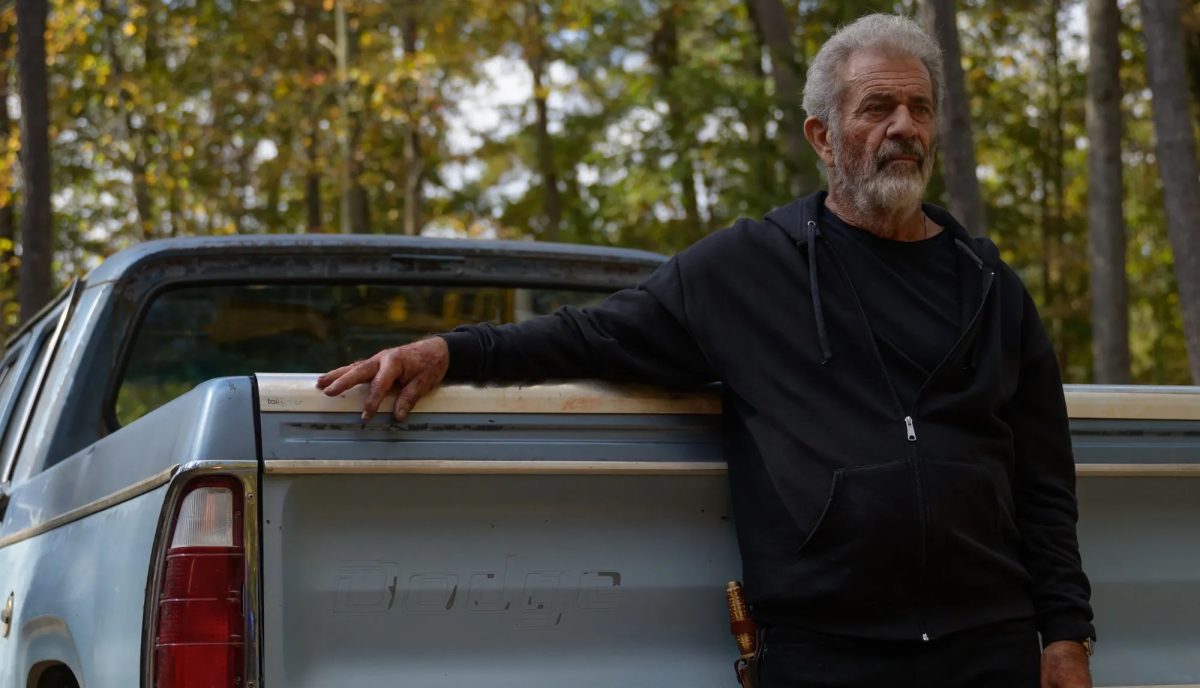
Alejandro is not introduced with grandeur. He is a function or a tool. The Brotherhood sends him to clean up Jensen’s mess. He does not just kill Jensen. He brings his wife and child to the cartel as proof. Loyalty is measured in brutality. January is an eyewitness. That makes her a liability. The Brotherhood does not care that she is wounded or hiding. They want certainty. The men who come to Bo’s cabin do not negotiate. They test boundaries. They return and push harder. This is not a single threat. It is systemic violence.
Bo kills some of them, efficiently and quietly. But each body invites more. Violence solves immediate problems while escalating the future. Bo realizes the cabin cannot hold forever. He reaches out to Sheriff Brake, a friend he trusts. The meeting at the church feels safe and sacred. Brake offers to drive January out of the county.
Tag says goodbye to January with the innocence of someone who believes in endings that do not hurt. Bo watches her leave, unsure if he has done the right thing. Brake goes silent. Another officer confirms his death. There is no body and no explanation. January is gone. This is Bo’s breaking point. The system he reluctantly trusted has failed. Now the danger is not theoretical. It is personal.
Hunting Season (2025) Movie Ending Explained:
How Does Bo Become the Hunter Instead of the Hunted?
Bo captures one of the Brotherhood’s men and ties him to a lawnmower. The threat is grotesque but controlled. Bo does not rage. He calculates. The man tells him what Bo already fears. Alejandro has January. Or she is already dead. Bo decides to go to the settlement. Not with a plan. With resolve. He leaves Tag a letter.
A goodbye written by someone who believes he may not return. This is the cost of his choices finally surfacing. Protection has led him here. Tag does not stay behind. She finds the guns and follows the trail. She refuses to be protected from irrelevance. When Tag arrives at the Brotherhood camp, she does not hesitate. She shoots and fights beside her father. This is not recklessness. It is clarity.
Bo sees in this moment what he has been denying. Tag has grown. His protection has not kept her small. His secrecy has. Together, they save January. Not as saviors, but as people who finally understand the cost of standing still. Throughout the film, Bo burns letters. Quietly. Guilt flickered across his face. Before leaving for the settlement, he tells Tag the truth. Her mother was not dead. She was imprisoned and recently released. She tried to reach Tag. Bo stopped it. He believed he was protecting his daughter from disappointment. From confusion and pain. But the truth is simpler. He was afraid of losing his place as her only anchor.
This confession reframes everything: Bo’s violence, his lies, and his control. They were not just about safety. They were about fear of abandonment. A month later, January is healed, ready to leave. She thanks Bo and Tag, not as a victim, but as someone who survived because she was believed. Tag meets her mother. The reunion is imperfect.
Bo watches from a distance. For the first time, he does not intervene. “Hunting Season” ends not with victory, but release. Bo learns that protecting his daughter does not mean deciding her life. It means trusting her strength. The film argues that guardianship is not ownership. Love is not control. And sometimes, the bravest thing a parent can do is step back and let their child walk forward, armed not with fear, but with truth.