Kogonada has become a popular figure within the independent cinema world because of his insight into the format itself. As a former video essayist with a deep knowledge of film language, the South Korean filmmaker has merged his probing philosophical insights with an artful visual style, creating heartfelt dramas with deeper ideas at their core.
The extent to which Kogonada’s existentialist insights reach effectiveness is dependent on the strength of his characters, who serve as both audience avatars and vessels to make the material more personal. “Zi” is a wonderfully composed and ambitiously introspective work of experimental filmmaking, but its flat emotionality makes for a frustrating experience.
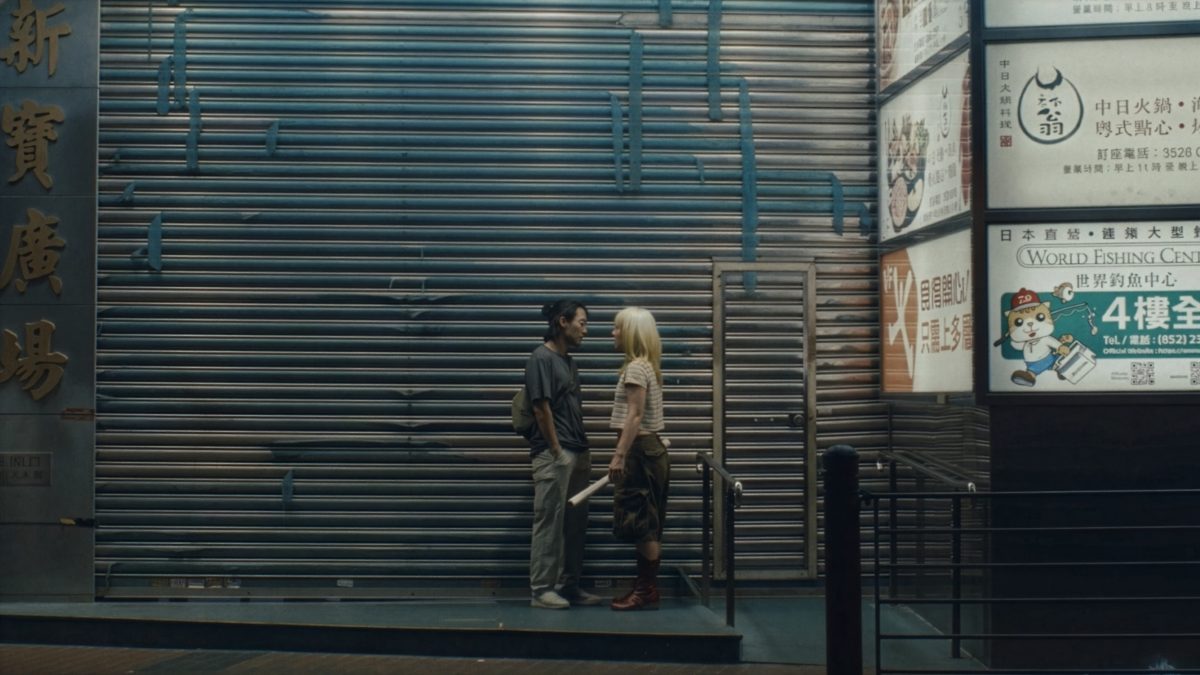
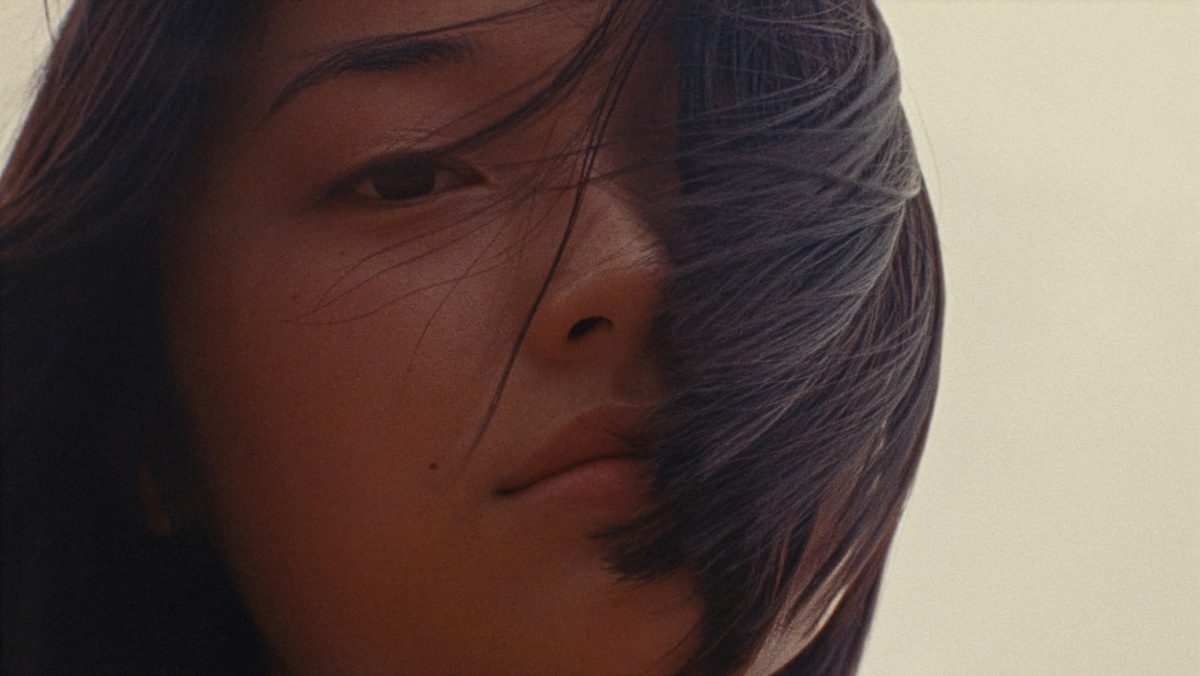
Although there’s a degree of non-linear framing within nearly all of Kogonada’s films, “Zi” has a premise that seems simple enough. The titular character is a violinist, Zi (Michelle Mao), who has come to wander the streets of Hong Kong at night as she ponders, singly distant memories of a past she does not recognize.
While Zi’s mannerisms would seem almost childlike, she forms a deep connection with the former dancer L (Haley Lu Richardson), who begins to feel a surprising sense of deja vu that she doesn’t quite understand. Zi is often wordless and unable to express herself through verbal means, but L seems content enough to take her under her wing. They share an intimate 24 hours together in the seemingly infinite possibilities of a sleeping city, eventually encountering the man Min (Jin Ha), who may know more about what their fates entail.
Kogonada’s deep knowledge and perspective on international cinema make it easy to note his influences: the dreamlike wonder of Wong Kar-Wai, the baroque yearning of Federico Fellini, and even the fragmented evocation of Agnes Varda are blended into a tapestry of cosmic beauty that somehow doesn’t feel derivative.
Few can conjure visual splendor quite like Kogonada, and the trance set by the film’s visceral audaciousness makes it easy to become lost within. Unfortunately, Kogonada seems just as lost when it comes to narrative progression. The dynamic between L and Zi falls into such familiar strands that their anecdotal adventures begin to feel derivative.
Plot isn’t something that Kogonada has ever shown significant interest in, but there’s a difference between the authentic conversationalism of his earlier work and the more austere qualities of “Zi.” His debut feature, “Columbus,” was refreshingly proud of the fact that its characters were eloquent and educated, and made for an emotionally mature, insightful dialogue between thoughtful individuals.
Even with its sci-fi slant, Kogonada’s second film, “After Yang,” played upon age-old considerations about the definition of family. “Zi” seems intended to expose the fallacy of a didactic existence, as the individual experiences that Zi and L share are secondary to the fact that they have simply lived. However, the extent to which Zi and L are aware of this cycle is unclear, as their relationship seems to progress at alarming rates through obvious emotional cues.
Also Check: The 40 Best Movies of 2025
It’s not inherently wrong for Kogonada to craft a chillier, less cathartic story about losing oneself within the experiential aspects of consciousness, and “Zi” seems to hint at the idea that people are more than a sum of their memories. However, there’s nothing particularly deep about the idea of lost souls recurring through time that hasn’t been seen before in more engaging, probing arthouse dramas, especially when “Zi” can only trigger these revelations through hasty reconciliations.
“Zi” reaps the benefit of a formless avant-garde project, but seeks the encapsulation of time and destiny found in the more significantly scaled work of Terrence Malick or Ingmar Bergman. The two goals are often contradictory, as it often feels like Kogonada is both unclear as to what he’s trying to say and unwilling to include any components of traditionality.
The origin story of “Zi” does inform some of Kogonada’s choices, as the independent film had its inception in the wake of the director’s flop, “A Big Bold Beautiful Journey,” which saw the first time in which his work was rejected by both average viewers and critics who had previously supported him. Outside of the fact that “A Big Bold Beautiful Journey” wasn’t written by Kogonada, and thus felt less personal, it was clearly a studio endeavor in which emotional breakdown and stylistic quirks were baked into the story for the sake of reaching profound moments.
It’s understandable why Kogonada felt the need to respond to a failure that felt cynically concluded by making a film that’s literally about soul-searching, but the hastiness of “Zi”’s production is evident within the final product. A series of revelations made in the third act, particularly in conversations between L and Min, are literal to the point that they undercut the ambiguity that the film had seemingly valued up until that point.
The confused vision on Kogonada’s part doesn’t mean that he’s lost his talent for finding actors with the expressive, emotive quality needed to hit the unusual tonal register. As exasperating as it can seem for the dialogue to so frequently use banal small talk as a means of foreshadowing philosophical awakenings, “Zi” does benefit from the fact that its two protagonists are warm, thoughtful, and genuinely charming together.
Mao, in one of her first major roles, is able to showcase Zi’s intellectual inquisitiveness through a lack of self-awareness, and it thankfully doesn’t mean the character is too obtuse to invest in. Richardson’s naturally bubbly, endearing personality does help to cushion some of the most banal segments, as there’s a fullness to the performance that makes it feel as if L could exist outside of the confines of the narrative.
As admirable as it is that Kogonada felt the impulse to simply pick up a camera and find a story through the creative process, “Zi” doesn’t indicate any evolution from his days as an essayist. Perhaps Kogonada felt confined by strict narrative parameters, even within his feature work, but the lack of any boundaries on “Zi” makes it a tough sit. There’s a place for every great artist to make a passion project intended to rekindle their creative passions, but “Zi” is a more successful formal concept than it is a satisfying film.



![Something in the Water: A Kinston Basketball Story [2020] Review – Glories of the past, present and future](https://www.highonfilms.com/wp-content/uploads/2021/01/Something-in-the-Water-2020-highonfilms-1-768x404.jpeg)
![Moonlight [2016]: Even Boys get the Blues](https://www.highonfilms.com/wp-content/uploads/2023/03/Moonlight-768x512.jpg)