
Jason Statham is perhaps the most consistent action star of the 21st century because of his complete and total commitment to the genre. Outside of the rare self-deprecating cameo or “Fast and Furious” spinoff, Statham seems content to star in at least one mid-budget action flick every year, a majority of which are fairly entertaining.
Statham’s catalog has grown so expansive that he’s developed different avenues, and most recently found success with sillier fare like “The Beekeeper” and “A Working Man.” While “Shelter” is less over-the-top and smaller in scale, its sharper focus gives Statham the chance to give a solid performance in a film that actually has some ideas on its mind.
Statham stars as Mason, a former member of the Royal Marines who has been living in seclusion on a remote island in Scotland after enigmatic circumstances during his service. Although Mason has only occasionally made contact with a fellow veteran who provides him with material for survival, dramatic events cause him to take in his niece, Jesse (Bodhi Rae Breathnach), who has been targeted by MI6.
Mason initially intends to only provide Jesse with temporary protection, but they’re both forced to go on the run after the new MI6 director, Roberta Frost (Naomi Ackie), is assigned to track them down by the mysterious former spymaster Steven Manafort (Bill Nighy).
Although this is the first collaboration between Statham and director Ric Roman Waugh, it seems like a match that was inevitable. Between high-energy B-movies (“Shot Caller”), elevated action sequels (“Angel Has Fallen”), and old-fashioned genre flicks (“Greenland”), Waugh has become a filmmaker capable of giving otherwise disposable premises just a touch more attention and class than they would have in the hands of a less seasoned director.
It’s the second film Waugh has directed that’s been released this month after “Greenland 2: Migration,” an underwhelming franchise vehicle that couldn’t properly combine its ludicrous set pieces with turgid family drama. However, “Shelter” actually makes the case for itself as a straightforward character drama in its first third, which makes the turn into kinetic action all the more enthralling.
Statham has developed a few archetypal personas that he’s become reliant on, but “Shelter” is a reminder that he can actually be a fairly compelling actor when the script plays to his strengths. Given that he’s now an older star who’s not quite as naturalistic delivering ridiculous quips, Statham is well-served by a character who has grown weary of violence and has never considered himself to be a hero.
There’s nothing unexpected about another “lone wolf and cub” story in which a grizzled loner becomes a paternal figure to a traumatized child, but Waugh has a knack for finding simple, yet human moments between his characters. The relatively slow pacing of the early scenes between Mason and Jesse is largely effective because of the chemistry that the two actors share.
“Shelter” is surprisingly modest in its scope, as the narrative is under structure parameters regarding anonymity. Mason went into his self-imposed exile in order to avoid being tracked by an incredibly invasive surveillance state that has kept a database on both former agents and active threats, and he knows that he’s a wanted man because of the knowledge he’s acquired about Manafort.
The threat of governmental invasions of privacy has been a hot topic for years now, and “Shelter” doesn’t offer much to the conversation other than suggesting that yielding so much power to an espionage department probably isn’t a good idea. Nonetheless, the wrinkle that Mason is forced to keep a low profile does add a layer of intrigue and allows for more dynamic chase sequences.
“Shelter” has an embarrassment of riches with its supporting cast, but they’re mostly wasted in underwritten roles. Nighy has a great screen presence and is often genuinely intimidating, but there are not enough instances in which Manafort is actively monitoring Mason for there to be a real connection between them. Ackie is given a more interesting role as a character who begrudgingly begins to sympathize with Mason, but their storylines are so bifurcated that they feel like two distinct strains.
The most effective antagonist of the film is the secondary villain Workman (Bryan Vigier), a covert assassin dispatched to eliminate Mason. It’s the one aspect of the film that flirts with being quite silly, but having a stuntman of Vigier’s talent gives the film a means to deliver memorable hand-to-hand combat scenes. Statham’s willingness to do his own stunts makes a real difference, and seeing him as a slightly aged, restless drifter actually draws out more vulnerability in the character.
“Shelter” could be easily dissected for plot contrivances, most of which don’t affect the entertainment value, but its biggest issue is that it often hints at what a more interesting version of the same story would look like. Mason’s reckoning with his past is given a few brief expositional lines, but it’s largely suggested that he’s become so embittered that there’s no reason for him to bring it up.
Similarly, any details about Mason’s history with former allies, including the former MI6 agent Arthur Booth (Daniel Mays), are all subtextual because “Shelter” doesn’t feel the need to add any context. As refreshing as it is that Waugh doesn’t commit to a needless backstory that would likely slow the pacing, the lack of clarity makes it more difficult to gauge the stakes. Even if Manafort seems to be a powerful figure with access to powerful resources, the specifics of his plan are largely incoherent.
Despite the ham-fisted and largely predictable plot beats, “Shelter” is overcome by the fact that Waugh simply knows how to direct a watchable film with coherent action and a sense of movement, as keeping the characters on the run is a good way to avoid dullness.
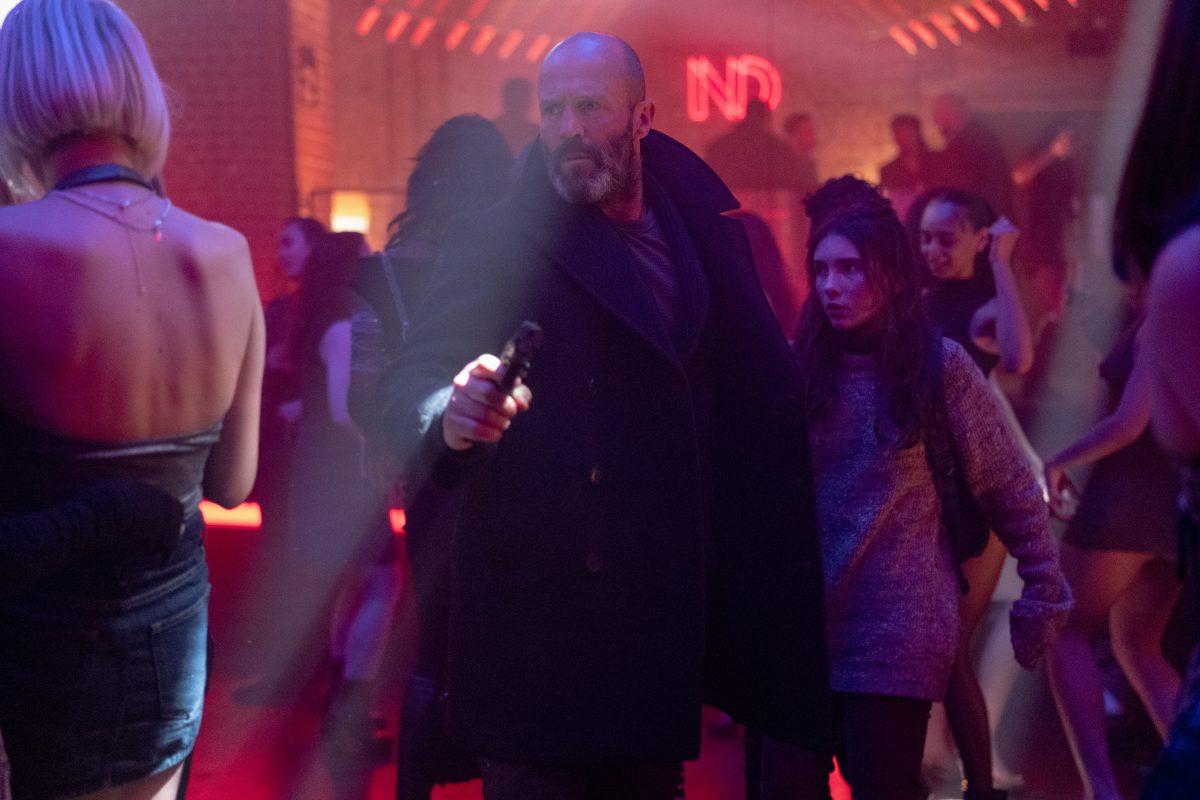
Within the final stretch, the hazy, gloomy depiction of European nightlife strikes similarities with classical neo-noir thrillers with a touch of existentialism, even if there is a club scene that is almost identical to one in “John Wick.” The film industry is better off when Statham is making fun, if disposable B-movies on a regular basis, and “Shelter” falls firmly in the middle of his impressive resume.






![Midsommar [2019]: ‘MAMI’ Review – A blissfully warm nightmare](https://www.highonfilms.com/wp-content/uploads/2019/10/Midsommar-MAMI2-768x384.jpg)

