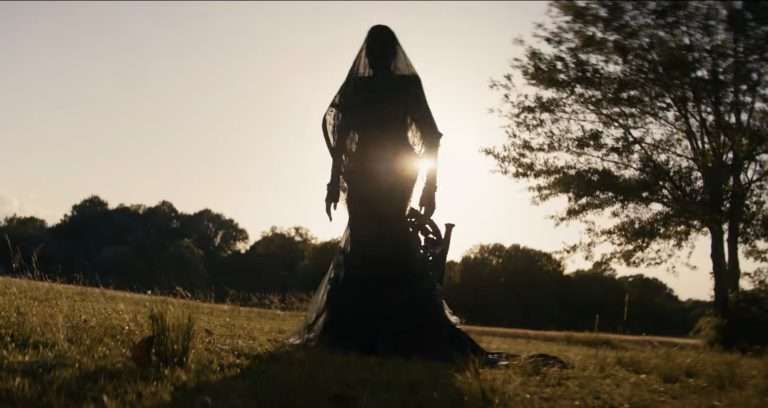
Devastating, invigorating, and cathartic…the 3 intrinsically contradictory adjectives miraculously come together to honestly describe the experience of watching “Sentimental Value” (2025). Helmed by Joachim Trier, the Golden Globes Best Picture Nominee follows the fractured lives of an estranged filmmaker and his two adult daughters as they grapple with decades of absence, resentment, and the very nature of memory and reconciliation. The action unfolds when Gustav, the estranged father of the daughters, once a celebrated film director, returns to Oslo after the death of his wife, Lena, the mother of his daughters. Gustav barges into the lives of his two daughters with an emotional mission: to make a film about his own family’s past and, in doing so, finally connect with his children.
Much like Joachim Trier’s previous filmography, “Sentimental Value” is a brooding, purposeful drama, blending narrative and meta-narrative elements as Gustav’s film-within-a-film becomes a conduit for revealing deeply buried trauma. The film’s ending in particular has sparked intense discussion about whether it constitutes closure, reconciliation, or something more complex. Below, we break down what happens in the climax of Sentimental Value and what it all means, including themes of trauma, forgiveness, and the limitations of human connection.
Spoiler Warning: The rest of this article discusses the ending and emotional revelations of the characters in detail. If you haven’t watched “Sentimental Value” to the very end, we recommend that you watch it first to fully enjoy the proceedings of this article.
Sentimental Value (2025) Plot Summary & Movie Synopsis:
“Sentimental Value” opens after the death of Sissel Borg, the wife and mother who once held her family together. Gustav Borg (Stellan Skarsgård, who won the Golden Globe for Best Supporting Actor), a once-renowned film director who has lived abroad and largely absent from his daughters’ lives, returns to Oslo with intentions of reclaiming the ancestral, severely dilapidated, Borg family home. Though he left years earlier under strained circumstances, Gustav sees an opportunity: he wants to make a film that somehow encapsulates both family history and his own emotional reckoning.
His two daughters – Nora (Renate Reinsve) and Agnes (Inga Ibsdotter Lilleaas) – respond very differently. Nora, essayed impeccably by Renate, is a successful stage actress plagued by stage fright and a tangled romantic life, while Agnes is a historian and a mother whose life has taken a more stable direction. Both the sisters, however, share a deep resentment toward their father for his absence and emotional unavailability.
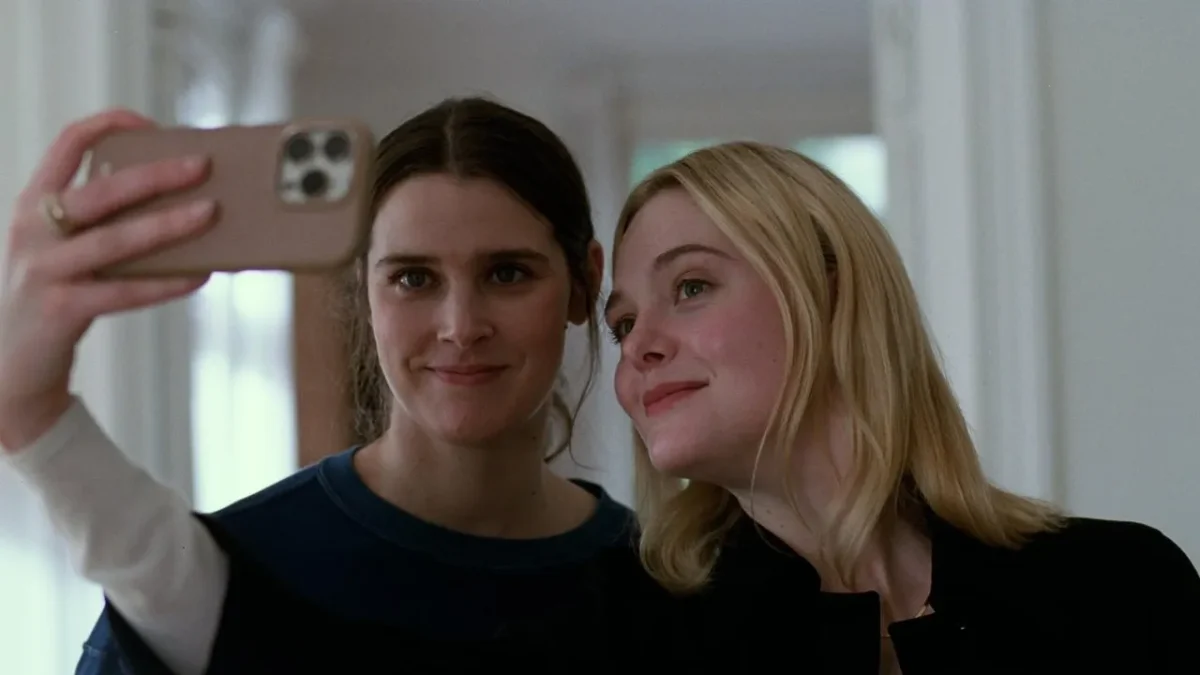
Gustav’s plan to cast Nora in the lead role in his autobiographical film is met with swift refusal. Hurt and suspicious, she walks away, and Gustav seizes another chance by hiring a Hollywood actress, Rachel Kemp (Elle Fanning), whose involvement brings in major funding. As tensions escalate, Nora loses interest in her career, Agnes remains torn between loyalty and judgment, and Gustav spirals into self-destructive behavior. In one moment that encapsulates his desperation and frustration,
Gustav drunkenly flips off the family home, a brilliantly integrated symbol of both his guilt and his unresolved emotional wounds, and collapses, landing in the hospital. It is only through Agnes’s journey into her family’s past, particularly reading her grandmother Karin’s wartime statements in the National Archives, that the emotional core of “Sentimental Value” truly unravels.
She also reads Gustav’s script and discovers that while it draws on Karin’s history, it ultimately mirrors his unspoken regrets about his relationship with Nora. This realization softens Nora and brings her back into the fold, agreeing to star in her father’s film at the very end.
Sentimental Value (2025) Movie Ending Explained:
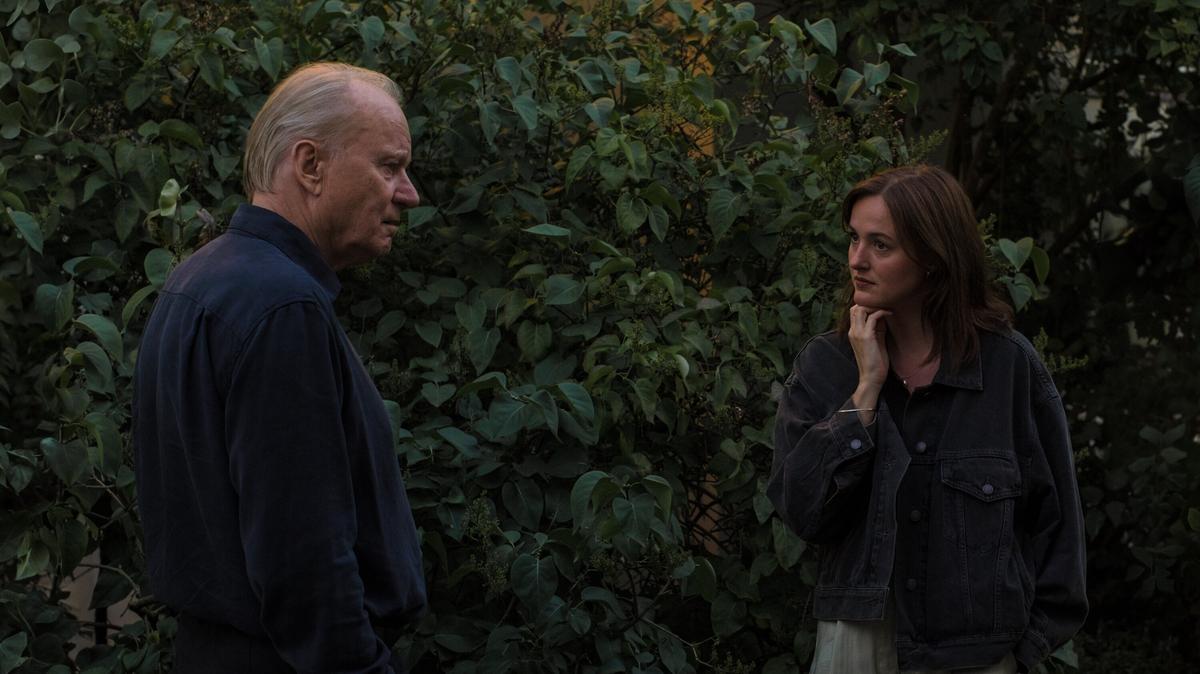
The climax of “Sentimental Value” unfolds in a quiet, lingering way that invites interpretation and reflection. After the production secures new funding without Rachel and moves to a modern sound stage, Nora finally agrees to take on the lead role in her father’s film. In the climactic scene, a long, uninterrupted take where Nora performs alongside her nephew Erik, who plays her on-screen son.
In a masterfully executed single-shot, Joachim crystallizes the film’s emotional purpose: Gustav watches from behind the camera, while commemorating how he was always in the life of Nora, and Nora embodies a character that reflects her own hidden pain and resilience. Through Nora’s point of view, we see her eyes meet Gustav across the set, piercing approval of his father, not in words, but in mutual acknowledgment. This moment is the film’s emotional apex, a silent conversation that communicates far more than dialogue ever could.
As an audience, we do not see a full reconciliation between the father and daughter in a traditional narrative sense. Instead, what we witness is connection through art. Nora and Gustav finally recognize each other’s truths. A barrage of emotions flows through telepathically. While Gustav mourns his lifelong struggle to communicate emotionally, Nora emancipates herself from the long-suppressed wounds shaped by abandonment and familial trauma. Their shared performance becomes a space where they see each other as human beings bearing the weight of history, memory, and unspoken grief.
What Does the Final Look Between Nora and Gustav Mean?
Remember Benoit Blanc’s iconic meme from the first Knives Out series? “It makes no damn sense, it compels me though!” The final look between Gustav and Nora might probably invoke such an indecipherable itch of decoding.
The most talked-about moment in the final scene is the long look exchanged between Nora and Gustav after the final take. This look matters because it opens a door that had long been closed.
Here’s what “THE LOOK” conveys where words couldn’t:
- Recognition: Nora and Gustav finally understand each other on a level neither could articulate.
- Empathy: Nora perceives and resonates with her father as someone shaped by his own unhealed wounds, including silence about his mother’s suicide and his own emotional limitations.
- Shared vulnerability: Gustav has poured his love into a film instead of words; Nora meets him there, in that creative space.
This is not closure in a traditional sense, as the director Joachim Trier himself has emphasized; instead, the ending acknowledges the messiness of human relationships and suggests that healing can occur in moments of shared humanity rather than full forgiveness.
Why Does Gustav Want Nora in His Film?
Understanding the real reason Gustav wanted Nora in his film is central to grasping the ending. On the surface, Gustav believes casting his daughter would lend authenticity and emotional truth to his work. He hopes that collaborating artistically might bridge the gap left by years of silence and distance. But deeper than that, he lacks the language to say what he actually feels. Instead of saying “I am sorry,” he writes, imagines, and directs. His film becomes an attempt to externalize what has been left unspoken for decades.
Nora’s initial refusal is grounded in anger and pure disdain. She recognizes that her father’s offer is tied up with his ego and his need for validation. But when she finally agrees, it is not because she has forgotten her pain, but because she sees herself reflected honestly in his script. It reveals a truth about her own suffering that even she has not confronted openly. In this sense, her acceptance becomes a form of mutual understanding. In a more poetic sense, it could be interpreted as a daughter’s acknowledgment of her father’s existence even in his absence.
What Happens to Gustav After the Film?
Joachim Trier does not show Gustav’s life beyond the final shot, nor does he depict a fairy-tale reconciliation. What we do understand, however, is that he has taken a significant first step toward understanding his children and understanding himself. The act of creating this film, and allowing Nora to take her place in it, becomes a kind of confession: one that does not erase the past, but reframes it in shared experience. The final shot in the film hints subtly that Gustav, despite his flaws, is capable of reaching out through vulnerability and creative expression. It implies that he still has work to do, but that he and Nora have found a space where communication is possible.
Sentimental Value (2025) Movie Themes Analysed:
Why the Ending of Sentimental Value Matters?
As aforementioned, “Sentimental Value” explores how unresolved wounds shape the ways we love and fail to love, and how art can serve as a bridge. From our in-depth interpretation, these three themes emerge most clearly:
Memory and Trauma
“Sentimental Value” periodically traces the ripple effects of generational wounds, from Karin’s wartime trauma to Gustav’s abandonment of his daughters. The emotional legacy of these events shapes every character’s choices and relationships.
Communication Through Art
Gustav’s inability to express love through words pushes him to succeed through filmmaking, a language Nora ultimately understands. Their shared creative act becomes a way of speaking what has always been unsaid.
The Possibility of Healing
The final scene reframes healing not as closure, but as shared recognition. They do not end with a perfect relationship, but they do end in mutual awareness. The silent exchange confirms that connection is possible even without fully articulated forgiveness.
Who Truly ‘Wins’ in the Ending — Nora or Gustav?
In traditional narratives, questions like “Who wins?” or “Who is redeemed?” might make sense. “Sentimental Value” refuses such dichotomies. Neither Nora nor Gustav “wins” in the conventional sense. Instead:
- Gustav learns that his art cannot replace emotional presence, but it can reveal truths he could not speak.
- Nora realizes that confronting her pain does not diminish her, but allows her to engage with her father in a meaningful way.
- Agnes’s insights bridge the generational gap and facilitate the emotional breakthrough that makes the ending possible.
Sentimental Value Ending: Final Words
Dysfunctional family, a sub-genre that has resonated widely across the world, always has a way of tying up family dramas with neat bows. “Sentimental Value” does the very same, but in a more metaphoric way. The film propagates that understanding is not always spoken, but felt. The ending is a testament to the power of art to open pathways between estranged hearts while ensuring that it does not promise that all wounds are healed or forgotten.
As viewers, we are invited into a shared human space where what is said and what is left unsaid are equally significant. Gustav and Nora do not walk away with a fully restored relationship, but they walk away with a moment of true connection, and that, in its own quiet way, is powerful enough to give their story sentimental value.