
You hold filmmakers like Mani Ratnam, Vishal Bharadwaj, and others of their ilk in the palm of your hands. Filmmakers who possess knowledge of the diction and rhythmic specificity of the country can impart into adaptations or templates of Western ideas, coalesced together into something so utterly unique that one could categorically call them original.
For Bharadwaj, that’s just the Shakespeare trilogy. His attempts beyond that trilogy have all yielded intriguing results of varying acclaim and impact. But it is beyond reproach to admit that few filmmakers capture the passion and violent instincts of romance and the human condition quite as poetically and succinctly as Bharadwaj does.
The long-winding preamble is to acknowledge that O’ Romeo is an abject failure. And it brings me no pleasure to state this. It’s the dissection of the failure that is fascinating, once one can move past the bafflement of the storytelling.
Then again, both Thug Life (2025) and O’ Romeo (2026) prove not just veteran filmmakers feeling a bit out of step, as their attempts at storytelling seem to be getting lost in translation, but also that in their attempts to tap into the populist cinema of stylized violence and swagger-shrouded, angry bloodlust-headed heroes utterly comfortable tapping into berserker rages, they lose their own individuality due to the nature of said compromise.
I suppose it is easier to utterly despise or completely forget a movie like “Thug Life” simply because nothing of Ratnam or Kamal Haasan remains within the picture. In that way, it is honest in its utter dishonesty and futility to be remotely entertaining. The disappointment of O’ Romeo stems from the fact that Bharadwaj’s trademarks can be identified in the picture.
Check Out: The 10 Best Hindi Movies of 2025
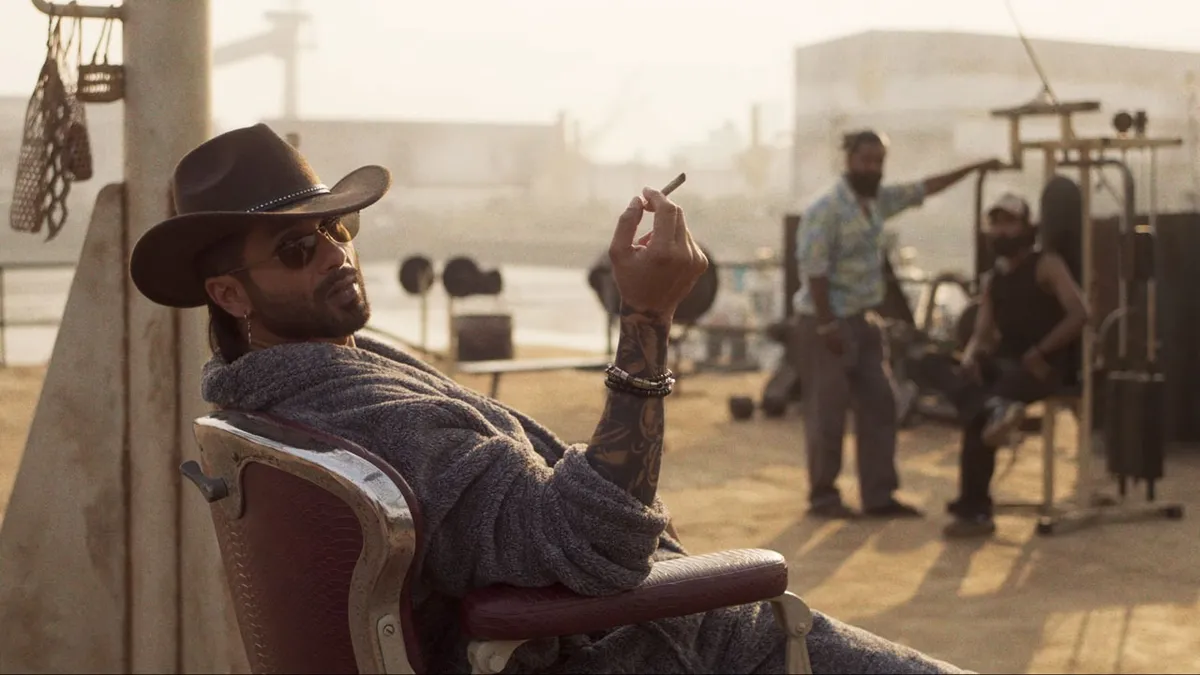
The idea to frame the origin of dreaded gangster Sapna Bibi and put the emotional onus squarely on Shahid Kapoor’s Arjun Ustara, gangster/police informer, is strange in how it is trying to not just reframe history but also, in a way, revise the same history. The idea to then frame Ustara as a gangster who is fiercely dangerous and utterly terrifying completely robs him of any underdog status, precisely because Bharadwaj’s own storytelling clashes with the populist idea of swagger-based heroes whose violence is as much luxuriating on gore as it is on the stylisation of battle, replete with slow motion.
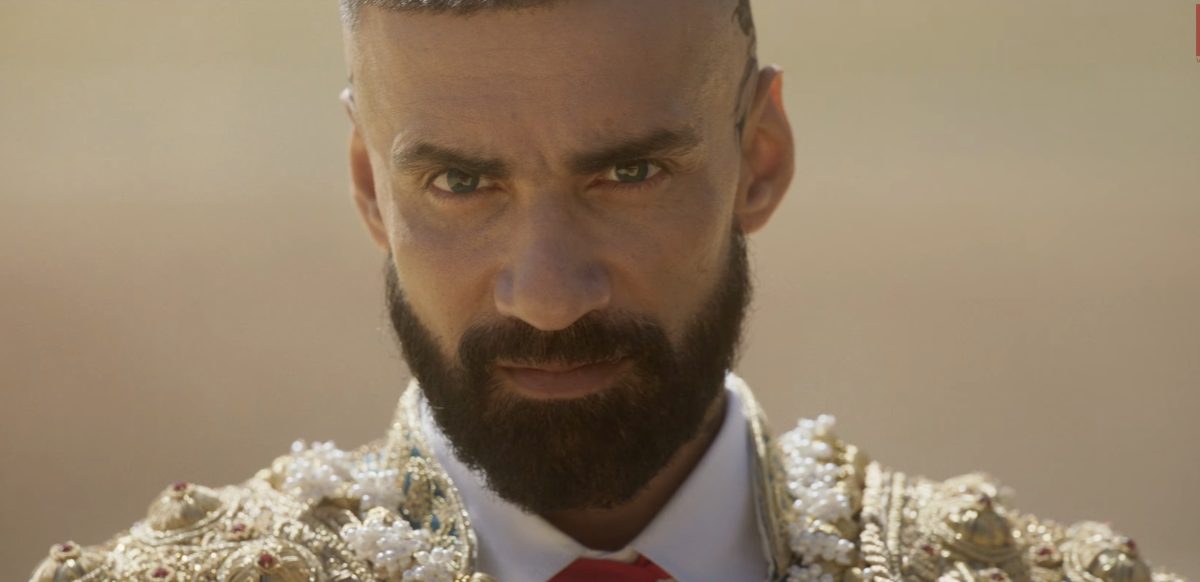
Thus, if one puts Ustara as a person so much in touch with his comic side, his love for films, as well as his own sense of twisted morality, the screenplay fails to provide him any underdog status against his rivalry with dreaded gangster Jalal (Avinash Tiawary), a Dawood Ibrahim stand-in, who has escaped to Spain and is controlling his business within the country from abroad when he is not cosplaying as a Spanish matador (better not to ask; even the film isn’t interested in answering that).
Thus, if Ustara and Jalal are both evenly matched in their attempts at one-upping each other, how does the film attempt, in its most basic form, to make us root for Ustara? By bringing in Dimri’s Afshana Qureshi, the Sapna Bibi stand-in, who, due to the revisionism of the history to provide emotional catharsis within the narrative, becomes both the object of desire as well as the woman with agency allowed to fall in love with Utsara while also rejecting him to go after her revenge.
It is confusing and messy, made messier because none of the emotional beats land. There are singular scenes where poeticism is used as the tool to deliver sermons of love and desire, but Shakespearean melodrama gets lost in the shuffle of templatized plotting with baffling choices of song placement and poorly staged action set pieces.
Also Read: 10 Movies With A Surprising Second Half
Thus, it is some of those singular moments—the first moment of Ustara listening to Ashraf singing, Ashraf’s love story with her husband Mehmood (a decent Vikrant Massey) recounted in extended flashbacks, the banter between Ustara and IB officer Ismail Khan (Nana Patekar) selling their relationship far more than the screenplay could, Ustara revealing the violent end of Mehmood as a way to convince her of the violent deed inherent within her quest for revenge, and the slow but silent acquiescing of Ustara to fall for Ashraf without explicitly revealing it until the tail end of the second half whereby the confrontation of Ashraf and Ustara at her bedroom results in one of those scenes that sound emotionally potent on paper.
The potency, though, is lacking in this movie, lost in this weirdly plotted mess of a film, especially within the second half, where the contrivances of back-stabbing and hidden backstories with barely any registered foreshadowing only further dilute any sense of emotional connection the audience could feel for the characters.
Actors like Shahid Kapoor or Tripti Dimri try their best with the material given, with Dimri reminding us of why she still is one of the more promising actresses of her generation, and Kapoor playing variations of “Kabir Singh” mixed with shades of “Charlie” from Kaminey (2008). A curiously stacked supporting cast has barely enough material to register beyond feeling like glorified extras rather than part of the texture of the world created. A soundtrack that is so forgettable that even key phrases from the titular ballad barely register, much less elicit emotional reaction.
Bharadwaj’s inconsistent stab at poeticism and individuality only provides infuriation, because you can see the filmmaker remembering his old tricks but is squarely disinterested in utilising said tricks to innovate or provide something new. Instead, his attempts to replicate an action-packed romantic gangster drama in the vein of producer Sajid Nadiadwala’s filmography become a tepid misfire, so muted that even the visceral dopamine rush feels utterly hollowed out.





![Tigre [2017]: ‘TIFF’ Review](https://www.highonfilms.com/wp-content/uploads/2017/09/TIFF_HIGH_ON_FILM_tigre_01-768x384.jpg)
![The Curse of La Llorona [2019] Review: Predictable. Forgettable. Mediocre.](https://www.highonfilms.com/wp-content/uploads/2019/07/la-llorona-screenshot-1-768x384.jpeg)