In an age of instant streaming and shrinking attention spans, something intriguing is designed to be unseen. Does that make sense? “100 Years: The Movie You Will Never See” is sealed away in a vault until the next century- a cinematic parallel to the Cognac house’s meticulous, multi-generational craft. The question still remains: is this bold meditation on time a masterclass in brand mythology, or brilliantly executed publicity stunt?
What is “100 Years” about?
A film that might work as a time capsule, “100 Years: The Movie You Will Never See” is a marketing campaign used by Louis XIII Cognac. Just like the Cognac brandy that takes 100 years to come up with an exceptional blend, the film is a 2015 experimental sci-fi film directed by Robert Rodriguez, starring John Malkovich, but locked in a bulletproof vault till 2115.
It is produced to reflect upon the century-long aging process of the brand, keeping the plot secret. What’s more surprising is the level of secrecy being used to keep it stored for such a long time period. This shows how painstakingly cautious steps have been taken to keep its premiere details clandestine.
To make the event more exclusive, it can be accessed with 1,000 metal tickets meant to function as passes to the descendants. The passes are given to selected individuals and will be passed down to generations who are the chosen ones, from this day onwards, to have the sole privilege to watch the film. Yet in a rapidly evolving world, an unsettling thought persists: will theatres exist in 2115?
When will it be released?
It is scheduled for release on November 18, 2115. The safe, located in the Louis XIII cognac cellars in Cognac, France, will automatically open in 100 years. The high-tech vault was displayed at the 2016 Cannes Film Festival and is designed to open automatically on the said date. It has a custom-made timer that cannot be opened without a code or key, specially designed by Fichet-Bauche.
Three teasers for “100 Years.”
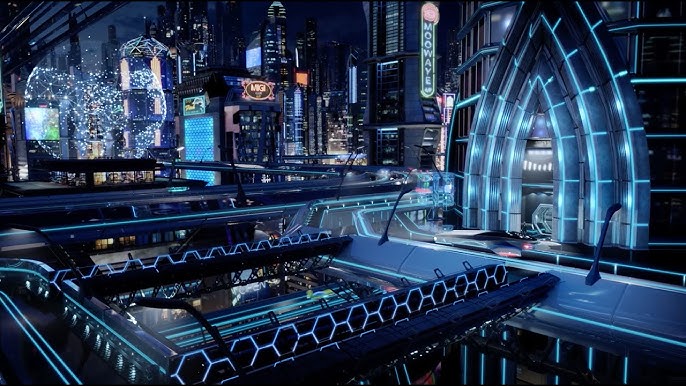
Three teasers for “100 Years” have been released, each depicting distinct 2115 scenarios: a steampunk “Retro” future, a post-apocalyptic “nature” takeover, and a high-tech “future” metropolis. Each teaser has been crafted to give the audience an idea of what the future would look like when the vault opens. The teasers do not mention anything about the film, but the three visions of the futuristic film that our great-grandchildren will be able to enjoy.
Each teaser follows the same narrative arc, though the scenarios differ. It begins with Malkovich carefully placing a bottle of Louis XIII inside a vault, setting time itself in motion. The story then fast-forwards to his urgent return at the moment of reckoning, exactly 100 years later, as the secure vault, fitted with an automatic timer, unlocks the instant the countdown reaches zero.
The female protagonist seen alongside Malkovich is Shuya Chang, as they both hurry down the long corridor towards the safe. The teasers even show Marko Zaror in three different getups, saying, “Hey, what are you guys doing here?” Not showing anything from the film is an even greater mystique, which effectively helps to generate more hype.
Today’s audience may find such a campaign frustrating, even exasperating in its deliberate inaccessibility. Yet for those destined to live in the 22nd century, the film’s impenetrability may feel less like exclusion and more like anticipation- a rare, unfolding experiment that inches closer to reality with every passing day and year.
Visionaries behind the unseen film
John Malkovich is an American actor well-known for his roles in “In the Line of Fire” (1993) and “Con Air” (1997). As per People Magazine, he explained why he signed on to write and star in a film no one alive today will ever see.
Malkovich stated this project to be “forward-thinking” as, “When this idea was proposed to me, I just thought it was a very clever and fascinating concept to do something which, essentially, I will never see.” He describes the short film as a “blast from the past” and isn’t concerned about never seeing it himself, noting that he has worked on several other films he never ended up watching. In fact, the film was a challenge rather than an opportunity for him as he had to address things that should be relevant to the audience of the future.
Robert Rodriguez has made films like “Desperado” (1995), “From Dusk Till Dawn” (1996), “The Spy Kids” (2001 onwards) franchise, and “Sin City” (2005). He was confident that Malkovich’s emotional writing had done justice to the film and would surely “touch people’s hearts” when watching it in the future.
Malkovich shared the concept with several people, and the response was overwhelmingly positive. While many admitted it felt unfortunate that they would never get to see the film, nor know what it truly contains, that very uncertainty only deepens its allure. The mystery isn’t a drawback; it’s precisely what fuels the intrigue.
Reception in 2115: Will the future care?
The true test for the film’s production will start once it is unveiled in 2115. The reception of the film, which is exclusively made for the future generation, is almost impossible to predict. Cultural tastes, cinematic formats, and even the concept of “film” may evolve beyond our imagination.
Having lived through an era before the internet to a time dominated by short-form content that has shaped modern attention spans, we can appreciate that the mystery surrounding the movie’s reception remains inaccessible, too. An audience that is just born, Gen Beta, will turn nearly 90 years old at the time of the film’s premiere. This unique anticipation is the culmination of a multi-generational experiment in storytelling, legacy, and the passage of time.
As this article is written, the clock is ticking in the vault- probably like a time bomb. Currently, marketing researchers are studying key likes and dislikes of Generation Z (1997-2012) and Alpha (born 2010-2024/25). The data obtained for Gen Z people is rapidly changing as they are widely characterized by “digital first” generation, the first cohort to grow up fully immersed in the internet. The same stands true for Gen Alpha, as their learning has been immersed in screens and smart technology from birth.
Marketers are in an ongoing phase of thoroughly knowing both these generations, as Gen Z is still in their teenage years and is expected to evolve with time and changing technology. They exhibit a complex, paradoxical relationship with media, fully engrossed in short-form content. Therefore, the idea of making “100 Years” as a short film is an intelligent choice.
Existing research on Gen Z suggests that this generation favors intense, darker genres that convey a more immersive, authentic experience, while preferring much less explicit content. As per The Hollywood Reporter, Gen Z wants less sex in movies and more content about platonic relationships. It is Gen Alpha that matters the most.
Based on the recent data, Gen Alpha is likely to accelerate the trend and favor emotionally rich, world-building narratives with strong suspense and thematic depth. The enigmatic premise may amplify the film’s apprehension and curiosity, allowing the imaginative scope to connect deeply with Gen Beta of that time in the same manner.
Following Gen Beta will be Generation Gamma (born 2040-2054), for whom the data is completely unavailable. Those will be among the audience of “100 Years,” likely driven by AI-environments, advanced automation, and a focus on sustainability. Animation has been gaining popularity recently, suggesting Gen Beta will continue this trend as a means of “escapism” with synthetic AI-driven experiences. The imaginative storytelling must be an integral part of the media diet that the film could offer, allowing the film to convincingly capture the audience’s attention.
Personal verdict: Success or gimmick?
For viewers who prioritize substance, mystery, and human connection over conventional cinematic tropes, the century-long wait adds another layer of intrigue, elevating the film to the status of a cultural artifact meant for future generations. Whether judged as a marketing experiment or work of cinematic art, it is likely to resonate as a uniquely profound experience for those who will finally see it. I feel “100 Years” is a gimmick that functions as a marketing masterstroke, inculcating long-term thinking with a high-concept publicity to capture attention.
And it sure did!