“In the Blink of an Eye” sees filmmaker Andrew Stranton return with yet another sci-fi tale that speaks about the connections between our past and the future. The director previously analyzed a similar futuristic concept in “WALL·E,” the animated film that he also co-wrote with Jim Reardon. This time, he only takes the directorial reins with a script by Colby Day, who previously wrote the Adam Sandler-led sci-fi yarn, “Spaceman.” Much like that Netflix release, his latest film doesn’t offer anything new in its narrative scope. It is a sweet, but uninspired, and dated contemplation on what connects or separates people across centuries of human evolution.
The cloying sappiness, paired with well-shot digital frames in a near-advertorial gleam, makes it likable on the surface. Yet, it approaches every single theme with a level of mind-numbing simplicity that may have done wonders only in the aughts. In fact, its narrative tone suits the animated films from that era that Stranton has worked on at Disney. Two decades later, it all feels quite pointless and dull – something that desperately tries to tug at your heartstrings but feels far too redundant and surprisingly lifeless. Even the innate charm and acting chops of Rashida Jones, Daveed Diggs, and Kate McKinnon can’t salvage it.
Spoilers Ahead
In the Blink of an Eye (2026) Plot Summary & Movie Synopsis:
What happens in ‘In the Blink of an Eye’?
“In the Blink of an Eye” follows three stories set in three distinct eras of human evolution that intersect when the characters face similar conflicts related to loss, birth, or emotional connection.
45,000 B.C.E. (Before Common Era / Before Christ)
The first story is set at the end of the Neanderthal Era, several centuries before any of us set foot on Earth. It introduces a family of three: Thorn (the father), Hera (the mother), and Lark (the child). It offers a glimpse into their life in those earlier stages of human evolution, when people didn’t have access to things that we now take for granted. So, even lighting a fire was deemed an achievement, years before humans realized its logical roots, and friction became an inseparable part of our lives.
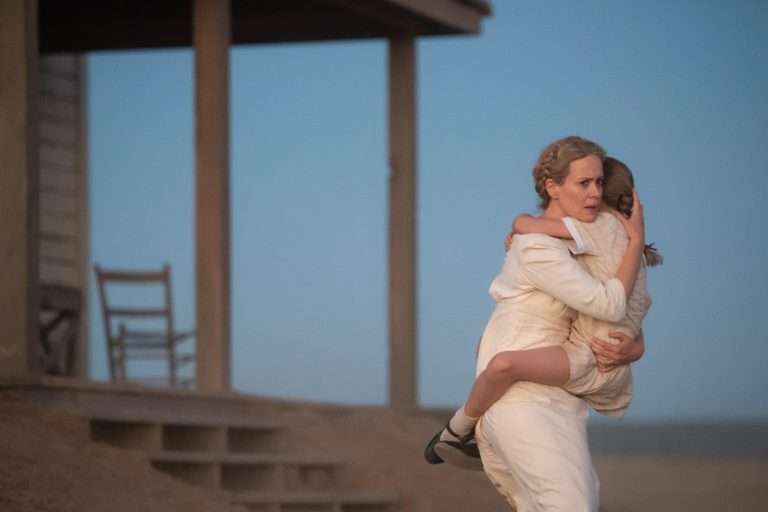
At such a time, Hera gives birth to a baby, only to lose her own life shortly after. Before her death, she healed his wounds to the best of her abilities when he fell from a cliff. So, her departure leaves him dealing with emotional as well as inexplicable physical pains, while raising the newborn with Lark. Eventually, the two cross paths with individuals like them. They make their lives bigger and lead them to realize the joys of communal living. Despite a shaky start with the group, Thorn and Lark soon acclimate to the ways of this bigger family, which offers them new and different experiences.
2020s
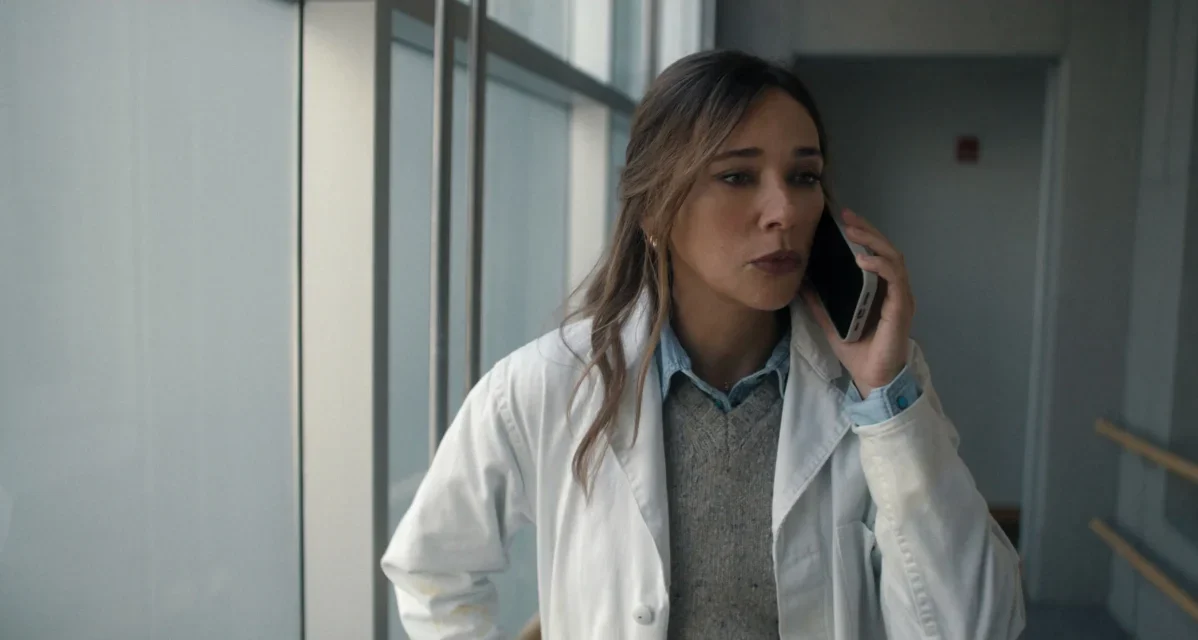
The chronologically second story is set somewhere in the 2020s, when Claire Robertson (Rashida Jones), a doctoral candidate in anthropology, is pursuing her higher education. That’s where she meets Greg (Daveed Diggs) and gets into a relationship with him. They don’t hit it off right away. He tries to woo her, but she seems more invested in her research.
We get only an occasional glimpse at the contents of her work when she spends time observing a skull and other remains of past species and notes down her observations. Anyhow, that research doesn’t hurt their bond. Despite the initial hiccups, everything seems to be going well for them. It changes when she suffers a personal tragedy: losing her mother.
Devastated by this incident, she stays back in her hometown instead of continuing her work at the university. Greg remains confident in their relationship and doesn’t let that physical distance affect the emotional intimacy. Yet, down the line, she doubts whether the relationship is even worth it if they are rarely spending time together. So, they work on their differences after accepting that they love each other. Eventually, they take the next steps in their relationship, which inadvertently helps bring her mojo back.
They start living together and go through the usual motions of romantic relationships. In one such scene, she reveals her hope to move into a different home for the sake of their children. Years later, we see them with their prepubescent kid in a museum, who confronts a tour guide for his lack of knowledge. Claire considers that situation as a way to teach him the etiquette to engage with strangers.
2417 C.E. (Common Era)
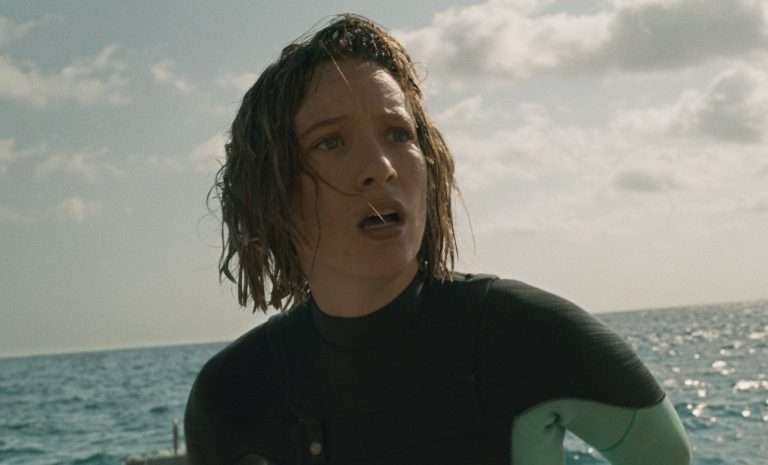
The third story is set in the future and follows Coakley (Kate McKinnon), a human who leads an eternal life. She resides in outer space inside a self-sufficient structure with only an AI co-pilot, Rosco (which looks and feels like a diametrically opposite iteration of HAL in “2001: A Space Odyssey”) to accompany her. Rosco takes care of nearly everything that usually requires human intervention, which keeps Coakley mostly idle while being responsible for her mission of settling on a new habitable planet. Before it happens, she faces a grave dilemma.
The oxygen starts running out because the vegetation inside the ship comes into contact with a pollutant. She brainstorms and comes up with a solution of destroying the potential source of their conflict (the existing palm trees) and then replanting them. Unfortunately, it isn’t feasible because it won’t provide her with the amount of oxygen necessary for her survival.
That compels her to eliminate Rosco from the equation. It saddens her because, for a long time, Rosco’s was the only company she had. Eventually, she fills that emotional gap by giving birth to children through a scientific procedure that doesn’t require her to go through the excruciating pains of labor. That’s how she finds her new human companion, V.
In the Blink of an Eye (2026) Movie Ending Explained:
How do the final moments connect centuries of human evolution?
Toward the end of every story, the script introduces relatable conflicts of parenting. Lark, who once saw Thorn and Hera pay their respects to a dead animal, sees a similar ritual unfolding after Hera loses her life. Once she grows older, Thorn sees her getting married to someone and then having a child.
In the second story, Claire and Greg notice their teenage son’s browser history and decide to have the conversation that people usually have when their kids hit puberty. Coakley teaches V how to operate the ship in case she cannot do her job. As the years pass, V grows up, and so do other children, but Coakley remains the same age. That’s because she is part of the experiment that allows people to live an eternal life. Claire and Greg attend a seminar that introduces an ‘Elixir’ that offers this possibility.
While on their ride back home, Claire asks whether Greg would be interested in living forever, and he says no. In the final moments of this story, she imagines seeing him watering the plants while living her twilight years with her memories of him. Similarly, Lark mourns Thorn’s loss, while Coakley mourns V’s, years after she fulfilled her mission and supposedly gave birth to a new human world. By connecting all these stories, the script tries to depict how humans have evolved across centuries by inventing and adapting to gradual changes, yet retaining the capacity to feel for those they lost.
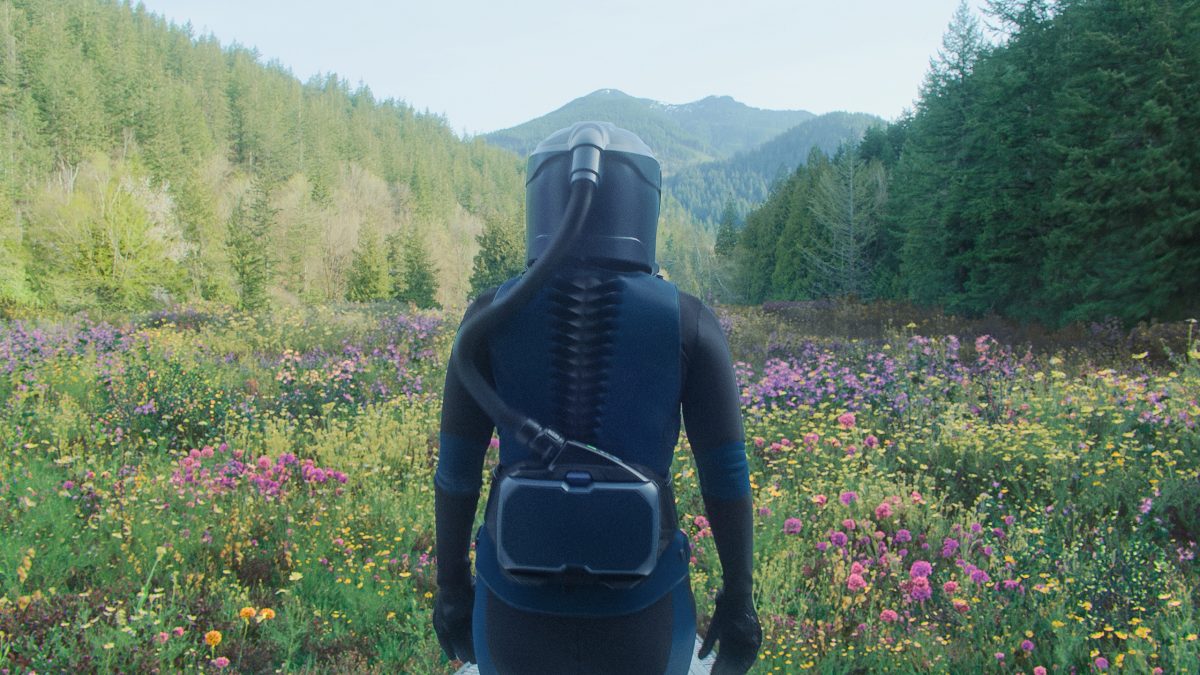
Lark experiences life after losing her father, Claire experiences a similar stage of life after losing Greg, while Coakley experiences it through the loss of her children and the AI tool that accompanied her for a long time. Instead of our past and present, when life seemed to be as limited as ‘a blink of an eye,’ the future offers new opportunities, according to Day’s script. The makers tie all these narrative threads in a characteristically sentimental montage that feels closer to a collection of superficial template photos we used to see on those Archie greeting cards.
In the Blink of an Eye (2026) Movie Themes Analyzed:
Mortality, Evolution, and Human Connection
The script introduces new possibilities for life through different stages of evolution, leading mortality to be something people can overcome if they choose to. Greg doesn’t choose it, but Coakley either chooses it or is required to choose it. The script doesn’t dive into the specifics of their past to give us a better idea of their present. That’s why every concept gets reduced to its surface-level understanding. Even a connection between human inventions across centuries doesn’t break any new ground and pales in comparison to films released decades ago.
Does this mean the film is subtly highlighting that we are devolving? Its sweet tone doesn’t exactly suggest that. The issue with ‘script being simple’ is not the kind that people usually have with mindless action or rom-com projects. If you’re analyzing themes of human intellect and emotional connection, it should factor in human reality and not be a sugar-coated fantasy. Nowhere does the film discuss how tragic it would be to depend on an external system instead of our own intellect to accomplish anything and everything.
Even now, seeing people relying on chatbots is tragic because that dependency is closely monitored and monetized by oligarchs with an endless hunger for control. That could have been a better segue for the film into its discussions about immortality, which, even if realized as a possibility, wouldn’t be as accessible to the majority of the human population as the film indirectly and naively expects you to believe. Instead, the AI grifters have been shamelessly advocating for even more human exploitation.
Yet, the script presents it all through the dewy-eyed lens, even when the said fairytale might be attainable to only a select few. Ironically, the film is directed by a person who co-wrote the 1998 film, “A Bug’s Life,” which, in a nutshell, is about workers rising together against a greedy industrialist. In his latest film, people seem a little too content with the comforts and small joys of their lives, so the demise of planet Earth, to them, seems like a sweet dream, not a wake-up call to an urgent crisis.