
Josh Loeb’s debut film, “In Spite of Ourselves,” centers around two people who help each other realize their true potential while falling head over heels in love. It’s the kind of romance that feels instantly gratifying and innately charming — where you don’t have to make much of any effort to understand why the two lovers value each other’s presence so much. Yet, it relies on a tried and tested formula that has lost its appeal. There’s no novelty in seeing a similar kind of romance unfold on screen, unless there’s something deeper to discover beyond the tropes. Loeb’s film doesn’t offer much in that regard.
In its early moments, it introduces one of its protagonists, Hannah (Conor Leslie), working on some bakery products in a professional setting. Her haircut, paired with yellow-tinted shots (that make it all seem like it’s drenched in a warm glow of sunlight), feels quite similar to Jean-Pierre Jeunet’s “Amelie.”
Loeb doesn’t portray Hannah as a daydreamer like Audrey Tautou’s character, but he seems intent on bringing a similar dreaminess to his narration that Bruno Delbonnel’s cinematography brought to Jeunet’s film. Yet, instead of indulging in the vibrance of its tones, it tries to distill an autumnal tone filled with reds, greens, and yellows.
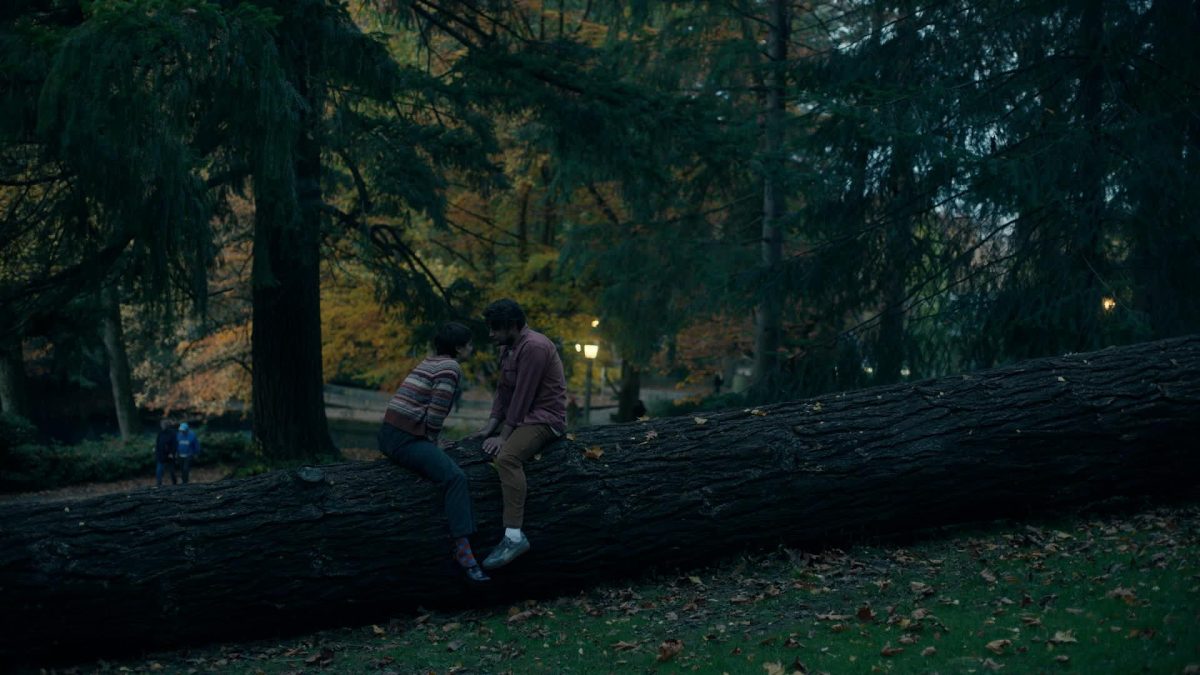
The result is predictably sweet and cosy, making you want to spend time with its characters solely through its visual palette. Still, while the appeal is there, the film falters when it comes to bringing something unique through its string of genre cliches. Its lead characters, Hannah and Archie (Brett Dier), find each other in a quirky meet-cute moment. He drops by her restaurant to get a cinnamon roll just when they run out of them. While he doesn’t get the roll, he gets instantly smitten by her presence. That introduction is enough to make you realize the amount of cutesiness that the film will subject you to.
Luckily, the film has charming leads at the centre, who know how to maintain their fizzy charm without going overtly cheesy. That makes some of its cliches work adequately well. Yet, it doesn’t suffice for a script that doesn’t develop its characters enough. If we’re to go by the film’s analogy, the film is surprisingly underbaked. Baking, unlike other forms of cooking, requires you to adhere to specific proportions. If not, you can’t salvage it. Loeb overdoes the sweetness in this recipe, while forgoing a process to let it all breathe organically.
After Hannah and Archie’s first interaction, the plot follows a usual rom-com trajectory of them breaking apart to realize something deeper about each other, only to fall back in love. Eventually, things get complicated due to some emotional baggage from their personal lives. It makes them confront what they truly mean to each other. It’s a sweet but highly familiar thought that can work only if the characters are intricately rendered on the script level. That isn’t the case with this script, where catharsis feels like an inevitable part of the structure, not a thoroughly believable part of their individual journeys.
The issue comes right from the way the film portrays their professions, which are an integral part of their identity. Hannah is a baker, while Archie is a stand-up comic. The film could have relied on the beauty of baking procedures to reveal its magic, similar to what Tran Anh Hung achieved in “The Taste of Things” through sumptuous shots of cooking. Instead, it introduces an inner monologue that presents surface-level musings about the whole process as profound, which actually dulls the impact instead of elevating it.
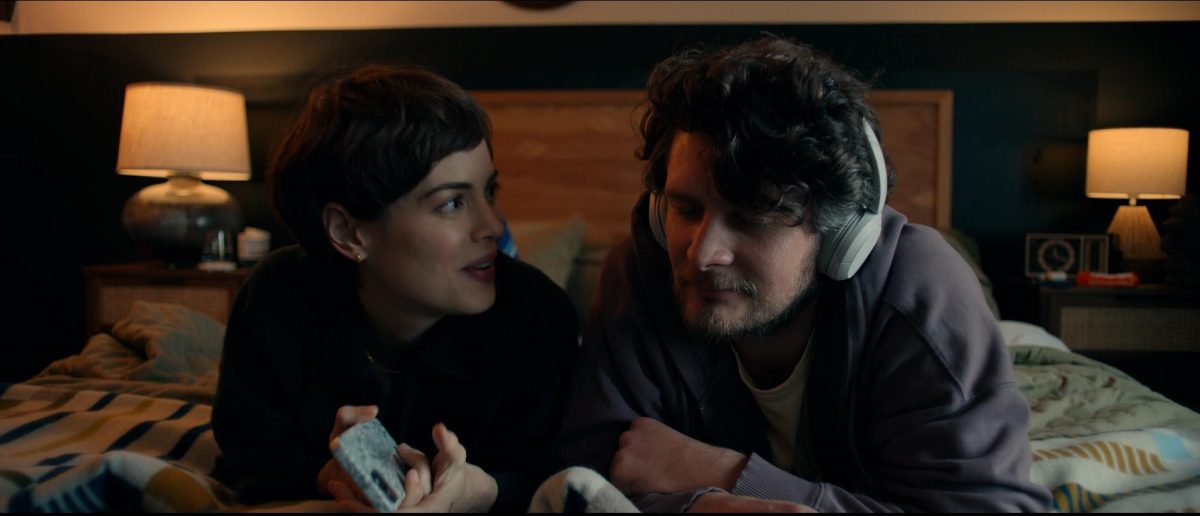
Even the stand-up act feels far from convincing. Many on-screen portrayals of comics, in general, suffer from this issue and fall flat because they can’t summon the magic of spontaneity on a stage. Will Arnett and Bradley Cooper still managed to conjure something visceral within that realm in “Is This Thing On?” and offered what’s close to the experience of an actual gig. Compare it with Loeb’s film, and Archie’s routine falls embarrassingly flat. It shows Archie telling a bunch of jokes with half-hearted segues, where you might laugh only because you feel pity for him.
There’s definitely more happening in the story, with Archie overcoming his fear of embarrassment and an onerous responsibility, and Hannah overcoming her imposter syndrome, explored through a few gently affecting moments. Yet, they don’t suffice for a film that often relies on mushiness to touch your heart instead of emotional depth and novelty.
That’s also why the film feels comforting in the moment, but leaves you with nothing memorable. That isn’t the fault of either Leslie or Dier, both of whom are a delight to watch on screen and are sincere in their work. It’s a shame that they feel stuck in a comfy-looking but vastly forgettable rom-com.



![Dasvi [2022] Netflix Review: A Two-Hour Long Dud that Flunks the Boxoffice Test](https://www.highonfilms.com/wp-content/uploads/2022/04/Dasvi-Movie-Review-1-768x432.jpg)

![Wazir [2016] : Check & Meh!](https://www.highonfilms.com/wp-content/uploads/2016/01/wazir.jpg)