Yu-Han Tsai’s latest short film, “Dua Ji,” offers a closer look at a woman mourning her mother’s death at a place she stayed for most of her life. So, first and foremost, it’s a portrait of grief in a patriarchal society that doesn’t allow her emotions a room to breathe. Yet, it also sheds light on the psychological aspects that Joachim Trier addressed in “Sentimental Value,” despite being set in a vastly different part of the world. Trier’s film explores our complicated relationship with the places we grow out of but never leave behind, as they hold a special place in our hearts and leave us with an emotional residue to deal with.
Tsai’s film explores its protagonist’s relationship with the house she grew up in through a similar prism, albeit revealing a few different layers than the Nordic film. The key difference is that it takes place in a rural East Asian town, where orthodox patriarchal rituals bluntly dictate how people express their emotions.
That’s why Tsai’s script isn’t merely about the familial concerns that show face in these delicate situations, but the underlying cultural connotations based on gender norms. In this case, the protagonist isn’t afraid to express her emotions due to internal chasm as much as societal expectations. That’s why the film becomes one about her silent rebellion against the norms, while expected to behave a certain way as a woman.
Kuei-Mei Yang plays A-Hsien, the lead character, who is introduced in a dimly lit hallway, all alone. She walks across the way, turning on lights in every room, likely to check if they are working fine before her family arrives. It introduces the world around her as dark and quiet, but doesn’t paint it in any specific emotion right off the bat.
That offers the script to paint more layers beneath her silence through subsequent narrative strokes. The following beats include her siblings returning home in a manner that instantly offers a peek into the aspects of a Taoist funeral. The peculiar way she ushers them to the house feels like a way to connect birth with death — like a young child crawling back to their parents.
While revealing this mode of dealing with grief, the film doesn’t restrict itself to being a cultural snapshot of Taiwan. It remains focused on fleshing out A-Hsien’s interiority through her reaction to every single event in the immediate aftermath of their family member’s death. Sometimes, she remains an active participant, while other times, she is a silent spectator. Her silence also has its own shades. Sometimes, it’s because she is not allowed a say in some matters, while other times, it is her calculated decision against an awkward, uncomfortable interaction.
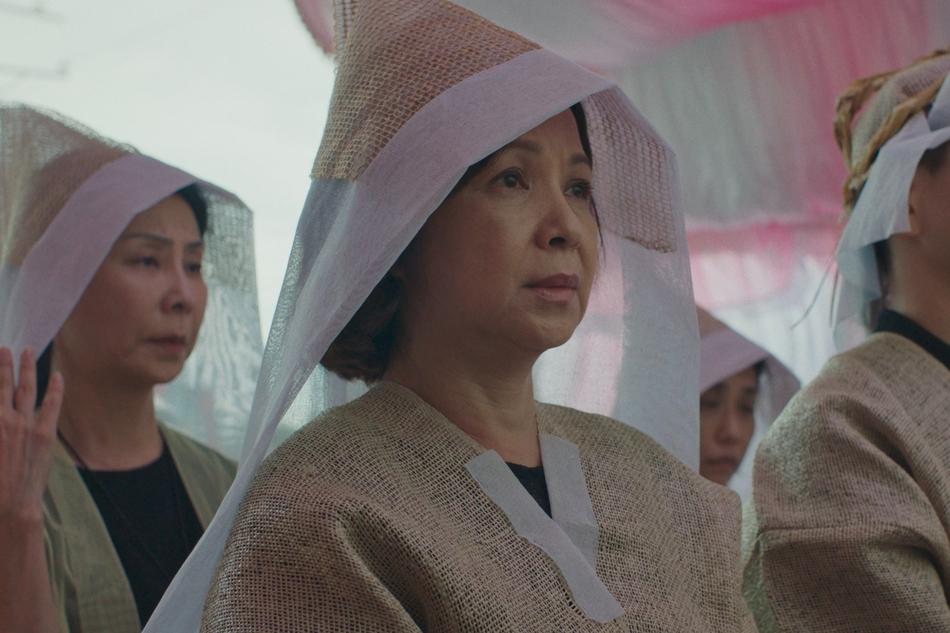
Tsai’s script keeps the exposition to a bare minimum, instead letting Yang’s expressive face do all the talking. The camera remains focused on her face, revealing how she processes the gradual changes in her life after her mother’s death. Tsai works with only a handful of scenes within the film’s limited duration, but chooses them so carefully that they leave plenty to contemplate afterward.
The script analyzes A-Hsien’s anguish in a few contexts. After all, she is a woman, but also an older sibling, and the one who stayed with her mother to take care of her while others left the town to lead different lives. So, by an archaic logic, she is deemed the one stuck in her old life, while others followed the conventional path of growing out of their formative selves. That’s why she is taken for granted for the most part and is considered sentimental, while others are considered rational, as they stay content in the way things are. Her refusal to abide by normative ways of womanhood, directly or indirectly, puts her under scrutiny even by her family.
Murdo Barker-Mill’s cinematography remains crucial in conveying her painful alienation in the vast, empty spaces through a meticulous blend of wide shots and close-ups. Moreover, the clever decisions in the sound design elevate the effect of its evocative moments through a precise use of sounds like near-guttural screams or through seamless transitions between the sound of flames and water, among other things. They help make it a more lived-in experience.
Besides them, Kuei-Mei Yang’s performance deserves praise as she conveys plenty of detail, even through something as simple as her watchful gaze. That isn’t surprising considering her exceptional body of work. She has been central to the cast of Tsai Ming-Liang’s bleak, meditative projects and has also been one of the three stars at the centre of Ang Lee’s “Eat Drink Man Woman.” Her neatly pitched performance becomes the quiet force behind Dua Ji’s thematic communication.
It becomes vital to Tsai’s understated directorial approach, which works with a deliberate, unhurried pace, backed by a script without any fluff. That watertight structure makes the short gently rewarding, as it conveys A-Hsien’s fuming pain that restricts her ability to feel things as she wants to, while being considerate with her cinematic choices.




![House By The Lake [2017] : A Lovecraftian Take On Broken Relationships](https://www.highonfilms.com/wp-content/uploads/2017/12/Fish-Man-and-Amiah-Walking-Into-Water-5-768x432.jpg)