Motherhood is a choice. This narrative has been highlighted by so many cinemas all over the world for eons. Cinema has always been a platform through which many artists protested against forced motherhood. However, a subject that occurs frequently in real life but is less talked about in films is when a woman chooses motherhood willingly, yet the immense pressure and impractical expectations of society crush her every day. A mother can adore her child, but the burden of responsibilities can make the same mother question her choice to become a mother and her ability to carry on with this journey anymore.
The life of a mother can be equated to the pendulum of a clock. If the right side represents her own life, the left side represents her maternal responsibilities. She constantly swings from left to right, then right to left. She is unable to spare a little time for herself. Because society has given a mother the status of a Goddess. Ironically, she just possesses the duties of a Goddess, not the power. Mary Bronstein demonstrated this miscellaneous disposition of motherhood in her latest work, “If I had Legs I’d Kick You” (2025).
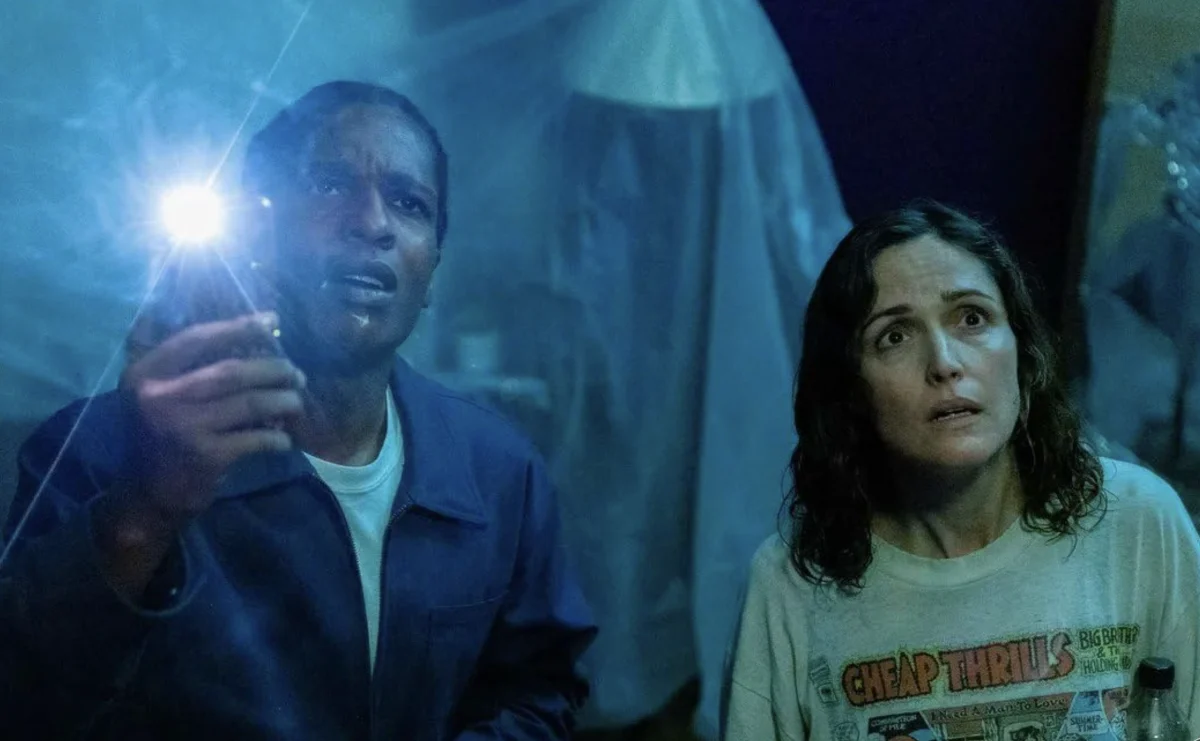
The 2025 A24 production “If I had Legs I’d Kick” You dealt with the darker side of adulthood and the unspoken challenging features of motherhood. The upsetting plot and the vibrant color grading were contradicting each other, and that created a more disturbing experience for audiences. Moreover, the subtle, eerie humor and quirky characters made the journey captivating for us from the very first shot. One of the X factors of the film was the stellar lead performance by Rose Byrne. She was unapologetically vulnerable and unreservedly honest on screen for every single second.
The story stayed with me for days after watching because of the truthful exposition of a mother who was lost in her journey of saving her child. Dealing with her daughter’s severe malady and professional and personal problems, Linda, the lead character, lost her grip on herself more and more as we approached the ending. Despite having inexhaustible love for her daughter, she started feeling that the weight of maternity would soon vanquish her. There is a grey area where the vivid line between motherhood and womanhood blurs away, and this is exactly where “If I Had Legs I’d Kick You” stands.
Linda: What Made Her Human?
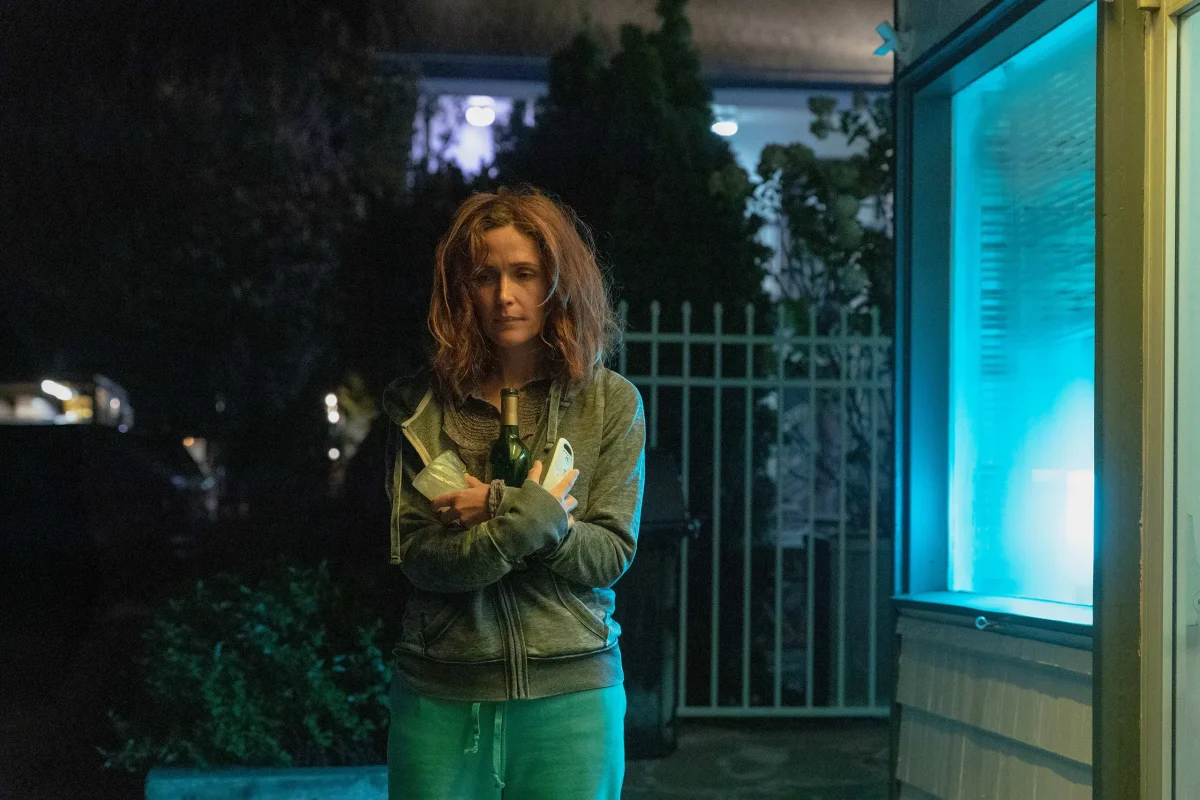
If we are told to imagine a mother figure, what is the image that pops into our heads immediately? We view a selfless woman with a heart of gold who has a wide smile on her face. A mother never gets weary. She never complains, never sleeps, and hustles 24/7 in order to shield her child from the deadly world. This is the notion of motherhood that has been depicted to us by films, books, artworks, and so on. However, Linda stood on the opposite side of this idealization. She was a middle-aged therapist who was struggling both personally and professionally.
Must Check Out: The 50 Best A24 Movies
Linda has an absent husband who is constantly questioning her every decision, and her therapist is also emotionally unavailable and hostile towards her. She did not have a proper place to live. Her daughter’s doctor is inconsiderate of her situation and behaves impolitely to her as if Linda were an irresponsible mother. On top of everything, a patient of hers goes missing in the middle of a session with her. None of these made her journey any easier. Linda did not have an impeccable motherly image.
She smoked, drank, yelled, cried, yearned, and was angry with the ignorant world around her. Her frustration seemed valid, and the realistic portrayal by Rose Byrne made the exhaustion of Linda so intense for me that I felt uneasy watching some scenes. Bronstein did not push Linda to achieve the goal of flawlessness as a mother; rather, she embraced Linda’s honest and relentlessly outspoken personality.
The Struggle of Working Mothers
Women’s freedom and their financial stability have always been interconnected with each other. It has been promoted to us for many years that if women got education and got the opportunity to pursue their passion, they could go anywhere and do anything. Nevertheless, the reality is drastically different. Most of the working women manage both inside and outside on their own. Linda was handling her profession and her daughter’s treatment concurrently. Still, she was not enough.
In one scene, Linda’s husband Charles screams at her over the phone, saying that she is doing nothing all day as she is just sitting on a chair and listening to people’s problems while he is actually enjoying a game at that time. Charles was absent for eight weeks, giving all the loads to Linda, and pretending that he was the one who was doing the actual work.
Linda represented the endless struggle of women, that there is no escape for women. No amount of success, strength, or financial capability can make a woman emancipated from the never-ending shackles of unrealistic expectations created by society. People easily point out the shortcomings of working mothers by using their work as an excuse and demeaning their contributions.
Self-Doubt and Grief
A particular scene that made the internal conflict between Linda’s love for her daughter and her inner unsettling thoughts explicit, where she sobbed during a therapy session and explained her past experience of abortion. Linda, being overburdened with frustration, expresses how she doubts her choice of becoming a mother. She vulnerably says that she aborted a child when she was in college, and then she was stuck with a sick child. She doubts whether she saved the wrong one. Here, Bronstein makes the character as transparent as it could be. She did not filter out Linda’s emotions to gain sympathy from the audience.
Many mothers out there feel like Linda in their hard times when they have to figure out everything by themselves. In addition to that, they are not allowed to say what they actually go through. Linda was not an evil mother. She loved her child with all her heart and gave her the most she could. In their time of deepest despair, human beings sometimes cannot like what they actually love the most in their lives.
This is the absurdity of life. The tendency that has been practiced for years to purify mothers was directly challenged in this scene, and for a few moments, we could dive into the realest version of Linda, who mirrored most of the mother’s inner voice. Linda was written as a hug to the struggling mothers out there, which they did not even realize they needed!
Also Related: The 40 Best Movies of 2025
The Story of Caroline: The Portrayal of Shared Struggle
Caroline, a patient of Linda, appears on screen as an anxious mother who is in constant panic for her baby, Riley. The overprotectiveness of her seemed a bit unsettling to me from the very first second. The director, Mary Bronstein, did not make it clear what Caroline’s main problem was in the beginning. Afterwards, in a specific scene, Caroline called Linda late at night, thinking Linda was worried about her and she wanted to make sure to Linda that she was okay. Linda, being annoyed, told her not to call again on her personal number unless there was an emergency. This incident made it clear that Caroline was lonely and wanted some validation from someone.
Caroline going through postpartum depression, is in denial of having a hard time with the baby and tries to cover it up by overdoing care. Since she can’t handle it any longer, she gives up her child to Linda in the middle of a session. Unable to handle Riley’s endless crying, Linda calls Caroline’s husband and discovers that he has no clue that Caroline was in therapy in the first place. That indicates the distant relationship Caroline has with her husband. Caroline’s breaking point comes when she realizes that she was not the ideal “mother material” type, and the shame of not being inherently good at being a mother made her run away from everything, even from her own child.
Caroline shows us how the lack of emotional support and a safe place to rely on could destroy a mother’s sanity. Caroline did not just play a supporting role in the film, but she was crucial to making Linda’s journey understandable to us. They were like mirrors to each other. We could see one’s reflection in the other. As they both could not take any more, they both went to the sea. In there, their struggle and sorrow washed away in the water. The two stories were not similar, but they beautifully complemented each other.
Many can argue about several aspects of “If I Had Legs I’d Kick You” (2025). However, to me, this film did not reach the level of perfection. The honest portrayal of Linda moved me from the core. The film’s ending scene left a deep impact on me. Linda, lying exhausted on the seashore, delivers her final line to her daughter: “I’ll be better. I promise.” It provides a quiet, beautiful sense of closure to her character and to the bond she shares with her daughter.
“If I Had Legs I’d Kick You” did not try to entertain us with a particular story. The film began in the middle of a journey of a mother, and it ended in the middle. We could not know what ending she had, whether happy or sad. Nevertheless, in this journey, we saw a mother who was brave, unyielding, and truthful to herself and to her child. As a film lover, I want to see more characters like Linda who would hold every woman tightly and whisper to them, “You are not alone in this journey. We are with you”.





![Judas and the Black Messiah [2021]: ‘Sundance’ Review – Daniel Kaluuya is electrifying in this powerful and relevant tale about the BPP](https://www.highonfilms.com/wp-content/uploads/2021/02/Judas-and-the-Black-Messiah-Review-2-768x432.jpg)