“Su From So” (2025) is not really about a ghost. It pretends to be about one, but slowly, almost quietly, it reveals something far more unsettling. The fear in Marlur does not come from spirits. It comes from people. From beliefs, from a system so deeply ingrained that even the victims begin to accept it as fate.
At first, the film feels like a harmless social comedy. A village full of odd characters, harmless gossip, and exaggerated reactions. But beneath the humor lies something darker. Something that only becomes visible when the laughter fades. And at the center of it all is a lie. A lie that somehow becomes the only truth that matters. Why did Ashoka pretend to be possessed in the first place?
Spoilers Ahead
Su From So (2025) Plot Summary & Movie Synopsis:
Ashoka was never meant to be a hero. He wasn’t even meant to be important. He was just a man who made a mistake. A shameful one. After a wedding celebration, when the village was still buzzing with noise and celebration, Ashoka did something he should not have done. He peeped into a private space where an old woman was bathing.
It was an act driven by impulse, by entitlement, by a mindset that the film subtly criticizes later. But the problem wasn’t just the act. It was the fear that followed. When the villagers discovered that someone had intruded, panic spread. There was talk of fingerprints, of police, of consequences. For Ashoka, this wasn’t just about embarrassment anymore. It was about survival.
So he returned to the scene, trying to erase the evidence. Trying to wipe away his mistake, quite literally. But this is where things spiraled out of control. He was caught. In that moment, when two men grabbed him and dragged him into the chaos he had created, Ashoka made a choice. Not a moral one. A practical one. He acted.
He twisted his body, changed his voice, and began behaving erratically. What started as panic quickly became performance. And in a place like Marlur, where superstition often overpowers logic, that performance found its audience. The villagers didn’t see a guilty man. They saw a possessed one. Ashoka realized something crucial. If they believed he was not in control, then he wouldn’t be held accountable. The blame would shift. From him, to something unseen. So he leaned into it. Not because he believed in it, but because everyone else did.
Why did the Exorcist Karunakara Make Things Worse?
Marlur is not just a setting. It is a reflection of a mindset. It is a place where respect is not earned through knowledge but through perception. Where Ravi Anna, an illiterate yet kind-hearted man, is the most trusted voice. Where logic exists, but only up to a point. After that, fear takes over. When Ashoka slapped Ravi Anna, something impossible happened. Nobody dared to touch Ravi.
He was that respected. But now, someone had hit him. This could not be explained. So it had to be supernatural. The villagers chose the explanation that protected their understanding of the world. Because accepting the truth that a man like Ashoka could act out of impulse and still challenge authority was more uncomfortable than believing in a ghost. This is where the film subtly shifts. The possession is not just Ashoka’s lie. It is the village’s need.
Karunakara enters the story as a solution. But he is not one. He is a man who thrives on belief. A former TV astrologer who has lost relevance, he sees in Ashoka not a problem to solve, but an opportunity to survive. He doesn’t question the possession. He amplifies it. The rituals he suggests are not just absurd. They are dangerous. Rolling a man on burning coals. Forcing him to consume disgusting mixtures.
All in the name of expelling something that does not exist. But Karunakara is not entirely to blame. He gives the villagers what they want. Validation. Because in Marlur, truth is less important than reassurance. Karunakara reassures them that their fears are real. Even when Ashoka tries to step back, tries to return to normal, the village does not allow it. Because by then, the possession has become bigger than him. It has become a narrative, and narratives are harder to break than lies.
Why did Bhaanu believe Ashoka was her mother?
The moment Karunakara names the spirit, Sulochana, from Someshwara, the story gains direction. Until then, the ghost was vague. Now, it has an identity. A past connection that leads to Bhaanu. Sulochana was her mother. A woman who had died years ago, leaving behind a daughter who now lives alone in a house that carries more pain than memory.
Bhaanu is not introduced with noise. She is introduced in silence — a silence that speaks of years of suffering. Her uncle, Gopala, is not a villain in the exaggerated sense. He is worse and real. A man who drinks, who abuses, who violates, and yet continues to exist without consequence because society allows him to. And Bhaanu? She is blamed, labeled, and dismissed. Because in Marlur, a woman’s suffering is often seen as her fault.
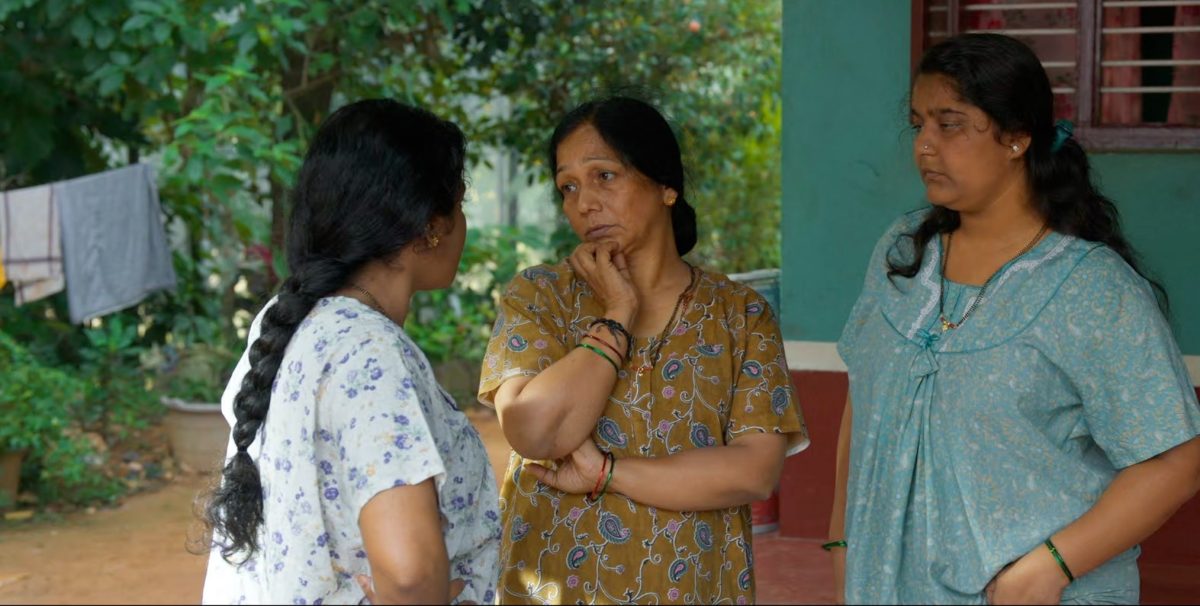
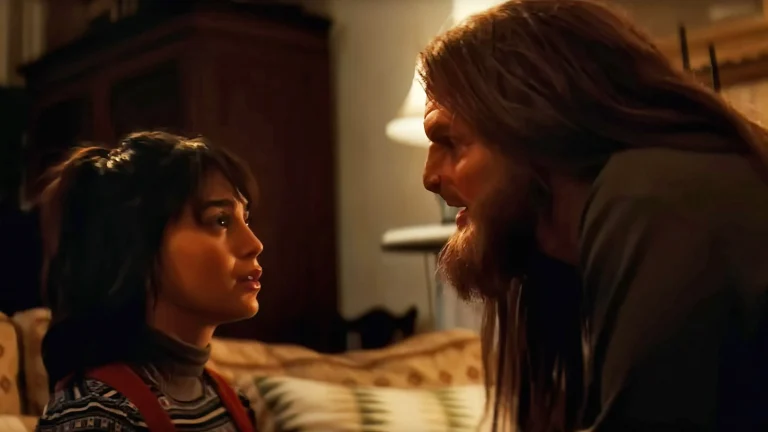
This is where the film stops being a comedy. Bhaanu does not see Ashoka. She sees Sulochana. She speaks to him as a daughter would, confides in him, and shares her pain. And for the first time, someone listens. Even if that someone is pretending. For Bhaanu, the truth does not matter. The comfort does. And in one of the film’s most heartbreaking moments, she asks her “mother” to stay. Just a little longer. Because she has no one else. That moment changes Ashoka. Because for the first time, he is no longer acting to escape punishment. He is acting because someone needs him to.
Why did Ravi Anna choose to stand with Bhaanu?
Guilt is a powerful force. Ashoka begins to see himself not just as a victim of circumstances, but as part of the problem. He remembers his own actions. His own objectification of women. And suddenly, Bhaanu’s suffering is no longer distant. It is personal. So he makes a decision. If the village believes in a ghost, then he will give them one. But not for himself, for Bhaanu. Dressed in a saree, embodying Sulochana, Ashoka transforms the lie into something purposeful. The same superstition that once protected him now becomes a weapon.
He uses fear. But this time, against the right people. When he rides Ravi Anna’s scooter in that avatar, it is not just a visual spectacle. It is a statement. The village that once created this illusion now stands frozen before it. Because now, the illusion has power. Ravi Anna is an interesting character. He represents the good within a flawed system. A man who is respected, who is kind, but who has also been complicit in the past. He once rejected Bhaanu. Not because he wanted to. But because his family did, and because society dictated it.
He went along with it. That regret stays with him. So when Ashoka takes a stand, Ravi follows. When Gopala and his men attack Ashoka, Ravi steps in to try to correct a mistake. He declares that Bhaanu will come with him. That she will not be left behind. It is not a grand heroic moment. It is a quiet act of responsibility. Sometimes, that matters more.
Su From So (2025) Movie Ending Explained:
What Happened in the Post-Credit Scene, and Why is it Important?
The film does not offer easy redemption. Gopala is exposed, humiliated, and confronted. But does he change? Probably not. Because men like Gopala are not shaped by a single event. They are shaped by a system that protects them. And unless that system changes, they rarely do. The film leaves this deliberately unresolved. Because the problem is not one man. It is many. Ravi Anna decides to marry Bhaanu. Not out of pity, but out of respect. It is his way of giving her what she was always denied: a place, a voice, a life. But even this comes with irony.
Because Bhaanu, an educated woman, finds herself grateful for something that should have been her right all along. That is the tragedy. And then there is Ashoka, who, despite everything, occasionally slips back into his act. Using the “possession” to his advantage in small, almost humorous ways. It is funny. But it is also telling. Because it shows that while moments can change people, habits take longer. Sometimes, even the ones who learn don’t fully let go.
Comedy lowers defenses. It makes you laugh. While you are laughing, it tells you something uncomfortable. “Su From So” understands that. If it began with Bhaanu’s story, it would feel heavy, maybe even distant. So it begins with Ashoka with humor and absurdity. Slowly, almost without warning, it shifts the focus. By the time you realize what the film is actually about, you are already invested. That is when it hits the hardest. Because the ghost was never real. But everything else was.
Su From So (2025) Movie Themes Analysed:
When Belief Becomes More Dangerous Than Truth
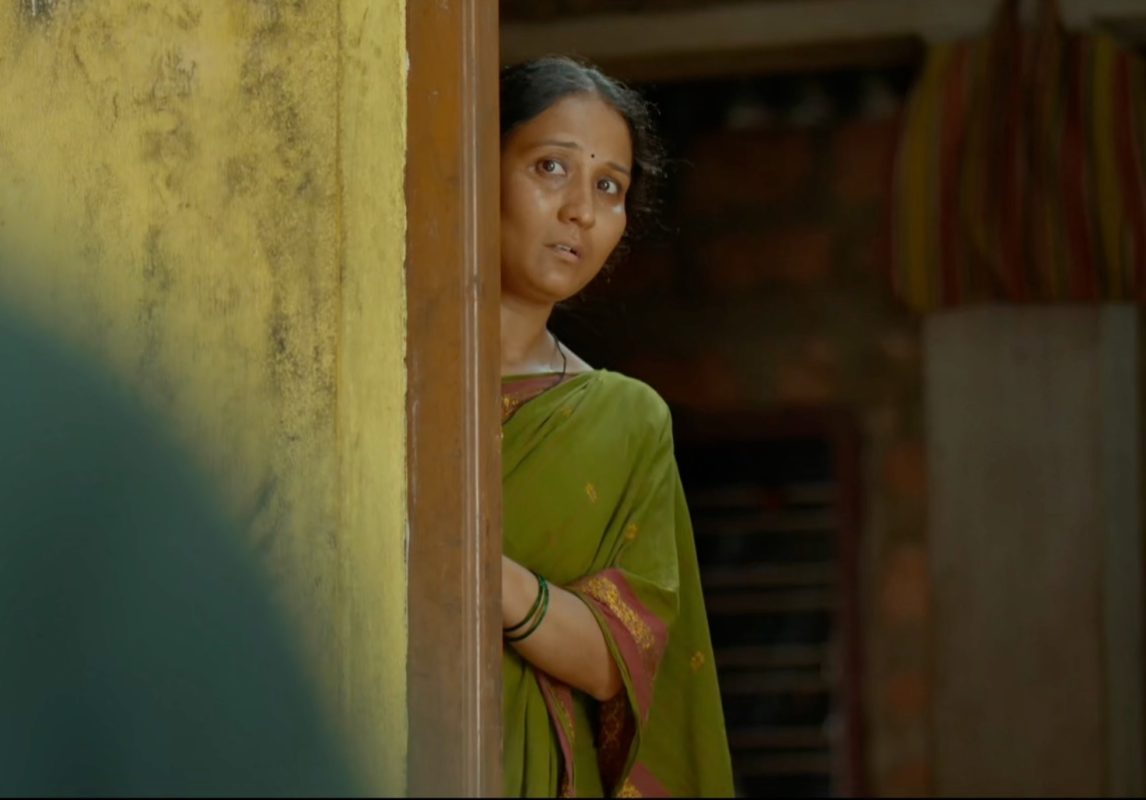
“Su From So” operates on a deceptively simple idea: what happens when a lie is more useful than the truth? But beneath that idea lies a layered exploration of patriarchy, collective belief, guilt, and the strange ways in which society chooses what to accept and what to ignore. At its core, the film is about how belief systems shape reality. The villagers of Marlur do not just believe that Ashoka is possessed; they need to believe it. This need stems from a deeper discomfort with confronting human flaws.
Accepting that Ashoka acted out of voyeuristic impulse would mean acknowledging a moral failure within their own social fabric. But blaming a ghost externalizes the problem. It removes responsibility. The film suggests that superstition is not always born out of ignorance; sometimes, it is a convenient escape from accountability. Running parallel to this is the film’s strongest theme: patriarchy as an invisible, normalized horror. While the narrative initially frames possession as the central conflict, it gradually reveals that the real terror lies in Bhaanu’s everyday life. Her abuse is not hidden.
It is known, whispered about, and yet dismissed. Society chooses not to intervene, not because it is unaware, but because it is structured to protect men like Gopala. In this context, the “ghost” becomes ironic. The village fears an imaginary female spirit but remains indifferent to the very real suffering of a living woman. Ashoka’s arc introduces the theme of redemption through performance. Initially, his act is selfish, a desperate attempt to avoid punishment. But as he encounters Bhaanu’s pain, the same act becomes meaningful. The film blurs the line between deception and truth here.
Ashoka is still lying, but for the first time, his lie serves a moral purpose. This raises an uncomfortable question: if a lie can bring justice where truth fails, does it become justified? The film does not answer this directly, but it allows the audience to sit with the contradiction. Ravi Anna represents another crucial thematic layer: complicity within goodness. He is not a bad man. In fact, he is one of the most respected and empathetic figures in the village. Yet, he has participated in the same system that once rejected Bhaanu.
His eventual support is not depicted as heroic, but as corrective. Through this character, the film also explores how even the best of people contribute to the perpetuation of oppression simply by going along with it. So, change is not about heroic actions, but about correcting one’s contribution to the problem. The film also explores the idea of the power of narrative and how it can influence social actions. Once the idea of “Sulochana” is presented, it takes on a momentum not because it is true, but because it is compelling. People support it. Decisions are made based on it.
In contrast, Bhaanu’s truth, her abuse, and suffering do not elicit the same response. What this does is point to a sad reality: society responds to stories that conform to their worldview much more than to truths that do not.
Finally, “Su From So” uses its tonal shift, from comedy to discomfort, to emphasize how easily serious issues are masked by entertainment. The humor is not just stylistic; it is thematic. It reflects how society trivializes or overlooks deeper problems until they become impossible to ignore. In the end, the film leaves us with a lingering realization: the ghost was never the threat. The real danger was a system where lies are easier to accept than truths, and where justice sometimes needs to disguise itself to be heard.