I’ll be honest: my interior design taste used to be non-existent. When I first moved into my apartment, the floors were a depressing shade of “landlord red” and the walls were peeling. I spent two months staring at my empty living room, paralyzed by the thought of picking the wrong rug or the wrong paint color. I called a few local designers, but their fees alone were more than my entire furniture budget. It felt like a total dead end.
Then I started messing around with AI. At first, I thought it was just for making weird sci-fi art, but then I stumbled into the world of the AI Home Design Generator. Once I figured out the secret to using an AI Image to Image Generator (or what the pros call “Img2Img”), it felt like I had found a cheat code for adulting. I stopped guessing and started seeing my home’s actual potential.
I want to share my actual, messy, trial-and-error process here. No corporate jargon—just the “street smarts” I learned after staying up until 2 AM rendering different versions of my kitchen on AIAI.com. If you’re currently staring at a blank wall and feeling overwhelmed, trust me, this is going to save you a fortune and a massive headache.
Stop Guessing and Start Seeing: Why an AI Image to Image Generator is the Only Tool That Matters
When I first tried using AI for my house, I did it all wrong. I typed “modern cozy living room” into a standard generator, and it gave me a beautiful picture—of a house that wasn’t mine. The windows were in the wrong spot, the ceiling was too high, and it was basically useless. It was like looking at a travel brochure for a place I could never afford to visit. It was “inspiration,” but it wasn’t a plan.
The game changed when I realized the power of an AI Image to Image Generator. The difference is huge: instead of dreaming up a random room, you upload a photo of your actual mess. The AI keeps your walls, your doors, and your floor plan exactly where they are, but it “re-skins” the room like a video game character. The first time I uploaded my cramped, beige bedroom to AIAI.com and told it to try “Japandi Style,” I nearly fell out of my chair. For the first time, I could actually see the potential of my own space without moving a single piece of furniture.
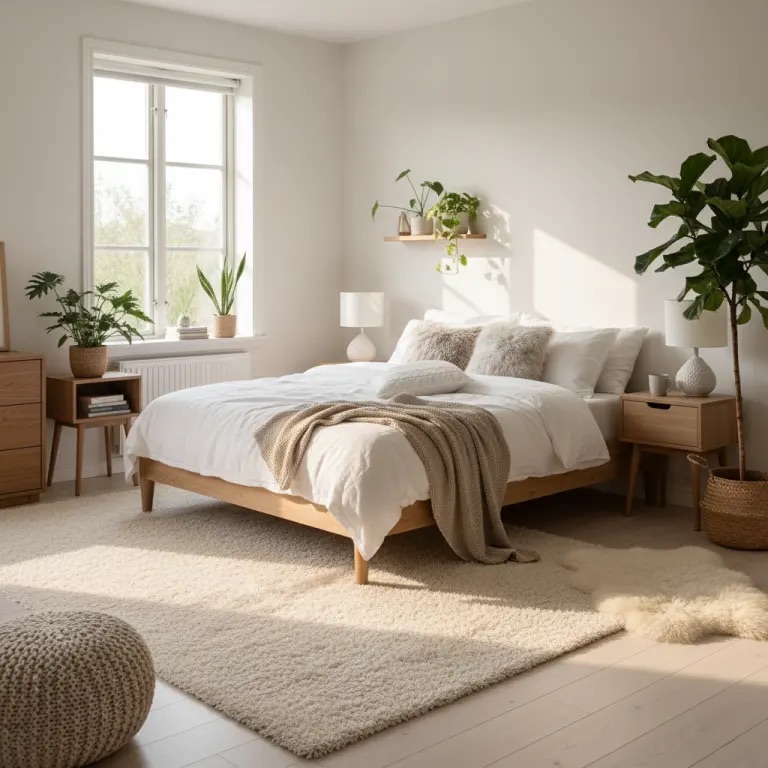
In 2026, this tech is scary good. It’s not just a filter; it understands light and depth. I was terrified of painting my walls a dark, moody charcoal because I thought it would turn my apartment into a cave. I used an AI Home Design Generator to test about fifteen different shades of grey. Seeing how the afternoon sun would bounce off a dark wall in my specific room gave me the confidence to finally buy the paint. If you want a renovation that actually works in real life, “Image to Image” is the only tool that bridges the gap between a dream and a reality you can actually live in.
My “No-Fail” Workflow: From a Hot Mess to a Magazine Cover in Minutes
I spent three months failing so you don’t have to. Here is the workflow I use now whenever I want to change a room. First, your base photo is everything. Don’t take a photo at night with a harsh overhead light; it makes everything look like a cheap plastic model. My trick is to wait until about 2 PM, open all the curtains, and use the wide-angle lens on my phone. The AI Image to Image Generator needs to see the “bones” of the room—where the floor meets the wall—to really nail the perspective.
Once I have a clean photo, I head over to my dashboard and upload it. There’s a setting called “Denoising Strength” (or creativity level). This is the soul of the machine. If you just want to see a new wall color, keep it low (around 0.3). But if you’re like me and want to replace every piece of “early-college-era” furniture you own, crank it up to 0.7. Just a heads-up: don’t go to 1.0. I tried that once and the AI turned my window into a fireplace and added a random marble pillar in the middle of my hallway. I laughed for ten minutes, but it wasn’t exactly helpful for my remodel.
Then come the “prompts.” Stop using vague words like “beautiful” or “nice.” AI loves materials and lighting. Instead of saying “nice room,” I’ll say “Oak wood floors, cream linen sofa, warm sunlight through blinds, architectural photography.” This gives the AI Home Design Generator something real to work with. The results were so realistic that when I posted a render to my Instagram, my own mother called me to ask if I had won the lottery and moved without telling her.
The best part? Once you have a render you love, you can use it to shop with intent. I stopped wandering aimlessly through furniture stores getting overwhelmed by options. Instead, I’d take my AI photo and ask, “Where can I find a rug with this specific texture?” It turned the whole nightmare of “decision fatigue” into a simple game of matching the picture. I found that AIAI.com provided the most stable results for these high-detail textures, making the shopping phase much easier.
The “AI Hallucinations” That Almost Cost Me a Fortune
I’m a huge fan of this tech, but I have to be the “bad cop” for a second: do not trust the AI blindly. AI has a habit of “hallucinating” things that don’t exist in the physical world. One of the most beautiful renders I ever got showed a stunning floating shelf perfectly recessed into a wall. I was ready to hire a carpenter until a friend pointed out that the wall in question was where all my apartment’s plumbing was hidden. If I had started drilling based on a pretty picture, I would have flooded three floors.
This is the biggest lesson: an AI Home Design Generator is a decorator, not an architect. It doesn’t know which walls are load-bearing or where the pipes are located. It doesn’t care about your electrical outlets or building codes. Whenever I find a design I love, I now show it to my contractor first to see if it’s actually possible. AI is there to give you the “vibe,” but you still need a human with a brain to tell you if your house will stay standing.
Another thing to watch for is “Sense of Scale.” AI loves to make rooms look massive. I once fell in love with a render of a giant velvet sectional sofa. It looked perfect on my screen. But when I actually took out a tape measure and marked the floor with blue tape, I realized I wouldn’t even be able to open my front door if I bought it. Always check AI’s math with a real-world ruler. Don’t let a pretty 4K image talk you into buying furniture that won’t fit through your hallway.
Final Thoughts: You Don’t Need a Designer, You Need a Digital Sandbox
Looking back, the coolest thing about this whole journey isn’t just that my apartment looks better—it’s that I’m not scared of my own home anymore. We’ve always been told that “good taste” is something you’re either born with or you pay thousands of dollars for. But tools like the AI Image to Image Generator have totally leveled the playing field for regular people like us.

It’s about having a digital sandbox. You can try a “Goth-Industrial” living room at 1 AM, realize it looks terrible, and delete it without spending a cent. You can see how expensive a rug might look before you ever put it in your cart. For someone on a budget, that’s the ultimate freedom. It removes the “buyer’s remorse” before the purchase even happens.
If you’re stuck in a design rut, just go try it. Grab your phone, take a photo of your messiest room, and upload it to an AI Home Design Generator. Even if the first result is a bit weird, seeing the potential of your own four walls is an incredible feeling. You’re not just “buying stuff” anymore; you’re actually designing a life.