There’s something unsettling about the way A War moves. It never feels interested in dramatic heroism, even though it takes place during war. Instead, the film keeps narrowing its focus until the battlefield and the courtroom begin to feel strangely connected. In both places, people are forced to make decisions with incomplete certainty, and someone else eventually pays for them. At first, Claus seems like a competent commander trying to protect his men. By the end, the film leaves him sitting alone under the night sky, unable to fully live with what he has done, even though the world around him has decided to forgive him. That silence at the end matters more than the verdict itself.
Spoilers Ahead
A War (2015) Plot Summary & Movie Synopsis:
Why Does Claus Start Taking More Risks With His Men?
The film opens with a death that changes the emotional direction of everything that follows. A Danish soldier steps on an IED during patrol in Helmand province, and the scene is almost unbearable in how helpless it feels. There is no cinematic build-up. No triumphant attempt at rescue. Just panic, injury, and the slow realization that the man is not going to survive. Claus watches this unfold from the base camp through radio communication. He cannot physically help. All he can do is listen. That distance becomes important because the guilt he feels afterward is not entirely rational. Technically, the death is not his fault. But leadership in war rarely works through logic alone. A commander starts absorbing responsibility for things he cannot completely control.
After the soldier dies, Claus changes his behavior. He decides to accompany his men personally on patrols instead of remaining behind at base. On the surface, it looks like courage or duty. But underneath it, there is something more emotional. He no longer trusts distance. Being absent during the death makes him feel like he failed them somehow. The problem is that this decision slowly pushes him toward exhaustion. Claus begins carrying too much at once. He has to protect his soldiers, assess threats, navigate an unfamiliar civilian environment, and constantly make split-second judgments where hesitation could kill people. The film quietly suggests that war erodes certainty long before it destroys morality.
Why Does the Afghan Family’s Death Affect Claus So Deeply?
One of the most painful parts of the film involves the little Afghan girl Claus’ team treats medically. For a brief moment, there is a sense that helping her means something. The Danish soldiers are not just fighting; they are protecting civilians too. But war complicates kindness almost immediately. When the girl’s family later comes to the base seeking protection because the Taliban threatened them for cooperating with foreign soldiers, Claus faces a dilemma with no clean answer. If he lets them stay, the base becomes responsible for them indefinitely. If he sends them back, he risks their deaths.
He sends them home. What makes the scene difficult is that Claus does not do this out of cruelty. He genuinely seems trapped between military procedure and human instinct. The war has created a system where even compassion has logistical consequences. Then the next day, he returns to the village and finds the family murdered. The film does not turn this into a loud emotional breakdown. Claus barely reacts outwardly. But internally, something shifts. The deaths become another weight added onto the earlier guilt he already carries.
This matters because when the ambush happens shortly afterward, Claus is no longer making decisions from a calm psychological place. He is exhausted, emotionally strained, and operating inside constant fear. The film never excuses what he later does, but it carefully shows how human beings gradually lose clarity under pressure rather than suddenly becoming reckless monsters.
Why Does Claus Order the Airstrike Even Without Clear Confirmation?
The ambush sequence is filmed with confusion rather than spectacle. Gunfire erupts suddenly. Visibility is poor. The soldiers are disoriented. Nobody fully understands where the enemy is positioned. That uncertainty becomes the central moral problem of the film. Military protocol requires PID, positive identification of enemy targets, before an airstrike can be authorized. Claus does not truly have that confirmation. He suspects insurgents are firing from a nearby compound, but suspicion is not certainty. Still, he calls the strike.
The important thing is that Claus is not trying to kill civilians. In that moment, his attention narrows completely toward keeping his men alive. Fear compresses morality into immediacy. The future consequences disappear. All that matters is survival and the strike works tactically as his men escape. But afterward comes the devastating reality: eleven civilians, including children, were inside the compound. The film refuses to simplify this moment into easy judgment. Claus is neither portrayed as evil nor innocent. He made a decision under impossible conditions, but impossible conditions do not erase responsibility. That tension is what the entire second half of the movie explores.
Why Does the Trial Feel More Disturbing Than the Battlefield?
Once Claus returns to Denmark, the film changes shape completely. Yet strangely, the courtroom scenes feel just as tense as the combat scenes earlier. Part of that comes from how isolated Claus becomes. Back home, Maria has been struggling alone with the children for months. Their family already carries emotional fatigue before the trial even begins. Now everything becomes unstable at once. Prison could remove Claus from their lives permanently.
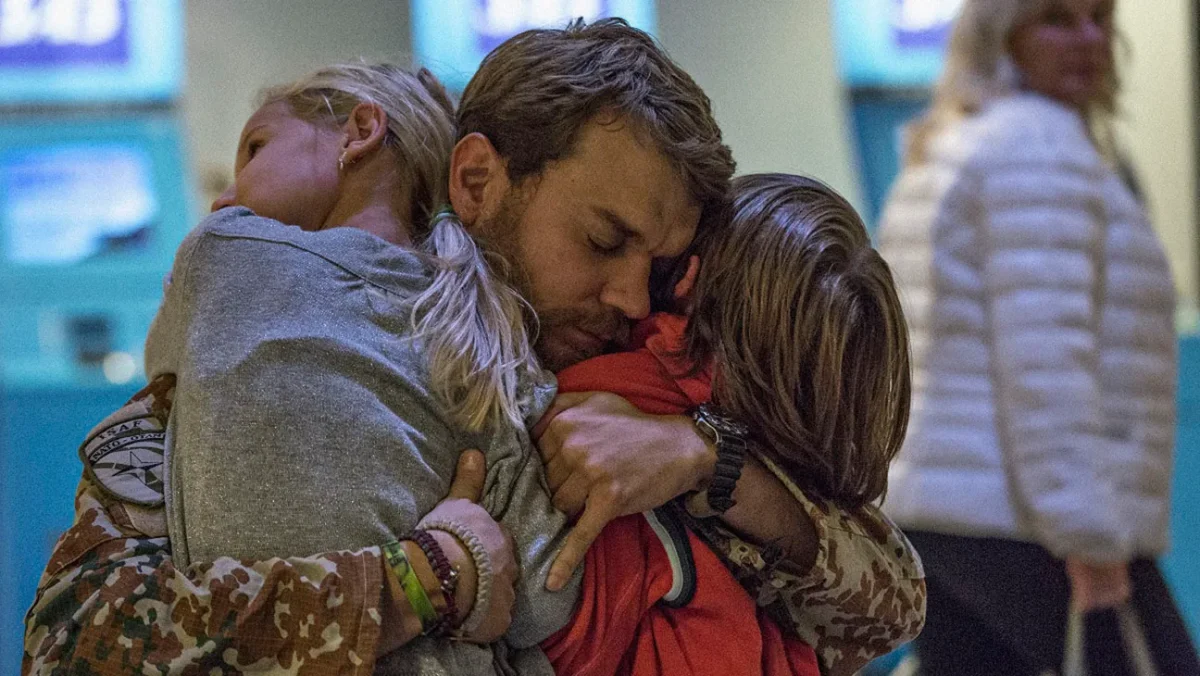
Maria’s frustration toward him is complicated because it comes from fear rather than moral certainty. She wants him to tell the truth initially, but when reality starts becoming clearer, the possibility of their children growing up without a father overwhelms her. The film understands something uncomfortable here: morality becomes harder to hold onto when punishment spreads beyond the guilty person. Claus knows he violated protocol. His lawyer also knows this. The defense strategy becomes painfully straightforward: lie about having PID.
At first, Claus resists. There is still a part of him trying to preserve some inner honesty. But eventually, family pressure and survival instinct begin outweighing moral clarity. What makes this tragic is that the lie is not presented as triumphant manipulation. Claus looks emotionally exhausted even while agreeing to it. He understands that saving himself will require becoming complicit in rewriting reality.
Why Do Claus’ Fellow Soldiers Struggle to Fully Defend Him?
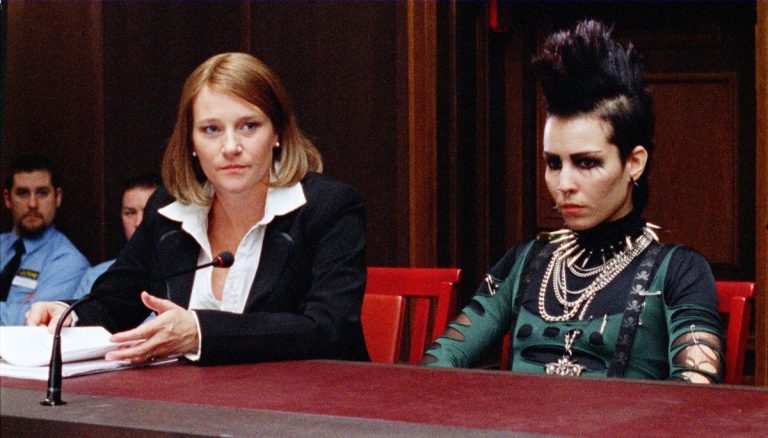
The testimonies during the trial reveal one of the film’s most human ideas: war creates conflicting truths. Some soldiers defend Claus because they know he protected them. Others unintentionally damage his case because they witnessed his mental strain during deployment. His close friend’s testimony becomes especially painful because it is honest. He does not describe Claus as reckless or malicious. Instead, he describes a good officer slowly breaking under pressure. That distinction matters.
The film avoids portraying trauma as dramatic insanity. Claus is still functioning throughout the deployment. He still leads. Still makes decisions. Still appears competent. But internally, fatigue and emotional overload are quietly affecting his judgment. That feels more realistic and far more disturbing. The prosecution, meanwhile, keeps pulling the conversation back toward legality. Did he have PID or not? The law needs a binary answer even though war itself rarely provides binary situations.
At one point, Claus becomes visibly angry during questioning and argues that civilians cannot understand what combat feels like. It is one of the few moments where his internal frustration surfaces openly and he is partly right. The courtroom can analyze decisions calmly because nobody there is under fire. But the film also refuses to let that argument become a total defense. Fear may explain his actions, but explanation is not the same thing as absolution.
A War (2015) Movie Ending Explained:
Why Does the Radio Operator’s Testimony Change Everything?
Near the end of the trial, Claus’ former radio operator unexpectedly claims he saw muzzle flashes coming from the compound before the strike. That statement changes the entire case. Suddenly, Claus’ decision appears justifiable again. The legal threshold for uncertainty shifts enough to create reasonable doubt, and the court acquits him. But the testimony feels morally unstable from the moment it is spoken.
The film never confirms whether the operator genuinely saw enemy fire or whether he is protecting his commander. That ambiguity is intentional. Truth itself has become fractured by loyalty, fear, and shared trauma. The soldiers are no longer only protecting themselves physically. They are protecting one another psychologically too. If Claus goes to prison, then everyone involved must confront the possibility that they survived because innocent people died unnecessarily. The acquittal allows them to avoid fully looking at that reality, at least publicly. Privately, though, the damage remains.
Why Does the Ending Refuse to Give Claus Peace?
The final scene with Claus and his son is devastating precisely because nothing dramatic happens. While putting his child to bed, Claus notices his son’s small feet and suddenly remembers the murdered Afghan girl. The connection hits him instantly. For a second, the emotional distance he maintained throughout the trial collapses. The war returns to him in the middle of domestic normalcy. That image matters because the film has quietly been contrasting two kinds of children the entire time: the Danish children Claus wants to protect and the Afghan children destroyed by the systems surrounding the war.
Earlier, Maria argues that their own children need their father home. And she is right. But the film never lets that truth erase the humanity of the civilians who died. So even though Claus wins legally, emotionally he remains trapped between two realities. He saved his men. He protected his family from losing him. But innocent people are still dead because of a choice he made. The acquittal cannot remove that knowledge. The final image of Claus sitting outside under the night sky feels almost empty rather than cathartic. There is no dramatic punishment waiting for him anymore. No prison sentence. No public disgrace.
Instead, the punishment becomes internal permanence. He has to continue living. That may be the film’s harshest idea of all. War does not always destroy people through death. Sometimes it leaves them alive with decisions they can never fully justify to themselves. The ending is not entirely hopeless, but it is deeply unresolved. Claus returns home physically, yet part of him remains psychologically stuck in Helmand province, inside that single moment where fear, duty, survival, and morality collapsed into one irreversible decision. And the film leaves him there deliberately, because A War is not really asking whether Claus is guilty or innocent. It is asking whether human beings can pass through war without carrying invisible damage long after the fighting ends.