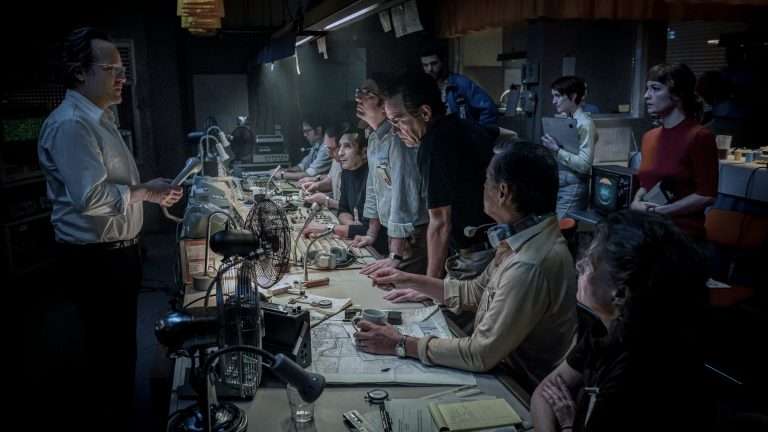
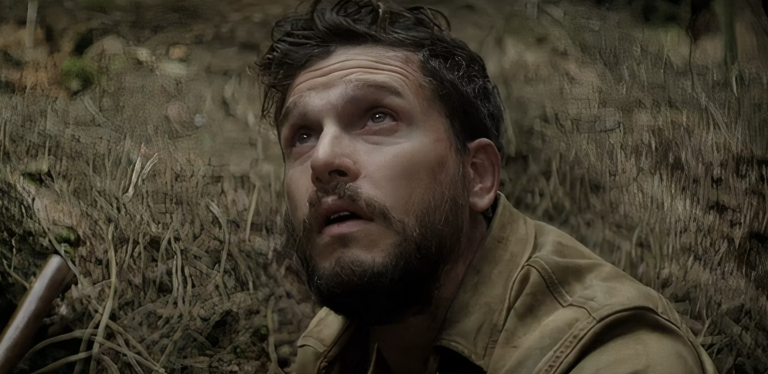
“Tin Soldier” (2025) becomes more disturbing because it shows what happens after the manipulation has already succeeded. By the time the movie begins, Nash Cavanaugh is not simply hunting a dangerous leader hiding in the mountains. He is returning to a version of himself he barely survived the first time. This gives the film its strange emotional heaviness underneath all the gunfire and military tactics.
The compound in Idaho is not framed like a normal terrorist base. It feels closer to a psychological wound frozen in time. The men living there are armed, radicalized, and dangerous, but many of them were once broken soldiers looking for meaning after war hollowed them out emotionally. The tragedy is that the Bokushi understood emptiness before anyone else did.
Spoilers Ahead
Tin Soldier (2025) Plot Summary & Movie Synopsis:
Why Does Nash Agree to Return to The Program After Escaping It?
When we first meet Nash, the movie immediately establishes that survival did not bring him peace. He escaped The Program years earlier, but emotionally, he still behaves like someone trapped inside it. Scott Eastwood plays him with a kind of constant guarded tension, as if every room might suddenly become hostile. Even outside the compound, Nash still thinks like a man trained to expect betrayal. This detail matters because it suggests the Bokushi’s influence was never fully removed from him.
The mission offered by Emmanuel Ashburn initially sounds simple on paper: Infiltrate the compound, kill The Bokushi, and prevent a domestic terror attack before federal agencies are forced into a catastrophic public siege. But Nash refuses at first because he understands something the government operatives do not. Entering that mountain means reentering a psychological system designed to erase individuality. The revelation about Evoli changes everything. For years, Nash believed his wife had died during their escape attempt from the compound. That guilt quietly defines his entire life. You can feel it in the way he isolates himself emotionally. Escaping alone never felt like survival to him. It felt like abandonment.
So when Ashburn reveals that Evoli may still be alive inside the compound, the mission stops being political. It becomes an emotional resurrection. Nash is suddenly forced to confront the possibility that the central tragedy shaping his life may have been a lie all along. But the movie carefully complicates this motivation too.
Nash is not only returning to save Evoli. Part of him also wants confirmation that leaving The Program was the correct choice. Trauma survivors sometimes romanticize the environments that damaged them because pain mixed with belonging can become psychologically addictive. The film understands that contradiction surprisingly well. That is why Nash looks terrified rather than empowered once he finally returns to the compound.
Why Does The Bokushi Feel More Like a Fallen Prophet Than a Traditional Villain?
Leon Prudhomme becomes unsettling because the film refuses to portray him as purely unpredictable or unhinged. Before becoming The Bokushi, he was a decorated naval officer suffering severe PTSD after years of military service. The early flashbacks imply that his original intentions may even have been sincere. He created The Program as a support structure for emotionally shattered veterans who felt discarded by the country they served. The tragedy is that he slowly transformed emotional dependence into ideological control. Jamie Foxx plays Bokushi with unsettling calm throughout the film.
He rarely raises his voice and doesn’t behave like a screaming cult fanatic. Instead, he speaks like a man who genuinely believes modern society is spiritually weak and morally corrupt. That composure makes him more dangerous because many of the veterans inside the compound are not following him out of fear alone. They follow him because he gave meaning to their suffering. That distinction changes the entire emotional texture of the movie.
The Shinjas are heavily armed extremists by the time the story unfolds, but the film repeatedly reminds us that many of them once arrived desperate for healing. Bokushi understood how to weaponize brotherhood itself. He took men broken by violence and convinced them that violence was the only honest language left in the world. What makes Bokushi tragic rather than cartoonish is that parts of his criticism are not entirely wrong. The government really did fail many veterans emotionally.
Institutions really did leave traumatized soldiers struggling to reconnect with ordinary life. Bokushi recognized that emptiness before anyone else cared enough to address it. His corruption comes from believing pain grants moral authority. Over time, he stops seeing wounded people as individuals needing recovery. He begins seeing them as proof that society deserves punishment. That shift is what transforms The Program into a militarized cult instead of a refuge.
Why Does Emmanuel Ashburn Hide So Much From Nash?
Ashburn operates almost like a ghost from an older political era throughout the movie. Robert De Niro plays him with deliberate emotional distance, which becomes important as the story unfolds. Unlike Nash, Ashburn does not approach the compound emotionally. He approaches it strategically. To him, the Bokushi represents a growing national security threat that must be neutralized before another Waco-style disaster unfolds publicly. But the film slowly suggests that Ashburn’s interest in The Program is more complicated than simple prevention.
There are hints throughout the story that intelligence agencies monitored Prudhomme’s transformation for years without fully intervening. Partly because they underestimated him. Partly because governments often tolerate dangerous systems longer than they admit publicly, especially when those systems involve veterans, covert operations, or politically sensitive failures.
Ashburn understands something terrifying: a public assault on the compound could turn Bokushi into a martyr. This fear explains why the mission remains unofficial and hidden. The government wants the threat eliminated quietly before the situation becomes symbolic. Once cameras, media outrage, and ideological narratives enter the equation, extremist movements often grow stronger rather than weaker.
Ashburn also manipulates Nash emotionally. He waits until the last possible moment to reveal the truth about Evoli because he knows Nash would never return otherwise. That choice matters thematically because the film keeps showing institutions using emotional wounds as operational leverage. Bokushi manipulates trauma openly. Ashburn manipulates it professionally. The methods look different, but the ethical line separating them becomes increasingly blurry. That ambiguity gives the movie more depth than a normal rescue thriller.
Why Does Evoli’s Survival Change Nash Emotionally?
Evoli becomes emotionally important long before Nash even sees her again. For most of the film, she exists almost like a memory haunting him. Nash built his entire identity around the belief that he failed to protect her. Losing her became the emotional proof that The Program destroyed everything good in his life. So discovering she may still be alive destabilizes him psychologically. Suddenly, the past is no longer fixed. The guilt he carried for years no longer feels clean or understandable. Instead, it becomes tangled with anger, confusion, hope, and suspicion.
Nash starts questioning what really happened during their escape and whether Bokushi intentionally allowed him to believe she died. When Nash finally reunites with Evoli inside the compound, the scene feels emotionally strange on purpose. It is not framed like a triumphant romance. There is hesitation between them. That is because time inside The Program affected both of them differently. Nash escaped physically but remained psychologically trapped afterward. Evoli stayed physically trapped while emotionally adapting to survive inside the cult environment.
The film smartly avoids simplifying that trauma. People inside coercive systems often develop emotional attachments to those systems because survival requires psychological accommodation. Part of Nash wants Evoli to immediately become the woman he lost years ago, but trauma rarely preserves people unchanged. The movie becomes quietly heartbreaking during these scenes because Nash realizes he is not rescuing the past. He is confronting how much of it has already disappeared.
Why Does the Final Assault Feel So Chaotic and Tragic?
Most action films treat climactic shootouts like spectacles of empowerment. “Tin Soldier” deliberately makes the violence feel exhausting instead. Once Nash infiltrates deeper into the compound, the mission collapses into confusion almost immediately. Former brothers-in-arms begin killing each other. The Shinjas are not faceless mercenaries to Nash. Many trained beside him, trusted him, and once believed they were building something meaningful together. This emotional history makes every confrontation uglier. The film repeatedly emphasizes how indoctrination survives through emotional dependency rather than ideology alone.
Even as the compound begins collapsing, many followers continue defending Bokushi because leaving him would force them to confront a terrifying possibility: that their entire rebuilt identity was based on manipulation. That psychological fear keeps the cult alive more than the weapons do. Nash’s own internal conflict becomes visible during these sequences, too.
He fights efficiently, but there is very little triumph in him. Every hallway and bunker feels tied to memories he cannot fully suppress. The compound itself almost resembles a physical manifestation of unresolved PTSD, isolated from society, trapped in cycles of paranoia and violence. The closer Nash gets to Bokushi, the more the film starts questioning whether destroying one man can actually solve the larger problem. Because Bokushi did not invent the emotional conditions that created The Program. He exploited them.
Tin Soldier (2025) Movie Ending Explained:
What Does Nash Realize After Facing The Bokushi?
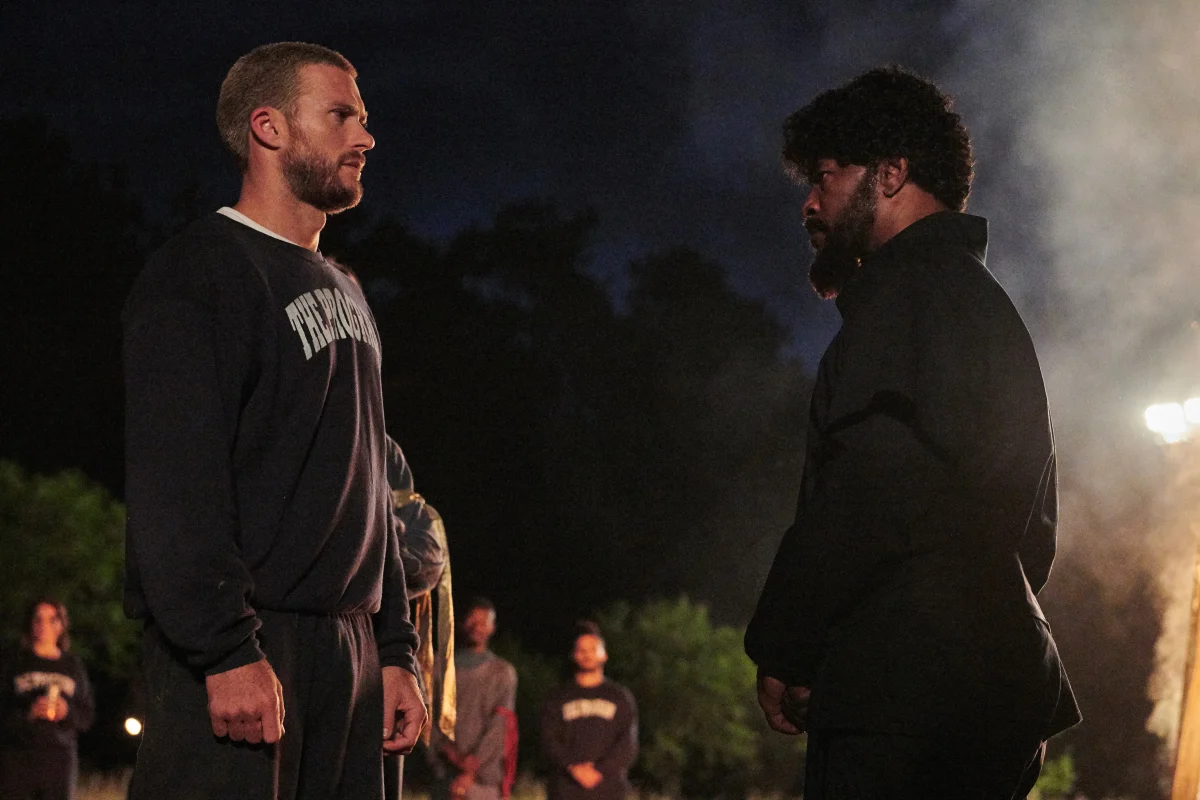
The final confrontation works because it is less about physical victory than psychological separation. When Nash finally faces Bokushi directly, the older man does not behave as if cornered. He speaks calmly, almost sadly, as if he genuinely believes Nash’s return proves his philosophy correct. In Bokushi’s mind, the outside world inevitably failed Nash, too. The trauma, isolation, and emotional drift Nash experienced after escaping only reinforce Bokushi’s worldview that broken soldiers can never truly reintegrate into ordinary society again. That is why Bokushi keeps trying to emotionally reclaim him instead of simply killing him. He sees Nash as unfinished proof.
The confrontation becomes emotionally powerful because part of Nash understands the temptation underneath Bokushi’s ideology. The Program offered certainty, structure, brotherhood, and purpose. Pain felt organized there. Outside the compound, life felt fragmented and emotionally numb. But Nash finally recognizes the hidden cruelty underneath Bokushi’s philosophy.
The Bokushi never truly wanted healing. Healing would allow people to leave him behind. What he actually built was permanent dependence disguised as spiritual recovery. That realization changes everything. Nash understands that Bokushi transformed trauma into identity because wounded people are easier to control when they believe suffering makes them special or chosen. The cult survives by convincing its followers that pain is purity and isolation is strength.
The ending ultimately becomes tragic rather than victorious because there is no clean resolution to that damage. Depending on how one interprets the final scenes, Nash succeeds in destroying Bokushi’s operation physically, but the emotional aftermath remains uncertain. Evoli survives, yet neither she nor Nash appears emotionally whole enough to simply return to normal life.
The surviving followers are left psychologically shattered. The government prevents a public catastrophe, but the systemic abandonment that helped create Bokushi still exists underneath everything. This lingering discomfort is intentional. “Tin Soldier” is not really arguing that one charismatic extremist created evil out of nowhere. The film suggests something more unsettling: vulnerable people searching for meaning can become dangerous when institutions fail to help them process trauma, grief, and alienation honestly.
Nash survives because he finally rejects the idea that suffering should define identity forever. Bokushi collapses because he could never imagine a world where damaged people heal without needing him. When the final moment arrives, “Tin Soldier” leaves us with a grim but important realization. Some wars do not end when soldiers come home. They continue quietly inside memory, loneliness, guilt, and the desperate human need to belong somewhere again.