Introduction
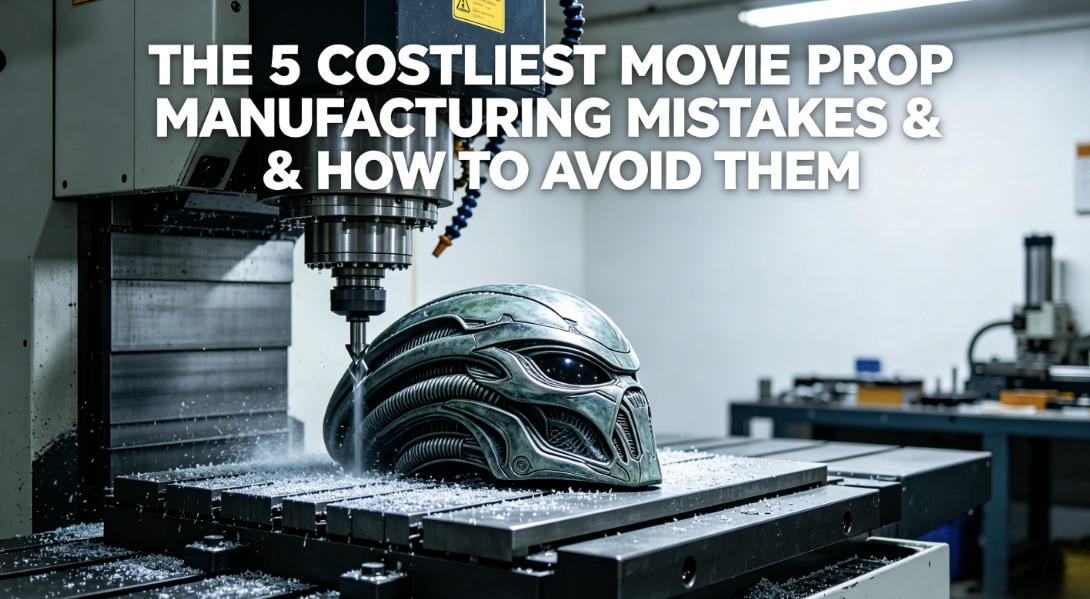
Film industry prop master artisans face an interesting paradox where creative concept artists work with incredibly organic ideas while prop manufacturers must take these designs and create precise, reusable objects that will pass muster when filmed at 4K. The problem does not lie in a lack of imagination, but rather in the knowledge of the process itself. Films overrun their budget by making mistakes related to manufacturing ignorance and treat cinema equipment precision parts as regular parts, overlooking dimensional tolerance and material safety issues.
The following article looks at the five costliest mistakes in movie prop manufacturing and analyzes how each of them represents a mistake that could have been avoided by following proper project risk management principles using ASME Y14.5 standards and high-end 5-axis CNC services for aerospace-grade precision.
Why Do Props Used In Films Require Greater Precision Compared To Other Industry Components?
Film props must be manufactured under an uncommon set of restrictions that make their level of required precision far greater than most other industrial components. Visual consistency, practicality of use, and the need for safety dictate a manufacturing process akin to production of medical or aerospace products.
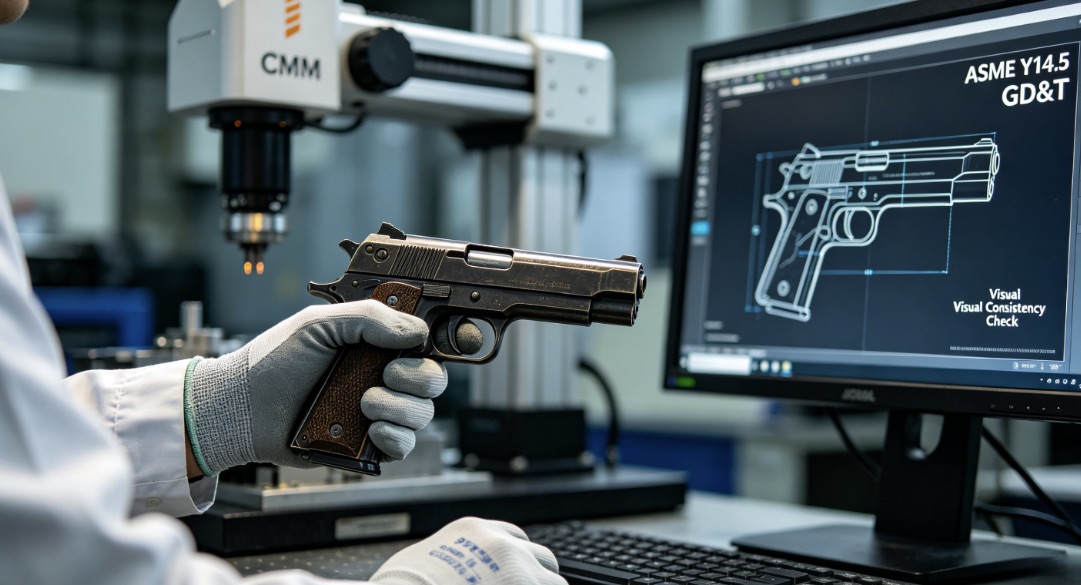
- Requirement Of Visual Consistency: The need for perfect visual consistency between a hero prop and those used in subsequent scenes in case of damage during a stunt or when several copies of the same component are used makes 0.5mm variation in any feature such as visors of helmets and grips of weapons unacceptable since this will cause breaking of the visual continuity. It requires geometric dimensioning and tolerancing (GD&T) according to ASME Y14.5 standards.
- Strength in Dynamic Conditions: Industrial components are typically shielded by housing while film props are touched, dropped, and exposed to harsh conditions. For thin walls, high-strength metal alloys are necessary and require tight control over wall thickness consistency for machining purposes. If a prop breaks during a critical shooting sequence because of a poor manufacturing decision, it will stop the entire filming schedule dead in its tracks. Therefore, strength becomes the main determinant of cost here.
- Safety and Material Certification: While machine components do not come into direct contact with performers, film props certainly do. Uncertified materials and inadequate finishes can become health hazards ranging from skin reactions to the risk of inhaling harmful fumes during the finishing process. Tracing materials and obtaining proper finishing certificates cannot be considered optional but essential safety measures.
How Does 5 Axis CNC Machining Help in Realizing the Freedom of Creativity for Special Effects?
The restrictions inherent in the 3 axis method compel the designer to make compromises when creating organic shapes, breaking up intricate forms into several pieces that result in production lines and flaws in design. The introduction of 5-axis CNC machining services makes possible real single setup machining of organic shapes, deep cavities, and undercut surfaces common in movie special effects components.
1. Breaking Down the ‘Split-Line’ Compromise
Intricate and complicated shapes like biomechanical armor or extraterrestrial artifacts will normally have undercut surfaces and compound curves that cannot be machined in one session using the 3 axis method. With 5-axis machining, it is possible to have a cutting tool engage optimally regardless of the shape or angle of engagement, leaving a flawless single piece of product without split lines or glue joints that may crack.
2. Surface Finish Quality For “Hero” Shots
If the props have to go into extreme close-ups in the shots, then surface finish quality becomes of prime importance. 5-axis flank milling and constant path tooling techniques allow better contouring without leaving any marks from the process or the tools used. It cuts down on the need for any manual labor involved in the finishing process.
3. Facilitating Fast Iteration Process
In preproduction, directors frequently demand fast design iterations. A 5-axis CNC machining service provider who offers CAD/CAM processes will be able to re-machine a design iteration rapidly without the need to re-design fixture setups. Such speed will help deal with the iterative nature of film-making without overspending on the prototyping phase. The production team interested in looking for the right CNC service should check out sources such as the 5-axis CNC machining manufacturer in China.
H2: What Is the Cost of the Cheaper “Machine Hour Rate”?
While a cheap rate might look attractive, it is actually quite risky for film shoots. The real price of a component lies not in machining, but in Total Cost of Ownership (TCO), which consists of such important factors as design for manufacturability (DFM) engineering, scrap rates, and overhead related to project management. A vendor providing you with best 5-axis CNC machining China might have been skimping on such value-adding services.
1. The DFM Feedback Void
Cheaper providers just go ahead and machine the designs as submitted, lacking DFM engineering to catch issues in advance. As a result, they end up with designs that have unmachinable parts, sharp corners inside components, or custom thread sizes. Such a design leads to frequent tool breakages, scrapping, and expensive design changes in the middle of work.
2. The Scrap Rate Multiplier
Scrap rates tend to be artificially lowered through over-working machines and tooling to the breaking point and producing parts outside acceptable tolerances. An expensive rush charge or penalty fee will be levied when the single scrapped “hero prop” is rushed at the last minute to make the filming deadline. High-quality production needs high levels of process control, an aspect that certified 5-axis CNC service provider firms excel at.
3. The Communication Tax
Offshore and low-rate providers generally come with language barriers and delayed communications due to different time zones. Mistranslations between the provider and client regarding part design changes or shipment dates may result in project delays. Projects must focus on suppliers with good communication skills despite higher rates.
How Can the Selection of Materials and Finishes Determine On-Screen Realism?
Choosing the incorrect material or finishing technique could cause an extremely expensive prop to appear inexpensive during filming. It is a careful balancing act between realism, practicality, and the ability to work with special effects editing later. Recognizing the characteristics of materials like high-strength aluminum and advanced engineering resins is essential when designing Film Studio Prototypes through our services.
1. Weight vs. Durability: The Burden on the Actor
Although a replica made entirely from metals would have the appearance needed, it might be so heavy that it would hinder the actor’s ability to use it effectively or comfortably throughout a shoot. Custom 5-axis CNC machining of alloys and even composite plastics with machinable qualities can help accomplish this objective while retaining weight and strength.
2. The Canvas for the Painter
Surface quality and porosity of the base material influence how well the paint or weathering effect sticks to the material. A base material with an improperly machined surface showing tool marks will be very hard to work with because of cracking and chipping. The correct machining finish (e.g., Ra 0.8µm or less) suitable for the paint coating in question should always be specified. Guidelines from standardization organizations such as the Aluminum Association of Canada (AAC) on anodizing can ensure consistent coloration on several prop units.
3. Functional Realism for Mechanisms
In props that have moving parts, e.g., folding blade systems or panels, the choice of materials determines the functionality of the part. Self-lubricating polymers for bushings and stainless steel for contact areas allow the prop to perform properly when filming action scenes. Functional realism often sells the shot, and this calls for manufacturers with vast experience with different materials.
What else does a film production need in a CNC partner aside from a quote?
Partnering exclusively with a company purely based on cost is the quickest route to ruining your film production. Your manufacturing partner must act like a consultant who reduces risks through experience and provides consistent deliverables. When choosing a 5-axis machining supplier 2026, here are some skills to consider aside from the quotes.
1. Engineering Capability and DFM
Your partner needs to appoint an engineering lead to analyze your design, not a mere sales representative. Furthermore, they should give you DFM reports with suggested changes to your design for lower costs, improved durability, and efficient manufacturing process. This is the mark of an experienced precision 5-axis CNC services and mandatory for props.
2. Quality Control and Documentation
If you plan to create copies of your prop or even use the same prop in other movies, then full documentation such as FAI reports and material certifications are essential. A partner must show a fully functional quality management system such as ISO 9001 or AS9100.
3. Adaptability and Crisis Management
Filmmaking is dynamic, and changes happen all the time right at the last moment. An ideal supplier should be able to adapt their production process to allow room for such emergencies without having to pay expensive “rush fees.” This is more important than getting services at a lower cost. As an initial step, one can refer to an approved list of 5-axis CNC machining services suppliers.
Can the Entire Process from Rapid Prototyping to Low Volume Production be Efficiently Handled by the Same Vendor?
The conventional transfer from the prototype shop to the production shop has been a significant source of mistakes and inefficiency in films. Data conversion, inconsistencies in processes, and additional time required for re-qualification can be resolved through collaboration with a one-stop vendor that can manage the whole process starting from Entertainment Industry Machining rapid prototyping to low volume production.
1. Consistency of Geometric Data from CAD to Part
Using the same CAD/CAM software in prototyping and manufacturing eliminates potential differences in geometrical data. The use of a one-stop vendor would ensure that the toolpathing and fixturing solutions validated during prototyping are automatically transferred to production.
2. Process Standardization
The full-service vendor uses the same quality checkpoints and procedures for prototype creation as for the production run. This guarantees that the verified prototype is the benchmark for the production run with no unexpected issues at the time of final handover and that there is consistency between the hero prop and all the other replicas created.
3. Supply Chain Simplification
The use of one vendor for everything related to the prop’s development makes the logistics, billing, and responsibility management simpler. The use of one vendor creates a cooperative approach where the vendor understands the requirements of the project well enough to think ahead of potential issues, which is very beneficial given the complexity of the 2026 5-axis CNC guide.
Conclusion
In the creation of film props, the lowest cost may very well be the highest price you will pay. It all depends on your ability to identify the right manufacturing service provider. Instead of going for the lowest hourly rate, you should focus on finding a company that can offer you engineering excellence, superior quality control measures and total manufacturing services. Do not see precision manufacturing as an unnecessary expense; rather view it as the ultimate solution in realizing your artistic dreams.
FAQs
Q: What is the key benefit of 5-axis over 3-axis CNC machining for film props?
A: With the former, single-setup machining is possible even for the most complex designs with undercuts and deep cavities. There will be no need for assembly lines and there will be flawless surface finishes in intricate hero props.
Q: Why are material certifications important for non-functional “hero” props?
A: Extremely important. Material certifications will assure the consistency of each batch for both color and finish, an essential aspect for mass-producing items. Material certifications also help guarantee that no harmful elements are included in any material, thus providing safety assurances against potential legal risks.
Q: What is a realistic tolerance for high-end film props?
A: Most visual props would require a tolerance of ±0.1 mm. Some special props that require interfacing or movement may require tolerances of ±0.025 mm. However, ASME Y14.5 standards should always be followed in setting tolerances to avoid unnecessary expense without increasing functional value.
Q: Can you machine transparent or flexible material for props?
A: Yes. Some engineering-grade plastics can be machined, including clear polycarbonate or some forms of TPU. These are good options for making prototypes, but some injection molding may prove more cost-effective once the design of the prop has been proven viable through a prototype.
Q: How do I make sure that the color and texture of my props match each other?
A: For consistent results, one needs controlled processes. Define a surface finish specification (e.g., Ra value), and implement anodizing and finishing according to Aluminum Association (AAC) standards. Work only with those suppliers who have color matching capabilities and insist on obtaining master samples physically before allowing full-scale manufacturing to begin.
Author Bio
The author has years of experience in precision manufacturing and is highly proficient in implementing aerospace manufacturing principles when developing prototypes and scaling production to meet the demands of the entertainment industry. Motivated by the drive for perfection, the author and her team from LS Manufacturing guide prop masters through the intricacies of 5-axis CNC machining, thus making their wildest dreams come true. To get your free copy of the “Film & TV Prop DFM Checklist,” which can save you from numerous manufacturing mistakes, visit our Resource Center now.