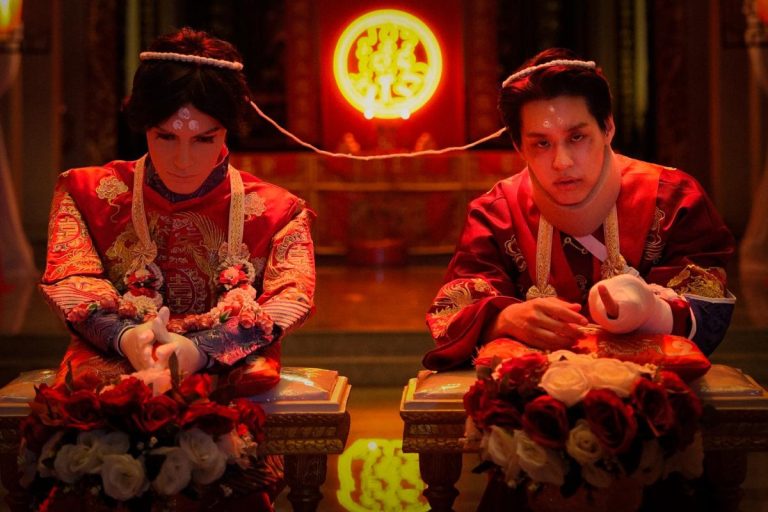
Jodie Foster has starred in some of the most intelligently crafted films over the years, and “A Private Life” (Original title: Vie privée) is easily another addition to that list. Co-written and directed by Rebecca Zlotowski, this French psychological thriller unveils a mystery through the eyes of a psychiatrist.
Foster plays the said protagonist with unresolved emotional issues of her own, which adds another dimension to the investigative core. The film begins as a drama about the midlife malaise of a woman living alone and gradually leans into the mystery about the sudden death of one of her patients. She receives different accounts of the incident, which raise suspicions of foul play.
From presuming a natural cause of death, Foster’s character finds reasons to believe everything from self-harm to murder, while seeing her own life unravel in front of her eyes. That’s why, while a captivating thriller in its own right, it is also a pensive contemplation on the nature of memories and truth that maintains a sly balance between its intensity and humor. It seamlessly glides between its dreamy absurdism and breezy naturalism to gently reveal layers of her psyche, helping her uncover the truth about a case she wasn’t obliged to investigate. By the end, it leaves you with more mysteries to mull over than answers.
Spoilers Ahead
A Private Life (2025) Plot Summary & Movie Synopsis:
What happens in ‘A Private Life’?
“A Private Life” explores an investigation by probing into the private life of Lilian Steiner (Jodie Foster), a psychiatrist living alone in a French apartment. One evening, as she prepares for one of her sessions, she hears music blasting from a neighboring apartment. She walks over and politely asks the neighbor to keep quiet for the sake of her patient, but the young man doesn’t pay heed to her. Instead, he calls her an ageist slur, which upsets her, prompting her to look for a cigarette. Suddenly, she hears another noise and walks out to check on the neighbor again. Instead, she finds one of her patients, Pierre (Noam Morgensztern), sitting outside on the stairs, even though he was supposed to have a session another day.
She was expecting another patient, Paula Cohen-Solal (played by Virginie Efira), who had missed her past three appointments. Since Paula’s not there, Lilian allows Pierre in, only to realize he wants to stop his therapy. Shortly before that meeting, he got in touch with a hypnotist who helped him get rid of his cigarette addiction after a single session — something that Lilian hadn’t managed to do over a long time. That’s why, due to efficacy concerns about her work, he decides to stop seeing her. After he leaves, she receives a call from Paula’s number, inviting her to the wake. That’s how she learns about her death. The next day, she stops by Paula’s house to find people in mourning.
While there, she notices Paula’s husband, Simon (Mathieu Amalric), and her daughter, Valérie (Luàna Bajrami). Simon throws her out as soon as he realizes who she is. Despite his rage, she remains as calm and composed as ever. Yet, after that incident, she realizes something strange about herself: she can’t stop crying. A passenger notices her crying on a bus and offers her a seat, concerned about her. Later, she starts crying at her son Julien’s (Vincent Lacoste) house, which prompts her to leave immediately without spending time with her grandson.
Why were Lilian’s eyes getting watery all of a sudden?
Lilian doesn’t seem overwhelmed by her emotions, but it doesn’t really stop her from involuntarily crying. That’s why she shows up at her ex-husband, ophthalmologist Gabriel’s (Daniel Auteuil) office to get her eyes checked. However, he doesn’t find any issues that would warrant medication, leaving her with an unresolved mystery.
He wonders if the visit is only an excuse for her to meet him. She rejects his hunch, noting she never thinks of him. That afternoon, she finds Valérie outside her office, waiting to speak with her about her mother’s death. She says Paula took her own life, and hands over a prescription note with something scribbled on the back.
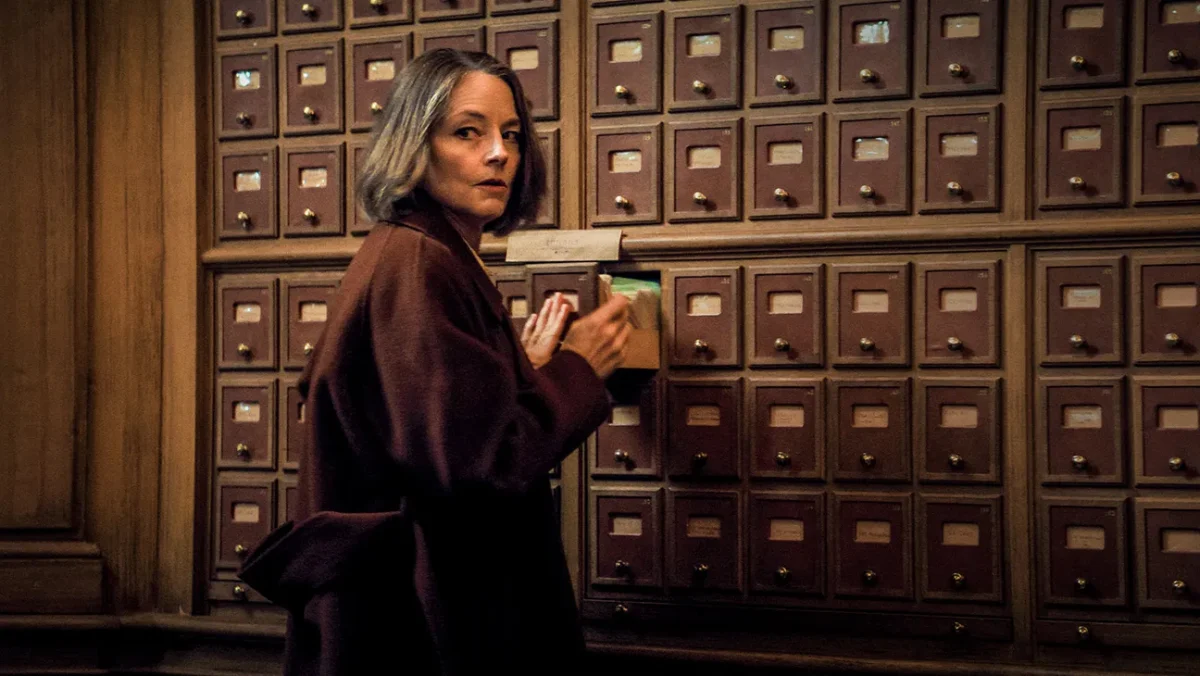
Lilian doesn’t look into it immediately and doesn’t break her doctor-patient confidentiality agreement either. Yet, knowingly or unknowingly, she starts feeling responsible for the loss. She also can’t stop crying during her following sessions. So, as a recourse, she decides to meet hypnotist Jessica (Sophie Guillemin) despite her skepticism about those methods.
Jessica calls it a memory-based therapy and uses it to take Lilian to an elusive place in her mind. Lilian enters a hallway, drenched in vibrant red tones, to find plenty of doors around her. She opens one of them, but Jessica compels her to try another. Within a few moments, it takes her to an orchestra sitting behind Paula. In this scenario, they are both cellists, while Simon is the conductor.
Lilian notices an old woman sitting in the audience, but can’t recognize her. She realizes Paula is trying to tell her something, but can’t hear the words either. In the next few moments, Jessica snaps her out of this hazy state and leads her to realize that she had started falling in love with Paula. That’s likely why Paula’s presence unsettled her.
How does Jessica’s hypnosis affect Lilian’s judgement?
Lilian doesn’t trust Jessica’s methods, but the session leads her to reflect on her bond with Paula. She listens to a tape recording of one of their sessions, where Paula speaks about issues during labor, which affected her marriage with Simon. He made her feel guilty about them and put her in a cycle of self-blame. Paula also admits that Valérie isn’t Simon’s daughter.
“If she found out, it could trigger a terrifying crisis,” she says, referring to Valérie. Thus, Lilian consults a colleague, Vera (played by Irène Jacob), who bolsters the theory of the daughter trying to seek revenge. That evening, Lilian joins Gabriel for dinner to discuss her hypothesis: Paula didn’t kill herself; she was murdered.
He doesn’t reject the theory, but isn’t keen on her walking down that route of investigation either. A few hours later, they enter an elevator, drunk, and start kissing. She leaves and walks back to her car to find it scratched on the side and a blood-soaked piece of cloth lying on her windshield. A few hours later, she realizes someone had broken into her house and stolen a cassette of one of her sessions with Paula.
The next morning, she shows up at a police station to file a complaint, suspecting Valérie of doing this to intimidate her. Yet, filing the case doesn’t calm her worries. Back home, she listens to another tape, where Paula talks about Simon occasionally going to Chérence to meet someone. She also confesses to avoiding him to avoid his searing scorn.
Suddenly, Valérie shows up at the doorstep and interrupts her to speak about Paula. She reveals that Paula felt a sense of kinship toward her (Lilian), as if “she had known her forever.” It brings back memories of her time in hypnosis, making her believe that it was a part of her past life with Paula. Valérie also reveals that Paula has inherited a considerable inheritance from her aunt Perle (Aurore Clément), which, after her death, goes to Valérie and Simon. That’s why Valérie feels guilty about it all. On the other hand, Valérie’s honest confession makes Lilian point the needle toward Simon.
A Private Life (2025) Movie Ending Explained:
How does Paula’s death affect Lilian’s life?
After a conversation with Valérie, Lilian realizes that someone tampered with the prescription she gave Paula before her death. She speaks with the relevant pharmacist to realize that it was Simon who often got hold of the medication. After realizing that, Gabriel helps her steal an Amazon package from Simon’s house. It contains a hair iron, ordered surprisingly after Paula’s death.
That makes Lilian look into Perle’s records to realize she is the old woman standing in the audience of the orchestra (during her hypnosis session). That night, she consults her senior colleague, Dr. Goldstein (Frederick Wiseman), who believes she is constructing a false narrative out of random pieces, likely to process her guilt and grief.
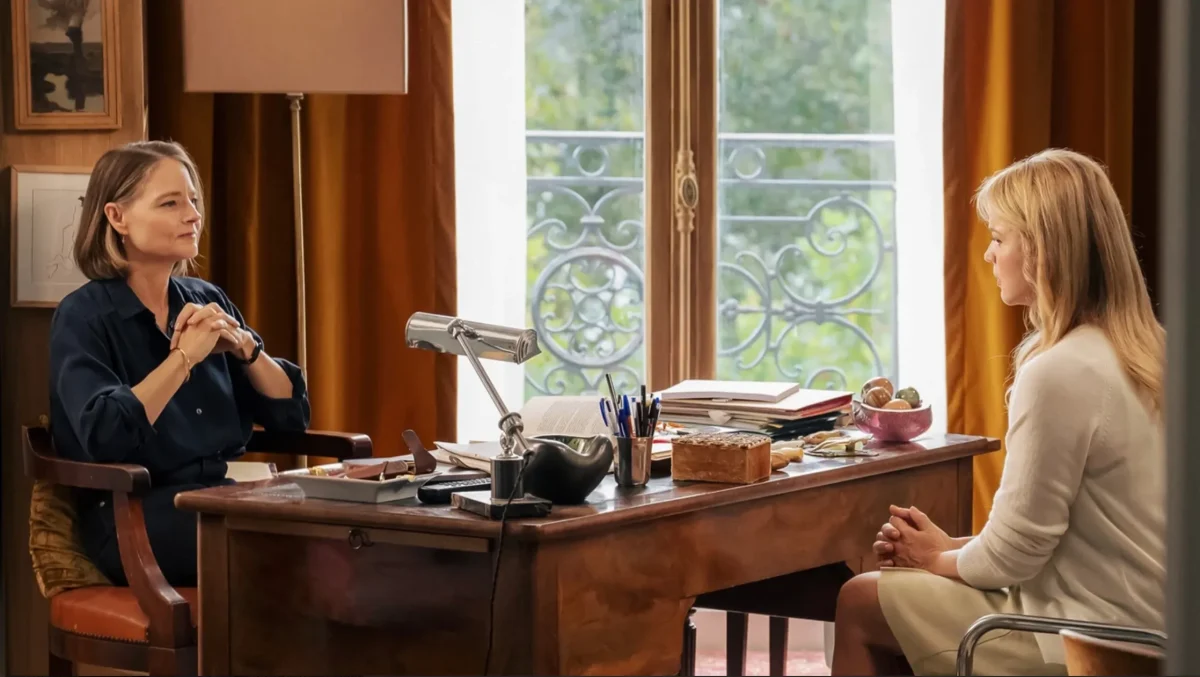
Unsatisfied with his answer, she goes back into hypnosis to hear what Paula said. She reveals that she is having Lilian’s (her past life) child. This time, Lilian also sees her son Julien as a militiaman, trying to arrest the musicians, as the conductor (Simon) shoots Paula to death. This strange vision spoils her relationship with Julien even more, but it also compels her to travel to Chérence to investigate Simon for any wrongdoing.
Gabriel, who joins her on this adventure, pretends to be a driver with a busted car, so she can break into the house and look for incriminating evidence. After an unsuccessful attempt, they walk out with only one additional insight: Simon was having an affair with another woman. (It’s something that Paula had already hinted at, but Lilian didn’t pay attention to it.)
The next morning, Lilian learns that the strange things happening in her life in the past few days (the wet cloth on her windshield, the scratch on her car, anonymous calls on her phone) were from Pierre, not Simon. The hypnotist didn’t magically help Pierre either, as he still feels the urge to smoke a cigarette. Back home, she finds Simon having broken into her house as she broke into his. He confesses to his infidelity but admits Paula knew about it. He also claims that Paula relieved Perle of her pain with her medication, but the guilt weighed heavily on her, leading to her unfortunate loss.
What does Paula’s death make Lilian realize about her own life?
After confessing about his relationship with Paula, Simon leaves as if he had never been there, making Lilian (and us) wonder if it was only a figment of her imagination. Regardless, he nudges her to revisit her old tapes to realize she may not have paid attention to some sensitive details that Paula shared with her.
In those tapes, Lilian hears Paula speaking about Perle, whom she had likely mistaken for ‘a pearl.’ Even before, she didn’t pay close attention to some details Paula shared. So, whether it’s Simon or his ghost, it makes her reevaluate her choices and prompts her to be more present in the lives of those who matter to her, and for whom she matters a lot.
In the end, she returns to Julien’s house to apologize for unwittingly provoking him at dinner and, unlike before, spends time with her grandson instead of being away from that emotional intimacy. It also ties with her emotional reaction (tears) to her patient’s death, which she initially didn’t acknowledge as one. Over the years, she might have developed this mode of behaviour for self-preservation and to treat her patients, but it has led to her at least occasional absent-mindedness. It also explains her use of cassette tapes to record her sessions instead of paying close attention to her patients when they are next to her.
In the film’s final moments, we see her remedy this by refusing to use a cassette. She turns on only a limited number of lights and readjusts her furniture to help her patients be more open about darker aspects of their psyche. It likely helps her readjust to her new approach to therapy and life in general, where she would approach emotions, not distance herself from them. Speaking about the central query about Paula’s death, the film doesn’t offer a concrete answer. It notes Lilian and Simon’s responsibility for Paula’s loss, and implies that Perle’s death affected Paula to the point of no return.
Who’s the woman with two kids in the snow?
For a brief moment toward the end of the film, we see a woman walking in the snow with her two children behind her. It looks quite similar to what Lilian sees behind one of the doors during her hypnosis session, where she also imagines snow around her. That’s why that frame seems like a glimpse into her past that she doesn’t want to reflect on. It may be related to her mother, whom she refuses to talk about even during her brief meeting with Dr. Goldstein. Yet, as said before, the film doesn’t reveal a clear detail about her past and leaves this thread open for interpretation.