When memories become your only source of identity and belonging, does the old home continue to be your home? Or does the idea of home transform? This is one of the important questions raised by “Batt Koch,” an independently produced film starring the veteran theatre artist MK Raina and the YouTube comedy sensation Anil Koul Chingari (Rajesh Koul, the Father). The women cast is not far behind with measured performances and a beautifully woven narrative.
The plot setting is straightforward. A Batte family—the Kashmiri word for Pandit—the Kouls have been living in exile in Jammu since the early 1990s exodus. Much of the film unfolds in Jammu, the primary destination for many Kashmiri Pandits who fled the persecutory edge of the Tehreek (self-determination movement).
The one masterful decision that the filmmakers deployed was the use of Koshur (Kashmiri) throughout the film. The language is sort of an anchoring, not only for the film but also for the family. It is said that language is the first casualty of violence. This couldn’t be further true for the Kashmir conflict. The touch with Kashmiri was not only lost for the displaced Kashmiri Pandits but also Kashmiri Muslims, albeit for different reasons respectively. For the Pandits, most of the 2nd-generation children (like me) grew up in places far away from their ancestral homes.
Urbanization and migration led to the breakup of erstwhile organic connections to Kashmiri culture and, consequently, the language itself. The parents (1st generation) assimilated themselves in these urban centres of mainstream India, which didn’t necessitate the use of Koshur daily. In fact, most of them didn’t even bother to speak it at home. This created the first level of alienation for 2nd-generation Kashmiri Pandits, unaware of their language and roots; they mostly spoke in Hindi/Urdu at home. The language survived but was not thriving.
This is evident from the scene where the granddaughter, Osheen (Sakshi Bhat), attempts to speak in broken Kashmiri with her Dadu, Poshkornath Koul (MK Raina). She feels estranged from her homeland and has never even been to Kashmir. However, by virtue of a quasi-joint family like set up, typical of Kashmiri kinship arrangements, the language continues to breathe life into the home.
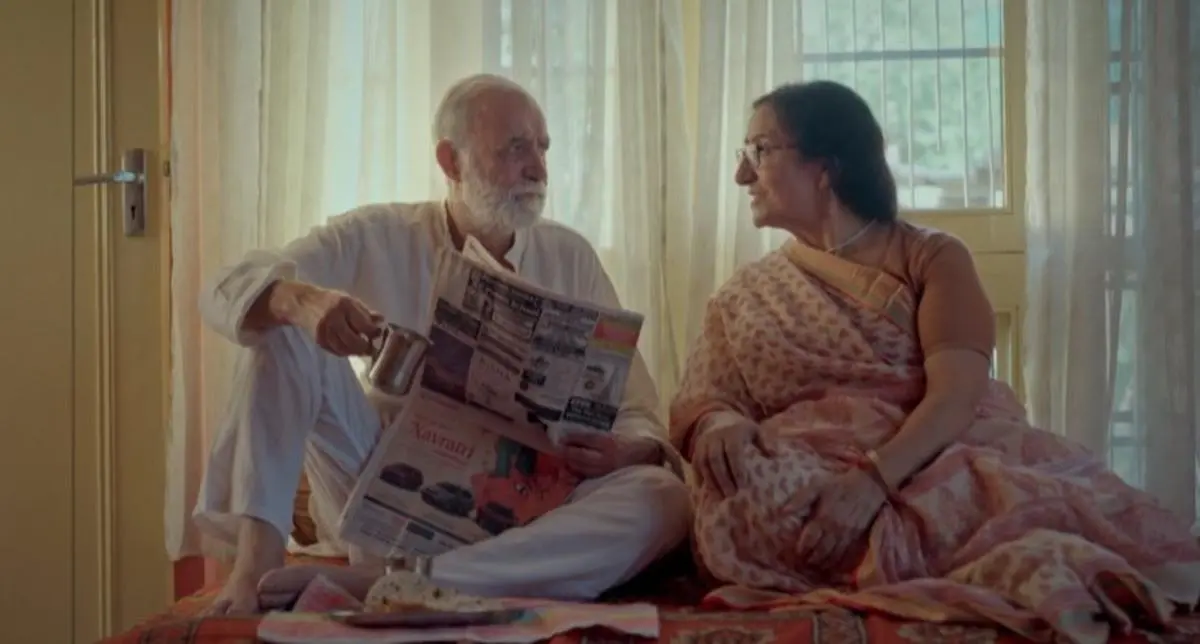
The leitmotif of Kashmiri Pandits is a desire to return. Classical psychoanalysis would love to tell us that the trauma of displacement is repressed and always returns in one way or another. However, if we turn to a more positive affirmation of the psyche, like Deleuze and Guattari, the desire to return is not repressed for the Koul family. Rather, it manifests and transforms socially as their annual plan to make a trip to their ancestor village of Mattan (which houses the famous Martand temple).
The Dadi (Kusum Dhar) is constantly planning to make a trip back home, debating on the bed with her husband, who initially typifies the paranoiac discourse about visiting Kashmir. The trip keeps getting disrupted year after year for one reason or another. It becomes an elusive encounter. After one such cancelled plan, the Dadi passes away, and like thousands of others of her generation, her dream of return is now buried.
“Batt Koch” doesn’t idealize this familial setup, though. The household labour is clearly gendered, with the mother (Kusum Tikoo) shouldering most of the work involving cooking, cleaning, and washing. She is constantly flustered with the stubbornness and kayk (an exemplary Kashmiri word whose literal translation doesn’t do it justice- an attitude/chip on the shoulder) behavior of the men (from Dadu to her husband) and the carelessness of the children.
The performance and the micro-expressions of the mother reveal the patriarchal chokeholds that are in Kashmiri familial setups. It’s a community in transition, feeling perpetually stuck. Neither have they completely assimilated themselves into mainstream India, nor have they been able to return to Kashmir. It isn’t until the majority of the film has passed that the trip to Kashmir finally materializes, several months after the grandmother’s demise.
Henri Lefebvre, in his famous book “The Production of Space” (1974) had talked about how spaces are produced not only physically and mentally but most importantly materially. The film, in this sense, is about the politics of different spaces that the Koul family inhabits and used to inhabit. The film is very direct in asking this question when it asks, “If a place could speak, what secrets would it whisper?” A place in Lefebvre’s ontology is a ‘practiced space’.
For Lefebvre, space was a continuous dynamic flux between how a space is conceived (designed by architects), perceived (spatial practice), and lived (symbolic value of spaces). In this sense, a ‘place’ is where temporary meaning gets assigned to a ‘space’; ‘place’ is the momentary intervention in the dynamic flow that is ‘space’. As per this line of argument, the ruins of old Kashmiri Pandit homes strewn across Mattan (Anantnag district) are places frozen in time, clocks stuck somewhere between 1989 and 1990. They ‘speak’ because they aren’t just objects but part-objects, woven into the fabric of the social life of the people whom it used to host.
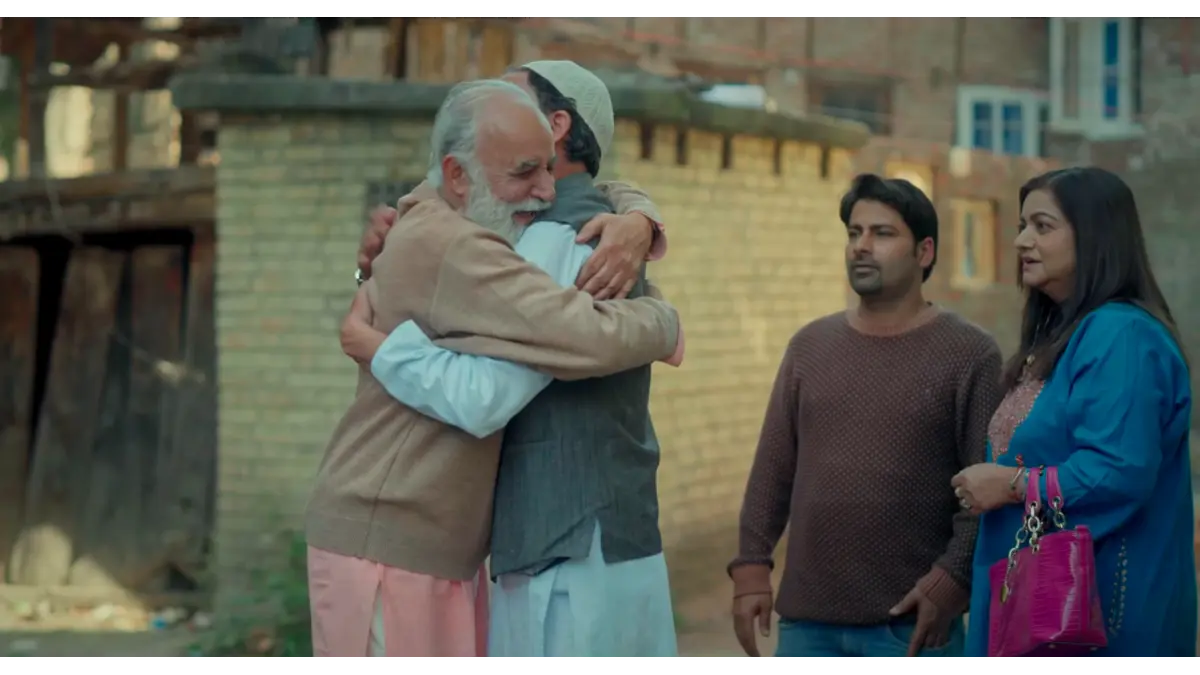
These were not houses but homes, which are places or practiced spaces where routines, rhythms of everyday life, and work were embodied. Poshkornath, a former postman, was at the frontier of interacting with these practice spaces. Each ‘place’ had its own set of rhythms, stories, and narratives. In a somber and poignant end to the film, Poshkornath goes to each and every home to deliver a bunch of undelivered letters. He speaks to the dilapidated homes and the homes speak to him. These places contained a social universe of their own – breathing and speaking its own life into the environs.
His final letter is to himself, his old abandoned home. The home, as a place, not only evokes memories but has produced these very memories running through Poshkornath’s head. It had produced effects of neighborly camaraderie, that feeling of walking out in the angan on a summer’s day to enjoy the sunshine, the corridors sandwiched between these places were sites where social exchanges, gossip, and banter thrived. The home was also the place of trauma, of nightmares that erupted on those panicked nights of fleeing from threats, intimidation, and violence of militancy.
As Poshkornath sits down in his abandoned Daeb or Kaeni (attic), he is not morose. He’s defiant; his desire for return is productive and life-affirming. He believes they will return one day. But the finiteness of his being and the inevitability of death are inescapable. There marks the suffering of his community- will any of them be alive to ever see that day?
Here, this opens a door for another interpretation. Death, much like the return to homeland, becomes a constant, ever-looming presence that structures the life of the Kashmiri Pandit yet never arrives. Will the promise of return remain conspicuous by its absence, much like the eternal wait for Godot in Samuel Beckett’s Waiting for Godot? Or will the existence of the community get drowned in the mediocrity of everydayness, much like the Koul family? The dream remains as long as there are people who are still willing and daring to dream about it.
The film does undoubtable job of talking about pain, loss, suffering, and trauma of Kashmiri Pandits in a sensitive and gentle manner. The film manages to do this without resorting to Hindu majoritarian pandering, Islamophobia, or vilification of Kashmiri Muslims. In an era of Indian cinema where it has become a norm to whip up nationalistic emotions based on Muslim othering, this film comes as an antidote.


![Grave of The Fireflies [1988]: A Love Letter to Brotherhood](https://www.highonfilms.com/wp-content/uploads/2021/04/Grave-of-The-Fireflies-1984.jpg)