
Audiences are introduced to visuals from World War II as the screen slowly fades in. Young faces in intimidating tanks ride about shelling enemy positions as the viewer is transported to a brutal war that claimed millions of lives. The aspect ratio changes as the monochrome footage slowly transitions to the green lush hills of India’s north eastern state of Manipur.
A crew sweeps a fog-soaked meadow with metal detectors until a signal finally breaks the silence. They unearth a bullet, a small relic of a devastating war in which British and Allied forces fought the invading Japanese. Decades on, the war’s imprint endures, carried by families who never saw their loved ones return. Many of the fallen still lie in these hills, far from home, far from the soil they once knew. Scattered and unclaimed, their remains have waited through generations, as if for a rescue long overdue.
Borun Thokchom’s “Battlefield” follows the Second World War Imphal Campaign Foundation, headed by Rajeshwor Yumnam, as they seek to discover remains and remnants in a landscape where one of the bloodiest confrontations of the global war took place.
The documentary, which took ten years to complete, takes a deep and reflective look at how the war impacted the lives of the native people living in the quiet land as well as the soldiers who took part in the war. Families across the world continue to look for closure, nearly eight decades later, as they search for their loved ones who lost their lives in the Battle of Imphal.
Rajeshwor and team use modern techniques such as GPS, triangulation, and terrain mapping, as well as locations discussed in the fading pages of memoirs and soldiers’ diaries written at the time. The strength of the documentary lies in its documented people, the space, and the utmost sensitivity that the visual piece affords its subject matter.
Whether it is Rajeshwor, whose curiosity about the Battle of Imphal has led him into a life spent in remote forests—amid insects, vermin, and the constant risk of infection—as his team painstakingly combs through dense green undergrowth, or Christopher Johnson, an author whose father served in the war and who brings a human anchor to what we often register only as distant, monochrome footage, “Battlefield” is rich with such compelling characters.
The long-term project successfully manages to capture what only years of dedicated documentary practice can describe: the essence of memory and how it can shape a region. Many old villagers, now at the end of their lives, also feature in the documentary as they tell about the day when they saw fighter jets for the first time or how invading Japanese troops ransacked their villages for supplies.
Caught between two imperial forces and ultimately trusted by neither, the natives’ survival hinged on their ability to appease whichever boots happened to be on the ground. Whether through forced labour, the surrender of food, or the endurance of arbitrary punishments, “Battlefield” records the human cost of war and the near-erasure of testimonies from those who once called these battlefields home. In one haunting moment, a villager sings a local song that distinguishes the movement and sound of British and Japanese fighter planes, allowing the audience to witness, in real time, how trauma embeds itself in collective memory and quietly survives across generations.
On the cinematography front, the handheld camera work conveys the grit and physical immediacy of the subject, while measured, sweeping shots of hills and plains anchor the film in the scale of the landscape. The editing further collapses the distance between wartime and the present by juxtaposing contemporary images with a soundscape that evokes the chaos and brutality of battle. Through carefully composed frames and attentive visual design, the documentary also communicates the remoteness of these locations and the herculean labour involved in recovering the remains and remnants left behind by the war.
“Battlefield” also portrays the various ways in which villages in Manipur grapple with the legacy of the war in forms of undetonated armaments. In a sequence, the mud floors of an otherwise peaceful village home are now a haven to once buried and now rusted bombs and pieces of mortar shells. Dangerously, many of these explosives remain active to this day. In one striking scene, villagers repurpose metal salvaged from a bomb to cast a church bell, even as the surrounding landscape bears bridges built during the war, structures that continue to be used in everyday life.
However, many such stories involving bombs are full of tragedy. “Battlefield” also shines a light on the often less talked about aspect of active bombs in the region. Many Manipuris continue to lose their lives owing to the mishandling of such bombs, as showcased in the documentary, wherein two brothers died undertaking such an endeavour. As Rajeshwor puts it, “Even after 78 years of the Second World War, our people are still dying because of the war.” We see the aftermath of the incident as the kids of the deceased young man play with the base of the bomb.
The documentary also accomplishes in providing a narrative of the war, which has been rather underexplored till now. How did poor villagers subsisting on agriculture deal with so much violence? How did it impact their lives? And how did the loss of a family member scar them? With the help of in-depth research and well-conducted interviews, we get these poignant answers and then some.
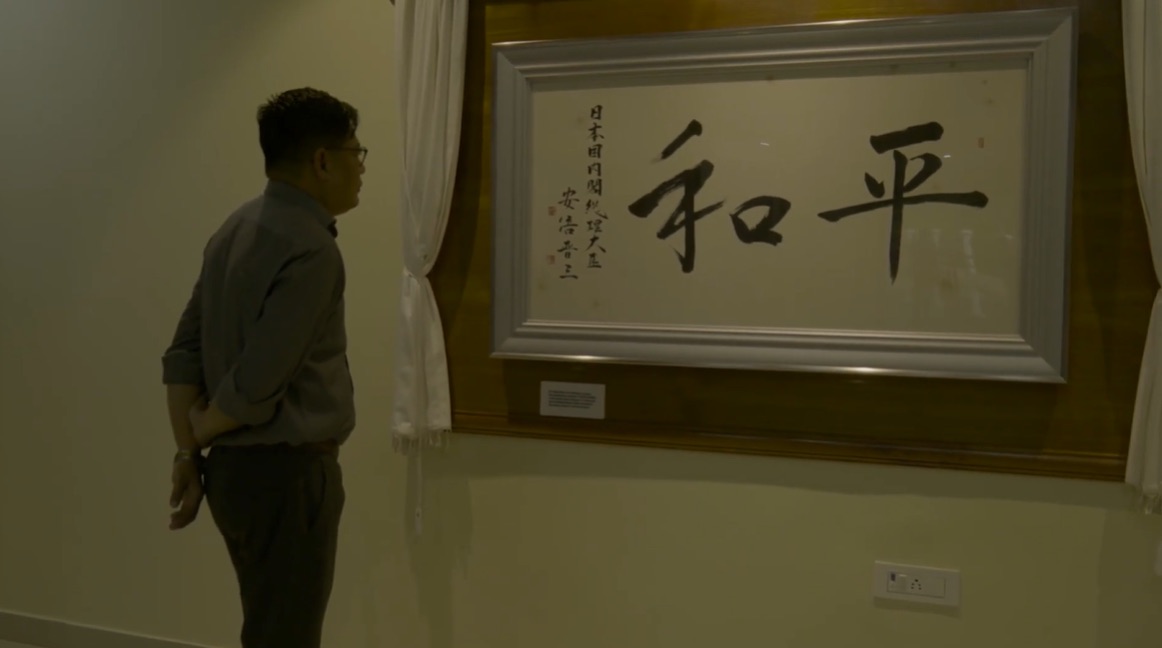
The visual piece is also an introspection on the nature of war itself. Although Japanese atrocities on many communities of Asia are now known, and many young people laid their lives in the service of an ideology or their nation, time indeed fades everything. Now the descendants of such soldiers are trying to keep the cause alive and, with mutual collaboration, are trying to bring their lost soldiers back home.
Manipur’s serene beauty is etched with the scars and memories of war. From bridges built to ease the movement of troops and now used daily by civilians—quiet conduits to a violent past—to the engines of fighter planes that once claimed young lives and now rest, improbably peaceful, in people’s homes, the soil of Manipur carries stories everywhere. The question that lingers is whether humanity’s enduring appetite for war is still capable of listening. What Borun Thokchom achieves here feels close to the essence of cinema itself.
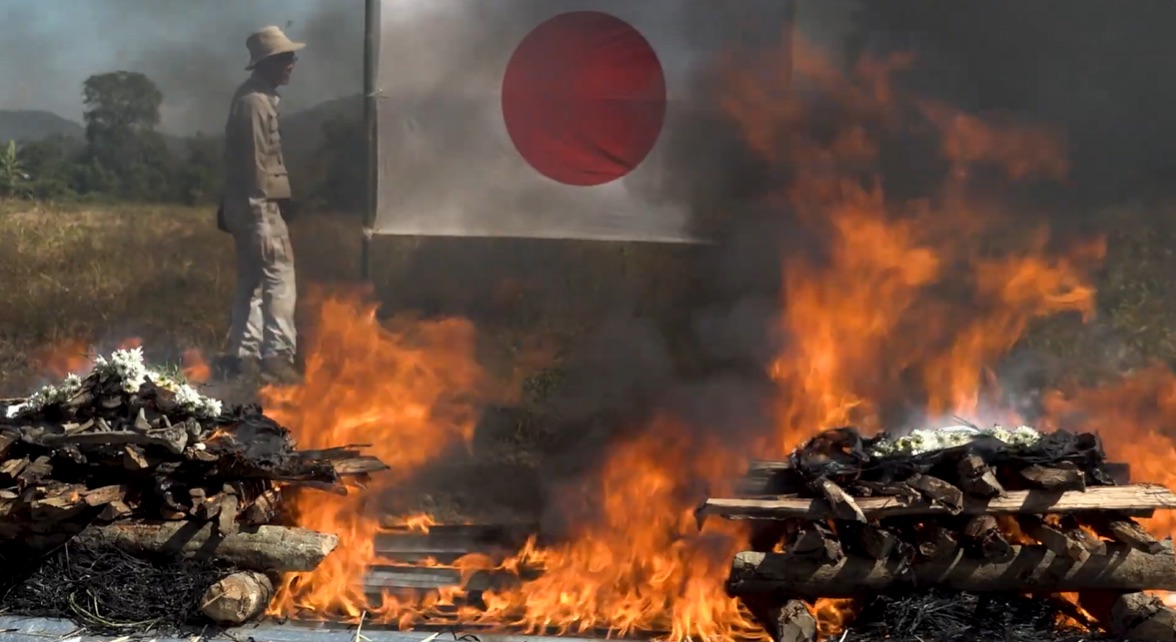
As a viewer, the film reaches its emotional peaks when sons and daughters, now aged and frail, reach out to Rajeshwor with a simple, devastating request: to find the mortal remains of their parents. Curious grandchildren, searching for ancestry and belonging, find a strange solace in the hills of Manipur as they perform funeral rites for a great-grandfather they never knew.
“Battlefield” gives a human face to a war too often reduced to winners and losers, Allies and Axis powers, speeches and statistics. At a time when Manipur is once again torn by brutal violence that has turned communities against each other, Borun’s film stands as a vital visual record of the fragile beauty of peace and the enduring consequences of war.

![Nadie sabrá nunca (No One Will Ever Know) Netflix [2019] Review – Turning to a Fictional World](https://www.highonfilms.com/wp-content/uploads/2019/08/Nadie-sabrá-nunca-No-One-Will-Ever-Know-768x384.jpg)
![The Kid Detective [2020] Review – Sleuthing in a Notably Darker and Self-Aware World](https://www.highonfilms.com/wp-content/uploads/2021/02/The-Kid-Detective-2020-768x512.jpeg)


![Manmarziyaan [2018] Review: Crazy, Stupid Love Indeed](https://www.highonfilms.com/wp-content/uploads/2018/10/Manmarziyan_HIGH_ON_FILMS1-768x384.jpg)