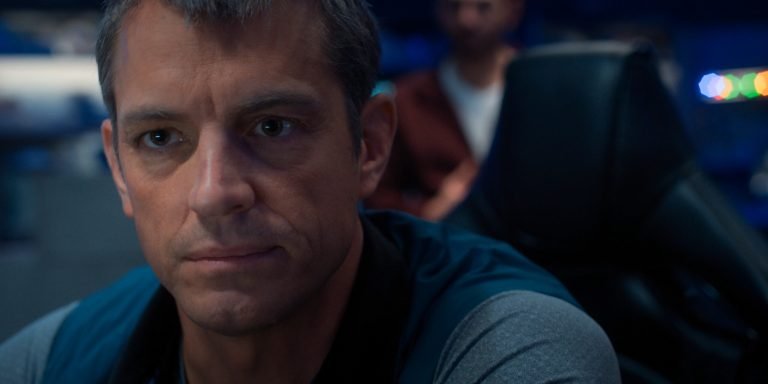
Mari Selvaraj’s “Bison Kaalamaadan” may look like a sports drama, but the film uses Kabaddi as an entry point into something harsher and more volatile. Beneath every raid and tackle is a story about caste, rage, humiliation, and a boy who grows up in a land where talent is never enough unless it is armored by pain. The film is less concerned with whether Kittan will win a gold medal and more invested in how much of himself he loses before he earns it.
Kittan’s journey is not about glory. It is about endurance. Every character around him, Velusamy, Kandeeban, Pandiaraja, and Kandasamy, helps shape the man he becomes, not through inspiration but through the violent landscape they force him to walk through. By the time Kittan reaches Japan, he is already victorious simply because he has survived. Selvaraj builds a world where Kabaddi is the only place Kittan can breathe freely. Everywhere else, society tackles harder than any opponent. That is why the ending feels less like triumph and more like a man finally allowed to stand.
Spoilers Ahead
Bison Kaalamaadan (2025) Plot Summary and Movie Synopsis

Kabaddi begins at home for Kittan, long before he understands what fame or competition means. Velusamy, his father, once followed the sport with pride, but the murder of his idol Attur Kittan, humiliated and stripped of his moustache by caste fanatics, turns that pride into fear. Velusamy doesn’t forbid Kabaddi out of cruelty but out of terror. He has already witnessed what happens to lower-caste men who stand out.
But Kittan is a child when he discovers the game, and children do not understand inherited fear. He plays because it fills him with joy, and he sees in it a world that obeys rules unlike the one outside. When PT teacher Kandeeban sees him play, he instantly knows the boy has something rare: speed, instinct, a kind of wild clarity. Kandeeban does what society refuses to do: he sees Kittan as talent before he sees him as caste. His decision to include Kittan in the school team becomes the first act of defiance the boy experiences on his behalf.
How does Caste Violence Shape Kittan’s Early Life?
Selvaraj wastes no time breaking the illusion of a simple sports narrative. While Kittan is happily eating porotta, believing for a moment that he belongs in a world without boundaries, violence erupts around him. Pandiaraja, a local rebel, storms into the eatery and kills two men who had mocked Kittan only moments earlier. To Kittan, this is the first encounter with a truth he will never escape: caste is not a theory; it is a daily assault, sometimes quiet, sometimes bloody.
Pandiaraja’s action is horrifying, but it also reveals an uncomfortable layer. The men he kills are celebrated casteists. Their words were weapons long before Pandiaraja lifted a blade. Kittan doesn’t know what to make of the man; he is savior, monster, protector, outlaw, everything at once. But this incident steals whatever innocence Kittan had left. From here on, Kabaddi becomes not a sport, but a refuge from a world where men die for their birth.
Why do Pandiaraja and Kandasamy Matter so much to Kittan’s Story?
Pandiaraja and Kandasamy stand on opposite ends of the social spectrum, yet both influence Kittan in ways they never fully understand. Pandiaraja, worshipped by oppressed caste villagers as if he were a guardian spirit, fights the system with unfiltered rage. His methods are violent, but his intention, to dismantle caste oppression, is the fire that keeps Vanathi alive. He even protects Kittan’s personal life, stopping Raani from being married off, as if instinctively drawn to shield the boy’s happiness.
Kandasamy, on the other hand, is introduced as the expected villain: upper caste, powerful, vengeful. But Selvaraj peels back that stereotype. Kandasamy is many things, but he is not a casteist. He loves Kabaddi with a purity that caste politics cannot touch. When Kittan defeats his team with an injured hand, Kandasamy isn’t threatened; he is mesmerized. He offers Kittan a place in his team, not out of pity but out of genuine admiration.
Together, these two men represent the contradictory forces in Kittan’s life. One pulls him deeper into the caste war he never asked for. The other lifts him toward a future built on talent rather than blood. Yet both are trapped in a feud so consuming that it spills into Kittan’s life whether he chooses a side or not.
Why does Kittan Lose His Place in KB After Finally Getting His Big Break?
For a moment, joining Kandasamy’s team feels like freedom. Kittan finally gets to play without the weight of Sethuram’s hatred or village politics pressing on his shoulders. But peace never stays long in a Selvaraj universe. When Pandiaraja returns from a near-fatal bombing and kills Kandasamy’s men in retaliation, suspicion shifts toward Kittan simply because of where he comes from and who his village worships.
Kandasamy understands the danger far better than Kittan does. He knows his own people will not hesitate to target the boy in their search for blame. So when he asks Kittan to leave the team, it is not an act of anger but of sorrow. He is trying to save a player he respects from a war that has no rules. Kittan leaves heartbroken, carrying the bitter realization that even talent cannot protect him from the world he was born into.
Bison Kaalamaadan (2025) Movie Ending Explained: Why is Kittan’s Path to the National Team so Difficult?
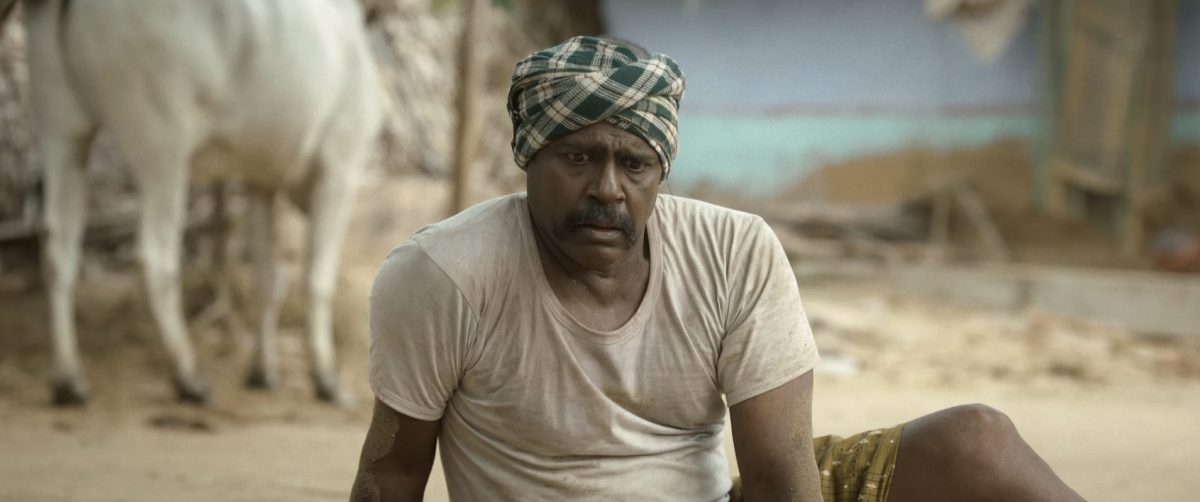
Kittan is the best Kabaddi player in Tamil Nadu, and everyone knows it. But potential means nothing in a system that pretends meritocracy exists while quietly following caste arithmetic. The selectors do not want two Tamil players on the Indian team. Rathinam fights for him, fully aware that he is risking everything. The South Indian selector goes even further, sacrificing his job to force Kittan’s inclusion. Their actions show a truth the film keeps circling back to: Kittan succeeds not because the system becomes fair, but because a few individuals decide to challenge it.
Even when he is selected, Kittan cannot leave without facing violence one last time. As Velusamy tries to smuggle him out of a burning village, police officers stop them, refusing to believe Kittan is a national player. They assault him, insult him, reduce him to the caste they think he belongs in. Letting him go feels less like mercy and more like an afterthought. By the time Kittan reaches Japan, he is already wounded by a lifetime of humiliation. But he goes anyway because the alternative is surrender.
How does Kittan Finally Win the Gold Medal?
Japan feels like a fresh start, but the coach carries the same prejudices Kittan has spent years fighting. He benches him, mocks him, and treats Rathinam with equal disdain. It takes a referee’s controversial call to force a replay of the final, opening a door Kittan wasn’t meant to enter. When both he and Rathinam are ruled out after a mistake, the team must choose who returns. Rathinam chooses Kittan, not out of desperation, but because he knows who the bigger fighter is. Kittan’s entry into the final minute feels like destiny folding back on itself.
The three points he scores are not just athletic victories; they are eruptions of every insult, every beating, every refusal he has survived. Selvaraj stages it like a charge, not a raid. Kittan becomes the bison in full, unstoppable force. The gold comes down to a single point, and when India wins, the celebration feels quieter than expected. Kittan is victorious, but the cost has been immense. The film closes with him receiving the Arjuna Award, a symbol not of recognition but of a world that finally allows him to be seen.
Bison Kaalamaadan Movie Theme Analysis: What Does the Bison Symbolize in Kittan’s Life?
“Bison Kaalamaadan” is not about Kabaddi. Kabaddi is the only language through which Kittan speaks a life soaked in discrimination. The film is about how caste shapes childhood, how violence becomes normal when justice refuses to appear, how talent must sometimes grow horns before it is allowed to bloom.
Kittan wins the gold, but his real achievement is survival. He does not break, even when the world tries to break him at every turn. He becomes the bison because the human within him is never allowed to stand unprotected. Selvaraj ends not with triumph but with truth: Kittan has not conquered the system. He has merely outrun it long enough to claim his moment. And sometimes, in a world like his, that is victory enough.
The bison is not magic, but it is sacred. It represents the deity Kaalamaadan, the same force Velusamy fears and respects. When Kittan sees the bison head in Kandeeban’s house, it feels like a calling rather than a coincidence. In a life where he is constantly denied identity, the bison becomes the one thing he chooses for himself.
Also Read: All Five Mari Selvaraj Films Ranked
When Kandeeban is beaten for letting a lower-caste student sit behind him on a bike, something inside Kittan snaps. His rage is not wild; it is controlled, channeled, almost ritualistic. He fights with the fury of an animal forced into a corner. The headbutts, the charging tackles, the unstoppable intensity on the Kabaddi court, all of these become extensions of the bison’s spirit. For Kittan, the bison is strength, pain, and defiance fused into a single form. It becomes his armor against a world that repeatedly tries to break him.