For all of his attempts to explore the depths of class disparity and the consequent desperation that plague his native Mexico, Michel Franco seems to find the most success when he applies his proto-Haneke style of dispassionate filmmaking just about anywhere else. Where films like “Chronic” and “Memory” use Franco’s clinical gaze as a means of letting those small slivers of empathy shine through the unemphasized cracks, films like “Through the Eyes” and “New Order” tend to give off the impression that the only appeal Franco sees in his own country is in its depiction as a breeding-ground for vicious apathy communicated via empty provocation.
“Dreams” falls somewhere in the middle—quite literally, in fact, as Franco’s latest dissection of how power dynamics affect the underprivileged of Mexico does so by hopping back and forth between the sheltered haven of San Francisco and the slightly less sheltered haven of a San Franciscan socialite’s isolated getaway in Mexico City. In either space, desperation turns those high glass walls into a self-erected prison, and in keeping with that flip-flopping of locales, Franco’s exploration of what those prison walls do to a mind is just as clinically compelling as it is critically clumsy.
Reteaming with Jessica Chastain after their shared success in “Memory”—quite possibly Franco’s most fully-rounded achievement to date—the director now casts his favourite poised redhead as Jennifer McCarthy, the head of one of several foundations intended to give the underprivileged—often Mexican migrants—a chance to get a foothold on steady living through the venue of professional ballet dancing. Opening with an overcrowded truck filled with immigrants being siphoned into Texas to fend for themselves, one such traveller, Fernando (Isaac Hernández), slowly hikes his way to Jennifer’s home, spending the night raiding her fridge and occupying her empty bed.
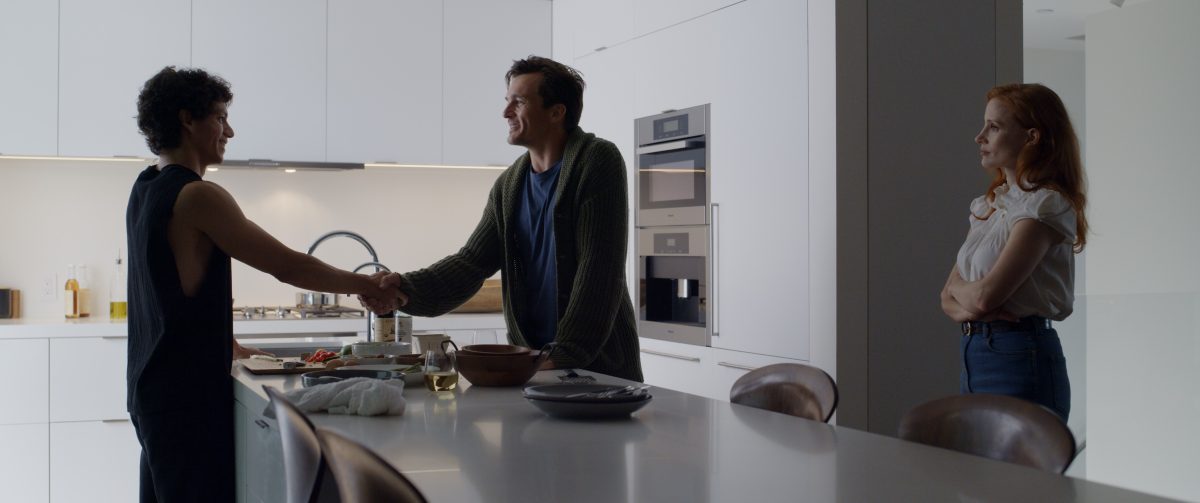
It isn’t long before McCarthy comes home, and we learn that these two have long had a history together, with the socialite utilizing her resources to pamper Fernando as they carry on an illicit affair. The prospect of permanence appears to be little more than a pipe dream, though. As Fernando pushes for a more exposed role in Jennifer’s life, her refusal to do so draws uncomfortable attention to the purpose of their union and to the value they each see in one another.
Also Read: 10 Best Jessica Chastain Performances
Chastain, who thrives on a stunningly regal disposition, here displays a despondent fragility we haven’t seen from her in years, offering a more obliviously predatory, sexually motivated counterpoint to the previous sort of emotional reticence Franco pulled from her on their last collaboration. Every move this woman makes is underscored with a measured smile and a skip in her step whenever Fernando is around, to the point where her affection for him is never quite in question. The question is always to what degree that affection is driven purely by the dancer’s body; she’s so willing to hide from the rest of the world, like her own emergency sex doll entombed in a breakaway glass case.
As is typically the case with Franco’s films, “Dreams” employs the filmmaker’s detached eye to suck every ounce of romanticism from the affair, leaving little room for passion but a surprising amount of leeway for the resulting despair of that internal emptiness to take hold. How much of the relationship between Jennifer and Fernando is actually transactional is the primary concern here.
It’s from that sober distance that Franco’s camera is able to sow that doubt across the entirety of the runtime. When so many of the conversations and interactions in the film revolve around sex, an early scene of intimacy that reads as equal parts unenthusiastic and instinctively delicate sets the stage for a carnal sense of bartered value between two dubious souls.
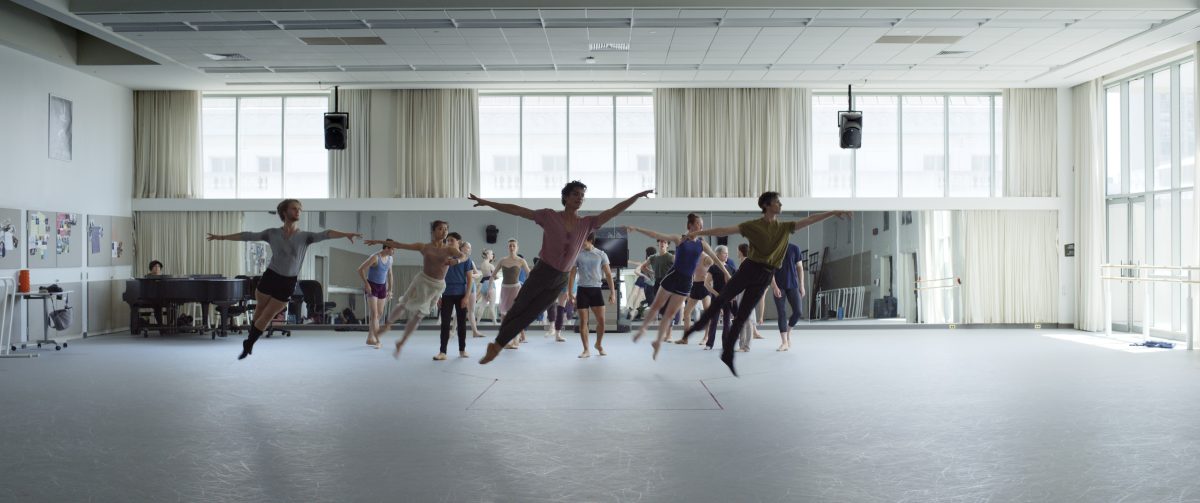
How Franco then delves into that dubiousness—particularly in the film’s final act—is where the most umbrage is taken with “Dreams” and the director’s inevitable penchant for what some see as empty provocation. And sure enough, like “The Brutalist” before it, Franco’s microcosm for the proverbial screwing that goes on between the US and the immigrants that keep it alive gets somewhat lost in the metaphor, here even more so because the director, as with “New Order” before, seems confused about where his countrymen and their depicted attitudes come to fit into a broader narrative about complicity in the suffocating mechanisms of a wider regime.
Clearly intended to shock viewers in some capacity, what proves most shocking is probably Chastain’s willingness, in a career often quite guarded in its purposeful depictions of female representation, to let Franco take her to these more cryptically instigating spaces. In any case, the star’s own efforts to hold on for dear life to the shield that wealth has provided this character make the moment it shatters all the more frigid, empty as it may prove to be when “Dreams” brings itself to a whimpering close.
While Michel Franco’s “Dreams” arguably suffered from the misfortune of not even being the most significant film of that title to compete at last year’s Berlinale—Dag Johan Haugerud’s deserved Golden Bear winner of the same name is an equally sexually charged, but far more delicately considered feature—it may be just as easy to view Franco’s more muted reception as a growing immunity to the viciously impersonal incitement in which he continues to traffic so casually. But while the class metaphor continues to come just shy of crossing its own border into a fully-rounded commentary, the quiet exhaustion of the trek leaves enough consideration for what actually lies on the other side of that elusive skyline kissing the Golden Gate Bridge.



![20th Century Women [2016]: Progressive tale set in the past.](https://79468c92.delivery.rocketcdn.me/wp-content/uploads/2020/12/great-feminist-films-1-20th-Century-Women-768x513.jpg)

![1BR [2020] Review – An ingenious horror-thriller that crafts a satisfying rehash of genre tropes](https://79468c92.delivery.rocketcdn.me/wp-content/uploads/2020/12/1BR-Movie-Review-highonfilms-1-768x322.jpg)
![The Last Queen [2022]: ‘Venice’ Review – A Highly Engrossing Period Drama from Algiers](https://79468c92.delivery.rocketcdn.me/wp-content/uploads/2022/09/The-Last-Queen-2022-1-768x416.jpg)
![Triple Frontier [2019] Review: Interesting Premise, Uneven Execution.](https://79468c92.delivery.rocketcdn.me/wp-content/uploads/2019/03/triple-frontier-screenshot-1-768x360.jpg)