John Carpenter’s “Escape from New York” (1981) imagines a future that solves chaos with isolation. Crime is no longer reformed, understood, or prevented. It is contained. Manhattan is sealed off, abandoned, and left to rot as a maximum-security prison. No guards inside, and no laws. Just walls, mines, and the assumption that anyone trapped within deserves it.
The film doesn’t pretend that this system works. It shows what happens when power withdraws responsibility and replaces justice with distance. Survival inside the city belongs to the ruthless, the adaptable, and the forgotten. Into this space, the most important man in the country is dropped like discarded cargo.
Spoilers Ahead
Escape from New York (1981) Plot Summary & Movie Synopsis:
Why Has Manhattan Been Turned into a Prison?
By 1997, crime had overwhelmed the United States, rising by 400 percent. The government responds not with reform, but with erasure. Manhattan is fenced off, surrounded by mines, and stripped of citizenship. Prisoners are sent in. No one comes out. This decision reveals the film’s core cynicism. The state does not believe in rehabilitation.
It believes in containment. Manhattan becomes a dumping ground for people the system no longer wants to deal with. The city is still standing, but its purpose has been erased. It exists only to hold bodies. This environment shapes every character inside it. Power is no longer institutional. It is improvised.
Why is the President So Vulnerable?
President John Harker is introduced as a symbol rather than a man. He is flying to a peace summit with a cassette that contains nuclear fusion data, meant to stabilize global tensions. His importance is entirely abstract. He represents diplomacy, progress, and authority. When terrorists hijack Air Force One, that abstraction collapses.
The President is handcuffed, silenced, and ejected into Manhattan like contraband. The escape pod does not save him. It isolates him further. Inside the city, the President has no power. His title means nothing, and his survival depends on the very system he helped create, and that system immediately hesitates.
Who is Bob Hauk, and How Does He See Power?
Commissioner Bob Hauk is the face of authoritarian pragmatism. He does not negotiate with ideals. He negotiates with leverage. When the President goes missing, Hauk does not send an army. He sends a criminal. Hauk understands Snake Plissken better than anyone else. He knows Snake will not cooperate out of patriotism or morality. So he removes choice. The micro-explosives injected into Snake’s neck are not just insurance. They are a philosophy. Obedience enforced by death. Hauk’s calm demeanor masks cruelty. He believes the ends justify any means, including turning human beings into disposable tools.
Why is Snake Plissken the Only Option?
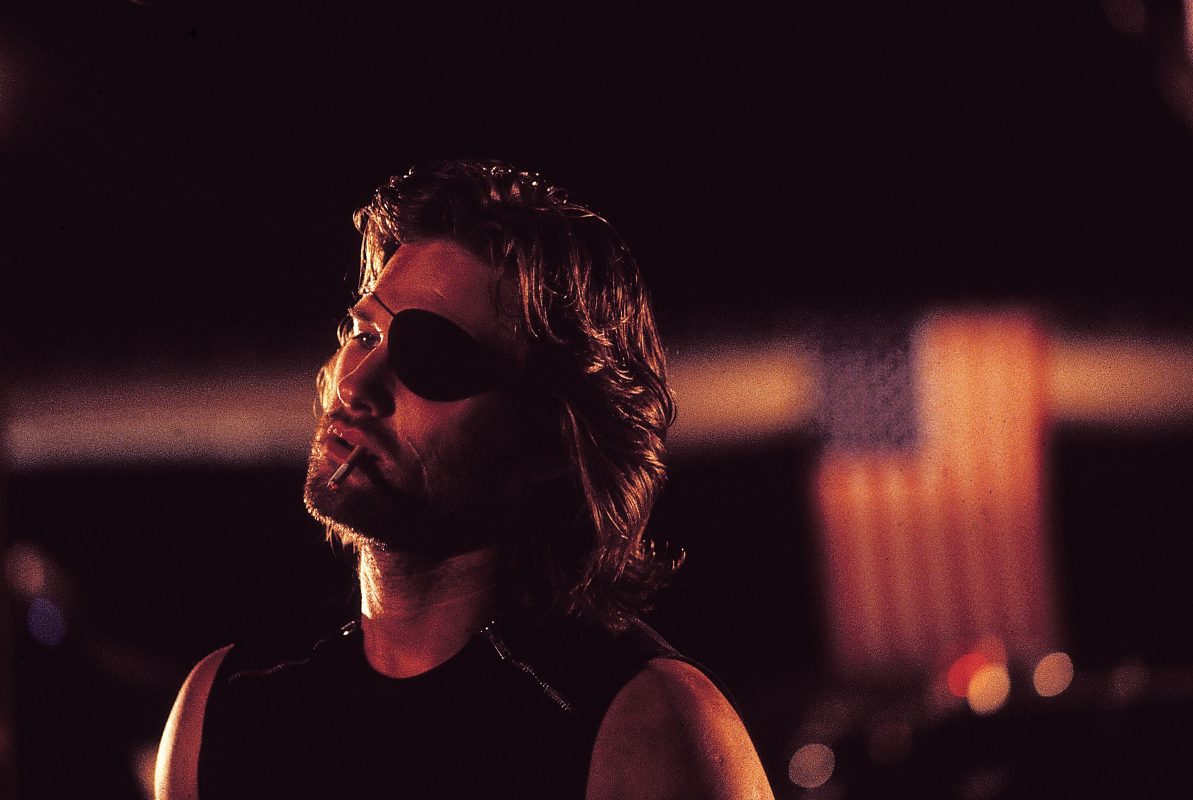
Snake Plissken is already a ghost before the film begins. A former Special Forces soldier turned criminal, he is sentenced to Manhattan with no ceremony. The world has no use for his skills unless they can be exploited. Snake accepts Hauk’s deal not because he believes in the mission, but because survival demands it. His silence is not heroism. It is fatigue.
He has learned that resistance only costs more. Snake’s defining trait is refusal. He refuses to explain himself and refuses loyalty. And later, he refuses to play the role of savior once the job is done. Snake’s glide onto the World Trade Center is clean and precise, but the city below is chaos. His tracker leads him not to the President, but to a vagrant wearing it like a stolen trinket.
Technology fails immediately. Snake’s radio is destroyed. The mission becomes personal and blind. This is where Cabbie enters. Loud, cheerful, and strangely hopeful, Cabbie survives by adapting. He knows the streets and the people. His optimism is not ignorance. It is armor. Cabbie represents the people left behind by systems that decide some lives are expendable.
Who is the Duke of New York, and Why Does He Rule?
The Duke of New York is not just a crime boss. He is the natural outcome of abandonment. When the state leaves, someone fills the vacuum. The Duke rules through spectacle and fear. His control of Grand Central Terminal turns a symbol of movement into a throne room. He plans to escape Manhattan using the President as a human shield, turning political power into literal protection. He understands leverage better than the government. Inside the city, authority comes from control, not legitimacy.
Harold ‘Brain’ Hellman survives through intelligence and cowardice. As an engineer, he controls the gasoline supply, making himself indispensable. His alliance with the Duke is strategic, not loyal. Brain betrays the Duke the moment survival demands it. He betrays Snake when he thinks it will save him. Brain is not evil. He is afraid. In a world without rules, self-preservation becomes the only consistent ethic. Maggie, his girlfriend, sees through him but stays anyway. Her loyalty is emotional, not rational.
What Does the Deathmatch Reveal About the City?
Snake’s forced fight with Slag is entertainment masquerading as justice. Violence is ritualized. The crowd demands blood not out of cruelty, but boredom. Snake kills Slag efficiently. There is no triumph. The fight is just another obstacle. This moment strips violence of spectacle. Survival is mechanical. Outside the arena, Romero’s death and the escape attempt show how fragile power really is.
Control shifts quickly. Everyone is expendable. The escape across the 69th Street Bridge is where illusions collapse. Mines do not discriminate. Cabbie dies trying to help. Brain dies because he hesitates. Maggie dies because she chooses to act. Each death is the result of a system that values speed over safety and outcomes over people. Maggie’s sacrifice is the most human act in the film. She stops running. She decides to protect someone else. Snake keeps moving. He has learned that stopping means dying.
Escape from New York (1981) Movie Ending Explained:
Why Does the President Kill the Duke?
At the wall, the President briefly regains agency. When the Duke attacks, the President picks up a rifle and kills him. It is his first decisive action in the entire film. But this act changes nothing. Authority returns the moment the President is lifted out. The city remains sealed, and the dead stay dead. The system is restored without reflection as the President thanks Snake politely.
His regret for the dead is procedural. When offered a job, Snake walks away. He understands the offer for what it is. Another leash. The cassette is the final insult. The President plays it, expecting salvation, only to hear music. Snake has kept the real tape and destroyed it. This is Snake’s only act of rebellion. He denies the world its miracle because the world denied humanity first.
Progress without empathy means nothing to him. Snake walks away free, not victorious. He leaves behind a system that will continue sacrificing lives in the name of order. “Escape from New York” ends without hope, but with clarity. Walls do not solve violence. Power does not equal responsibility. And survival, in a broken system, often requires refusing to save it.