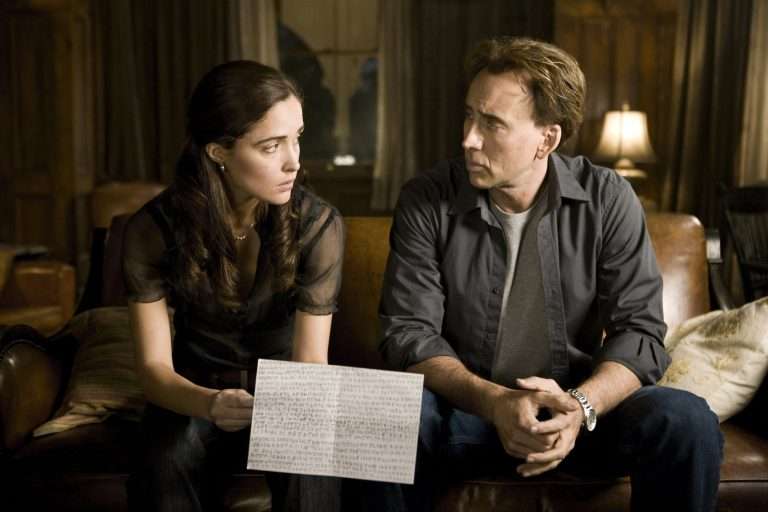
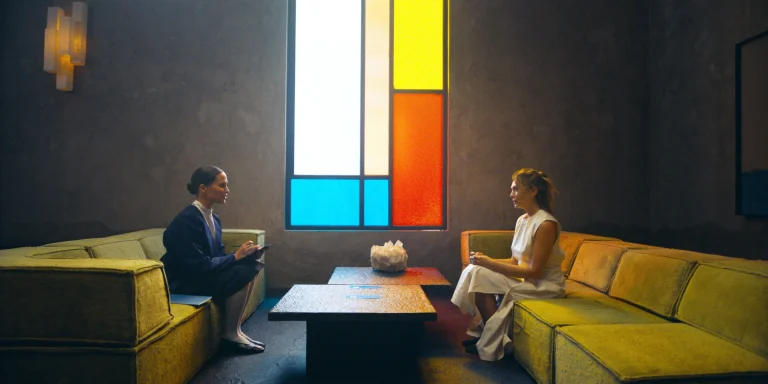
Exit 8 (original title: 8-ban Deguchi, 2026) adapts the indie game of the same name into a psychological puzzle film. Directed by Genki Kawamura, the film amplifies the game’s creeping dread by leaning into psychological instability rather than spectacle.
The protagonist, an unnamed man played by Kazunari Ninomiya, is on his way to a temporary job, moving through a subway space defined by repetition and anonymity. Just before attempting to exit, he learns that he is about to become a father, a revelation that unsettles him and leaves him uncertain about his readiness for responsibility.
When he tries to leave the station, he discovers he is trapped in a looping corridor, walking the same path over and over again. Apart from him, only one other man appears repeatedly, materializing ahead of him in the same passage, a presence that feels both ordinary and unsettling. Gradually, the protagonist begins to notice signs outlining the rules of escape, transforming the subway into a silent test of perception and judgment.
The task is deceptively simple. If he detects any abnormality in the corridor, he must turn back. If nothing seems out of place, he must continue forward. Progress depends on absolute precision. To escape, the protagonist must make the correct choice eight consecutive times. Any mistake resets the loop, tightening the psychological pressure and turning observation itself into a form of survival.
This article contains spoilers.
Exit 8 (2026) Plot Summary & Movie Synopsis:
The film opens inside a subway train. We follow our protagonist, an unnamed man (Kazunari Ninomiya), who stands by the door with his phone. There is a mother with a baby on the train. The baby starts to cry loudly. A man standing in front of the mother and child starts yelling at the mother as the child’s cry is annoying.
So, the protagonist takes off his earplugs and listens to the commotion. Then plugs his earpiece in for the rest of the journey. Once outside the train, the protagonist receives a call from his girlfriend/ex-girlfriend. The protagonist takes the call and learns that the girlfriend is pregnant. The only question the girlfriend asks is what the protagonist’s choice is regarding the child. However, the protagonist is still indecisive but promises to visit the girlfriend in the hospital.
What does the protagonist learn about the subway loop?
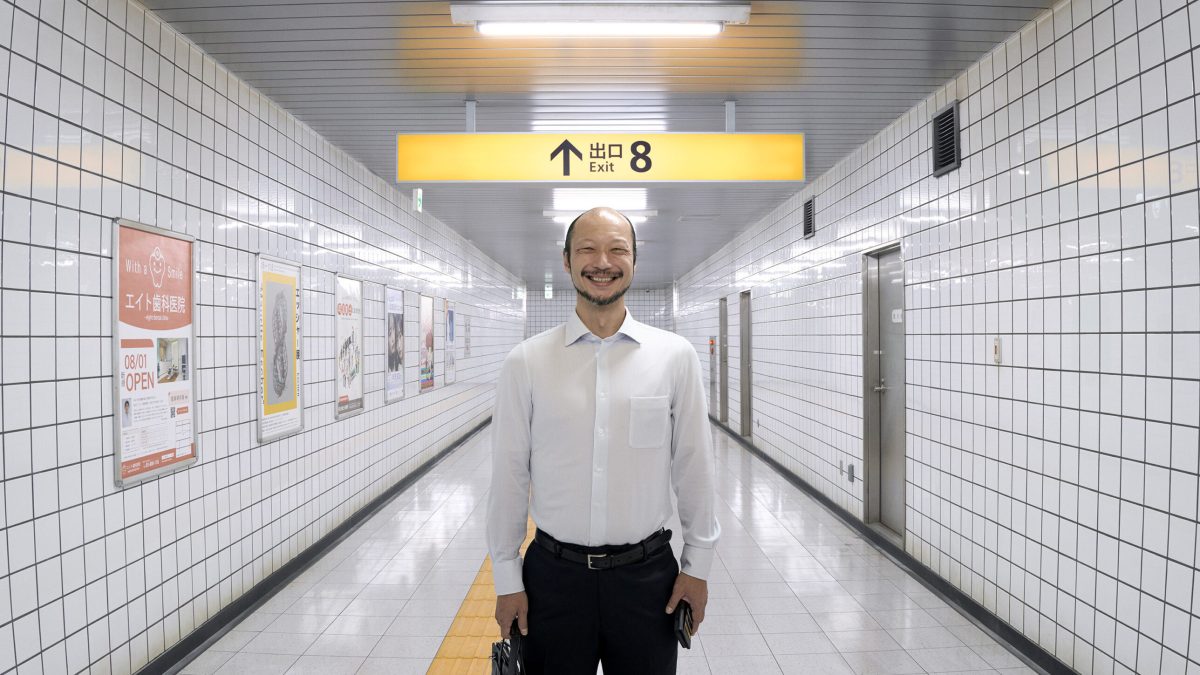
As they talk, the signal goes off, and the protagonist is at exit 8 of the subway. A man (aka the walking man) walks past the protagonist. Furthermore, there is no one else on that stretch of exit 8. The protagonist walks around and sees a sign that reads “exit 0.” When the protagonist makes the turn, the overhead board reads “exit 8,” and the walking man appears again.
The protagonist walks around a couple more times before realizing he is walking in circles. This time, the walking man, instead of just walking past, is right behind the protagonist, smiling, which takes the protagonist by surprise. As the protagonist walks away, the walking man follows, smiling. When the protagonist approaches the wall exit sign, the walking man is no longer behind the protagonist.
Once again, in the main corridor, the protagonist sees the walking man, so he turns around and rushes back, but soon realizes the board still reads ‘exit 0’. In the main corridor, the protagonist sees three doors and tries to open them, but they are locked. While waiting in the main corridor, the protagonist sees blood dripping from the walls and the ceiling.
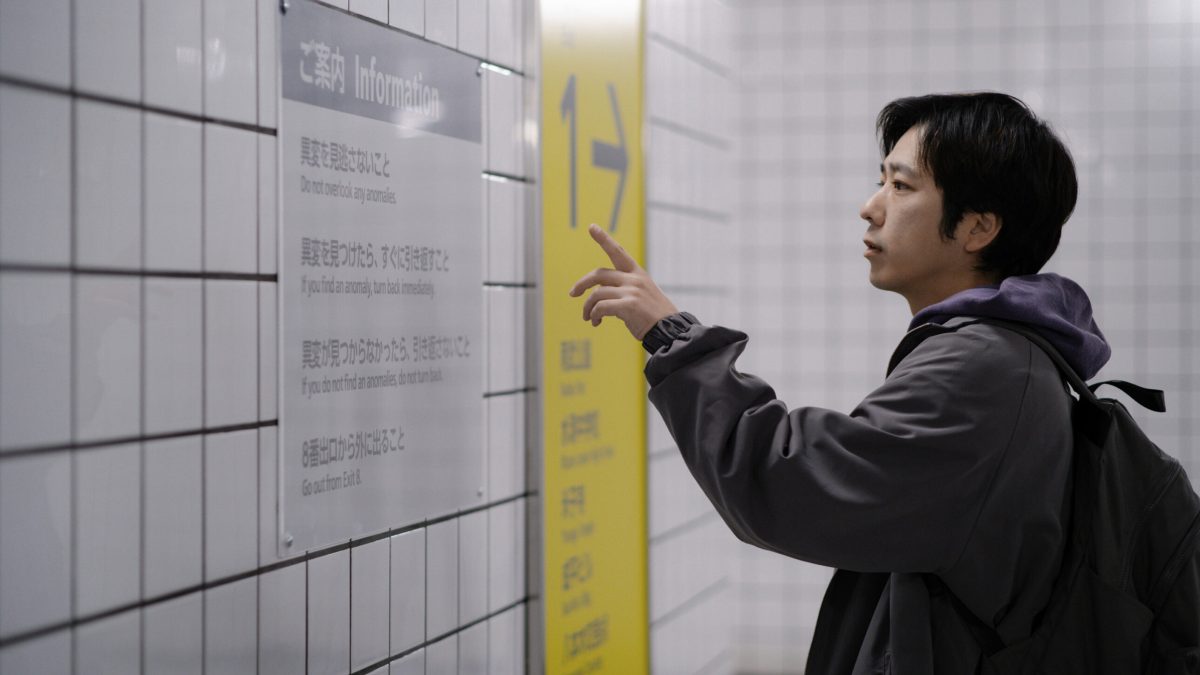
So the protagonist turns around and runs. The wall sign has changed to ‘exit 1’ from ‘exit 0’. Next to the wall board is the information board (or the rules). The rules are as follows: Do not overlook any anomalies; if you find any anomaly, turn back immediately. If you do not find any anomalies, do not turn back; go out from Exit 8. After reading the instructions, the protagonist rushes to the main corridor.
What anomalies does the protagonist encounter?
This time, when the walking man approaches, the protagonist asks him how to reach the exit, but receives no response. Now, the protagonist decides to take pictures of everything in the main corridor to detect anomalies. There are several posters- Dentist, Escher, Judicial scrivener, Cosmetic Surgery, High-paying job, Subway manners, and Security camera.
Additionally, the protagonist takes a picture of the walking man. Even the pictures of the doors, air vents, and a fire hydrant are captured. After taking a turn, the protagonist takes a picture of the lockers, blanket/garbage, and the photo booth. The wall sign has now changed to exit 1. Once again in the main corridor, the protagonist checks the phone and realizes the images captured there are corrupted.
The protagonist continues his journey and, this time, encounters an anomaly. The walking man is suddenly smiling at the protagonist. So, the protagonist makes a turn. Thankfully, the wall sign has changed the number to exit 2. In the third round, the protagonist hears noises from the locker. When the protagonist opens a locker, he hears a baby cry, so he shuts it immediately.
All the other lockers turn red, and the babies’ cries are amplified. Realizing this is an anomaly, the protagonist turns around, and the wall sings has changed to ‘exit 3’. In the fourth round, the protagonist notices that any posters with images of eyes are moving. Noticing an abnormality, the protagonist turns around and runs. The wall sign has changed to exit 4. The fifth round goes smoothly as there aren’t any anomalies; the sign says exit 5.
What is the walking man’s story?
In the sixth round, the protagonist gets a call from his ex-girlfriend/girlfriend. The protagonist takes the call while we see glimpses of the woman. During the conversation, the protagonist tells the woman that he didn’t defend the lady with a child in the subway, so he doesn’t know what kind of father he would be. However, the protagonist promises to meet the woman in the hospital soon. When the protagonist takes a turn, the wall sign changes to ‘exit 0’. Turns out the phone call was an anomaly.
The cycle begins again. In this round, the protagonist sees a yellow light in the main corridor. In that bad psychological state, the protagonist starts vomiting. After passing out for a while, the protagonist leaves his belongings and turns back, as this is an anomaly. The wall sign reads Exit 1. In the second round, the protagonist sees a small boy standing in the main corridor. Assuming it’s an anomaly, the protagonist turns around, but the wall sign reads “exit 0.”
The cycle restarts. The protagonist tries to talk to the small boy with a bruise on his cheek, but gets no response. In the main corridor, the small boy points to the walking man, and the protagonist says the walking man is no longer human. We now follow the walking man’s journey. Similar to the protagonist, the walking man is stuck in a loop.
However, the walking man’s wall sign reads exit 4. Throughout this journey, the walking man and the small boy move together. While the protagonist sees the walking man in his loop, the walking man sees a schoolgirl in his loop. The walking man continues his journey; the wall sign reads “Exit 5.” In the next round, the schoolgirl asks if she can join them as they are all stuck there. Through the conversation, the schoolgirl mocks the walking man for doing the same job, stuck inside the subway, which is so sad. The situation becomes grim when the girl starts to talk in different voices.
How does the little boy help the protagonist move ahead in the loop?
However, the walking man does not lose his wits. He turns around so the wall sign reads “exit 6.” In the next round, the little boy is staring at a door as the walking man drags him along. However, the wall sign now reads exit 0. The walking man pulls the information sign down in anger, screaming that he was supposed to meet his son that day. Seeing the little boy, the walking man calms down. They continue their journey. In the main corridor, the walking man sees stairs leading out of the subway.
The walking man climbs the stairs in joy, but the little boy remains where he is. The little boy turns around as he knows this is an anomaly. Now, the little boys’ wall sign reads Exit 1. In this round, the little boy sees the walking man again and tries to pull him, but the walking man is unresponsive. Once again, the little boys’ wall sign reads exit 0. The little boy waits in the main corridor where the protagonist arrives. This was the time when the protagonist thought the boy was an anomaly.
The boy now follows the protagonist, who realizes the boy is real. The protagonist tries to talk to the boy. But he gets no response, and they decide to complete the loop together. The point of view is back to the protagonist and the little boy. The little boy follows the protagonist. His wall sign reads exit 0. The cycle restarts.
Due to fatigue, the protagonist thinks he sees an anomaly and calls the little boy. However, the little boy keeps walking forward. The protagonist thinks they need to start over, but the wall sign reads exit 1. In the second round, as the protagonist is walking ahead, the little boy stares at a door. The protagonist approaches the little boy and realizes the door handle is in the middle, an oddity.
They turn around; the wall sign reads exit 2. In the third round, as they enter the main corridor, the lights go off, so the protagonist uses his phone’s torch to see around. They see big rat-shaped creatures with human-like eyes and a mouth in weird places on their bodies. The duo manages to turn around. Its exit is 3.
How do the little boy and the protagonist get separated?
In the next round, there is a woman in the middle of the corridor. The little boy tries to run to the woman, saying, Mama. This is the same woman we saw as the protagonist’s girlfriend before—unfortunately, the little boy faints. The protagonist realizes it’s an anomaly, turns around, and places the little boy on his lap. The wall sign reads Exit 4.
When the little boy wakes up, he tells the protagonist that he purposely got away from his mother so she could find him. Furthermore, the little boy reveals that he has never met his father. The protagonist consoles the boy, and they continue the journey. Subsequently, the boy notices the ceiling sign is upside down, so they turn around; the sign reads Exit 5.
The next time around, a door in the main corridor opens, and inside, the protagonist sees himself before getting lost in the subway. It’s the reflection of his actions when he didn’t stand up for the mother in the subway. The duo turns around, and the sign reads Exit 6.
At the sign, the protagonist asks the little boy what he wants to do when he’s out of the subway. The little boy wants a pizza. When the protagonist says he is still unsure, the boy gives a seashell for good luck. In this round, an immense flood washes over the duo. At this time, we see a vision of the woman (the protagonist’s partner) at a beach with a little boy who looks like the one in the subway calling out to the protagonist as the father.
Even in the vision, the protagonist does not know what is right, nor does he know how to be a father to that boy. In the vision, the little boy gives the protagonist a seashell for good luck. In the subway, the protagonist pulls the little boy and puts him on the ceiling exit sign to keep him safe. The flooding is relentless, washing the protagonist away. A while later, the little boy wakes up around debris. Slowly, the little boy walks to a sign that reads “Exit 7.”
Exit 8 (2026) Movie Ending Explained:
The little boy walks straight as he does not see any anomalies. However, the little boy pauses to look behind before moving on. In the next scene, we see the protagonist walking down the main corridor; he does not spot any irregularities. The sign reads “Exit 8,” and staircases appear. The protagonist walks down the stairs.
From a vending machine, the protagonist buys a water bottle and chugs it down. After that, the protagonist calls his partner to let her know he will be there soon. Inside the train, the same thing happens: a man yells at a lady because her baby is crying loudly. The protagonist tears up and looks ahead. In the last scene, we see the protagonist walk towards the commotion.