“Extra Geography” (2026) is as honest, funny, and accessible a coming-of-age story that this decade has produced so far. It’s the type of film that will feel specific to an almost spooky degree for some, yet still touches on universal aspects of growing up that can resonate with a broader audience. Molly Manners’ confident first feature pinpoints the awkward moment in a young person’s life when they are saddled with expectations and questions about who they might become, both as a citizen of the world and someone to be loved.
These pressures, which may retroactively feel silly, mean everything to young people whose only source of true guidance is from each other. Perhaps the one north star within this slice of adolescence is the possibility of having a friendship like the one in “Extra Geography.” Beyond the earnest and thoughtful ways Manners depicts how tough it is to be a young girl, it’s a beautiful, heartwarming story of companionship.
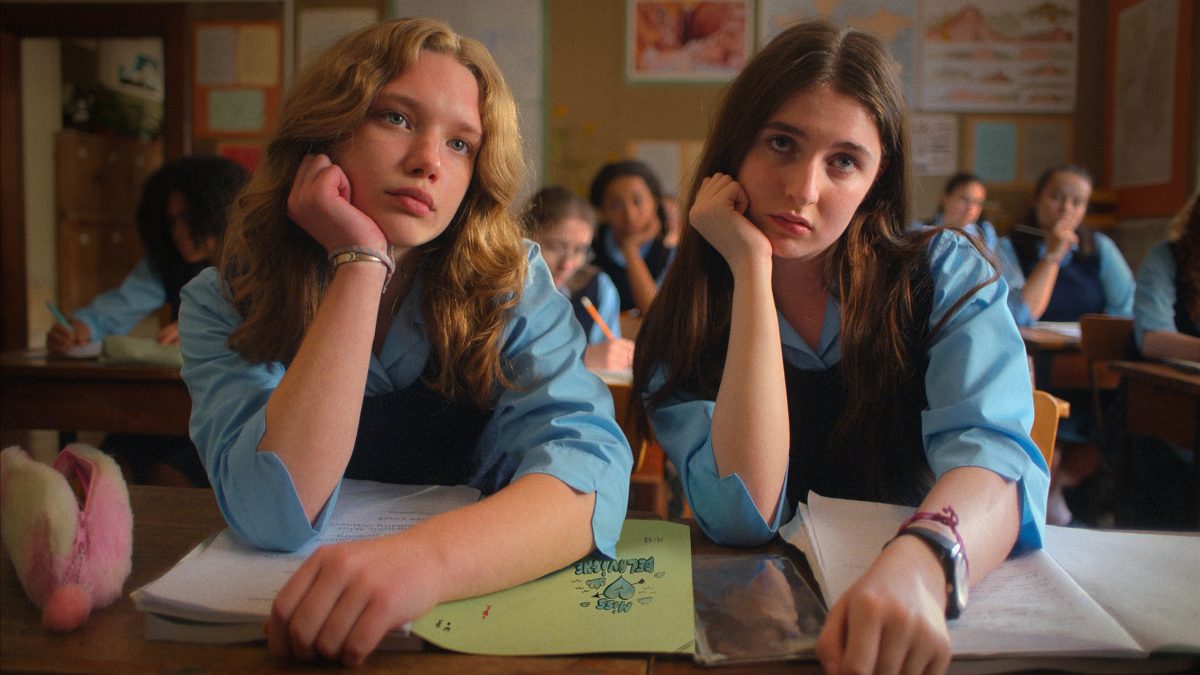
Based on the short story of the same name, “Extra Geography” follows the teenage girls Minna (Marni Duggan) and Flic (Galaxie Clear), inseparable best friends who study at an English boarding school. Both girls have the next stage of their life completely mapped out, and have made plans to attend Oxford and complete a series of “goals” that they’ve decided are important for their emotional and educational development.
Despite their type-A personalities, both Minna and Flic have grown bored by some of their school’s customs, and aren’t thrilled by the announcement that their class will be doing a summer drama production of “A Midsummer Night’s Dream.” However, Flic’s passing interest in being involved in the production is escalated upon the announcement that the neighboring boys’ school will also be participating. As a summer project to enrich them both, Flic convinces Minna that they must fall in love to prepare for the next stage of life.
The tone that Manners cracks is not an easy one to master. Depicting two highly confident, clearly intelligent, and often sarcastic young protagonists who speak in declarative statements could have very easily become grating or created a stylized manner that would make the story difficult to connect with. However, there’s such honesty within the way that Minna and Flic have micromanaged aspects of their reality that it becomes increasingly profound and hilarious to see their worldview challenged.
Although the comments that both characters make, which are about everything from the promiscuous older girls in the school to the insufferability of their chemistry course, are often disparaging, they’re never mean-spirited. The hard shell that these characters have developed isn’t only to protect themselves from how uncomfortable it can be to grow up, but also because of their complete and utter devotion to one another.
The humor of “Extra Geography” utilizes highly symmetrical visuals used to add a touch of baroque design to everything from the school’s sprawling classrooms to the stately nature that surrounds it. Although it could be compared in the broadest sense to the work of Wes Anderson, “Extra Geography” observes the fertile period between childhood and maturation, only perceived in “Moonrise Kingdom.”
There’s nothing surrealist or particularly esoteric about these framing devices because of the orderly manner in which Flic and Minna have compartmentalized everything they can see. What makes the notion of love so enticing, and so frightening for Minna in particular, is that it’s not something they can simply map out and pinpoint, even if they haven’t stopped trying.
The rapid-fire dialogue can be credited to screenwriter Miriam Battye, whose impressive television resume includes “Succession” and Prime Video’s feminist update of “Dead Ringers.” The coordination between the writing, directing, and performances ensures that the clever one-liners and snappy replies are paced to have the maximum impact, forcing the viewers to be bowled over by what they just heard as the scene continues. However, Battye’s writing isn’t just snarky for the sake of it.
All of the frustrations, anxieties, and proclamations made by the characters come from a place of truth, as their feelings can be both overblown reactions or legitimate grievances. It’s easy to scoff at Minna’s assertion that “A Midsummer Night’s Dream” is “shit” because Shakespeare doesn’t focus on anything but love, but her comments about how much easier it is for the boys are quite stinging.
The formal brilliance of how Manners framed this specific window into a coming-of-age memory would collapse if it weren’t for the two central performances, who are tasked with a deceptively tricky task of retaining their individualism. Minna and Flic have developed similar mannerisms and personalities as a result of their lasting connection with one another, a fealty made even stronger due to the isolating practices of a boarding school.
However, they are not identical, and the differences between them become more prominent when Flic begins to find more fulfillment in the school play, and Minna advances more in their quest to find love. It’s through an amusing predicament that both girls have set their sights on their geography teacher, Miss Delavigne (Alice Englert), as an object of their affection.
While they are both initially naive enough at the beginning to assume that love ultimately amounts to nothing more than gestures and smoldering gazes, their experiences with attraction begin to differ in one of the more acute and sensitive depictions of sexuality seen in coming-of-age stories. It’s so often that the pressures of body image and sexual conquest are discussed that the affairs of the heart are forgotten.
For both Minna and Flic, the value of being seen and taking pride is what offers them an escape from the taxing pressures of their academic obsession. “Extra Geography” doesn’t suggest that Flic’s flirtations with the boys in “A Midsummer Night’s Dream” or Minna’s crush on her frumpy teacher are the basis of their sexuality, but that they’ve both been an awakening experience.
“Extra Geography” is the announcement of two major young talents in Duggan and Clear, and a confirmation that Manners’ talents should be fostered and encouraged. While there are bound to be comparisons made to other coming-of-age classics, including everything from “Lady Bird” to “Romy and Michele’s High School Reunion,” “Extra Geography” is the rare example of a short story adaptation that actually justifies its extension to feature length. Any distributor wise enough to pick up the rights to “Extra Geography” has a potential generational classic on their hands.






![All These Sleepless Nights [2017] – Partying Hipsters & Dancing Realizations](https://www.highonfilms.com/wp-content/uploads/2018/01/All-These-Sleepless-Nights-768x432.jpg)