“Eyes Wide Shut” (1999), Stanley Kubrick’s final film, begins from the surface of intimacy and gradually moves inward, into the uneasy spaces between desire, fantasy, insecurity, and emotional isolation. Though often remembered for its erotic imagery and its atmosphere of secrecy, the film is concerned with the instability hidden beneath relationships that appear secure from the outside. Adapted loosely from Arthur Schnitzler’s “Traumnovelle” and released in 1999, the film follows Dr. Bill Harford through a long and disorienting night in New York after a conversation with his wife Alice unsettles his understanding of their marriage.
From that point onward, the film drifts between reality and dream with deliberate ambiguity, allowing ordinary encounters to take on the texture of hallucination. Kubrick constructs the city as a space filled with performances of wealth, seduction, ritual, status, and desire, all of which appear carefully staged. While Bill moves through it with growing uncertainty, the structures that once gave meaning to his life are quietly dissolving around him.
What distinguishes “Eyes Wide Shut” is the way it transforms emotional anxiety into atmosphere. The film unfolds slowly, often withholding dramatic release, allowing tension to accumulate through repetition, silence, and the strange artificial glow of its Christmas-lit interiors. Beneath its story of jealousy and temptation lies a deeper examination of intimacy itself: the recognition that love does not erase mystery, that fantasy can become emotionally real, and that people remain partially unknowable even to those closest to them.
Eyes Wide Shut (1999) Plot Summary & Movie Synopsis:
Before the Night Begins
The opening movement of “Eyes Wide Shut” unfolds with an atmosphere that appears calm and emotionally secure. Beneath that surface, the film quietly introduces tensions that will continue to expand throughout the narrative. Kubrick begins with routine. Bill and Alice Harford prepare for an evening Christmas party hosted by Victor Ziegler, one of Bill’s wealthy patients.
Their apartment is spacious, beautifully lit, and surrounded by the warm artificial glow of Christmas decorations that will continue to dominate the visual texture of the film. At first, the environment suggests stability and privilege. Bill is a successful doctor, Alice appears composed and affectionate, and their life together seems structured by comfort, familiarity, and social ease. The film lingers within his image long enough for its rhythms to feel established.
At the party, however, the film begins introducing subtle emotional dislocations through small interactions. Bill is repeatedly drawn away into conversations and flirtations with two younger women who openly suggest sexual possibilities, while Alice enters into an extended exchange with a Hungarian guest whose manner moves gradually from charm into seduction. Around them, the party itself unfolds as a carefully staged social performance. Guests move through enormous rooms filled with music, alcohol, expensive clothing, and polite conversation.
The evening shifts briefly when Bill is summoned upstairs to assist Ziegler, who has discovered a naked woman unconscious in his bathroom after an apparent overdose. The moment introduces one of the film’s recurring ideas: beneath the elegance of upper-class social spaces exist hidden forms of loneliness, secrecy, and exploitation. Yet the incident is quickly concealed and absorbed back into the smooth functioning of the party itself. What matters is how easily it disappears beneath appearances.
Later that night, after returning home, Bill and Alice smoke marijuana together and begin discussing the events of the evening. The conversation initially appears playful, centered around attraction, jealousy, and assumptions about male and female desire. Bill confidently insists that women are naturally more faithful and emotionally restrained than men, revealing his belief that marriage provides a kind of certainty about love and possession. Alice gradually challenges this confidence. What follows becomes the film’s first major rupture.
She confesses that during a previous vacation, she had once seen a naval officer and felt such overwhelming desire for him that she briefly imagined abandoning her entire life with her husband, child, and marriage, for the possibility of being with him. Alice speaks calmly, almost reflectively, but its emotional effect on Bill is immediate and destabilizing.
The film shifts here from social observation into psychological disorientation. Bill’s understanding of his marriage begins to fracture because he is forced to confront the existence of an inner emotional world that remains inaccessible to him. Kubrick frames this realization as a moment of overt conflict, but as the beginning of a slow internal collapse. Bill becomes haunted less by betrayal than by uncertainty itself.
From this point onward, the film begins tracing Bill’s movement through New York across a single night that gradually takes on the texture of a dream. After being called away to attend to a deceased patient, he drifts from one encounter to another through streets illuminated by artificial light and Christmas decorations that seem both comforting and unreal.
Each interaction introduces another variation of desire, loneliness, performance, or emotional instability. What the opening ultimately establishes is a world in which appearances remain intact while emotional certainty quietly dissolves beneath them. Bill’s life initially appears complete, stable, and controlled, yet Alice’s confession exposes how fragile that structure truly is. The film foregrounds this rupture gradually, allowing ordinary interactions and spaces to accumulate psychological weight until the familiar world itself begins to feel strange.
Why Does Bill Leave the House That Night?
Shortly after the conversation with Alice, the movement of the film shifts outward into the city when Bill receives a late-night phone call informing him that Lou Nathanson, one of his longtime patients, has died. The call interrupts the already unsettled emotional atmosphere inside the apartment and gives Bill a practical reason to leave home. He dresses quietly and steps out into the night, carrying with him the lingering psychological impact of Alice’s confession. Although the reason for leaving is professional and immediate, the emotional state in which he leaves is already altered. The conversation with Alice continues to remain active within his mind, reshaping how he experiences the encounters that follow.
Bill arrives at Nathanson’s home to pay his respects, where he meets Lou’s grieving daughter, Marion. The interaction begins within the expected emotional space of mourning, but gradually shifts into something more intimate and unstable when Marion suddenly confesses that she is in love with Bill and has been for a long time. Her confession arrives unexpectedly, especially within the context of grief and death, and momentarily unsettles the emotional structure of the scene. Bill attempts to calm her gently and maintain distance, but the encounter leaves him further displaced, particularly because it arrives so soon after Alice’s own revelation about desire and fantasy.
As Bill leaves the house and begins moving through New York at night, the film adopts a more drifting and uncertain rhythm. The city becomes less like a familiar urban space and more like an environment through which Bill moves in a heightened emotional state. His wandering feels suspended between intention and aimlessness, as though he is moving forward physically while internally remaining fixed on Alice’s confession and the destabilising effect it has had on him.
What does Bill do after Alice’s confession?
Later, while walking through the streets, Bill is mocked by a group of young men whose insults briefly puncture the confidence and composure he usually carries. His encounter with Domino, a sex worker who invites him into her apartment, continues this movement toward spaces shaped by intimacy and transaction simultaneously. Bill enters her apartment, speaks with her gently, almost awkwardly, and appears momentarily willing to cross a boundary he had previously assumed belonged outside his life. Yet the moment remains incomplete, interrupted by a phone call from Alice.
The interruption itself becomes significant because it reintroduces the domestic world he is simultaneously moving away from and orbiting around emotionally. Kubrick observes Bill with increasing distance, allowing his movements to feel like responses to an internal disorientation he cannot entirely understand. At the same time, the city itself begins to change around him.
Streets glow with artificial Christmas lights, interiors feel strangely suspended in time, and conversations unfold with an unnatural slowness that gives ordinary interactions the texture of dreams. Bill continues moving through these spaces as though searching for something that remains undefined. What emerges here is a man confronting the instability of his own assumptions about marriage, masculinity, and desire.
Who begins to enter Bill’s night journey?
The people Bill meets often appear unexpectedly, entering the narrative briefly before disappearing again, yet their presence accumulates into a larger pattern that reflects his increasingly unstable state of mind. One of the most important figures is Nick Nightingale, a pianist and former acquaintance whom Bill encounters performing at a jazz club. Nick exists at the edge of Bill’s social world, familiar enough to be trusted yet distant enough to carry an air of mystery.
During their conversation, Nick reveals that he has been hired to perform piano while blindfolded at a secret gathering attended by masked elites. His description of the event introduces a hidden world operating beneath the visible surface of the city, one structured by ritual, secrecy, and exclusion. Bill’s fascination with this world becomes immediate because it appears to offer access to something forbidden and emotionally charged that lies outside the controlled routines of his everyday life.
Domino represents one form of intimacy shaped by transaction, yet her interactions with Bill remain unexpectedly tender and conversational. The costume-shop owner Milich introduces another unsettling dimension through the strange discovery involving his daughter and two older men, a scene that blurs exploitation, commerce, and performance in ways that echo the larger atmosphere of the film. Even minor characters, such as the hotel clerk Bill, carry a charged ambiguity that makes every interaction feel slightly unstable.
What does Bill discover about the hidden world beneath appearances?
As Bill follows Nick’s directions and arrives at the secluded mansion, the film moves into one of its most enigmatic and psychologically charged spaces. The gathering he enters is presented as a ritualised environment governed by strict codes, masks, silence, and ceremony. Bill gains entry using a password, dressed in a rented cloak and mask, yet from the moment he enters the mansion, there is a sense that his presence does not fully belong within the world he is attempting to access.
Inside, masked figures move through candlelit halls while an elaborate ritual unfolds at the centre of the gathering. Women stand exposed while the surrounding participants remain hidden behind masks, transforming desire into something highly choreographed and impersonal. Kubrick presents the sequence with remarkable restraint and precision. The atmosphere is not chaotic or openly indulgent. It feels controlled, ceremonial, and emotionally distant. Sexuality here appears less connected to intimacy than to spectacle, hierarchy, and performance.
As Bill moves through the mansion, observing encounters in hidden rooms and long corridors, his role gradually shifts from spectator to intruder. Several individuals begin noticing his uncertainty. The masked woman who warns him repeatedly makes clear that his presence places him in danger. Eventually, he is brought before the assembled group and forced to reveal himself as someone who does not belong there. The sequence introduces a sudden vulnerability into Bill’s journey.
What Bill discovers here extends beyond the existence of a secret sexual gathering. The mansion reveals a hidden structure beneath the polished surfaces of upper-class life, one organised through exclusion, performance, and power. The masks become crucial because they literalise a condition already present throughout the film: people move through social life while concealing themselves behind carefully maintained identities.
Within the mansion, these performances become formalised and ritualistic, exposing how desire and authority operate together beneath ordinary appearances. At the same time, the film refuses to clarify the exact nature of the danger surrounding this world. The threats Bill receives remain partially ambiguous, suspended between genuine conspiracy and psychological paranoia. This uncertainty becomes central to the sequence’s effect.
When does Bill begin to confront the limits of certainty?
After leaving the mansion, Bill’s journey begins shifting from curiosity into fear and self-awareness. The following day unfolds through a series of discoveries that gradually destabilise his attempts to understand what happened during the night. He returns the rented costume and learns that Milich’s daughter now appears willingly involved with the older men who had previously seemed threatening, complicating his earlier assumptions about the situation. He visits Domino’s apartment only to discover that she has tested positive for HIV, transforming what had initially appeared to be a near-infidelity into an encounter shadowed by danger and contingency.
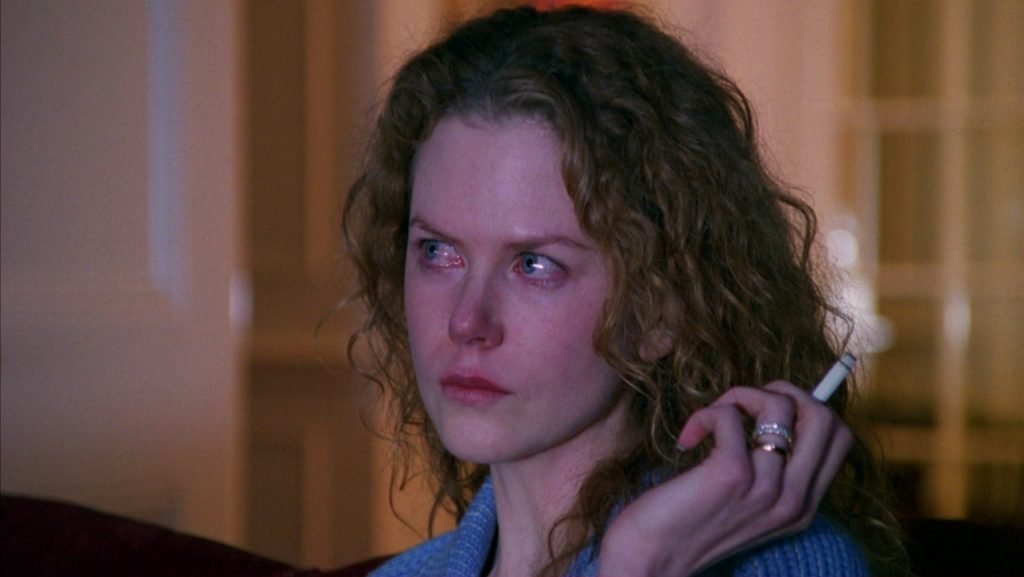
Also Read: The 10 Best Nicole Kidman Movie Performances
At the same time, Bill attempts to locate Nick Nightingale, only to discover that he has abruptly disappeared after being escorted away from his hotel by unidentified men. These developments begin surrounding the previous night with an atmosphere of surveillance and uncertainty. Bill receives warnings, notices strangers observing him, and becomes increasingly unsure whether the danger he senses is real or imagined. The film traces this growing anxiety carefully, allowing paranoia to emerge through repetition, silence, and ambiguity.
This movement culminates when Victor Ziegler summons Bill to explain parts of what occurred at the mansion. Ziegler confirms that the gathering was real and warns Bill against pursuing the matter further, yet his explanation remains incomplete. Certain details are clarified while others remain unresolved, particularly concerning the masked woman who appeared to sacrifice herself for Bill. Kubrick deliberately leaves these ambiguities intact, refusing to provide a final distinction between genuine conspiracy and psychological projection.
Bill gradually confronts the limits of the certainty with which he initially moved through the world. His profession, social status, and assumptions about marriage no longer provide stable frameworks through which reality can be interpreted. Alice’s confession has already destabilised his understanding of intimacy; the events of the night extend this instability outward into the larger social world itself.
As Bill returns home and confesses everything to Alice, the film has shifted away from mystery in a conventional sense and toward something more emotionally complex. What emerges is an acknowledgment that human relationships remain shaped by unknowability, fantasy, fear, and fragile forms of connection that cannot be entirely controlled or explained.
Eyes Wide Shut (1999) Ending Explained:
What exactly happens in the final moments?
The final stretch of “Eyes Wide Shut” brings the narrative back from its long night of drifting encounters, secrecy, and uncertainty into a space that is once again domestic and familiar, but now altered in its emotional weight. After Bill returns home, the film settles into a quieter rhythm, where the immediate question is no longer what happened outside, but what remains between Bill and Alice after everything that has been experienced and confessed.
Bill comes back to his home, and the story returns to the same couple we saw at the beginning. But the state they are in is no longer the same. Bill has gone through a sequence of encounters – the party, Alice’s confession, wandering through New York, the encounters with strangers, the visit to the mansion, and the ambiguous confrontation with Ziegler. Each of these experiences has destabilised his sense of certainty, both about his wife and about the world he moves through.
The most significant narrative object in this final movement is the Venetian mask. When Bill discovers it placed on the pillow beside Alice while she is asleep, the film introduces a final collapse between the two separate worlds it has been maintaining throughout, i.e., the domestic space of marriage and the hidden world of ritual, fantasy, and secrecy. The mask is no longer part of the mansion or the night journey. It has entered the most private and intimate space of Bill’s life. What this creates, in very direct terms, is the removal of any clear boundary between what was experienced and what was imagined, or what was real and what might still remain unresolved.
After this discovery, Bill is no longer able to maintain silence. The narrative moves into his confession, where he tells Alice everything that happened during the night. This is a release of accumulated psychological pressure. The film shows this conversation as an attempt to restore some form of continuity between experience and understanding. Bill recounts the party, the encounters, the mansion, the warnings, and the sense of being watched or followed, but none of these elements fully stabilise into certainty.
Alice’s response is equally important in this final sequence. Rather than offering closure or definitive interpretation, she does not reduce the experience to a single meaning. Instead, she acknowledges the fragility of both fantasy and reality, and the impossibility of fully separating them within human experience. The conversation between them does not resolve the tension that has built up throughout the film. It simply brings it into shared awareness.
The final movement of the film takes place in a toy store, where Bill and Alice are with their daughter, returning to an ordinary domestic activity that contrasts sharply with everything that has preceded it. On the surface, this appears to be a return to normal life. But what has changed is the emotional awareness they now carry. The film presents a condition where life continues with uncertainty still intact.
The final line of the film, spoken by Alice, becomes the closing gesture of this movement. It functions as an acknowledgment that what they have experienced, whether fully real, partially real, or emotionally imagined, now exists as part of their shared understanding. The film ends by placing Bill and Alice back into everyday life with those questions still quietly present, within the structure of their relationship itself.
Eyes Wide Shut (1999) Movie Themes Analysed:
Desire as imagination
At the centre of “Eyes Wide Shut” is the idea that desire exists as something imagined, projected, and internally experienced. Bill Harford’s journey begins with Alice’s confession of a fantasy. What destabilises him is the revelation that desire can exist independently of commitment, love, or moral structure. The film repeatedly returns to this idea through encounters that never fully resolve into action: the interrupted moments with Domino, the near-entry into sexual situations that dissolve before completion, and the constant deferral of consummation. Desire in the film is therefore structured around anticipation rather than fulfilment. It circulates through imagination, shaping behaviour more strongly than actual experience. What governs human relationships is not only what is done, but what is thought, imagined, or feared in silence.
Marriage as coexistence with unknowability
Marriage in the film is presented as an ongoing negotiation with uncertainty. Bill believes he understands Alice at the beginning of the film, yet Alice’s confession reveals a layer of interior life that exists beyond his awareness. The film carefully constructs this shift as a revelation of unknowability. Within their marriage, love does not eliminate the presence of fantasy, memory, or private desire. Instead, it coexists with them. What the film shows through their relationship is that emotional proximity does not guarantee emotional transparency.
Even after confession, there is no return to a simplified version of certainty. Instead, the couple is left with an expanded awareness of each other’s inner lives, which cannot be fully accessed or controlled. Marriage, in this sense, becomes a structure that holds both intimacy and opacity at the same time, without resolving the tension between them.
Social performance and the instability of identity
Throughout “Eyes Wide Shut,” identity is repeatedly presented as something performed, adjusted, and reshaped according to context rather than something fixed or inherently stable. Bill Harford moves through a sequence of social environments. His role exists simultaneously as a husband, a doctor, a guest at elite gatherings, an observer of private worlds, and at moments even an intruder into spaces where he does not fully belong. Each of these positions demands a different version of behaviour, tone, and emotional presentation, suggesting that identity functions less as a core essence and more as a set of socially legible roles.
The Christmas party establishes this logic early on, where Bill and Alice both participate in a world governed by etiquette, appearance, and subtle performance. The encounters that follow in the city extend this structure into more fragmented forms, where Bill’s identity shifts depending on who he is speaking to and what kind of space he is entering. Whether engaging with strangers, patients, or figures from his professional past, he is continually required to adapt himself to expectations that originate outside him rather than from within.
This idea reaches its most explicit form in the mansion sequence, where masks literalise a condition that has already been present throughout the film. The masked gathering simply makes visible what everyday social life already contains. Identity is shown as something constructed through layers of appearance, concealment, and controlled self-presentation.
What the film ultimately suggests is that ordinary life operates through similar systems of performance, although they are less visible and more socially accepted. People maintain roles that allow interactions and relationships to function smoothly, but these roles remain inherently fragile when exposed to emotional instability, desire, or psychological pressure. Bill’s gradual disorientation across the night, therefore, reflects not only a personal crisis, but also a deeper unraveling of the assumption that identity is stable. Instead, the film presents identity as something continuously produced in relation to others, always contingent, and always subject to disruption.
Power, secrecy, and structures beneath visibility
A central thematic layer of “Eyes Wide Shut” lies in its sustained attention to hidden systems that operate beneath the surface of visible social life. The film introduces this most explicitly through the mansion sequence, where Bill enters a world structured by ritual, secrecy, and carefully controlled access. Yet the significance of this moment extends beyond the spectacle itself, because it reflects a broader pattern that quietly runs through the entire film.
From the beginning, social spaces in the narrative are shaped by hierarchies that are not always immediately visible. At the Christmas party, for instance, conversations, flirtations, and interactions already hint at unspoken rules of access and belonging. As the film progresses, this logic becomes more pronounced, culminating in the secret gathering where entry is regulated, identities are masked, and behaviour follows coded patterns that remain incomprehensible to an outsider like Bill. Within this space, power operates through layers of exclusion, controlled visibility, and selective participation, where understanding itself becomes restricted.
Bill’s experience inside the mansion intensifies this structure. His inability to fully interpret what he sees reinforces the sense that he is encountering a system that functions independently of his comprehension. Yet the film resists turning this into a straightforward conspiracy or fully defined organisation. Instead, it maintains a careful ambiguity around what the gathering represents, allowing power to remain partially visible and partially concealed. This ambiguity becomes central to the film’s thematic design. What Bill experiences is an encounter with the boundaries of interpretation itself, where meaning remains present but never fully accessible.
Fantasy as emotional reality
One of the most persistent ideas in “Eyes Wide Shut” is the way fantasy operates with the same emotional intensity as lived experience, shaping perception, behaviour, and memory in ways that feel equally real to the person experiencing them. The film places this idea at the centre of Bill and Alice’s relationship, beginning with Alice’s confession of a vivid sexual fantasy and extending outward into Bill’s own mental projections, suspicions, and imagined scenarios that unfold throughout his night in New York.
Alice’s dream of the naval officer is not presented as a passing thought, but as something that carries emotional force strong enough to destabilise Bill’s understanding of their marriage. Similarly, Bill’s jealousy arises solely from images he constructs of the visions of Alice with other men, imagined betrayals, and possibilities that never fully materialise in the physical world, internally. These internal sequences begin to shape his decisions as strongly as any external encounter, guiding him through spaces and situations that feel increasingly charged with meaning that cannot always be verified.
As the narrative progresses, the distinction between what is externally real and what is internally generated becomes increasingly fluid. Encounters in the city, moments of temptation, and the mysterious events surrounding the masked mansion all acquire emotional weight that depends less on factual clarity and more on how Bill experiences them internally. The film carefully sustains this ambiguity, allowing both perception and imagination to coexist without privileging one over the other.
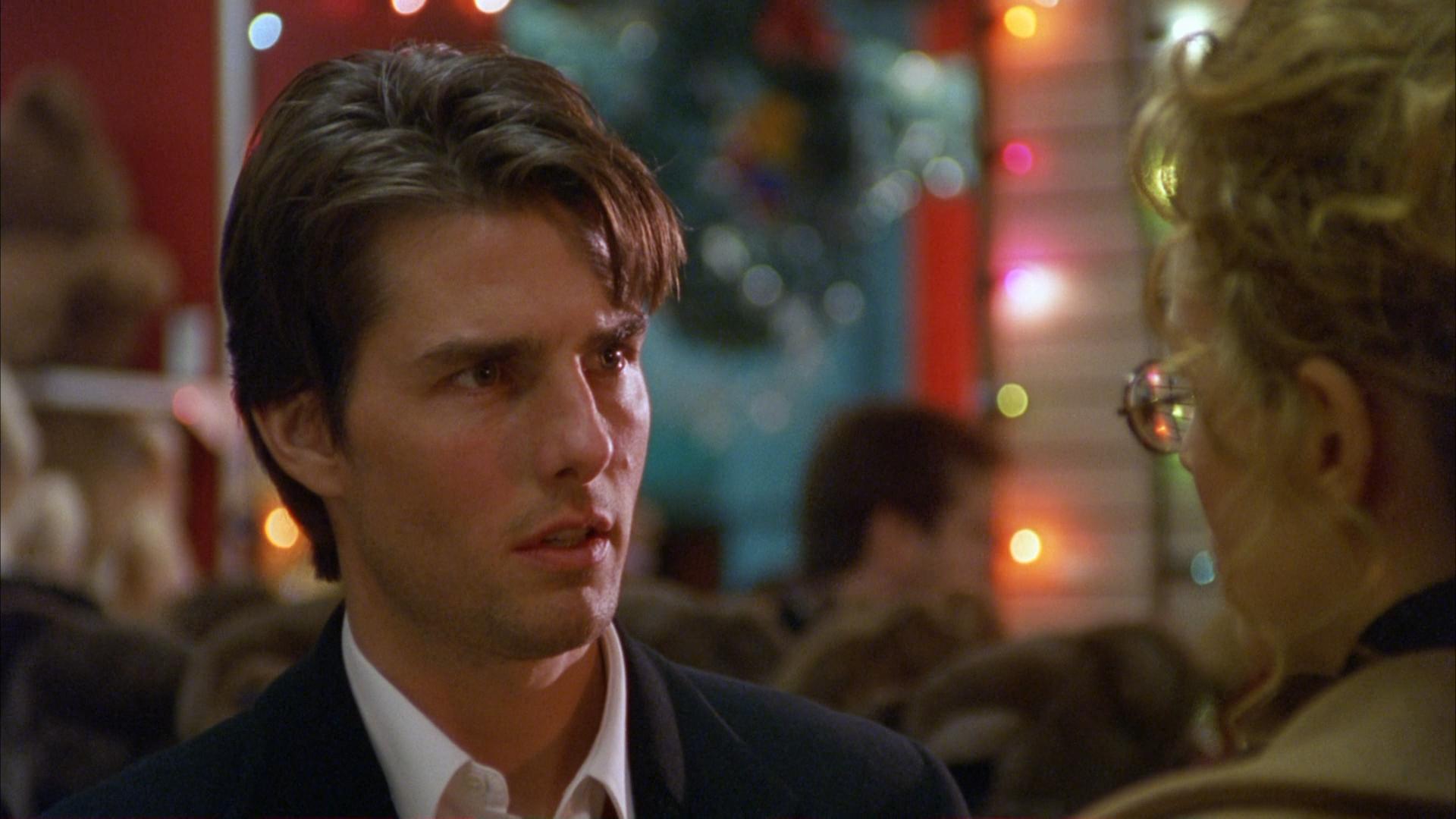
Also Related: All 45 Tom Cruise Movies, Ranked
By the end, what becomes clear is that human experience in the film is constructed through a continuous internal process where fear, desire, memory, and imagination interact. These elements shape how reality is felt and understood, creating an emotional landscape where the boundaries between what is lived and what is imagined remain open and constantly in motion.
Uncertainty as the final state of return
The final movement of the film returns Bill and Alice to domestic space, and what emerges there is a renewed way of inhabiting it. After everything that has unfolded – the confession, the night journey through the city, and the encounter with the secret mansion, the film moves beyond the need to resolve mystery into a more open and expansive emotional register.
What changes is their awareness. Bill and Alice begin to hold life with a wider sense of perception, where certainty gives way to a more flexible and attentive form of knowing. Their return becomes an entry into a shared space where experience carries depth, and where emotional truth expands beyond fixed answers. The domestic world they step back into feels enriched by what they have lived through, shaped by a fuller recognition of the layers that exist within intimacy.
The confession and the night journey through the city extend their relationship into a broader emotional landscape. These experiences allow both of them to encounter desire, fear, imagination, and vulnerability in forms that deepen their understanding of each other. What remains with them is a quiet clarity that accepts multiplicity, where fantasy, memory, and desire continue alongside everyday life, contributing to its texture.
Why did Eyes Wide Shut become a cult obsession?
Over time, “Eyes Wide Shut” developed a particularly intense life on the internet, where discussion around the film gradually moved beyond traditional film analysis and into larger conversations about secrecy, elite power, surveillance, and hidden systems operating beneath public visibility. For many viewers online, the film began to feel less like fiction and more like partial access to concealed structures of privilege and control.
This reaction emerged largely from the way Kubrick presents power throughout the film. The mansion sequence, in particular, is organised through controlled access, coded passwords, ritualistic performance, masked anonymity, and systems of exclusion that imply authority without fully explaining it. Kubrick avoids direct exposition, which leaves viewers with the sensation that they are observing fragments of a larger structure that remains deliberately inaccessible.
For instance, after Alice confesses her fantasy about the naval officer, Kubrick repeatedly cuts to imagined images of her being intimate with him. These intrusive flashes begin appearing throughout Bill’s journey, even during unrelated interactions, making it increasingly difficult to separate external reality from Bill’s psychological projections. The film never stabilises this distinction completely, which creates a viewing experience where perception itself feels unreliable.
Kubrick also designs physical spaces in ways that subtly resist realism. The streets Bill walks through at night often appear unnaturally empty despite supposedly taking place in New York City, while interiors are lit with excessive Christmas lights that produce a constant artificial glow. This becomes especially noticeable during Bill’s repeated movements through nearly identical corridors, cafés, taxis, and hotel spaces, creating the sensation that the city is looping psychologically rather than functioning as realistic geography.
The mansion sequence intensifies this further. The ritual is organised with rigid choreography: masked figures stand in symmetrical formations, movements repeat ceremonially, and dialogue is minimal and coded. The emotional coldness of the sequence is crucial because Kubrick presents elite secrecy as a controlled institutional ritual.
The film also withholds explanatory information in highly specific ways. After Bill is exposed at the mansion, several narrative threads remain unresolved. Nick suddenly disappears after being taken away by unidentified men. The masked woman who “saves” Bill later appears connected to a suspicious death. And Ziegler’s later explanation partially clarifies events while simultaneously creating new inconsistencies.
For example, Ziegler insists the ritual was essentially harmless roleplay, yet the atmosphere of surveillance, intimidation, and controlled access surrounding the mansion suggests structures operating far beyond theatrical performance. Kubrick deliberately leaves these contradictions intact. This formal incompleteness is exactly what produced the culture of obsessive interpretation surrounding the film. In “The Shining,” for example, viewers began obsessively rewatching the film because the physical architecture of the Overlook Hotel never behaves consistently. Windows appear in impossible places, hallways do not align logically, rooms expand or contract between scenes, and spatial continuity repeatedly breaks down.
One famous example involves Ullman’s office early in the film, which contains a large window behind his desk, even though the office is positioned in the middle of the hotel, where an exterior window should be architecturally impossible. Similarly, Danny rides his tricycle through corridors whose geography cannot be mapped coherently when viewers attempt to reconstruct the hotel layout. These details seem minor initially, but across repeated viewings, they generate a persistent sense that the film is concealing an underlying system viewers have not fully grasped. This is precisely where cult spectatorship begins, as there is a paradigm shift from receiving the narrative to investigating the film itself as an object containing hidden patterns.
The same phenomenon occurs in “2001: A Space Odyssey,” although through narrative and philosophical incompleteness rather than spatial disorientation. Kubrick removes explanatory frameworks that classical science-fiction cinema usually provides. The monolith appears repeatedly across human history, influencing evolution and consciousness, yet the film never verbally explains what it is, who created it, or what ultimate purpose it serves.
The final “Star Gate” sequence intensifies this ambiguity even further. Dave Bowman travels through abstract cosmic imagery, enters a neoclassical room that appears outside ordinary time, rapidly ages, and transforms into the Star Child. Kubrick refuses narrative clarification at every stage. Because the film withholds interpretive closure, audiences began constructing extensive theories that are philosophical, religious, technological, and even conspiratorial, in order to organise its meaning themselves. Entire communities formed around analysing the film frame-by-frame, searching interviews, production details, and symbolic motifs for coherence.
This relationship between incompleteness and obsessive interpretation became central to Kubrick’s cult reputation. His films create the sensation that every detail is intentional while simultaneously denying viewers the final interpretive key needed to stabilise meaning completely. As a result, Kubrick’s films often begin to function less as closed narratives and more as systems that invite structural decoding, where viewers feel compelled to search beneath the visible surface for hidden coherence. “Eyes Wide Shut” inherits this structure with particular intensity, which is one reason the film has provoked so many conspiracy theories over the years.
Kubrick provides enough detail to suggest the existence of an organised hidden structure, yet withholds the final explanatory framework that would stabilise what viewers are seeing. This tension encourages audiences to move beyond ordinary interpretation into speculative reconstruction.
For many viewers, the film began to feel less like fiction and more like partial access to concealed systems of elite behaviour operating beneath public visibility. As internet culture expanded during the 2000s and 2010s, these ambiguities became fertile ground for obsessive interpretation. Online forums, YouTube essays, Reddit discussions, and long-form video analyses began dissecting the film frame by frame, connecting its imagery to theories involving secret societies, elite sexual networks, institutional corruption, and ritualised systems of power.
Theories intensified further after real-world scandals involving wealthy and politically connected figures entered public discourse, leading many viewers to retrospectively reinterpret the mansion sequence through contemporary anxieties surrounding exploitation and hidden privilege. Kubrick’s death shortly after completing the film added another layer to this online mythology. Some viewers began treating “Eyes Wide Shut” as a suppressed revelation or coded exposure of elite behaviour, especially after reports that portions of the orgy sequence were digitally altered for American release. While many of these theories move far beyond what the film explicitly presents, their persistence reveals something important about Kubrick’s cinematic method itself.
The film is structured in a way that continually produces interpretive openness, encouraging audiences to search for hidden logic beneath visible surfaces. In this sense, the internet reaction to “Eyes Wide Shut” became part of the film’s cultural afterlife, where spectatorship transformed into an ongoing investigation and collective decoding.