“Gunfighter Paradise” (2024), directed by Jethro Waters, is an absurdist comedy that seems off-kilter from the get-go. It opens with a voiceover in a characteristically southern drawl, where a man shares an anecdote about his family’s past. He walks across a dry farm nearly soaked in fog, which lends him a mysterious sheen, heightening the magnitude of his theatrical diatribe. Finally, he shows his painted face that blends him with his surroundings. No matter what the regional context might be behind the paint, that camouflage renders him as someone peculiar, like an eerie oddball, but with unacknowledged mental health struggles.
Waters never dials down the strangeness he establishes with this introduction. Instead, he doubles down on those absurdist sensibilities while sketching out a satire about the rising extremism in the US. In this case, it shows its face through religious fundamentalism, which makes the cultural fanatics apprehensive about their doctrine, believing it’s heading toward extinction. So, although set in the States, it illustrates a paranoia across the world, similarly influenced by religion. Point your needle at almost any part of the globe, and you’ll find a place where people are latching on to their ‘glorious past’ as soon as they start feeling powerless in the present.
Something similar plagues Stoner, the disillusioned protagonist of “Gunfighter Paradise,” who returns to his family home, haunted by a similarly hefty paranoia. He stays alone in that house, apart from two Civil War reenactors dressed as Confederate soldiers, who behave as if they are hiding from something or someone. If it weren’t for some signs of modernity, someone could have mistaken this scene for a distant past, but it happens to be somewhere in the present. Apart from their looks and manners of speech, something else makes them seem quite odd: their weapons.
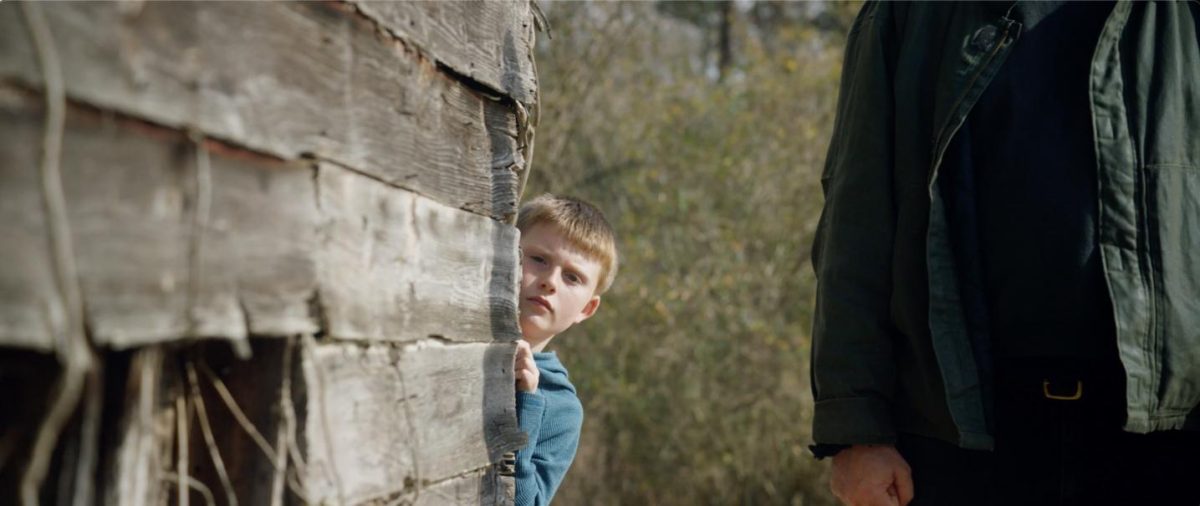
The men hold on to their guns as if their lives would fall apart the moment they distance themselves from these pieces of combustible metal. Guns feel like extensions of their selves, at least Stoner’s, who puts a lot of heart into every little detail. After a point, his strangeness ceases to be amusing, as he fires at a distant point with his rifle from his house. He shocks everyone around him, which includes Joel, a man driving past his house. Since that moment, the film becomes one about Joel’s attempts at helping Stoner regain his sanity. Unlike the gunslinging men, Joel seems in touch with reality and genuinely concerned about Stoner’s well-being in the wake of his mother’s passing.
Waters’ film operates on three fronts: an atmospheric mystery thriller, a surrealist comedy, and a socio-political satire. It also weaves in notes of tragic drama, as Stoner tries to reconnect with his emotions through a letter left by his mother. All of this makes it feel like an ambitious undertaking for a debut feature.
Before this, Waters worked mostly on music videos that show his strength in crafting a visual tone that complements the mood of those songs. Some of his striking work has been with indie music icons like John Cale, Angel Olsen, and Weyes Blood, all of whom lend a stunning textural canvas solely through their vocals. That’s where his abstract editing approach works well and matches the emotional intensity of their music.
“Gunfighter Paradise” relies on a similar impressionistic style when it presents Stoner’s inner turmoil, as he contends with his fears and temptations. This approach works best when Waters works with fresh, vibrant tones that turn the spaces into billowy dreamscapes or garish nightmares. Yet, it falters whenever the frames look shockingly gray and flat. One may argue that it was a deliberate choice to contrast them with the bright reds and yellows, but that doesn’t negate the lifelessness of those pale frames.
Although a nitpick, that visual dullness does take away the intended effect of its humor. Some of its framing choices also seem needlessly disorienting, probably meant to heighten a sense of absurdity, but make it difficult to follow the trail of its well-intentioned psychological drama. On the other hand, it looks stunning when it uses spilling light to its advantage, using its soft glow almost as a heavenly backdrop spread around its characters.
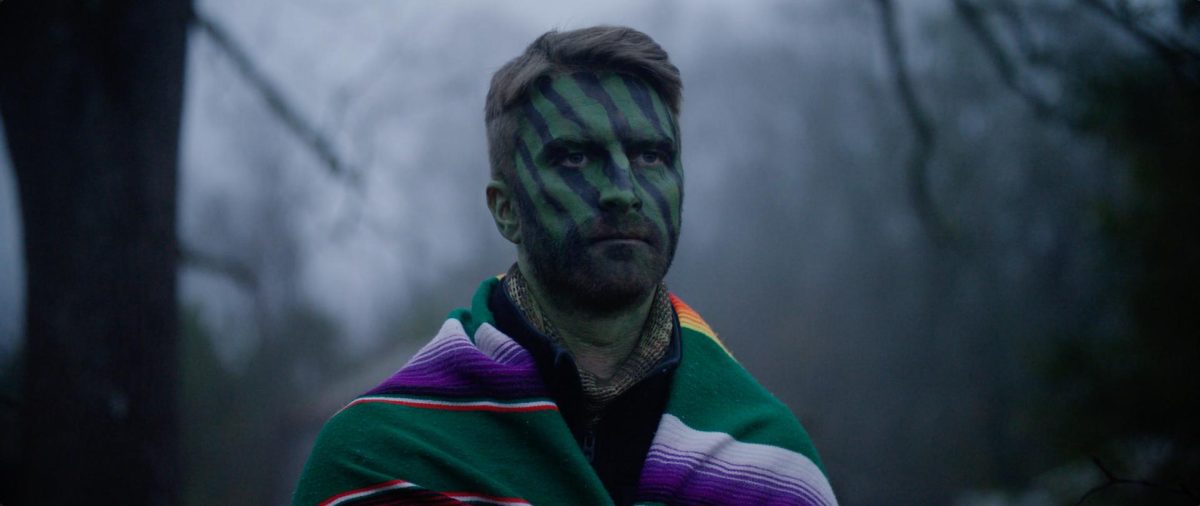
Thematically, Stoner’s tale might be compared with the male protagonists of Martin Scorsese’s films, as they also grapple with their interpretations of faith. In that context, Waters’s film is clearly admirable, as it dares to reflect on these contentious themes without shying away from its maddening brutality. It highlights the dangers of easy access to weaponry, which makes the psychologically unstable vulnerable to its temptations.
However, it is emotionally inert because it doesn’t spend enough time establishing a strong motivation for Stoner’s actions, nor does it elaborate on the religious themes well enough. Some of its faith-based cultural nuances, specific to their part of the world, get lost in translation. That’s why Christopher Levoy Bower’s perfectly pitched, frightening performance doesn’t hit the same emotional high as it should have in the end.
The film falls short on the emotional front, also because it tries to do so many things at once. Instead of jumping between these genres through awkward tonal shifts, it could have been far more effective and memorable if it had stuck to a single lane. Waters clearly has enough to admire with his cinematic vision and his strong understanding of emphatic needle drops. Yet, as a viewer, you leave his film feeling it should have been far more coherent.





![The Fam [2021]: ‘Berlinale’ Review – A mercurial coming-of-age portrait of a group of teenage girls at a care facility](https://www.highonfilms.com/wp-content/uploads/2021/03/The-Fam-1-highonfilms-768x402.jpg)