Jacqueline Zünd’s latest documentary, “Heat,” is a staggering dystopian portrait. It’s terrifying, and its immense scale protrudes like an inexorable nightmare. Worst of all, the horror of it is deeply grounded in the human-made, fully engineered crisis of global warming, to which we continue not to pay much attention. It’s a sensory plunge, the frames mottled with the skin-piercing excess of the temperatures. To defeat it in a fell swoop is only fantastical thinking.
But we must start somewhere with conscious steps and thinking. People rendered in the film seem to almost dissolve. The heat is so punishing, perception itself turns rubbery. The harrowing climate will indeed come for all as much as one seeks to sand themselves into a delusional bubble. Soon, this too will splinter. When that happens, no one can leave the boiling situation unaddressed. But it’d already be too late then.
Global warming is the inescapable reality of our times. As much as climate-change deniers aggressively shut down real, urgent conversations, time is running out. Sitting in air-conditioned silos can only waive off the illusion for a brief while. It’s a ticking time bomb. Comfort is borrowed for only a brief interval. Soon, the illusion will shatter.
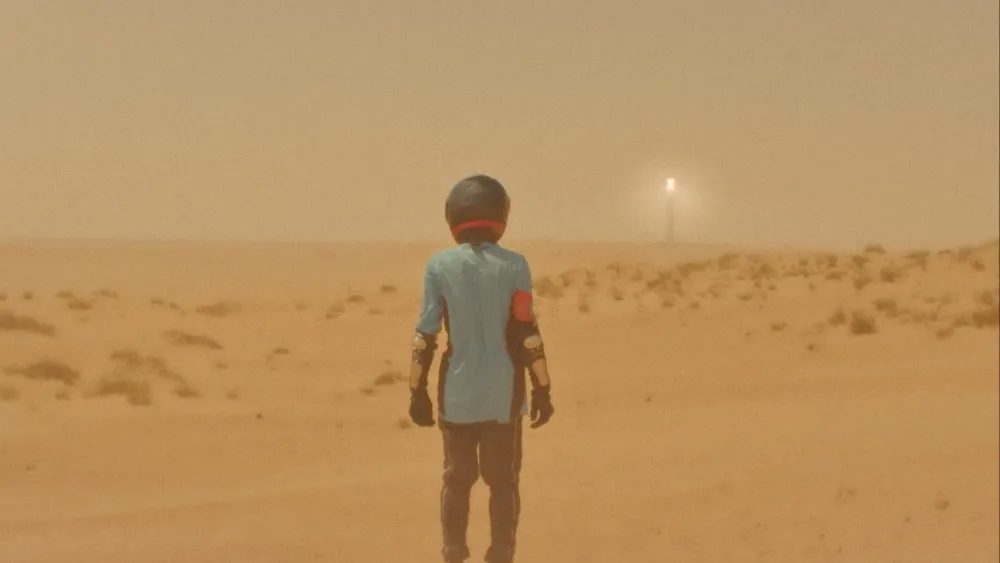
But there are alarms and fears, apprehensions and disquiet that rumble at times. In the film, one person in the office wonders what would happen if the AC shuts down. How would they even work if the electricity is snapped? The question comes early and haunts the film. Moving through the UAE, the film hurls you into the purgatorial, torturing clime of Dubai. The yellow colour scheme is blinding, all-enveloping, teasing you to dare to plot a release.
Zünd laces the film with ominous undercurrents. You get the sense of a world collapsing, the rising trepidation that scorches the global unrest. The vents of turning away from the conversation have all failed. There’s no running away. People struggle through the heat, enduring, making a living, even as the climate is determined to drain them utterly.
The crisis is unleashing itself in full fury, an uncontrolled torrent. There can be no more evasion or hiding. Heat transmits this intensity, visually evoking a doomed landscape, one besieged by the horror of the steep man-environment disconnect. Nikolai von Graevenitz’s cinematography accentuates the crisis with an epic scale that can crush the whole of the planet. As much as characters drift through, the spatial extremity remains at the forefront.
The disparities are ugly. Those who are ensconced in offices can only feel a twinge, compared to the daily razing discomfort experienced by gig workers. A migrant Kenyan worker shares how, when she first landed in Dubai, she wondered if she’d come to hell. It felt like being inside an oven. The sensation continues, intractable and persistent. To settle for work means accepting the climate as a compromise. It’s an inviolable hard fact that won’t just ease into quick sublimation.
It’s a fight that must be waged with precision, care, and utmost empathy. The Kenyan worker instead chooses a job calling for enduring the other end of temperatures. In freezing cold, she makes her living. The situation couldn’t get any more heightened in irony. She knows it, but cannot do anything about it. All she can hope for is to secure a stable life for her child. She bears her circumstances, thrusting everything at her goal.
Then there are the gig workers driving through the streets in blazing heat. Their helmets are puny in the face of the mighty sunny glare. Having a heat stroke is a constant, inevitable fear, but it’s a byproduct of their livelihood. You can elude it no longer, as work and life have turned into this deathly bond.
Zünd registers the landscapes soaked in acute dread. There’s a warning-infused ambience to the scenes. The documentary is menacing and impels you to sit up and take stock of the situation that’s arrived. To move away into isolation would only sharpen climate change into accelerating, not defusing it.
Yet, the rich and powerful remain secluded, extricating themselves to other relatively cooler places as the rest of humanity bleeds out. This is a thoroughly immersive film that holds up the frightening affairs of our planet. It won’t take an eternity before the planet blows up if the deliberate obliviousness hangs on.
This film gives a sobering window into an advanced stage, ushering you into immediate restorative action. It’s a bleak wake-up call, forbidding and trenchant in its visual denunciation of passivity. This is as searing as a film can get in tearing through the complacency that has led to ecological disarray to such perilous ends.