Klára Tasovská’s “I’m Not Everything I Want to Be” (Jeste nejsem, kým chci být, 2024) offers a searing account of Czech photographer Libuše Jarcovjákova, who received her flowers only in the later part of her life. For that, Tasovská employs a cinematic technique similar to that of Chris Marker’s 1962 short, “La Jetée.”
Back then, Marker used still images in succession to craft his sci-fi tale. He used visual textures and sonic landscapes to capture an illusion of movement, letting it convey both his plot and the underlying sentiment. Tasovská’s documentary uses images and sound to achieve a similar effect, but it stands out for another reason. She uses photographs taken by her subject, who also recounts her life’s details in her own words.
It makes a difference because it offers Jarcovjákova an opportunity to tell her own story, which she did not receive for most of her life. No matter where she lived, she was surrounded by people who wanted to control her life or the way she would tell it. That’s what makes Tasovská’s approach refreshing.
Throughout its one-and-a-half-hour duration, we see Jarcovjákova’s photographs during her many years of artistic reinvention. While artists often strive to reinvent themselves through their work, her reinvention was not always by choice but by compulsion. The societal forces, usually led by patriarchal beliefs, kept her constantly straddling between different places to seek a sense of belonging.
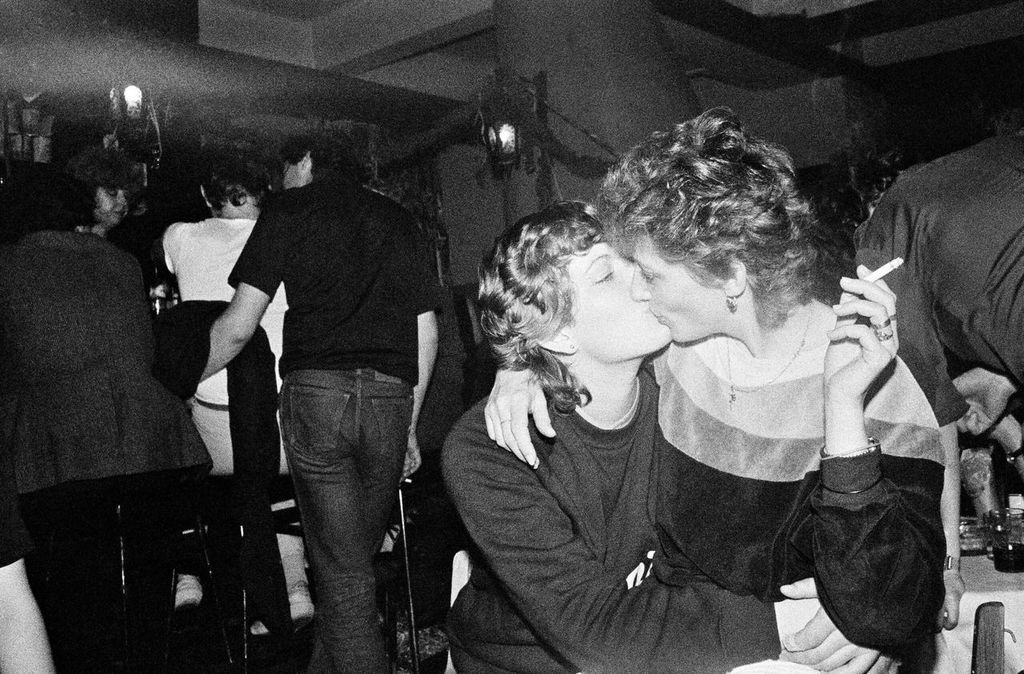
Most of the photos we see in the film are black and white. So, in the absence of colours, the textures reveal what words can’t. Whether clear, grainy, or blurry, they take us closer to the pain and glory of those chapters in Jarcovjákova’s life. It also helps that her photographic approach was unabashedly personal, which imbues them with a warm, candid quality. The photos also reveal some of her deepest, darkest moments with brutal honesty, where the framing often seems to be based on intuition. Her photos may seem like the kind that were popular on Instagram feeds that embraced similar candidness to capture reality.
Jarcovjákova’s work, however, wasn’t driven by the trends of her time. Instead, it often remained farther from what was celebrated in artistic circuits, which were largely determined by male gallerists or decision-makers. Some believed her work lacked a strong message, while others expressed their concern with her unorthodox compositions. Yet, some saw promise in her creative approach, which led her to some commercial projects. However, despite the occasional spotlight, it didn’t offer her artistic satisfaction. She remained hungry for recognition for who she was, not what they wanted her to be.
Tasovská takes us through different stages of Jarcovjákova’s life, including her early years in Prague, then a part of Soviet-controlled Czechoslovakia. She grew up in that oppressive environment, feeling othered far more than being included or recognized. At times, she found the company of people, either like-minded or plagued by worries similar to hers. Yet, they couldn’t relieve her from her existential angst. Some betrayed her, while others took advantage of her powerlessness from that time.
Jarcovjákova recounts the heartbreaking details about similar situations of betrayal, which left her in a constant mode of recalibration. Whether she lived in a Socialist or a Capitalist nation, she struggled to have a dignified life being her honest self. That kept her on a solitary journey for freedom, as she moved between Prague, Japan, and Germany in the second half of the 20th century.
Tasovská’s film filters every detail through Jarcovjákova’s distinct female gaze, letting us realize her struggles with abortion and her joys of sexual awakening with a similarly striking vividness. Jarcovjákova clicked every nuance with an intense passion, and her pictures reflect that brazen ferocity.
Some refer to her as Czechia’s Pan Goldin, and that doesn’t come as a surprise considering the similarities in her compositional style, subjects, and the lack of recognition when it mattered the most. Much like Goldin, she also offered a window into lesser-known aspects of Prague. She clicked photos of Queer-run nightclubs and Vietnamese migrant workers, offering them dignity that others didn’t. Her images, although still, convey a sense of motion. So, they feel quite literally, moments frozen in time.
Tasovská’s decision to use only Jarcovjákova’s pictures makes her doc stylistically distinct and immersive. Instead of using music from that time, she uses an electronic score that echoes the youthfulness and raucous energy of some of her experiences. Although these are her memories, Jarcovjákova speaks about them in the present tense, which goes hand in hand with Tasovská’s anachronistic musical choice. It also makes us feel like we are part of those eras, letting us experience their charm and franticness with her.