American cinema is in an interesting space at the moment. The indie voices that defined the 2010s have grown into near-titans, climbing to increasingly ambitious heights. Baker, the Safdies, Zhao, Baumbach—over the last six years, they’ve moved firmly into the mainstream, weaving themselves into the emerging cinematic canon.
So this begs the question, who might be a part of the next wave of American independents? The new kids on the block, their films emerge through Cannes, Sundance, South By South West, always with one or two names attached to bolster a bit of recognition. However, I’d like to draw your attention to a unique little indie that premiered at this year’s IFFI Goa, a meditative and peculiar tale set in Costa Rica. Harry Rossi’s directorial debut, “Pescador.”
“Pescador” is a film broken into three chapters. The first two being its own individual stories before they reach a sense of synthesis with the final chapter. We open on strikingly vibrant imagery of a young man taken quietly by the fish in an aquarium. It’s a simple opening note, but sets the mood very well: something gentle and meditative yet alluring. The tight shots of the aquarium saturated in blue hold our breath until we are forced to exhale moments later.
The compact aquarium vanishes and is traded out for sweeping shots of the endless ocean, introducing our first chapter, where we meet one of our leads: a young American woman (Alex Wanebo) on a research trip to find a mysterious, magical fish that has only been spotted a handful of times. We follow her as she meanders through various towns and cities, constantly feeling out of place.
However, it is made very clear early on that her approach towards the locals and, by extension, her entire presence on the island is actively shifting the vibe around her. It’s an unconventional choice to make one of your protagonists someone who’s actively antagonistic towards her surroundings and the people she interacts with. With every local she meets, it becomes clear how uneasy she is around the working-class Costa Ricans around her—an almost irrational, ever-present mistrust that only underscores how profoundly out of place she feels.
The only time when the young researcher isn’t being deeply unpleasant towards those around her is during a dinner-time discussion with two academics. You can tell immediately they are a little more well-to-do, just by how they talk and dress, and for that reason alone, she is much kinder towards them.
However, the most telling moment takes place at a youth hostel with people she believes to be the same as her. She initially assumes they’re fellow wealthy tourists drifting through Latin America, but that illusion collapses the moment they recoil from her entitlement and her refusal to acknowledge it. When they walk away, her reaction turns venomous; confronted with her own privilege—and the realization that even among the well-to-do she registers as “higher class”—her demeanor hardens into something far more cruel.
Her sense of entitlement is grating, but Rossi’s direction and Wanebo’s performance never dip into over the top or dislikeable to the point of unwatchability. There’s an uncomfortable authenticity paired with a level of restraint that avoids turning the character into a caricature of a rich, entitled white American tourist. It’s a big swing to make one of your leads so unlikeable, but in the case of “Pescador,” it’s one that really pays off.
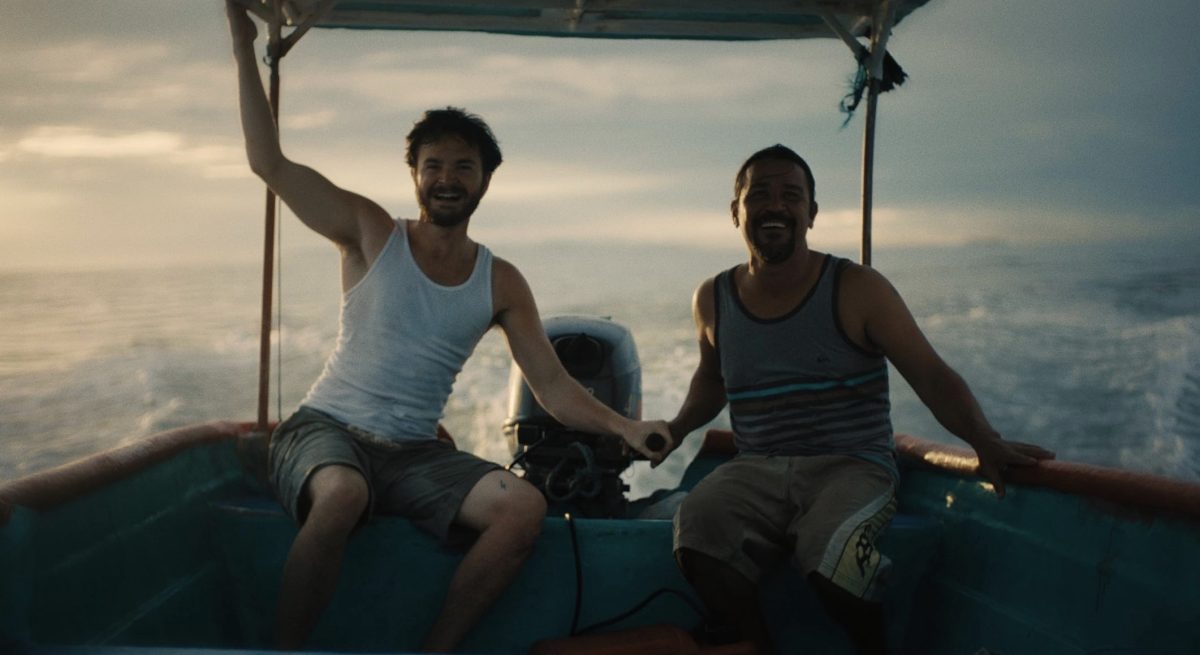
The second tale follows a lonesome fisherman who comes across a magical talking fish, who knows of the loneliness the fisherman is burdened with. He tells the fisherman that if he casts him back into the sea, he will be blessed with a son, one he must love as if his life depends on it.
Mere moments after this fish is cast back out to sea, our unnamed fisherman sees a young man floating on debris. He is saved by the fisherman, and at first, their interactions contain an intense amount of friction. The young man is in a prolonged state of panic, rebuking the warmth and care of his new father. The man’s attempts to be let go by his father span from extreme temper tantrums and failed escape plans off the island to reach the capital city of Costa Rica.
However, despite it all, the bond between the new father and son develops gently. It’s a bond mostly made through small gestures, looks that become warmer over time. The son realises the futility of trying to leave this situation. Not only does he accept his circumstances, but he fully embraces them. He slowly learns Spanish and starts to become a fisherman, much like his father. Things reach a wonderful equilibrium that feels like it could be shattered at any moment due to the hinted connection between our shipwrecked young man and the researcher from earlier.
I was really taken by the performance from Mario Chacon as the titular “Pescador” (Fisherman). There’s a tenderness to his mannerisms, the way his gaze falls upon his son. He manages to embody a different type of outsider, someone who’s in the right place yet is still out of place, as if a constant burden is weighing him down, pushing him into the very earth he stands on.
His performance stands to be one of the strongest elements of the film. I was shocked to learn that Chacon isn’t an actor but rather a local fisherman turned fishmonger turned momentary actor who lived in Tarcoles, where the film was shot. Spencer Bang makes for a good inverse to Chacon’s performance, and watching him slowly warm up to his new father is incredibly compelling. Seeing the barriers peel away acts as a very strong foundation for a great performance by Bang.
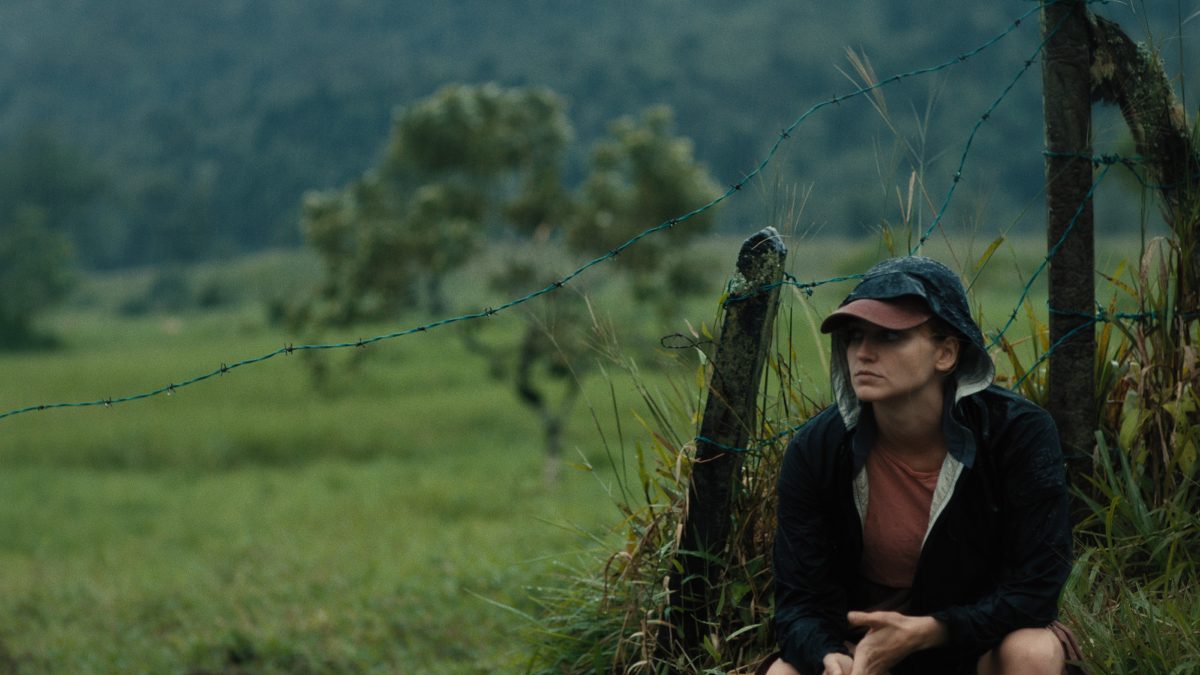
What makes “Pescador” quite a refreshing American indie is how focused it is on creating and maintaining a more atmospheric nature-focused experience. Which is calibrated strongly with its thornier characters and moments of magical realism. Too many recent indies feel caught in a cycle of self-cannibalization, recycling tropes from both mainstream American cinema and the indie canon until everything starts to blur together. The result is a wave of Sundance-ready dramedies that seem interchangeable—overly enamored with clever dialogue and endlessly remixing coming-of-age clichés, as if aiming for a higher-brow version of “Superbad” or “American Pie.”
“Pescador” operates more like a piece of asian or South American arthouse cinema with a focus on textures and haptic atmosphere, and a glacial pace, creating an experience that is tranquil and mesmerising but has these uneasy undercurrents to it, akin to “Monos” or “Memoria.” Cinematographer Isaac Bank’s work in this is nothing short of breathtaking.
A film saturated with luscious greens and blues, strong shadows, and just a constant vibrancy. The images hold onto a strong sense of constant contrast, and the Costa Rican coast and jungles are shot with such an allure, one that captures the beauty and mystery of these lands unknown to the characters and audience, incredibly well.
The sound design is equally as textured and atmospheric, and Dylan Marx’s score ties everything together really well, blending acoustic and electronic sounds to create an unconventional yet moving sonic experience. The fact that this was all achieved on such a low budget is quite astonishing. Despite its scale, it’s far more visually and sonically intriguing than many of the slick, big-budget titles dominating local cinemas.
Overall, “Pescador” is a fantastic and meditative experience from director Harry Rossi. It’s a perfectly calibrated debut that balances the yin and yang of new beginnings, the search for something greater, and the concept of death and rebirth. Anchored by striking cinematography, standout performances from Mario Chachon, Alex Wanebo, and Spencer Bang, and remarkably assured direction, this is a film I truly hope finds its audience. And there’s something fitting about its coastal tale premiering at IFFI Goa—practically within earshot of the ocean it evokes.





![The Manor [2021] Review : Barbara Hershey’s lead performance is not enough to save this hurried entry into Welcome to the Blumhouse series](https://www.highonfilms.com/wp-content/uploads/2021/10/The-Manor-Movie-Review-1-768x513.jpg)