
“The Beach Girls” (1982) is one of those films that, at first glance, appears to be a relic of early 1980s cinema, but revisiting it now shows a charming time capsule. It’s a movie that doesn’t pretend to be anything other than what it is. At the same time, it achieves more than its genre usually promises. I say this also as a testament to Crown International Pictures, an underrated independent movie studio that existed in Beverly Hills from 1959 to 1992.
If you can appreciate genre-based films from the 1970s, they are worth doing a deeper dive into. This movie sits in that liminal space between mainstream humor and 80s exploitation cinema. Watching it today feels like opening a time capsule that is filled with nostalgia and an unexpectedly sincere tone that ultimately saves the movie years later.
Directed by Bud Townsend, “The Beach Girls” follows a familiar outline: three women arrive at a beach house for summer break and decide to throw a party that spirals out of control. But while these ingredients sound like a formula, one that can be seen in movies today, the way this film handles it gives it a different flavor. It’s light and breezy, but there’s an almost gentle quality to all its chaos. Moreover, it is less cynical than the films that came after it.
At its core, this movie is a great hangout movie. It’s about people who are looking to have a good time, and it’s entertaining to watch them achieve this goal. It feels like a world you wish you could live in. There’s also a surprising emphasis on friendship throughout the narrative. It looks into the poetry of being a little clueless on the edge of adulthood.
“The Beach Girls” feels like it was made by a director who didn’t just want to show a party by the ocean but wanted to remind you of a party you might have been to once. The way the conversations spill into each other, the mix of awkward party goers, both the extroverts and the quiet introverts, the sounds of surf rock bleeding from a cheap boombox, the sense that something funny or disastrous might happen at any moment. But nothing disastrous ever comes. Only good times.

At worst, the party goers have to deal with a frustrated sea captain. Nothing in this movie is taken seriously. This film delivers expected comedic beats, and one thing I appreciate is the interludes of comedic gags that are interspersed between the scenes, but it’s all wrapped up in a sun-soaked atmosphere that it almost becomes a surreal experience. There are moments where the film feels more akin to a summer hangout movie with a screwball edge. “Well, lock me in a freezer and call me a popsicle!” says Ginger.
A big part of why the movie works better than it should is the cast. Jeana Keough, Val Kline, and Debra Blee play the trio of leads as actual friends rather than stock archetypes. Their banter has a genuine quality. None of them seems overly concerned with lessons or dramatic arcs. They glide through the film with the same loose, dazed energy that defines the movie as a whole. It becomes intoxicating.
Debra Blee’s character, Sarah, in particular, stands out. She radiates a confident carelessness that feels emblematic of early 1980s youth culture. There is a brief, almost throwaway shot of her looking out at the ocean before another wave of partygoers comes, and in that moment, the movie achieves a subtle tonal shift. It hints at the emotional subtext underneath the surface, the longing to stretch the summer, to freeze this time, to avoid whatever responsibilities are waiting after the credits roll.
Another element of the film that often gets overlooked is the subplot involving the uncle Carl Purdue (Adam Roarke) and his real estate company. It is all treated with the same breezy looseness as everything else. The uncle isn’t a stern authority figure or a cartoonish obstacle. He’s more of a well-meaning bystander swept up in the party’s momentum. There is a great scene when he first walks into the party, and a man standing in the background is juggling. This movie is filled with little touches like that.
There is also something funny about how easily he abandons whatever responsibilities he’s supposed to have, slipping into the role of a reluctant host who’s half annoyed with “Cinnamon and Goosey,” half-delighted by the chaos unfolding around him. Even the real estate backdrop feels like an artifact of early 80s California optimism. His presence rounds out the film’s atmosphere of harmless anarchy, reinforcing the idea that in this little bubble of summer, even the adults forget to be adults.
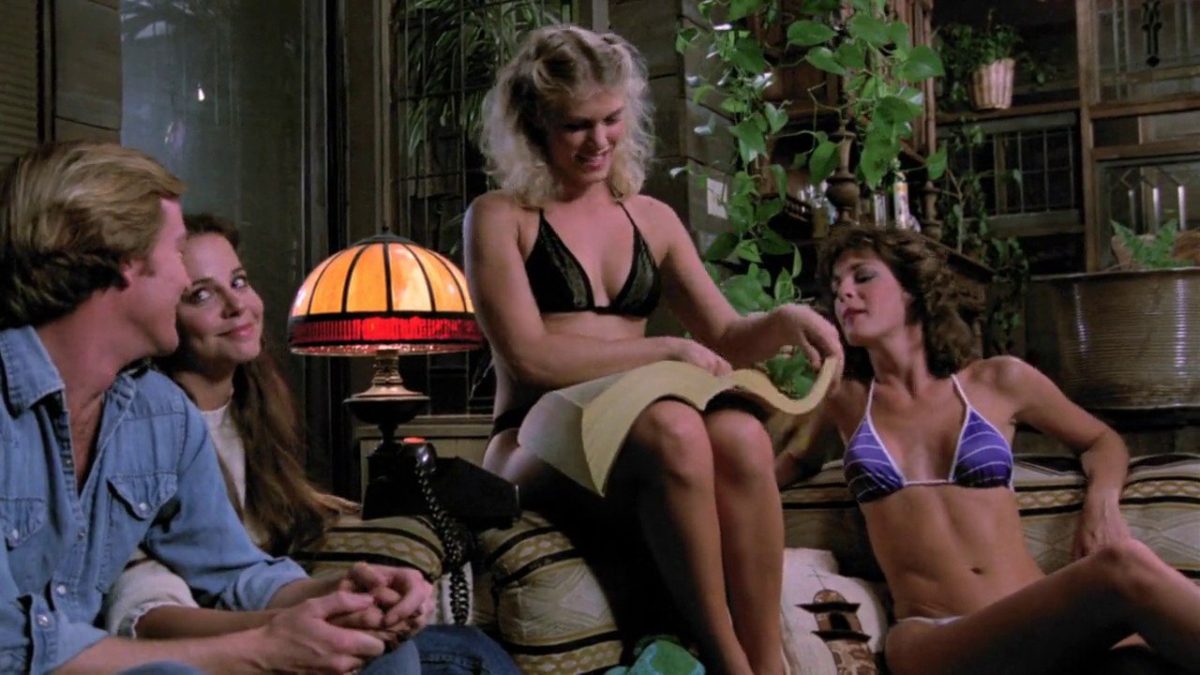
I also love the film’s soundtrack as a guilty pleasure. While many movies from this period used music simply as background noise, “The Beach Girls” leans into it. The party sequences are put together by music that reflects the characters’ carefree vibe. It captures the feeling of turning on the radio, hearing whatever is playing, and deciding that it’s the perfect soundtrack for whatever nonsense you’re about to get into. Visually, the film is very much of its time. Soft lighting and the hazy, sun-kissed look make it feel like an extended daydream. These moments give the film a handmade, almost scrapbook-like texture.
Director Townsend seems more interested in the summer ambiance, which makes “The Beach Girls” unexpectedly pleasant. It’s a difference in tone that sets it apart from some of its contemporaries; it just lounges. There is something disarmingly straightforward about a film that isn’t trying to outsmart its audience or send a message. It just wants you to have fun. And because it isn’t trying to be outrageous for the sake of it, the jokes that do work feel organic, born out of personality.
One of the unexpected pleasures of watching “The Beach Girls” now is seeing how gently the movie treats its characters. There’s very little cruelty in the narrative. No one is humiliated for sport, no one is punished, no one is positioned as a villain. Instead, the film creates a world where almost everybody is just a little goofy, a little lost, and very eager to have a good time. There’s a sweetness here that sneaks up on you.
The pacing is also surprisingly relaxed. Rather than building toward a high-stakes climax, the film flows like the tide, rising during moments of party madness, then easing back into scenes of casual conversation or small comedic beats. It feels like something Richard Linklater might make if he were asked to direct a low-budget beach comedy in 1982. It captures the last gasp of a certain kind of analog American summer before technology and youth culture shifted dramatically.
The film’s sincerity is perhaps its defining trait. The characters are not hardened, not calculating, not cruel. They’re just kids making mistakes and laughing through them. There’s something almost wistful in the film’s earnest belief in fun as a legitimate end goal. This is my end goal in life. Ultimately, “The Beach Girls” succeeds not because it transcends its genre but because it embraces it with total sincerity. It is authentic despite its ridiculousness and is surprisingly beautiful in the way summer memories can be. It’s a movie that invites you into a little slice of freedom and asks you to stay awhile.




![Nasumice [2018] Review: A Beautifully shot film that never rises above its ideas](https://www.highonfilms.com/wp-content/uploads/2020/11/Nasumice-Adrift-highonfilms-1-768x448.jpg)


![White Sun [2017] : Habitat International Film Festival 2017 Review](https://www.highonfilms.com/wp-content/uploads/2017/04/whitesun_03-768x384.jpg)