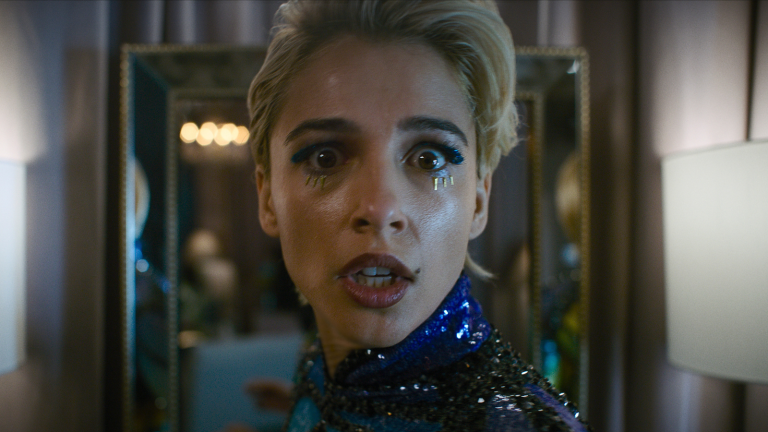
After years of exploding heads, political satire, chaotic superhero warfare, and one of television’s most unsettling villains, The Boys has finally reached its bloody conclusion. And yes, the finale delivered exactly what fans expected: massive deaths, brutal betrayals, emotionally wrecked survivors, and a final statement that feels less like a superhero victory lap and more like a warning about power itself.
The final episode, titled “Blood and Bone,” closes the curtain on Prime Video’s wildly successful anti-superhero saga with a finale that is equal parts devastating and strangely poetic. While the show has always thrived on shock value, the ending ultimately circles back to the core question it asked from the very beginning: what happens when people with absolute power stop pretending to care?
Where Can You Watch The Boys Finale?
Fans can stream the series finale exclusively on Prime Video. According to reports, Episode 8 of Season 5 premiered globally on May 20, 2026, with Indian viewers getting access in the morning hours due to time-zone differences. The finale marks the end of the mainline story after five seasons.
The episode quickly became one of the most discussed finales online because it promised answers to several long-running storylines: Billy Butcher’s deteriorating condition, Homelander’s increasingly unstable grip on power, Ryan’s fate, and whether any member of The Boys would actually survive the war.
The Boys Finale Explained: Who Dies and Who Makes It Out Alive?
The finale wastes almost no time before throwing viewers into complete chaos. The climactic conflict between Billy Butcher and Homelander finally erupts into an all-out confrontation that the series had been building toward for years.
Butcher, physically and mentally broken after repeated Temp-V exposure and his increasingly violent obsession with ending supes forever, enters the finale with essentially nothing left to lose. What makes the ending tragic is that Butcher’s mission stops being heroic long before the finale begins. The show deliberately blurs the line between savior and extremist, forcing viewers to confront how revenge corrodes even the people fighting for the “right” reasons.
Homelander, meanwhile, becomes more terrifying precisely because he no longer feels the need to hide behind celebrity culture or patriotism. The finale depicts him as a man completely consumed by his god complex, and the final battle reflects that unraveling.
Several major characters do not survive the finale’s events. Reports and breakdowns confirm that the final episode includes devastating losses during the climactic showdown, with multiple long-running players meeting violent ends as the conflict spirals out of control.
One of the biggest emotional pivots involves Ryan, whose role becomes central to the ending’s moral question. Throughout the series, Ryan represented the possibility that someone with immense power might still choose compassion instead of domination. The finale leans heavily into that symbolism.
Importantly, the ending does not hand viewers a neat, clean victory. Even the surviving characters are left emotionally shattered. The series understands that after years of corruption, manipulation, and violence, there is no realistic “happy ending” waiting for anyone.
What Does The Boys Ending Really Mean?
Underneath all the gore and satire, The Boys was never really about superheroes. It was about celebrity worship, nationalism, political radicalization, corporate greed, and how easily society excuses dangerous people when they are charismatic enough.
That message becomes painfully clear in the finale.
The final episode suggests that the greatest danger was never Compound V itself — it was humanity’s willingness to surrender accountability in exchange for spectacle and power. Homelander may be the face of the problem, but the show repeatedly argues that systems enabling him are equally guilty.
Butcher’s ending also carries enormous thematic weight. His hatred of supes ultimately mirrors the same absolutism he despises in Homelander. By the finale, the series openly questions whether vengeance can ever coexist with morality. The tragedy of Butcher is that he becomes consumed by the very darkness he spent years fighting against.
Ryan’s final arc, meanwhile, functions as the show’s final statement on generational cycles. The younger generation can either inherit violence or reject it. The finale intentionally leaves some emotional ambiguity there, but it strongly hints that the future depends on whether Ryan can avoid becoming another Homelander.
Why the Finale Feels So Different From Traditional Superhero Endings
Most superhero franchises end by restoring order. The Boys refuses to do that.
Instead, the finale leaves viewers with uncomfortable questions. Can broken systems truly change? Does defeating one monster matter if society keeps creating new ones? And perhaps most importantly: were the heroes ever really heroes to begin with?
That refusal to offer a clean moral conclusion is exactly why the ending has generated such intense reactions online. Some viewers wanted catharsis. Others appreciated that the show stayed brutally consistent with its worldview until the very end.
What the finale undeniably accomplishes is closure. The long-running war between Butcher and Homelander finally reaches its endpoint, the major emotional arcs receive resolution, and the series closes on a note that feels bleak but honest within the world it created.
And in true The Boys fashion, the ending leaves behind one final uncomfortable realization: power does not corrupt only superheroes. It corrupts everyone who believes they are justified enough to wield it.