Joel Edgerton starrer “Train Dreams” (2025) left a deep emotional impact on many and stood as one of the finest films of last year. The way it captured Robert’s life, from beginning to end, felt almost like watching a poem unfold on screen. A decade earlier, Edgerton had starred in and directed “The Gift” (2015), a twisted psychological thriller that stands in sharp contrast to the quiet poetry of Robert Grainier’s life in “Train Dreams” (2025). Even on a rewatch, the film remains gripping, and its brief jolts of shock still land effectively. More importantly, The Gift” (2015) excels in the way it builds atmosphere, gradually reveals its characters, and unfolds its secrets with a smooth and unsettling precision.
The Gift (2015) Plot Summary & Movie Synopsis:
A New Beginning in Los Angeles
The film opens with Simon and his wife, Robyn, relocating to Los Angeles after Simon lands a new job. Hoping for a fresh start, the couple moves into a new house in a quiet suburban neighbourhood. Since the house is still only partially furnished, they head to a local store to buy rugs, furniture, and other essentials. There, Simon is unexpectedly approached by a man who seems to know him well.
At first, Simon does not recognise him. The stranger mentions that he and Simon went to school together, though Simon still struggles to place him. It is only when Robyn joins them at the counter and the man introduces himself properly that Simon finally realises who he is. The man is Gordon, a former schoolmate from Simon’s past.
Gordon Enters Their Lives
Soon after this meeting, Gordon begins paying visits to Simon and Robyn’s home. On one of those early occasions, he meets Robyn while Simon is away at work. Robyn, trying to be kind and hospitable, welcomes him warmly. Since Gordon presents himself as an old school friend of Simon’s, she sees no immediate reason to be suspicious. In fact, she finds it polite to include him and make him feel comfortable, as she is new to the town.
Gordon appears genuinely happy to have reconnected with Simon. He repeatedly expresses how pleased he is to see Simon doing well in life, with a successful “job”, a beautiful “wife”, and a large “house”. To Gordon, Simon seems like a man who has “won” in life. Yet beneath his cheerful words lies a strange, awkward intensity that makes Simon uneasy from the start.
An Unwanted Friendship
Unlike Robyn, Simon is never fully comfortable with Gordon’s presence. He remains sceptical of the man’s sudden reappearance and finds his frequent visits increasingly intrusive. What troubles Simon even more is that Gordon often shows up when he is not at home, leaving Robyn alone to entertain him. The pattern begins to raise questions about Gordon’s true intentions.
Whenever Simon tries to learn more about Gordon’s life, Gordon avoids giving clear answers. He dodges personal questions and reveals very little about where he lives, what he does, or what kind of life he has built for himself. This secrecy only deepens Simon’s discomfort. Though he jokingly suggests to Robyn that Gordon may have developed an interest in her, the remark is rooted in a genuine suspicion.
Robyn’s Sympathy for Gordon
Robyn, however, sees Gordon differently, at least in the beginning. To her, he comes across less as a threat and more as a socially awkward, lonely man trying to reconnect with someone from his past. When Simon mocks Gordon or behaves dismissively towards him, especially in front of others, Robyn feels uncomfortable. She is not drawn to Gordon in any romantic sense, but she does feel sympathy for him. Part of what softens Robyn’s attitude is Gordon’s habit of bringing gifts whenever he visits.
These gestures seem thoughtful, if slightly unusual, and they gradually create a sense of obligation. Each gift makes the couple feel pressured to respond with kindness, another dinner invitation, or some gesture in return. In that way, Gordon slowly inserts himself into their lives. What feels artificial and forced to Simon seems, to Robyn, like the awkward effort of a man simply trying to be friendly.
Dinner at Gordon’s House
As Gordon’s visits become more frequent, the relationship between him and the couple begins to take on a more complicated shape. Eventually, Gordon invites Simon and Robyn to dinner at his own house. For Simon, this feels like a long-awaited opportunity. Ever since Gordon re-entered his life, Simon has been suspicious of him and eager to understand what he really wants.
Robyn urges Simon to be polite, but Simon’s curiosity is already overpowering his restraint. When they arrive, Simon is surprised to find that Gordon appears to live in a large, luxurious house and drives an expensive car. This image does not match the vague and almost pitiful figure Gordon had earlier projected. As always, Gordon behaves awkwardly, but he welcomes them warmly and, true to form, offers yet another gift. Unable to resist any longer, Simon begins pressing Gordon with personal questions. Once again, Robyn feels uncomfortable with the tension in the room.
Gordon remains evasive, only for an unexpected interruption to follow. He receives a phone call and abruptly says that something urgent has come up and that he must leave for a while. Strangely, he asks Simon and Robyn to stay in the house until he returns. The situation becomes even more unsettling once Gordon leaves.
Simon, seeing a rare chance to uncover the truth, begins looking around the house. Robyn follows him, though with much more hesitation. As they move through the rooms, they come across signs that Gordon has not been entirely honest with them. They find a wardrobe filled with women’s clothes and a room that clearly belongs to children. It becomes obvious that Gordon is not as alone as he had implied.
When Gordon returns, Simon questions him more directly. Gordon then reveals that the house belongs to his wife, who has divorced him recently and taken their two children with her. Even the call he had before was not related to work but his ex-wife. Suddenly, several missing pieces fall into place for the couple. Gordon’s loneliness, his awkwardness, and his emotional instability begin to make more sense to them. Robyn is willing to accept this explanation and let the matter rest. Simon, however, is less convinced.
Even after learning more about Gordon’s life, he cannot shake the feeling that something is deeply off about him. Simon makes it clear that Gordon’s frequent visits and constant gift-giving have started to feel strange and unwelcome. He wants the behaviour to stop. Gordon, however, does not respond well to this confrontation, and the uneasy tension between the two men only deepens from there.
The Gift (2015) Movie Ending Explained:
Robyn slowly begins to realise that Gordon is not just an awkward man from Simon’s past, but someone capable of carefully building false versions of himself. By this point, she cannot shake off the feeling that something bad is going to happen. After Simon finally decides to put an end to Gordon’s creepy visits and his habit of bringing gifts, things begin to turn darker.
The fish gifted by Gordon are found dead, and soon after that, their dog goes missing. Simon is convinced that Gordon is behind it, while Robyn becomes more anxious and unsettled. Still, they do not want to press charges because they have no real proof against him. They also worry that, if Gordon realises they suspect him, it might push him to do something even worse.
The Fabricated Lie
When Gordon apologises to the couple and admits that he lied about his personal life, that too turns out to be another fabrication. It is revealed by the detectives that Gordon’s display of wealth was part of the lie. The expensive car and the luxurious house were not his. He had access to them through the people he worked for, and he used that access to present himself as someone far more settled and successful than he really was.
Gordon knew the owners were away on vacation and used that opportunity to invite Simon and Robyn over for dinner. Even then, the couple is still unable to fully understand what Gordon really wants. His lies, his strange behaviour, and the constant unease he brings into their lives make their everyday routine increasingly difficult and psychologically exhausting.
More Lies
After the police intervene and the dog is returned, one final letter from Gordon comes; the couple begins to believe that the worst is finally over. Life appears to settle down, and soon Robyn learns that she is pregnant. As the couple returns to their usual routine, Simon becomes more focused on securing a promotion at work. But for Robyn, the fear never fully disappears.
The unease returns the moment she spots Gordon again while out shopping for dresses. From then on, she can no longer stop thinking about him and the past he seems to share with Simon. Later, when their neighbours and Simon’s family gather for Robyn’s baby shower, she decides to ask Simon’s sister, Joan, about Gordon. Robyn suspects Joan might know something, since she, too, went to the same school.
Gordon’s final letter, especially his line asking Simon to “let bygones be bygones,” has already made Robyn feel that there is something unresolved between the two men, something Simon has not told her. But getting the truth out of Simon proves difficult, so Robyn looks for another way to uncover it. Joan tells her about an old story from school, that Gordon had once been molested by an older boy in a car, and that Simon and his friend Greg had saved him.
But instead of answering Robyn’s questions, this only confuses her further. If Simon had really saved Gordon, why does he become so uncomfortable whenever Gordon is mentioned? And why would Gordon want to torment Simon and his wife if Simon had once helped him? The story does not add up. Determined to learn the truth, Robyn tracks down Greg and finally hears what Simon has been hiding all along.
Many Lies Lie Before the Truth
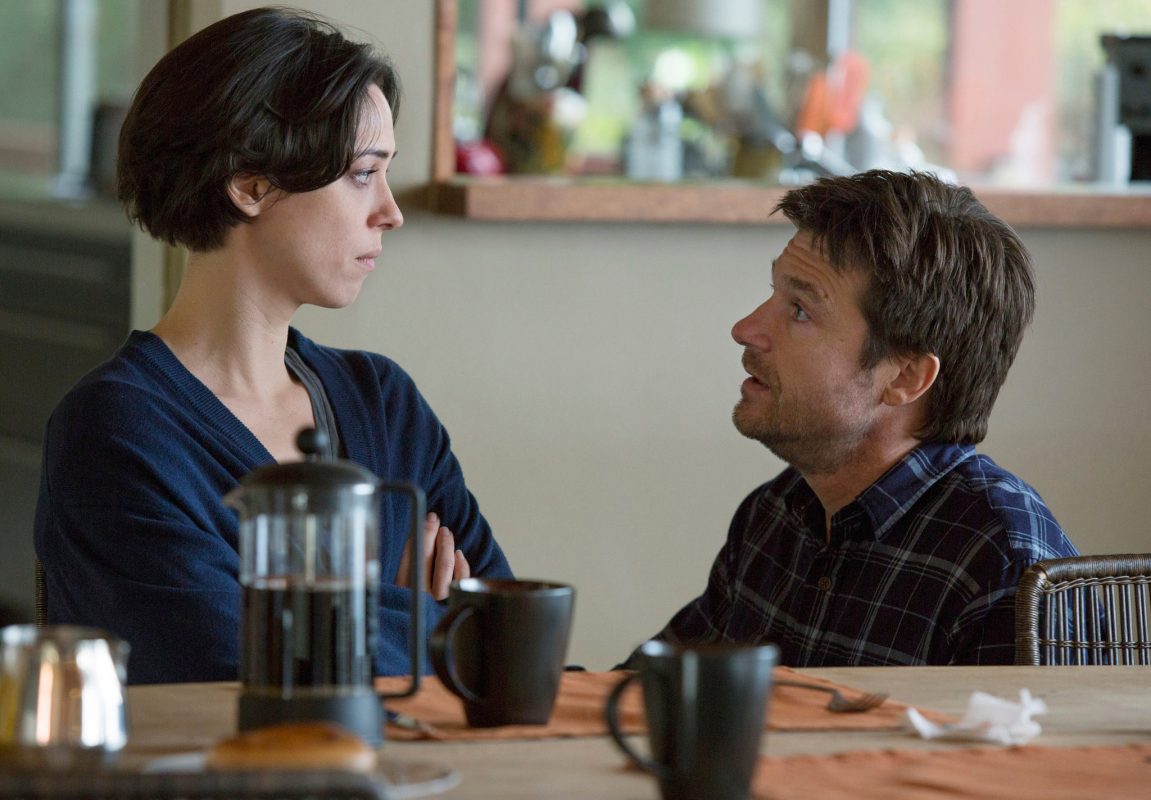
Greg finally tells Robyn what actually happened. The story that Gordon was molested in a car and later saved by Simon and Greg also turns out to be a lie. Greg admits that he is not proud of what he did back then. He feels ashamed that he went along with Simon. It was Simon and Greg who branded Gordon as gay, and because of that humiliation, Gordon was almost burned by his own father. Those early wounds explain a lot about Gordon’s social awkwardness and the emotional damage he carries into adulthood.
Also Read: The 50 Best English Language Films Of 2015
For Robyn, this is a shocking revelation. Until this point, she only knows one side of the story. Now, the other side completely changes how she sees both Gordon and Simon. More importantly, Simon’s own darker nature starts becoming visible to her more clearly. The more she learns, the more uncomfortable she becomes around her husband. Simon eventually admits the truth after repeatedly denying it and trying to dodge the subject. But Robyn does not accept his apology so easily. Instead, she wants him to make peace with Gordon, because to her, that is the only right thing left to do.
Simon agrees, but even here his motives seem less sincere than practical. He may never have gone looking for Gordon to apologise if Robyn had not pushed him to do it. Robyn’s pregnancy also adds urgency to the moment. This is not the first time the couple has faced emotional strain. After all, one of the reasons they moved to Los Angeles was Robyn’s miscarriage and the depression that followed. Simon wants peace, but mostly because he wants his own life to remain smooth and undisturbed. Even his regret feels rooted more in self-preservation than in genuine moral reckoning.
Gordon, unsurprisingly, does not accept Simon’s apology. He immediately sees through it and understands that Simon has come only because Robyn made him do so. At one point, Gordon may have genuinely wanted to let the past stay in the past. But Simon proves that he has not changed. That becomes especially clear in small but telling ways.
When Gordon leaves his number written on the fridge board, Simon crosses it out and writes “Weirdo” instead. It is a casual act, but it reveals everything. Gordon saw this and believed Simon still sees him through the same cruel lens he did in school. He was the one who gave Gordon the nickname “Weirdo Gordo,” and even now, he carries the same arrogance.
Simon tries to justify himself by saying that the world is not an easy place, that his own father was harsh on him too, and that Gordon is the one who is stuck in the past while he has moved on and become successful. But Simon never really confronts the truth that he ruined a man’s life. That realisation begins to haunt Robyn even more than Gordon’s behaviour. The clearest proof that Simon has not changed comes later, when the couple hosts a dinner to celebrate his promotion. It turns out Simon got ahead by ruining the career of his rival, Danny McDonald. Once again, Simon built his success on a lie. His manipulation deeply affected Danny’s mental state.
During the dinner, Danny suddenly shows up outside the house and throws stones at the glass door, shocking everyone inside. Simon rushes out and catches him, but the damage is already done. Danny exposes the truth in front of everyone, and Simon’s carefully maintained image starts collapsing in public. At that very moment, Robyn’s water breaks, and she is rushed to the hospital for an emergency delivery. At the hospital, Simon gets another crushing blow when his colleague informs him that he has been fired.
His professional life is collapsing at the same time as his personal life. Robyn, too, no longer wants to return home with him. In many ways, Simon has finally reached the lowest point of his life. And the film suggests that even if Gordon had never re-entered his world, this fall was always waiting for him, because it grows out of Simon’s own character.
One Last Gift
When Simon returns home, he finds another large gift waiting at his doorstep. Inside is a baby stroller. Within that stroller are three smaller gifts. The first contains a key to his front door. The second contains an audio recording of Simon and Robyn’s conversation from the dinner, especially the cruel things Simon said about Gordon.
The third contains a CD with a video. In it, random shots of Robyn and Simon from different days, and then a man wearing a monkey mask enters Simon’s house, finds Robyn unconscious on the floor beside a juice bottle mixed with pills, and approaches her. The video stops in a way that suggests, but never confirms, that Gordon may have sexually assaulted her.
What Was in Gordon’s Final Gift?
The film ends on an open note. That uncertainty is the film’s final cruelty. Simon rushes to the hospital, shattered, unable to know whether the child is really his or Gordon’s. He is left speechless, broken, and psychologically destroyed. The film never confirms whether Gordon actually violated Robyn or whether he simply planted that possibility in Simon’s mind with deliberate precision.
But that is exactly what makes the ending so cruel. Simon now has to live with the doubt for the rest of his life. He cannot fully confront Robyn with it without risking the complete collapse of his family. Yet even if he remains silent, the uncertainty will continue to poison whatever remains between them.
Either way, Simon’s life has been altered permanently. He now has to live with suspicion, guilt, anger, and the unbearable possibility that the child may not be his. In a way, Gordon does to Simon what Simon once did to him. He enters his life, damages his sense of stability, and leaves behind a wound that may never heal. The difference, of course, is that Gordon’s revenge is not merely physical or social; it is psychological. He makes Simon live inside a prison of doubt, the same way Gordon himself once had to live with the trauma Simon helped create.
The Gift (2015) Movie Themes Analysed:
One of the more uncomfortable ideas raised by “The Gift” (2015) is how often women become collateral in stories driven by male revenge. When “Maharaja” (2024) was praised by many, it also sparked serious online discussions about the way women are used as objects within a man’s revenge arc. In many such narratives, the violation of a woman’s body becomes a shortcut to intensify the emotional blow.
Perhaps the long influence of films like “Oldboy” (2003) has made this device feel like an accepted tool for delivering a shocking twist. But looked at from another angle, it also reveals how deeply cinema, and society with it, continues to treat women less as full persons and more as instruments within someone else’s suffering.
At the same time, the reason filmmakers keep returning to this device is clear, even if troubling. If revenge in such stories resulted only in physical injury or some other form of damage, it may not provoke the same disturbing reaction in the audience as the suggestion of sexual violence does. That is precisely why it gets used so often.
Filmmakers may argue that their intention is not to normalise such acts, but merely to create shock or psychological tension. Still, that choice says something unsettling about the cinematic imagination itself. Human bodies continue to be objectified, sexualised, and turned into narrative tools, even in a time when debates around gender, identity, and representation are more visible than ever.
Another major idea in “The Gift” (2015) is how a lie, once planted in someone’s mind, can destroy a life far more effectively than direct violence. Gordon spends most of the film trying to force Simon into acknowledging the past, but Simon continues to deny, dismiss, and bully. In the end, Gordon turns that cruelty back on him. He becomes, in a sense, the bully himself, not by brute force, but by planting doubt so deep inside Simon that it can never fully leave him. That is what makes the ending so cruel. Gordon does not simply hurt Simon; he makes Simon live with uncertainty.
In that sense, the film becomes not just a revenge thriller, but a study of how human beings weaponise memory, shame, and fear. Revenge itself is one of the cruellest things humans are capable of. Animals kill for survival. They do not preserve humiliation, nurse resentment, or wait years to psychologically ruin another being. Human beings do. That is what makes “The Gift” (2015) so unsettling. Its final act suggests that the deepest wounds are not always physical. Sometimes, the most lasting damage comes from an idea placed carefully in the mind, where it continues to grow long after the act itself is over.