There is something quietly disarming about “The Perks of Being a Wallflower,” a film that does not so much announce itself as a coming-of-age narrative as it slowly seeps into the emotional grain of its viewer. It chooses not the silences and hesitations of adolescence. In doing so, it constructs a space where experience feels like a series of returns, like the returns to memory, to feeling, to moments that refuse to remain contained in the past.
The film exemplifies that emotions are not always legible and experiences do not always translate into immediate meaning. And this refusal to clarify too quickly becomes one of its most striking qualities. It is a film that lingers in the liminal spaces, and in the quiet aftermath of moments that seem insignificant but leave behind an indistinct weight. It tells us that whatever shapes a person is often these smaller, almost imperceptible accumulations. The narrative unfolds as a consciousness being gradually revealed, where perception takes precedence over action and where the act of observing becomes as significant as the act of participating.
The film follows Charlie, played with a kind of fragile translucency by Logan Lerman, whose presence in the narrative is less about action and more about perception. This distinction becomes crucial because the emotional weight of the film rests on how it is absorbed, processed, and often left unresolved within him.
This creates a narrative texture that feels almost diaristic, as though the film itself were composed of entries written in the aftermath of feeling. What emerges, then, is a portrayal of adolescence that resists the neat categorisations of joy or trauma, instead allowing both to exist in an uneasy, often indistinguishable coexistence.
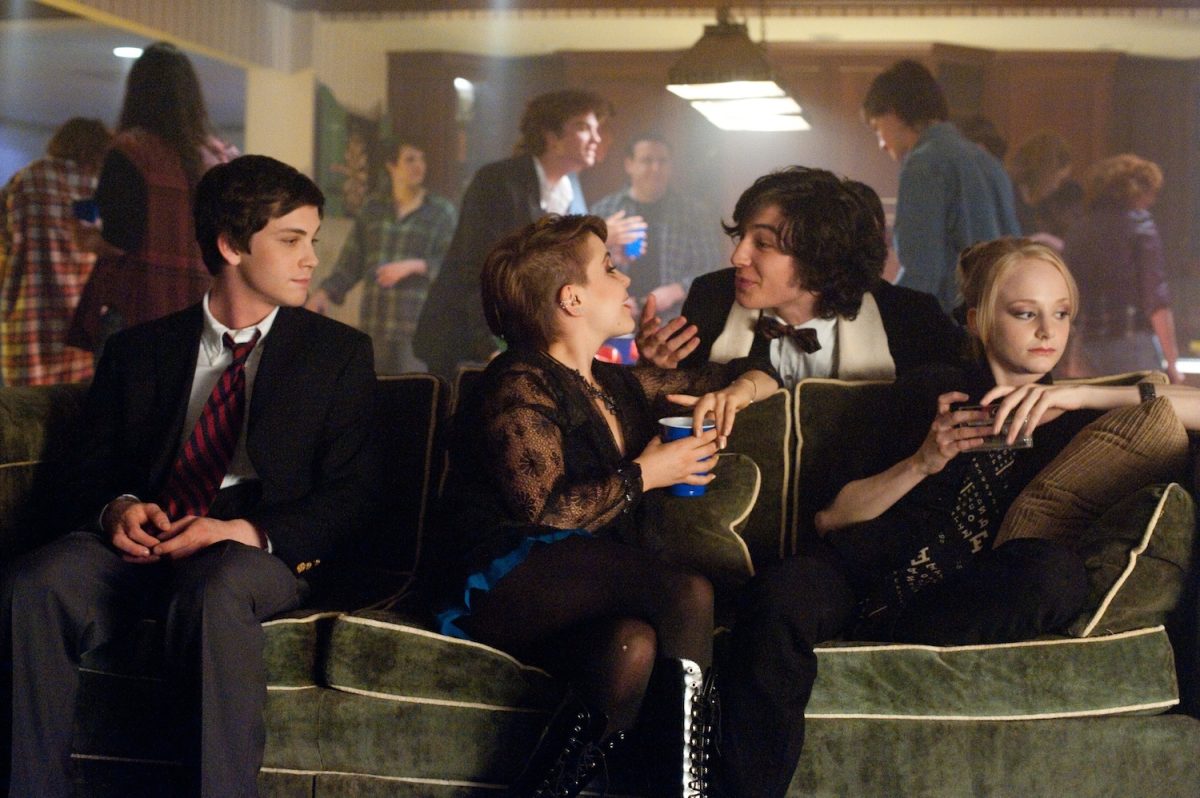
There are moments of laughter that carry the shadow of something unarticulated within them. A moment of pain is never entirely devoid of warmth, particularly in the relationships Charlie forms with Sam and Patrick, played by Emma Watson and Ezra Miller, respectively. They are, thus, less archetypal figures of rebellion or liberation and more embodiments of a certain kind of emotional openness that the film seems to suggest is both necessary and precarious. Their presence introduces Charlie to experiences that might conventionally be framed as rites of passage, with parties, first love, and the intoxicating sense of belonging.
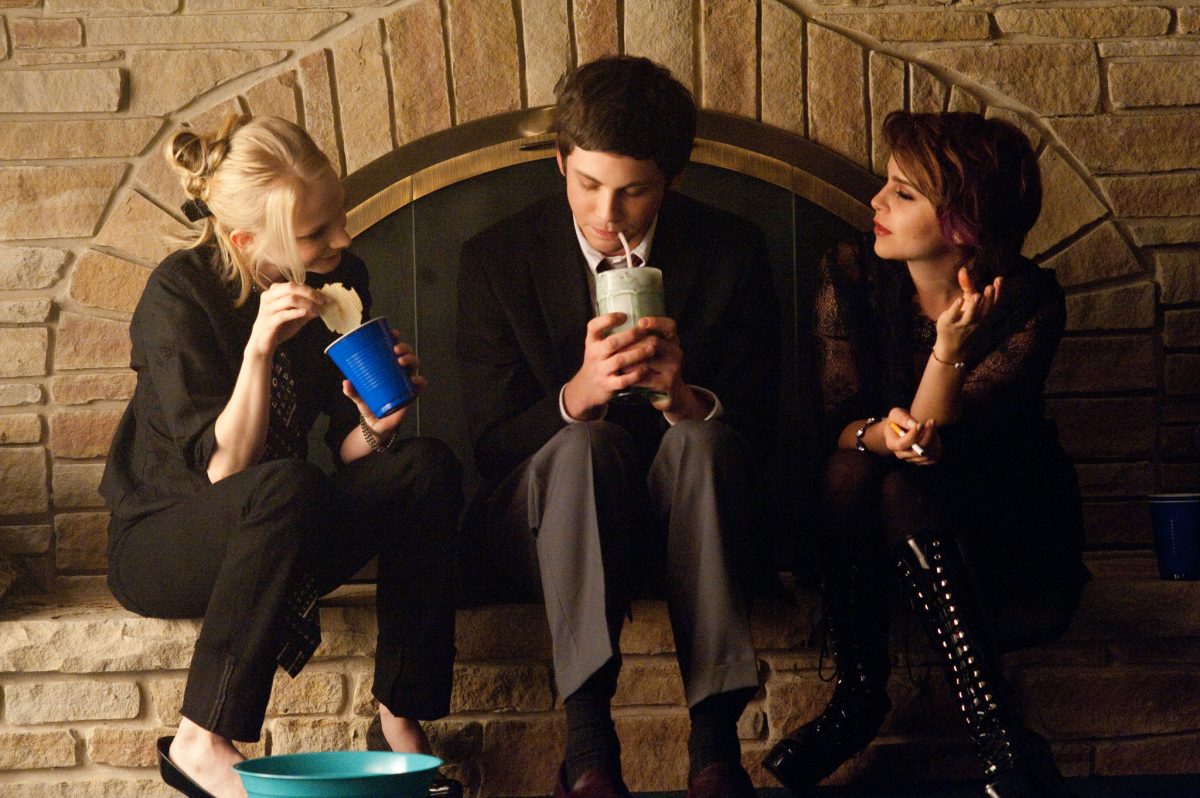
But the film complicates these by refusing to isolate them from the psychological undercurrents that shape Charlie’s engagement with them. So, even in moments that might otherwise be read as celebratory, there is an awareness of fragility and the possibility that these experiences are sites where unresolved histories surface.
This is perhaps where the film’s engagement with memory becomes most pronounced, as it gradually reveals that Charlie’s present is a space, continually interrupted by fragments of a past that resists articulation. The narrative’s structure mirrors this by withholding certain revelations, allowing them to emerge as inevitable recognitions, moments that feel like acknowledgments of something that has always been there, just beyond the reach of language.
The film’s treatment of trauma is notable for its refusal to render it as a singular, defining event, instead portraying it as something that permeates experience, shaping perception in ways that are not always immediately visible. This is reflected in the film’s aesthetic choices as well, from its use of music, which often seems to carry the emotional residue of them, to its visual framing.
This frequently positions Charlie at the edges of the frame as someone whose mode of being is inherently observational, and for whom participation is always mediated by a heightened awareness of self and surroundings. Yet, the film does not romanticise this position of the “wallflower”, despite what its title might suggest, because it becomes increasingly clear that this distance, this tendency to observe rather than engage, is a way of navigating a world that often feels overwhelming.
The film subtly critiques the allure of detachment, suggesting that while it may offer a form of protection, it also entails a certain kind of isolation, a separation from the immediacy of experience that can render even moments of connection somewhat provisional. However, the film’s exploration of connection itself is equally nuanced, as it resists presenting relationships as solutions or resolutions. It depicts them as spaces where understanding is partial, where affection coexists with misrecognition.
The act of being seen is as fraught as it is desired, particularly in Charlie’s relationship with Sam, which is marked by a tension between idealisation and reality. It is a dynamic that the film does not resolve so much as it allows to unfold, revealing the ways in which desire can be shaped as much by absence as by presence. This complexity extends to the film’s engagement with identity, particularly in Patrick’s storyline, which navigates issues of sexuality and acceptance without reducing them to a singular narrative of struggle or triumph.
What ultimately distinguishes the film, however, is its tonal consistency and its ability to sustain a sense of emotional authenticity without resorting to overt dramatisation. This is perhaps most evident in its quieter moments, in the pauses between dialogue, in the way the camera lingers on expressions that seem to carry more than can be spoken, creating a cinematic language that prioritises emotional elements over explanation.
The now widely recognised tunnel scene, set to music that becomes almost inseparable from the image itself, encapsulates this approach because it captures a fleeting sense of expansiveness, where the boundaries of self seem to dissolve, if only temporarily. It is in these moments that the film’s central concern with presence becomes most apparent, defying the simple injunction to “live in the moment”, taking the shape of a more complex negotiation between past and present, between memory and immediacy, between the desire to feel and the fear of what feeling might entail.
The oft-quoted line about feeling “infinite” in “The Perks of Being a Wallflower” never really comes across as a triumphant declaration. It feels far more fragile than that, almost like a moment that is aware of its own impermanence even as it is being experienced, something that exists only because of a certain alignment of people, emotions, and time that cannot last forever.
It is this quiet awareness that keeps the film from slipping into easy sentimentality, allowing it instead to hold on to a kind of emotional honesty that does not pretend to have all the answers. What stays back happens to be a series of impressions that continue to shift and rearrange themselves. It opens up a space where personal memories, uncertainties, and fleeting recognitions can sit alongside the narrative without needing to fully merge with it, maintaining a distance that still feels intimate.
Perhaps that is what lingers the most, this sense that understanding, much like adolescence itself, is not about arriving at clarity once and for all, but about continuously negotiating what it means to feel, to remember, and to exist within moments that are always in the process of changing.



![The Fragile House [2018]: ‘Locarno’ Review](https://www.highonfilms.com/wp-content/uploads/2018/08/locarno_the_fragile_house_hof_review_2-768x432.jpg)