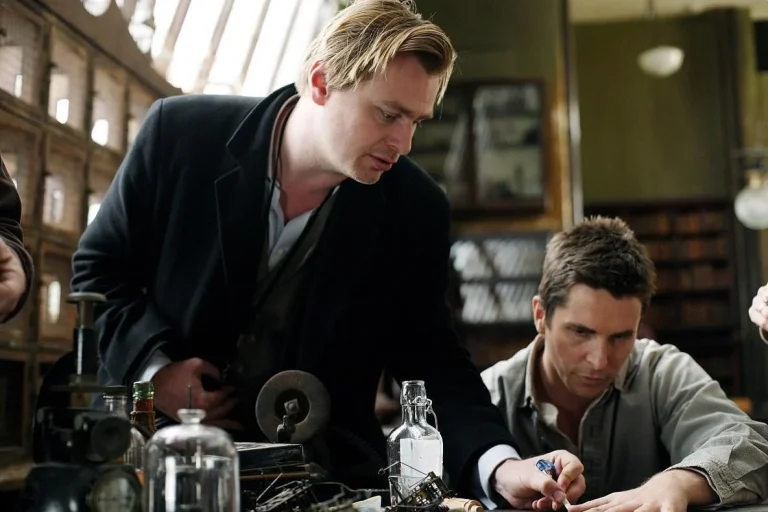
In an industry obsessed with reinvention, Yorgos Lanthimos has quietly built his career on return.
Yorgos Lanthimos’ Casting Philosophy Begins With People, Not Roles
Across his recent films, the same faces keep resurfacing—Emma Stone, Jesse Plemons, Colin Farrell, Olivia Colman, Willem Dafoe, Rachel Weisz—not because Lanthimos is repeating himself, but because he believes repetition creates something most productions never reach: trust deep enough to risk failure.
That philosophy surfaces plainly when he talks about casting—not in grand auteur language, but with a kind of practical certainty:
“When you find something so valuable, you don’t let it go easily. You make everything work around that. People are the most important thing in filmmaking.”
It’s a sentiment that explains far more than any single collaboration. Lanthimos doesn’t treat actors as interchangeable pieces for pre-written roles. He builds films around people, letting characters bend, stretch, or even mutate to fit the performer rather than the other way around.
“I always hated that notion that there’s a character written a certain way, and you’re looking for someone that can fit that thing,” he says. “I like to find people that I like in general and I like their work and make the character fit them.”
That approach turns familiarity into freedom. Actors who return to his sets aren’t burdened by expectations; they’re liberated from them. The groundwork—physical, emotional, interpersonal—has already been laid.
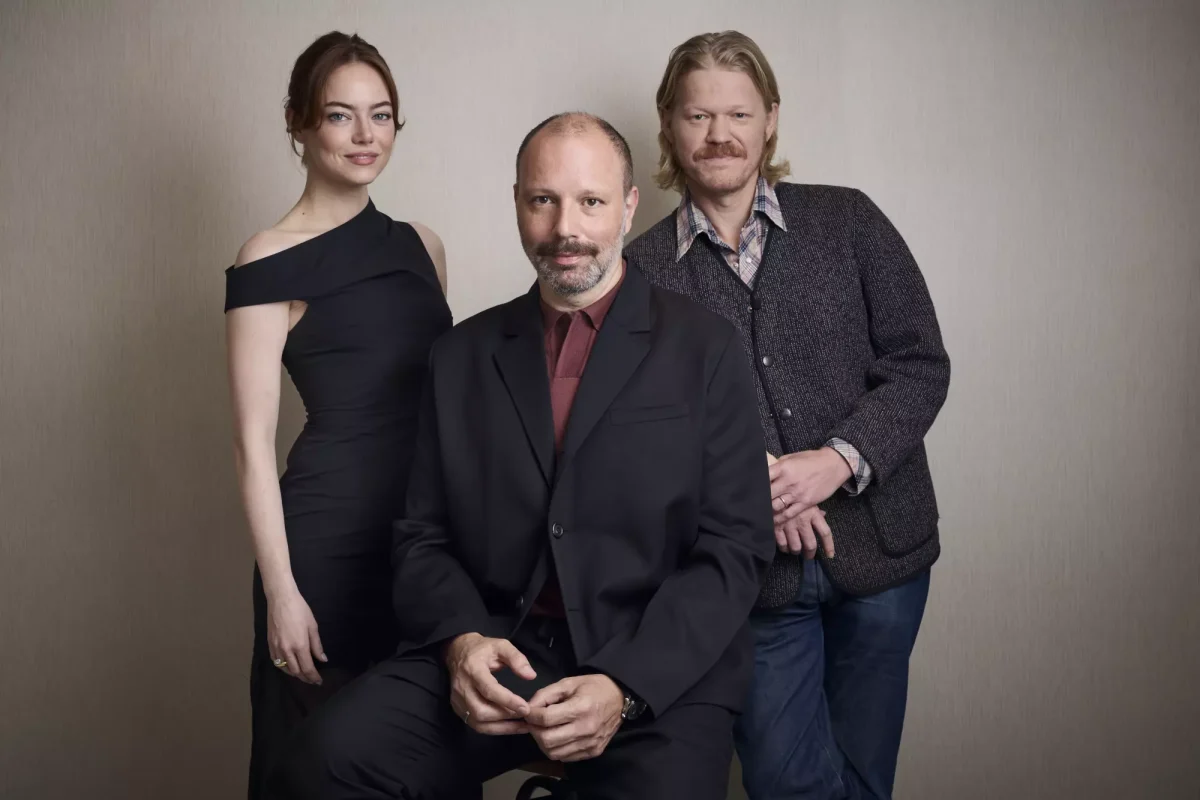
Stone remembers feeling intimidated when she first stepped into that world on The Favourite, but the feeling didn’t last.
“We all bonded so quickly because of [his] rehearsal process,” she says. “I fell in love with the way it all felt and the freedom of it.”
Those rehearsals are less about performance than dismantling self-consciousness. Lanthimos describes warm-ups that resemble a dance-theatre troupe more than a film set—mirroring exercises, close physical movement, absurd tasks layered onto dialogue.
“It makes it light. You don’t take yourself too seriously. You don’t take the material seriously,” he explains.
“It’s a way of the actors getting the dialogue in them in an unconscious way, not fixed with a kind of intellectual baggage.”
Working with the same actors means that process doesn’t have to start from zero every time. Embarrassment disappears faster. Physical proximity stops feeling staged. Emotional exposure becomes normal.
“We become comfortable physically with each other and emotionally — not feeling embarrassed at being close, or whatever,” Stone says. “It feels like you’ve been there already.”
That comfort is what made the leap from The Favourite to Poor Things possible—a role that demanded, in Stone’s case, complete fearlessness. It’s also what allows newer collaborators to be absorbed into the fold rather than overwhelmed by it.
Even someone as experienced as Plemons describes his early days working with Lanthimos and Stone as destabilizing.
“The part of my mind that needs to understand was just haywire during those first few days,” he admits of Kinds of Kindness.
What helped wasn’t explanation—it was example.
“When you’re seeing these other actors throw themselves into these silly games with full abandon, it encourages you to do the same.”
Why Bugonia Fits Into Lanthimos’ Pattern of Repeat Collaborations
That’s why casting Plemons again for Bugonia wasn’t a question.
“When you find something so valuable, you don’t let it go easily.”
Lanthimos even sent Stone the script for Bugonia before fully committing to the film.
“I trust her judgment and her opinion.”
This is how his films accumulate power—not through novelty, but through continuity. Each collaboration sharpens a shared language. Each return removes another layer of self-protection.
As Stone puts it, even a few minutes of that shared process can change the dynamic between people.
“If the four of us were to do that right now, we would have a slightly different relationship 10 minutes from now.”
In Lanthimos’ cinema, repetition isn’t creative stagnation. It’s how risk becomes possible—and why the work keeps going further instead of safer.