Review by Kalpit Tandon
The turkey is all rotten from the inside, the garden has trenches of dirt, and even the door to the house is broken. The atmosphere builds savagery and reeks of pending doom, like the lull between two consecutive storms, always waiting to destroy everything in its wake. Every time the lens is up close to the family, cracks appear. Crevices and fissures that run deep within the skin, with nothing but pieces of epidermis piling over themselves in a heap of sorrow.
Just like the way she herself tends her broken finger, Krisha is a walking wound requiring desperate attention to stop her from falling further down her self-destructive abyss. Krisha Fairchild plays her namesake as a searingly crippled addict and an unintentional nihilist. She tries to redeem herself, begs for forgiveness, but the muted ghosts of her past linger like heavy dew on the windowpanes of her house. The background scores melt hysteria as chaos creeps in gently during trivial conversations that eventually tread down darker roads.
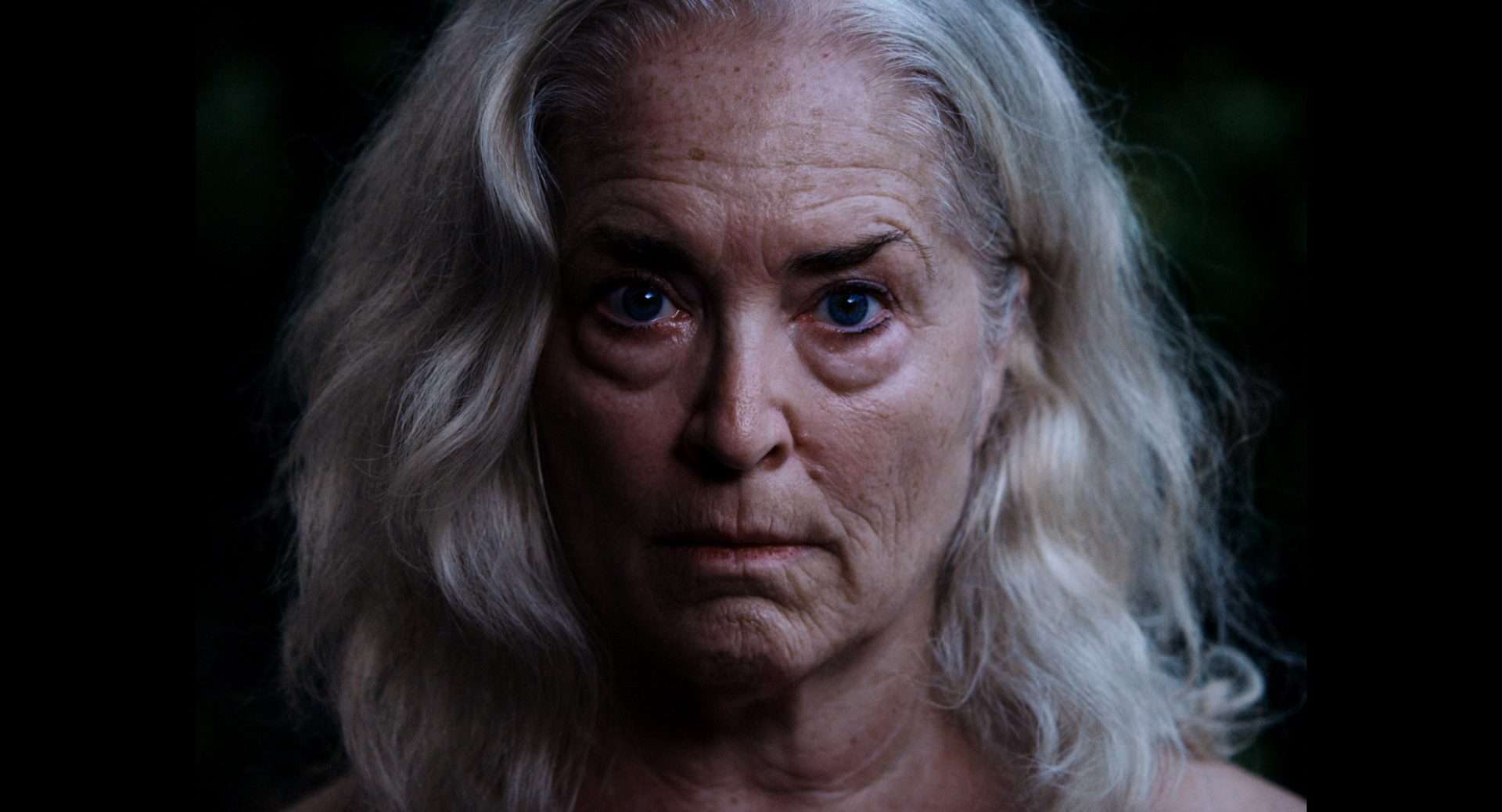
It would not have been possible to concoct so stressful an affair without the brilliant and tremendously inventive cinematography. With eyes as bright as the sun and blue as ice, Fairchild possesses the character so hauntingly, as if she is one with Krisha and her grief. She elevates the experience with a performance that paints a wretched modern tragedy brimming with guilt. Her gaze alone makes this an incredibly difficult movie to sit through and might push casual viewers away with its naked power and honesty.
Shults has laid an egg for a garden snake, the mighty King Cobra, for that matter. The embryo is a vicious cloud of poison that breathes venom out in the surroundings; death to all near and close. Ruinously raw and manically depressing, Krisha feels like an ever-present ache in your body which refuses to evaporate.
Review by Nafees Ahmed
‘Krisha’ cleans ‘Turkey’ for dinner.
For a plot of a film, how about an old lady in her twilight years shows up at her sister’s bungalow after a long haul on Thanksgiving day and proposes to ‘cook dinner (Turkey)’ for their estranged relatives under a psychological pressure? Yes, that is the plot of Krisha. Sounds unbelievable, uninteresting or too thin for a film to base on it? But ‘Krisha’ turns out to be a powerful film about self-destruction at one’s own hand. It is nerve-racking, hypnotic sometimes — thanks to the unique music and the drama that unfolds naturally without any melodrama.
‘Krisha’ chops vegetables and stuff the ‘Turkey’.
Krisha is an alcoholic and abuser who promises that she has got her shit together. Her family believes her, so do we, and why not, she sports such a confidence and charm in the opening scene. Trey Edward Shults has used the bungalow of his own relative and majority of the cast members in the film is from his own family. This is the reason why the film feels more like a documentary of real events than a fictional account. Possibly, many gossips among the relatives in the film is true.
‘Krisha’ puts Turkey in an oven.
The scenes are chopped quite abruptly but then it actually helps the film. You see so many characters coming, going and talking, randomly. In between, Krisha strikes random conversations with her sister and brother in law. Krisha attempts to speak with her own son. Midst of all these, the tension in the third act builds to a new height and you could sense ‘the one big happy family reunion’ go haywire.
‘Krisha’ takes out the delicious brownish Turkey, and it’s ready to serve.
The central performance by ‘Krisha Fairchild’, who is the aunt of Shults in real life, as an emotionally vulnerable person who wants to get back to her life and son but simply could not by virtue of her unconsciously self-destructive behavior, is raw, heartbreaking and simply splendid.
Review by Shikhar Verma
Krisha (2016) is about a family gathering seen through and felt through the eyes of Krisha, a woman who is in her 60s and is invited to her sister’s house for Thanksgiving. While the first leg of the film has some very intriguing and happy elements, it’s quite evident from the outset that all that you see won’t end up being on the happy side. Whenever we, along with the camera, linger with Krisha, we feel her sense of anxiety, which is being presented brilliantly with the use of a very trippy score amp-up. The kind of anxiousness and dread that each one of us faces when we meet our family members whom we haven’t seen for quite some time.
Trey Edward Shults’s debut feature, Krisha (2016), is an investigation into the internal turmoil. The kind that makes you incredibly disjointed from anything that concerns your own self-being. The kind that wrecks you into two people. One of which needs to be sympathized with, and the other has gone too far into the ditch and cannot be brought back to life. Shults uses the happy occasion of Thanksgiving to portray how the titular character has gone past functionality. All her tries are beyond vain, and sometimes people need to unravel the ugly truths about themselves, even if it results in total self-destruction.
Related Read: Krisha (2016) – A Tale of Horror and Turkey
From the haunting opening image to the very last one, Shults’s film is packed with impeccable film-making. Featuring non-professional actors, most of which are his family members, Krisha (2016) is a film that takes up a familiar premise and drenches raw, honest camera work and unconventional, sometimes completely obnoxious film-making choices to replicate a mirror for estranged characters and people in real life. Shults has crafted an achievement here. Not that he breaks new grounds or anything. But the incredible use of sight and sound is almost similar to a horror film. From the first frame, which shows an old woman looking at the screen with her piercing look and sad, tired eyes that are full of remorse, to the use of moving tracking shots that inspect every family member of the family, Shults throws you into a horrific make-believe atmosphere.
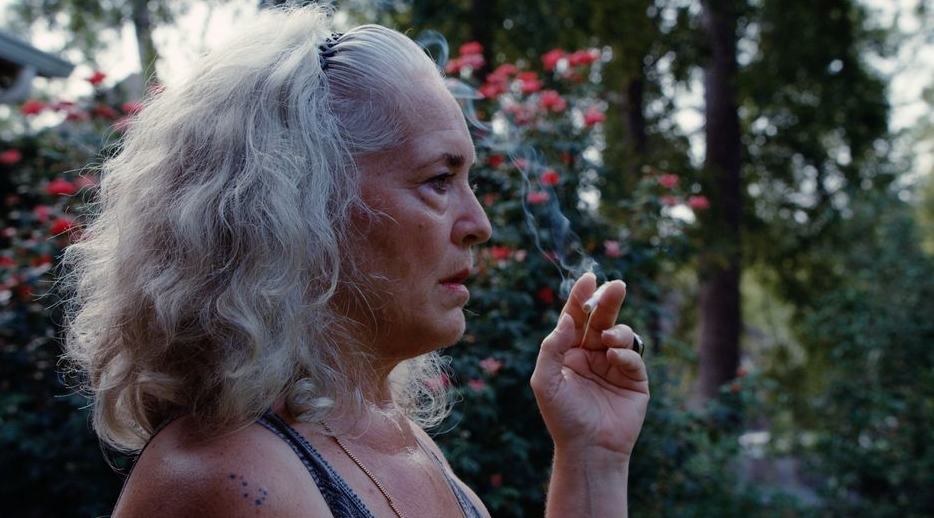
The tension that creeps through broken relations and cracks created or curated via not being there, emerge slowly to the surface. The screen resolution changes as we see a soap opera of chaos before our eyes. The resolution enhances the claustrophobic atmosphere that abides Krisha to lose control while she constantly assures herself that she won’t lose her shit. In a scene where Krisha discusses her life with Doyle, her sister’s husband, she says ‘I am working on finding a peaceful person inside me..’ Well, aren’t we all? Despite being a film about remorse, grief, and guilt, Krisha feels shockingly real from whatever angle you look at it. The demon in this family feud is Krisha herself. She has done something that’s beyond repair. We never get to see what wrong has she done. Her half-cut finger and her obsessive anxiety point to dreadful things but Shults still manages to make us sympathize with her.
While we see the Turkey making its way to becoming brown in the oven, the chats and the chaos grow stronger. Krisha is making the Turkey. She wishes to make everything right with the family and mostly her son (played by Shults himself) but aren’t some things and some people beyond repair? Aren’t some mistakes in life too big to be forgiven? Isn’t every one of us broken and deserted in some way or the other? The film asks tough questions which grow more and more personal as time passes. The breathlessness of Krisha is now, not seen, but felt.
Krisha (2016) is indie film-making at its prime. A film that is implausibly one of the greatest films of the year. It’s wiser, smarter, and more devastating than most of the horror films that have come our way. It has a lingering effect that’s not only hard to wash off but too messy to be cleaned thereafter.




![Stephen King’s It [1990]: Poorly Executed. Terribly Dated. Downright Forgettable.](https://79468c92.delivery.rocketcdn.me/wp-content/uploads/2017/08/It-768x432.jpg)
![Paddington 2 [2018] Review: A Cuddly, Cushy & Comfortable Bear Hug For Anyone & Everyone](https://79468c92.delivery.rocketcdn.me/wp-content/uploads/2018/12/paddington-2-screenshot-1-768x320.png)