There is something quietly disarming about Gil Junger’s “10 Things I Hate About You,” a film that arrives dressed as a buoyant high school romance that carries within it the faint, persistent echo of something older, more structured, and curiously enduring. Its Shakespearean skeleton is never quite hidden, merely softened into the rhythms of late-90s adolescence, where locker-lined corridors replace Verona’s public squares and teenage rebellion stands in for Elizabethan wit.
What becomes fascinating over time is that the film reworks “The Taming of the Shrew,” and further how it negotiates the discomforts of that inheritance, reshaping a narrative historically rooted in control and submission into something that feels, if not entirely free of those tensions, then at least aware of them, even resistant in fleeting, almost hesitant ways. Beneath the charming gloss of the very cinema is a more complex choreography of power, identity, and performance.
The arc of Kat Stratford (Julia Stiles) unfolds with a sense of careful attention that allows her emotional and intellectual world to remain vivid even as the narrative moves through the familiar rhythms of romance. The film presents it as a widening of understanding, where her anger, sharp intelligence, and chosen solitude remain integral to her sense of self, paving a way for romance to enter as something that exists alongside and in quiet harmony with who she already is. This approach lends her character a layered presence where connection becomes an addition rather than a resolution, creating the impression that what develops between her and Patrick Verona (Heath Ledger) rests on moments of recognition that feel intimate and immediate
Patrick Verona emerges as a figure who both moves within and reshapes the film’s central emotional dynamic. His introduction aligns him with a world where relationships often follow a quiet logic of exchange, where attraction carries the undertone of strategy and attention holds a kind of social value.
Yet as the narrative unfolds, his presence begins to shift the meaning of these interactions through gestures that carry a heightened sense of performance. It’s almost as if feeling itself requires articulation through spectacle in order to be recognised. This becomes especially vivid in the stadium sequence, where his public serenade transforms space into a stage, allowing affection to appear expansive and visible.
This tension gradually spreads into the wider social world of the high school, where hierarchies take shape through everyday interactions and shared perceptions, creating a system that quietly determines who receives attention, who remains on the margins, and who is allowed a fuller sense of identity. These structures feel deeply embedded in the environment, expressed through casual conversations, social groupings, and the unspoken rules that guide behaviour.
The film approaches this system with a certain attentiveness that allows it to open from within, revealing the ways in which individuals begin to move beyond the roles they initially seem to occupy. This furthers Bianca’s journey that carries a growing awareness of the very structures that once supported her sense of belonging, leading her toward a more reflective understanding of her own position within this social framework.
Must Check Out: 24 Best Indie Romantic Comedy Movies Of the Century
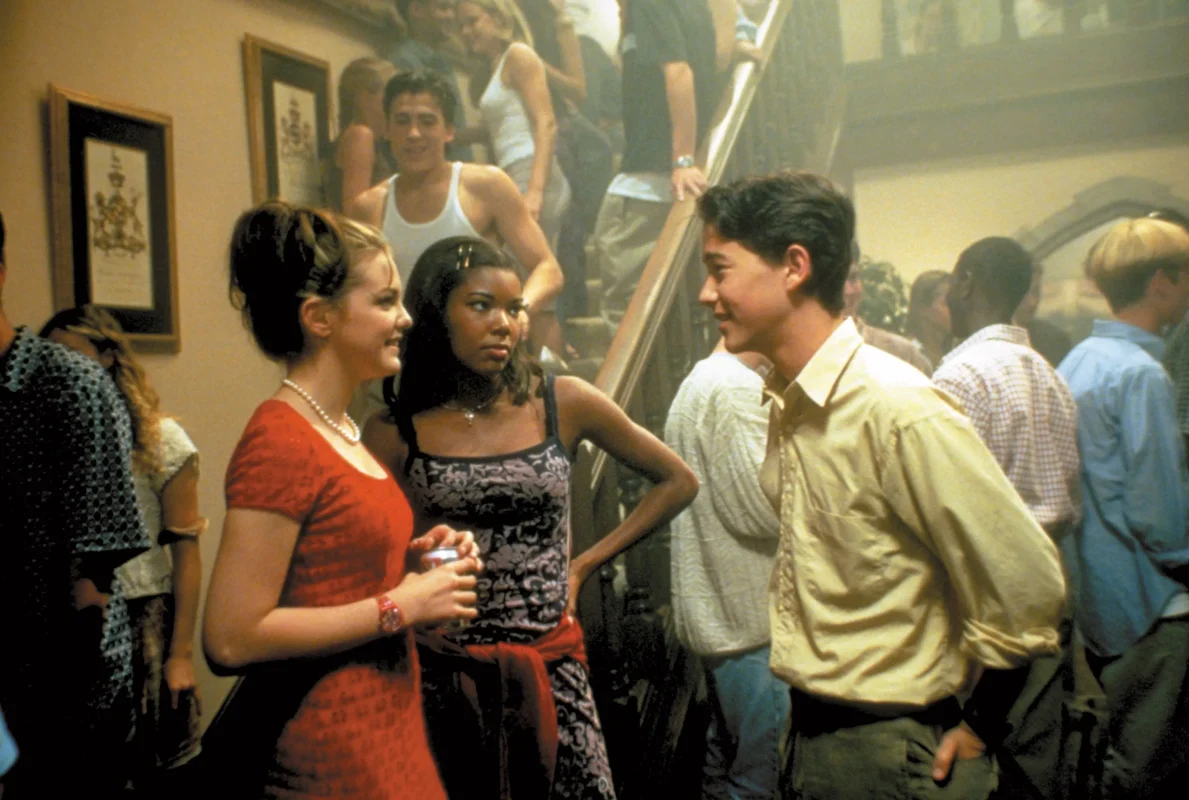
While Cameron’s (Joseph Gordon-Levitt) presence brings a quieter, more internal movement, his idealism shapes his perception of others and his place among them, allowing his uncertainties to exist alongside his hopes. The characters who appear briefly contribute to this textured environment, as small gestures and fleeting expressions suggest lives and perspectives that extend beyond the immediate narrative, giving the impression of a world that continues to unfold outside the boundaries of the central plot.
Through these layered portrayals, the film begins to shift its focus from romance as an isolated storyline to romance as something that emerges from within a network of expectations, negotiations, and shared understandings. The connection becomes possible through moments of recognition that gently challenge the limits imposed by these social scripts, allowing characters to step into spaces that feel more open and self-defined, even if only for a short time. In this way, the film creates a sense of movement within structure, where transformation appears as a gradual reworking of it from within, shaped by the choices, perceptions, and emotional growth of those who inhabit it.
In doing so, the film draws attention to the way sincerity often finds expression through deliberate display, particularly within environments shaped by observation and expectation. This dynamic resonates beyond the central relationship, extending into the broader social fabric of the high school, where hierarchies quietly organise perception, shaping ideas of desirability, visibility, and identity.
By gently loosening these structures and allowing its characters moments of depth beyond their assigned roles, the film opens up its world. What emerges is one where performance and authenticity coexist—not as opposites, but as intertwined ways of understanding and expressing the self within a shared social space.
This tension extends outward into the film’s broader social ecosystem, where high school hierarchies operate with a kind of casual rigidity, dictating who is desirable, who is visible, who is allowed complexity, and who must remain a caricature. Yet, the film subtly destabilises these hierarchies by granting its characters moments that exceed their assigned roles, like Bianca’s gradual recognition of her own complicity in superficial systems, Cameron’s oscillation between idealism and insecurity, and even the peripheral figures who, in brief flashes, reveal interiorities that the narrative cannot fully accommodate.
What emerges, then, is a film that is not merely about romance but about the conditions under which romance becomes possible – the social scripts that shape it, and the quiet negotiations required to step outside them, however temporarily. The dialogues carry a distinctive vitality that extends beyond surface wit, as it reveals a nuanced self-awareness embedded within the way characters speak and respond to one another, allowing their conversations to reflect an intuitive understanding of the roles they occupy within their social and narrative world. This awareness gives their words a certain texture, where humour, irony, and exaggeration function as more than stylistic choices, becoming modes through which the characters navigate and interpret their own experiences.
This layered quality of dialogue finds a striking expression in the classroom scene where Kat challenges her English teacher during a discussion on “The Taming of the Shrew,” a moment that unfolds as her words move beyond casual disagreement and take on the shape of a conscious engagement with both text and context. There’s a vehement articulation of a perspective that feels informed by her own sense of positioning within the world around her.
As she speaks, the exchange carries an awareness that extends past the immediate setting of the classroom, presenting her resistance on multiple levels at once, as a critique of the literary text, as a reflection of her own guarded identity, and as a response to the social expectations that define femininity and behaviour within the high school space.
This awareness lends her dialogue a density where wit and assertion blend seamlessly, so that her tone could convey both intellectual confidence and an understanding of the performative nature of such confrontations, especially within an environment that often rewards conformity. The teacher’s response, measured yet engaged, further grounds the scene in a dynamic where conversation becomes a space of negotiation rather than resolution.

Also Read: All Heath Ledger Performances, Ranked
In moments of lightness, there exists a subtle recognition of the patterns that shape their interactions. The film develops a reflexive quality that gently turns its gaze toward itself. It engages with the conventions of the teen romantic comedy while continuing to move within them, creating a dynamic where familiarity becomes part of the film’s expressive language. This engagement allows the narrative to acknowledge its own constructed nature in a way that feels fluid and integrated.
The film’s visual language, too, contributes to this duality, with its bright, almost idyllic settings contrasting against moments of emotional opacity, as if the environment itself is complicit in maintaining the illusion of simplicity while the characters quietly struggle against it. This interplay between surface and depth becomes a recurring motif, showcasing that what is most significant often lies just beneath what is most visible.
Even the titular “ten things”, when they finally arrive, resist the neatness that such a list implies. It unfolds as an accumulation of contradictions, affection, and frustration intertwined to the point where they become indistinguishable. Finally, it captures something essential about the nature of attachment itself, which rarely conforms to the clarity we attempt to impose upon it.
In “10 Things I Hate About You,” the final recitation of the “ten things” gathers an emotional charge that feels far more expansive than the structure that contains it. This becomes especially striking when placed in conversation with “The Taming of the Shrew,” where language often serves to stabilise power through performance, whereas here, Kat’s words seem to move in the opposite direction. That opens a space where vulnerability reshapes authority. Even within this reconfiguration, the film carries forward a subtle inclination toward narrative alignment, guiding her expression into a moment that can be received, understood, and ultimately absorbed within the familiar rhythm of romantic closure.
There is a vehement tension that feels central to this film’s identity, because while the poem articulates contradiction with a radical clarity, there is a representation of the existence of affection and frustration in the same breath. It also arrives within a cinematic structure that gathers these contradictions into coherence, allowing them to settle into a recognisable emotional resolution. When read alongside other Shakespearean reimaginings such as “She’s the Man,” adapted from “Twelfth Night,” these films reveal their own distinct negotiation with adaptation. They allow moments of emotional and intellectual independence to surface with clarity, yet continue to shape them within a framework that privileges harmony and mutual recognition.
This interplay produces a viewing experience that feels both expansive and carefully composed. The intensity of individual expression exists alongside a desire for narrative balance. From a more individualistic vantage point, this becomes the point of friction as well as fascination. This is because the film gestures toward a form of attachment that resists simplification, that thrives in contradiction and remains open-ended in its emotional truth.
However, it also draws that openness into a form that can be contained, shared, and resolved, and it is precisely in this movement, between rupture and arrangement, that the film locates its voice. That offers a vision of love that feels deeply felt and thoughtfully shaped, while also inviting a lingering awareness of the complexities that extend beyond what the narrative chooses to hold.






![Possessor [2020]: ‘BFI-LFF’ Review – A fine future addition to the realm of cult cinema](https://www.highonfilms.com/wp-content/uploads/2020/10/Possesor-1-highonfilms-768x432.jpg)
![Sacred Games Season 2 [Netflix] Review: A Long and Hard look at India’s Dark Underbelly](https://www.highonfilms.com/wp-content/uploads/2019/01/Sacred-Games-Season-2-Review-768x432.jpg)