Introduction: The Choice That Defines Your Energy Freedom
Power problems rarely come with a warning. One moment, everything is running smoothly, and the next, you are dealing with a blackout, rising electricity costs, or a system that simply cannot keep up with your needs. For many homeowners and businesses, this is the point where energy storage becomes more than just an option—it becomes a necessity.
But here is where most people make a costly mistake. They assume choosing between 30kwh batteries and a 20kWh battery is simply about budget. In reality, this decision shapes how you use electricity every day, how prepared you are during outages, and how much control you have over your energy in the long run.
Choosing the wrong size does not just limit performance. It creates frustration, forces compromises, and often leads to additional expenses later. Choosing the right size, however, gives you stability, flexibility, and peace of mind. This guide will help you understand the real difference and make a decision that truly fits your lifestyle.
Understanding the Difference Beyond Simple Numbers
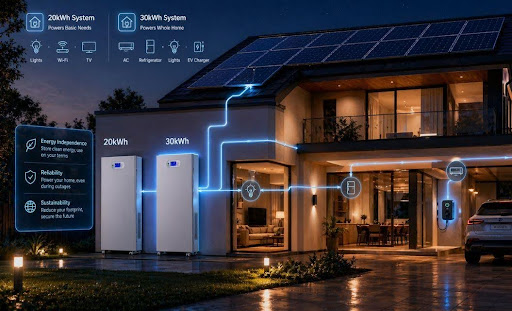
At first glance, the difference between a 20kWh and a 30kWh battery appears straightforward. One stores less energy, and the other stores more. But the real difference becomes clear when you look at how that energy is used in daily life.
A smaller system can handle basic appliances for a limited period. It works well for short outages and minimal energy consumption. A larger system, on the other hand, supports your entire home, runs multiple high-demand appliances, and provides power for extended periods without interruption.
The real question is not about numbers. It is about expectations. Do you want a system that helps occasionally, or one that supports you completely? That single decision changes everything about your experience with energy storage.
What Happens When You Choose the Wrong Size
Many users only realize the importance of battery size after installation. At that point, the limitations become obvious.
A system that is too small forces you to think constantly about what you can and cannot use. During outages, you may need to turn off appliances to avoid overload. Over time, this restriction becomes frustrating, especially when your energy needs increase.
There is also a financial impact. A smaller system may seem like a cost-saving choice initially, but upgrading later often requires additional investment. What seemed affordable at the beginning can become more expensive over time.
Now consider the alternative. A properly sized system allows you to use electricity without hesitation. You do not need to adjust your lifestyle or compromise comfort. Everything works as expected, even during long outages. That difference is what separates a short-term solution from a long-term investment.
When a 20kWh Battery Can Be the Right Fit
A 20kWh battery can still be a practical solution for certain users. If your household energy consumption is relatively low and outages are infrequent, it can provide reliable backup for essential functions.
In such cases, you can maintain lighting, refrigeration, and basic electronic devices without major interruptions. For those who are just starting with energy storage or want a lower upfront investment, this option may feel appealing.
However, it is important to understand its limitations. As soon as your energy usage increases or outages become longer, the system begins to show its constraints. Running multiple high-power appliances becomes difficult, reducing overall flexibility.
For users with growing energy demands or expansion plans, this type of system may serve only as a temporary solution rather than a long-term answer.
Why 30kWh Systems Are Becoming the Preferred Choice
Energy consumption patterns have changed significantly in recent years. Homes are now equipped with more devices, and businesses rely heavily on continuous power. In this environment, larger battery systems are becoming the standard rather than the exception.
This is why 30kwh batteries are gaining popularity. They provide the capacity needed to support modern energy usage without forcing compromises. Instead of deciding which appliances to run, you can operate your home normally, even during outages.
Another key advantage is future readiness. Energy needs rarely decrease. Whether it is adding new appliances, integrating solar systems, or preparing for electric vehicles, a larger system ensures you are ready for what comes next.
Choosing a 30kWh system is not just about meeting today’s needs. It is about avoiding limitations tomorrow.
Introducing a Reliable Solution: Avepower 30kWh LiFePO4 Battery System
Rather than trying to balance performance and cost with separate components, many users are now choosing integrated systems designed for real-world reliability. The Avepower 30kWh LiFePO4 Battery System is one such solution.
With a 30kWh capacity and a 600 Ah configuration, it delivers consistent, stable energy for demanding applications. Its 20.48kW output allows it to handle high-load appliances without difficulty, while its voltage range ensures compatibility with various setups.
What truly sets it apart is its durability. Designed for up to 8,000 cycles and a lifespan of more than 10 years, it offers long-term reliability, reducing the need for frequent replacements. This makes it not just a product, but a dependable energy solution.
The Technology That Makes the Difference
The performance of a battery system depends heavily on the underlying technology. Avepower uses LiFePO4 chemistry, which is widely recognized for its safety, efficiency, and long lifespan.
This type of battery is designed to handle repeated use without significant degradation, making it ideal for daily energy storage. It also provides a stable and safe operating environment, which is essential for residential and commercial applications.
In addition, the system includes a smart Battery Management System that continuously monitors performance. It protects against overcharging, overheating, and other potential risks, ensuring that your system operates safely under all conditions.
With built-in Bluetooth and WiFi monitoring, users can track performance and manage energy usage in real time. This level of control adds convenience and confidence to everyday operation.
Real-World Applications Where a 30kWh System Excels
The value of a larger battery system becomes clear when applied to real-life scenarios. In off-grid homes, it provides complete independence from unreliable power sources. For remote locations such as cabins, it ensures consistent electricity without sacrificing comfort.
In agricultural settings, reliable power is essential for equipment and operations. A 30kWh system effectively supports these needs, reducing downtime and improving productivity. Resorts and hospitality businesses also benefit from uninterrupted power, ensuring a seamless experience for guests.
For solar energy users, the system allows efficient storage of excess energy generated during the day. This stored energy can then be used at night or during outages, maximizing the value of solar installations.
These applications demonstrate how a larger system goes beyond backup and becomes an essential part of daily operations.
Flexibility and Customization for Growing Needs
Energy requirements are not static. As usage increases, your system should be able to adapt without requiring a complete replacement. Avepower addresses this with a modular design that allows for easy expansion.
This flexibility ensures that your initial investment remains relevant even as your needs change. Instead of starting over, you can build upon your existing system.
For businesses and project developers, customization plays an important role. Avepower supports OEM and ODM solutions, allowing adjustments in capacity, design, communication protocols, and branding. This makes it a suitable choice for a wide range of applications, from residential projects to large-scale installations.
A Practical Comparison That Guides Your Decision
| Aspect | 20kWh Battery | 30kWh Battery |
| Daily Usage | Limited flexibility | Full usage freedom |
| Backup Duration | Short to moderate | Extended coverage |
| Appliance Support | Essentials only | Entire home |
| Scalability | Restricted | Expandable |
| Long-Term Value | Moderate | High |
This comparison highlights the fundamental difference between the two options. One provides support during outages, while the other provides independence from them.
Cost vs Value: Thinking Beyond the Initial Price
Cost is often the first factor considered when choosing a battery system. While a smaller system may appear more affordable, it is important to consider long-term value.
A system that does not meet your needs may require upgrades or replacements, increasing overall expenses. In contrast, a properly sized system provides consistent performance over many years, reducing additional costs.
Investing in a larger system from the beginning often proves to be the more economical choice in the long run.
Why Avepower Is a Smart Choice for Energy Storage
Choosing a reliable provider is just as important as choosing the right system. Avepower combines advanced technology with practical design, creating solutions that perform well in real-world conditions.
Its systems meet recognized safety and quality standards, including CE, UN38.3, and MSDS certifications. More importantly, they are built with a focus on durability, efficiency, and user satisfaction.
This combination of performance and reliability makes Avepower a strong choice for both residential and commercial applications.
Final Thoughts: Choose Smarter, Power Better
Choosing between a 20kWh and 30kWh battery system is not just a technical decision—it directly impacts your energy security, long-term savings, and future flexibility. While a 20kWh system may cover basic backup needs, it often falls short when your energy demands grow or outages become more frequent. A 30kWh solution, on the other hand, gives you the confidence to run more appliances, store more solar energy, and maintain uninterrupted power without compromise.
With Avepower’s advanced 30kWh LiFePO4 Battery System, you gain a reliable, safe, and scalable energy solution designed for real-world performance.
Take the next step toward energy independence—contact Avepower today and get a customized quote for your project.
FAQ Section
1. What is the main difference between a 20kWh and a 30 kWh battery?
The main difference is energy capacity. A 20kWh battery is suitable for basic backup needs, while a 30kWh system can support full-home usage and longer power outages.
2. Is a 30kWh battery too big for a home?
Not necessarily. A 30kWh system is ideal for larger homes, high energy consumption, or users who want full energy independence and solar integration.
3. How long can a 20kWh battery power a house?
It depends on usage, but typically it can support essential appliances for several hours to a short duration during outages.
4. Can I expand my battery system later?
Yes, especially with modular systems like Avepower, you can scale your energy storage as your needs grow.
5. Why is LiFePO4 better for energy storage?
LiFePO4 batteries offer longer lifespan, higher safety, and better stability compared to traditional battery technologies, making them ideal for home energy systems.
6. Which is better for solar systems: 20kWh or 30kWh?
A 30kWh system is generally better for solar setups as it stores more excess energy and provides longer backup during nighttime or outages.