There isn’t a better example of a well-intentioned, dutifully made film that falls completely flat on a dramatic level than “Belen,” the adaptation of Ana Correa’s acclaimed non-fictional novel about an intense courtroom standoff that led to the passing of a groundbreaking abortion bill in Argentina. It’s a film of the moment, not only because of the recent circumstances of its true story, but in how its themes resonate with struggles for women’s rights across the globe.
Unfortunately, “Belen” renders its complex issues through a sub-standard series of procedural junctions, each of which seeks to underline points that are already made clear. Although there are times in which the overwhelming lengths to which the case was made unfair from the start are convincingly frustrating, “Belen” isn’t quite propulsive enough to justify its narrative wonkiness as a stylized choice.
It’s understandable why writer/director Dolores Fonzi, in her sophomore feature, decided to approach the story of “Belen” through such a traditionalist perspective, as a case of injustice this severe does benefit from laying the facts out in as bare a way as possible.
At the center of the trial that reshaped a nation is the young woman Julieta (Camila Pláate), who began suffering from a series of abdominal pains that led her to the emergency room, where she was informed that she was 22 weeks pregnant and miscarried. It’s an authentically gutting opening that sets up a cruel twist of fate. Julieta’s medical attendants informed the police, as they falsely suspected she may have attempted an abortion, which at the time was a crime in Argentina.
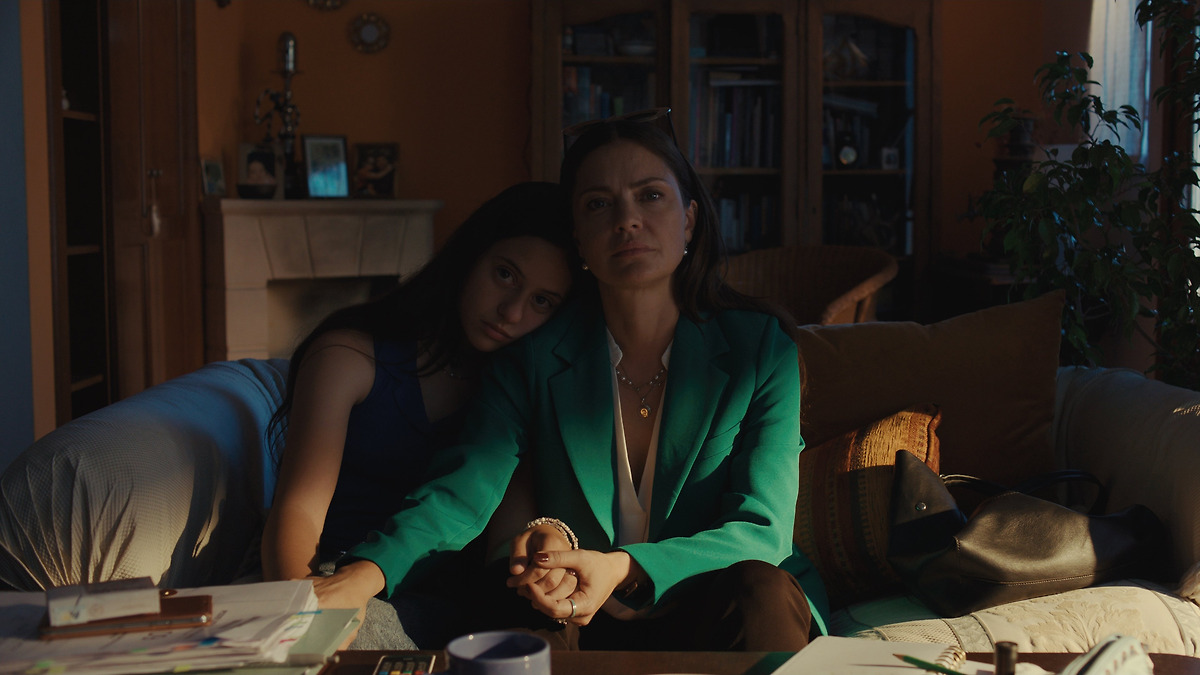
Julieta’s case against the authorities attempting to prosecute her is taken up by Soledad Deza, an outspoken lawyer played by Fonzi herself. It’s after years of valiant fighting that Deza begins to recognize that the battle she is fighting is not only for Julieta, but for the countless women who have had their health and privacy threatened as a result of outdated laws.
It’s abundantly clear that the ideal version of “Belen” is a real-time documentary that doesn’t exist. Audiences for political non-fictional films have been spoiled as of late due to the abundance of remarkably intimate productions that received extraordinary access to history-making cases. The fact that “Belen” wasn’t constructed from what (presumably little) archival footage exists isn’t the fault of those creatively involved, but it does leave the film in an awkward position of being socially profound and aesthetically regressive.
Even if “Belen” is a story that needed to be told as soon as possible, and in as plainspoken a way as possible, the film’s desire to protect its subjects makes it inert. Julieta’s identity was masked for the sake of the subject’s privacy, but the film’s only way of getting around that narrative inconvenience is to use her as an emotional crux, with Deza pushing the momentum of the story on point.
The result is a series of unusually bland recitations of legal facts that would feel more appropriate on network television, conjoined by a few searing reminders of the human face behind the trial. Unfortunately, the implication that Julieta became a stand-in for an entire class of women never goes beyond footage of extras chanting “I am Belen” that lacks the dramatic grandeur needed.
It’s odd that a film as interested in the mechanisms of suppression spends very little time with the people who have been victimized, as the tried-and-true formula of an inspirational courtroom drama isn’t as bracingly intimate or as cinematically vivacious as it could have been. There’s a world where “Belen” was completely narrow in its focus on Deza’s determination to approach the case from a strictly legal perspective, but the film can’t help itself from giving her declarative instances in which she serves as an ideological mouthpiece.
Alternatively, it feels as if Fonzi avoided the electrifying walk-and-talk of a Sorkinesque potboiler out of a desire not turn women’s disenfranchisement into strict entertainment. “Belen” was never going to be a traditionally pleasurable experience, but there are countless films about similarly bleak subject material that found ways to become viscerally engaging.
The issue with the pacing of “Belen,” which is spread thinly over an extended stretch of time, is worsened by the fairly undefined performances, except Pláate’s moving turn as Julieta. Deza and her co-workers are so idealized that their individual contributions to the case feel flattened for the sake of collective achievement.
Even if Deza purposefully tried to distance herself from the notion of “winning” a public case out of respect for her client, this isn’t a point that the film seeks to undermine. There’s also such a strong push to simplify the nuances of the case that a figure like Julieta Cardinali’s Beatriz, the uncaring public defender whose half-hearted efforts on behalf of Julieta landed her behind bars, is so broadly drawn that she nearly feels like a caricature.
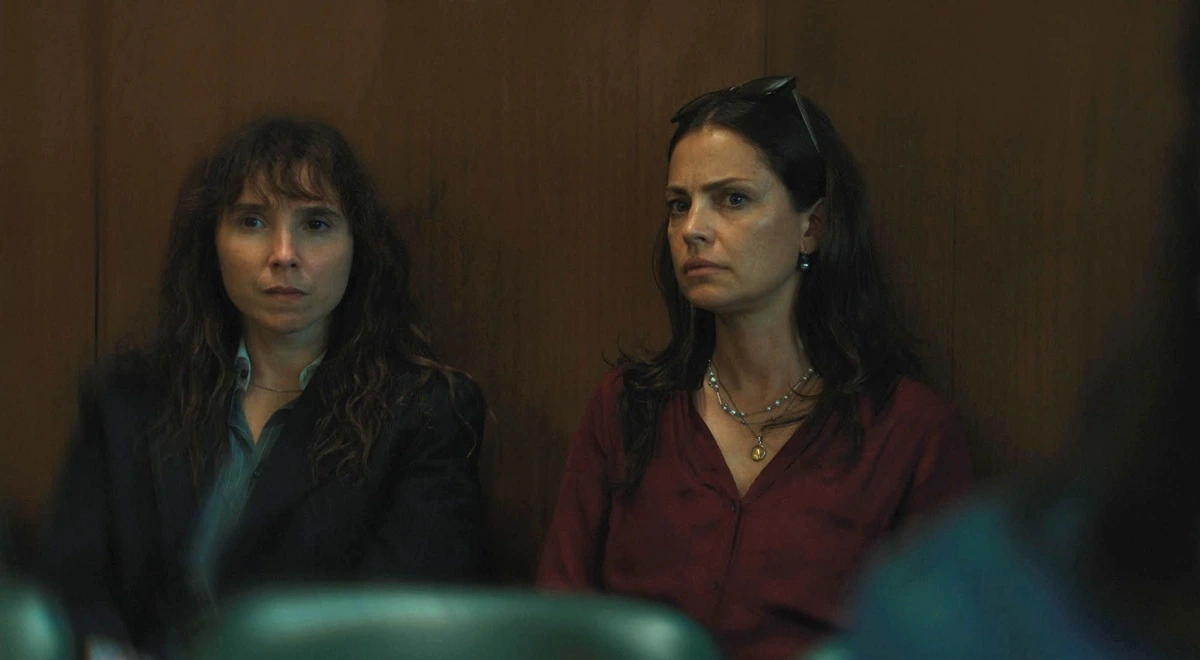
The reality is that the desire for “Belen” to be timely may have sacrificed its ability to be thorough, as the ambiguity regarding the effect that Julieta’s defense had remains to be seen. Although some interesting repercussions are hinted at in the closing credits, “Belen” didn’t have the time to examine how significant the story was after it had actually transpired, leaving the narrative feeling unfinished.
This does make it feel like a time capsule, but not one that invokes contemporaneous Argentinian cinema because of its unwillingness to break from formula. The film’s convictions, while refreshingly clear-minded, are so absolute that it would be difficult to imagine “Belen” moving the needle on a topic of discussion that most have already made up their minds about.
“Belen” has been naturally compared to “Argentina, 1985,” another courtroom drama from the nation based on a true story that has relevance to modern events. “Argentina, 1985” became one of the few films in the nation’s history to receive an Academy Award nomination for Best International Feature, as it transformed the tropes of a familiar legal procedural into an enthralling thriller, polished by a terrific ensemble that spanned generations. While perhaps it’s unfair to compare the two films, “Belen” isn’t able to find the same urgency within a more recent fragment of history. It may be a film that is meant to evoke a rallying cry, but it feels an awful lot like an echo chamber.