
It doesn’t benefit “Mercy” that it came out at the worst possible time, and it seems to be on the wrong side of history. Not only has the notion of artificial intelligence been taken out of science fiction exclusivity and ingrained within reality, but its usage among law enforcement and judiciary systems has been hotly contested.
It’s not entirely fair to criticize “Mercy” for glimpsing only the immediate future with little imagination, as most sci-fi works show their age in one way or another. However, “Mercy” is guilty of not fully developing its concept and using components of its worldbuilding to justify lazy storytelling choices.
“Mercy” is only set in 2029, but it imagines a reality in which advanced artificial intelligence programs have given the police the means to judge potential criminals through a seemingly flawless system program that collects evidence. Among the members of the Los Angeles Police Department that spearheaded the mission was Detective Chris Raven (Chris Pratt), who was responsible for making some of the initial arrests that led to charges under the program known as “Mercy.”
However, Raven wakes up to find that he has been arrested for the murder of his wife, Nicole (Annabelle Wallis), and sentenced to be executed under a system that presumes the guilt of the accused. With only 90 minutes to prove his innocence, Raven must reason with the AI Judge Maddox (Rebecca Ferguson), who introduces a virtual reality program that gives him access to details surrounding the crime.
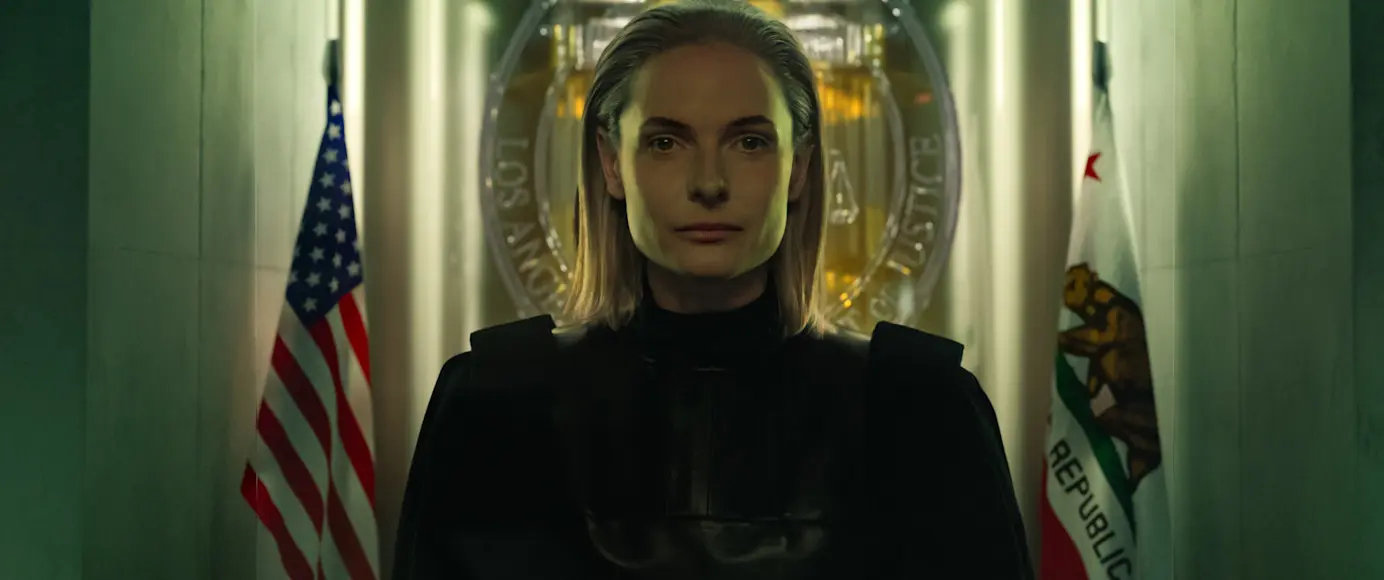
It’s hard to look at “Mercy” without comparing it to the sci-fi classics that it directly took inspiration from. The notion of a criminal’s guilt being determined by preventive law enforcement measures is virtually identical to that of “Minority Report,” a film that has aged better and become more precise with each passing year.
The reality program that Raven is hooked up to has clear ties to “Total Recall” and “The Matrix,” and some of the terminology used to describe the all-consuming justice system is taken from the “Dredd” comics. Even if sci-fi is a genre that tends to build on itself, the unoriginality of “Mercy” sticks out because it has so little to offer otherwise. The film’s depiction of social media, messaging, and digital media is so specifically tied to the specific moment that it has already started to feel out-of-touch.
Sci-fi films may require a certain suspension of disbelief, but the premise of the “Mercy” system raises too many questions that the film isn’t equipped to answer. It’s never detailed why a system of presumed guilt would be in place, and why the authorities would be given so much authority, only to turn it over to an “objective” source.
The information that Raven is able to access becomes increasingly unbelievable, as he makes either obvious assumptions or wild leaps in logic that aren’t feasible, regardless of his experience on the force. The most glaring question is why Raven, a presumed killer, would be given the power to involve himself in the investigation in the first place. “Mercy” doesn’t spend any time looking at how society or justice exists under this new reality, as it’s confined to Raven’s limited perspective.
The limited focus of the film may not have been as exasperating if it had a strong thesis, but “Mercy” seems to hint at various deeper connotations that it never has time to explore. Although Raven’s struggles as an addict and the pressures that his intensive job has placed on his marriage are suggested, there’s never a real sense of what his relationship with Nicole looked like.
Wallis, a great actress, is made into a MacGuffin whose death has no emotional impact on the rest of the story. Although there’s also a vague interest in examining how cracks emerge in every system, leaving some people to remain helpless, “Mercy” isn’t bold enough to condemn AI, the cops, the media, or any institution. The slightly sympathetic portrayal of AI itself is the most glaring issue, as the notion that artificial creations should be granted the same sympathy as humans is disturbing.
The film’s tone is also haphazard, as its worldview is so narrow that it’s never able to truly capture the paranoia of a digital age. The ways in which drone footage, screen sharing, instant messaging, and security videos are portrayed seem laughably rudimentary when framed within a slightly dystopian future. None of these technological impediments can disguise the fact that “Mercy” has a murder mystery plot that’s been done countless times in films and television before.
Even someone with only a basic understanding of the genre would be able to identify the obvious red herrings and false flags that point to what the conclusion will be. The few chances that “Mercy” takes to complicate the circumstances behind Nicole’s death are summarized so quickly that they could never be reasonably considered within the tight 90 minutes that Raven has to defend himself.
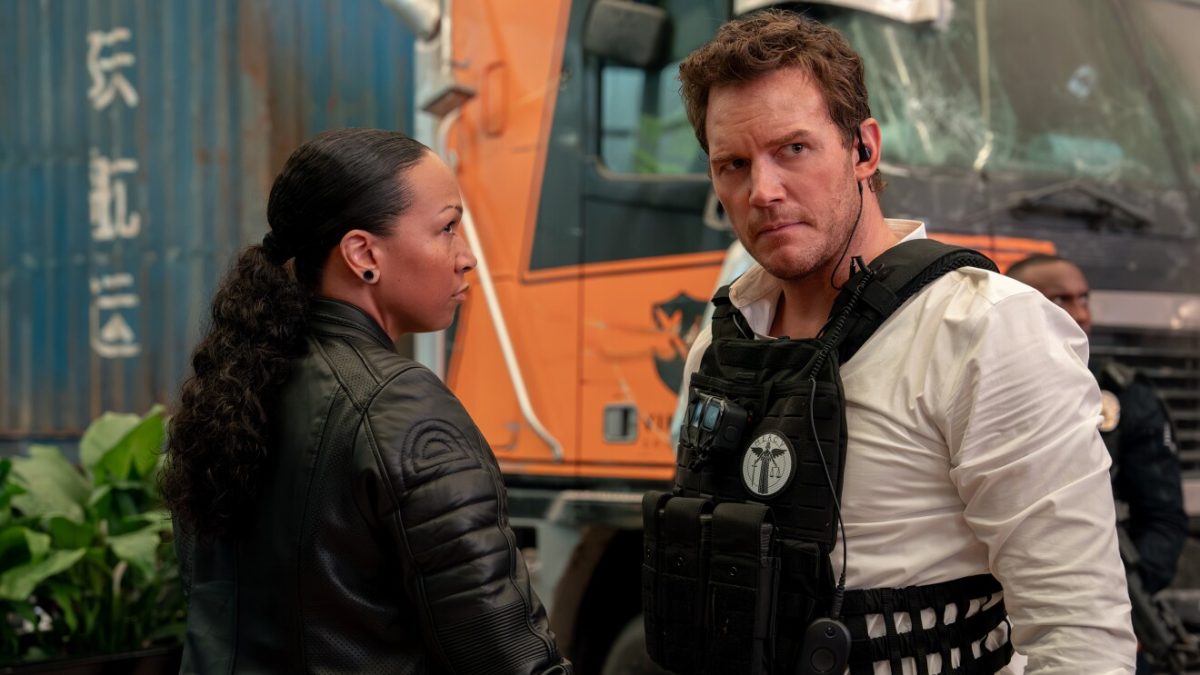
It’s remarkable that in the twelve years since “Guardians of the Galaxy” announced him as a movie star, Pratt has completely misinterpreted why his performance as Peter Quill was so resonant. While the affable, snarky sense of friendliness Pratt had would seemingly make him perfect to play the sorts of lightly comedic adventure heroes that Kurt Russell or Bruce Willis may have played decades earlier, he’s decided to take himself entirely seriously with grim, no-nonsense roles in “Passengers,” “Jurassic World,” and “The Terminal List.”
Pratt has a few moments in “Mercy” where the connection between Raven and his daughter, Britt (Kylie Rogers), feels genuine, but otherwise, he’s rarely convincing as a troubled LAPD officer on the brink of self-destruction. In fairness to Pratt, it’s hard to imagine that even Laurence Olivier or Humphrey Bogart could have been compelling within a film where they’re literally strapped to a chair for the entire running time.
It’s somewhat unusual that “Mercy” is released in theaters when its distributor, Amazon MGM Studios, has sent so many better films directly to streaming. If there was ever a film that was seemingly designed to be watched secondhand by audiences on their phones, it’s “Mercy.”
It’s also a surprisingly muted visual spectacle from director Timur Bekmambetov. While his previous credits of “Wanted” and “Abraham Lincoln: Vampire Hunter” can certainly be debated for their quality, they were bold in their visual texture and usage of special effects. “Mercy” has a few moments in which it is laughably bad, but for the most part, it commits the ultimate cinematic crime of being completely unmemorable.








![Riotsville, USA [2022] ‘Sundance’ Review- Engaging but never takes truly exciting Leaps](https://www.highonfilms.com/wp-content/uploads/2022/01/Riotsville-USA-2022-Sundance-Film-Festival-768x576.png)