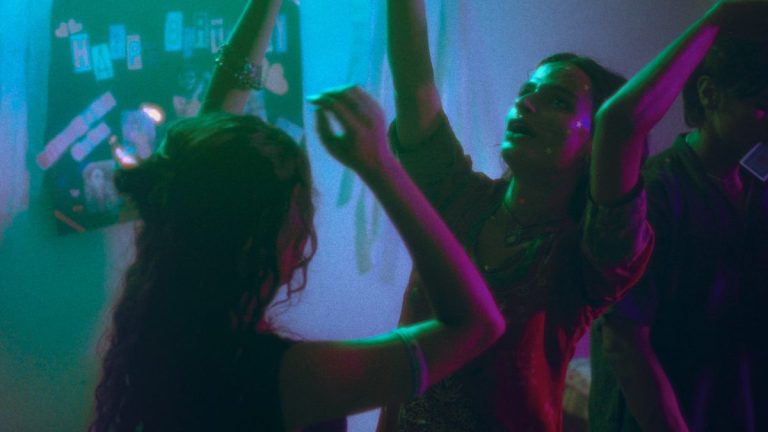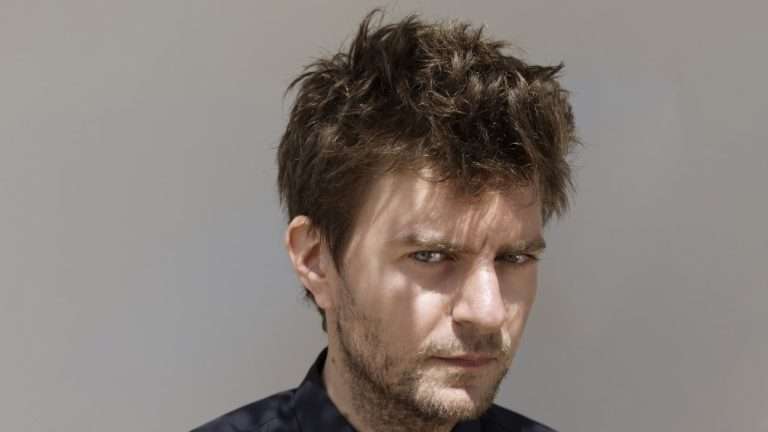
Daniel and Matthew Kooman’s upcoming feature, Daniel, is set to serve as an adaptation of the 2nd-century BC biblical text The Book of Daniel. Starring Mena Massoud (Aladdin), Elijah Alexander (Mr. & Mrs. Smith, The Chosen), and British, mixed-race actor Zaki Ali, whom I had a chance to catch up with ahead of the film’s upcoming release.
In this conversation, we get into Zaki’s experience on set, the challenges that come with tackling a tale as old and rich as “The Book of Daniel”, and why audiences should come out to see the film. I thoroughly hope you enjoy it.
Hayyan: I’d like to start in the deep end. I’m curious to know about the challenges that come with tackling a role and a tale that already holds such meaning and value to the world. As you’re not dealing with a blank canvas story that has come from the minds of the creatives involved, but rather, you hold the weight of expectation and responsibility to do your character of Azariah justice. How did you go about preparing to tackle those challenges head-on?
Zaki Ali: That’s a wonderful question. From the very beginning, it was important for me to understand Azariah as fully as possible. He was a real historical figure whose story carries deep significance for many people, and I felt a strong responsibility to honor that in my performance.
To prepare, I immersed myself in research and studied the cultural and historical contexts of the time period and how Azariah might have lived. I took great care to understand Azariah’s practices and daily life, so that I could do the same, which was essential to embodying him authentically on screen.
His diet, routines, and practises all became my own, and I also realized that while I had a general knowledge of religion, I had not studied the stories in depth, and since Azariah’s story originates in Judaism, I began by studying the Tanakh closely and attending synagogue services to experience communal prayer firsthand. which was a new and deeply meaningful experience for me, and it helped me connect with the spiritual life and principles that shaped his character.
Hayyan: Is that a process that you typically adopt in preparation for a role? Or was this a new experience for you to have to dive so deep into a character to attempt to become the person you’re portraying?
Zaki Ali: Yes. I usually take a methodical approach. It allows me to act instinctively and respond as naturally as possible. For Azariah, even more so, given how real he was as a historical figure and how much is recorded about his life. So to understand how he thought and moved, I had to really merge Zaki and Azariah together and know what that meant for me personally.
Hayyan: And like you say, with how formative a text this is and how important it has been to humanity, how vital was remaining faithful to the source material throughout this process?
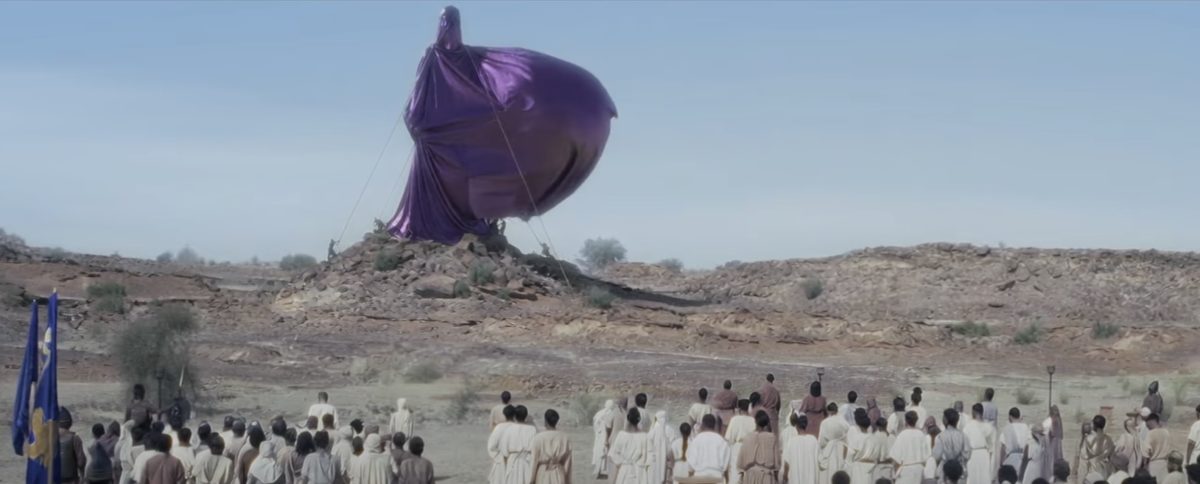
Zaki Ali: It was absolutely crucial. This kind of responsibility demands your full attention and respect from day one. The film honors the scripture faithfully, and for the directors, actors, and everyone involved, authenticity was the top priority, ensuring every detail felt real. Everyone approached the work with that mindset, and we shared meals together, prayed together, and took every measure to stay true to the text so that every character and scene felt authentic and truly belonged in the world of the story. The Kooman Brothers also come from a Christian background and are deeply devoted to their faith which shapes the film profoundly. It created a powerful energy on set that everyone could tap into, and as a performer, it’s incredibly inspiring to both be trusted by them and to trust in their belief.
Hayyan: And with this film being shot entirely in India, how did that compare to your experiences working on shoots back in the UK?
Zaki Ali: Yes, well, as you can imagine, the environment is verrrryyyy different from back home. Unlike anywhere I’ve ever been. India is a wonderland. We filmed in Jaisalmer, in deserts, ancient ruins, and inside the fort. Which is the only and oldest living fort in the world. Which meant we were surrounded by real people living their everyday lives and had to prepare for anything to happen. We had cows and goats wandering through, and locals occasionally peering into the shot. Equally curious, fantastically wild!
Might I just say as well, being an actor is such a privilege, and I feel incredibly fortunate to be able to visit these countries as part of my work. I’ve always loved to travel and experience new worlds and cultures, but filming in India was a personal adventure for me. I have Indian Heritage, and discovering my roots was deeply important.
So having the opportunity to live, breathe, and work in India was a deeply spiritual and profoundly transformative experience beyond anything I could have imagined. I am eternally grateful. And might I say, the Indian people are some of the kindest, charming, and hospitable people I’ve met, and their warmth made the journey even more memorable
Hayyan: Why was that important? To be shooting in the fort and in amongst it all.
Zaki Ali: Well, the shoot had a budget of around $2.8 million, so filming on practical sets was very important. Partly for budget, but mostly to make everything feel as real as possible. When you watch it, you won’t think, “This is a set,” because it truly isn’t.
There’s a history to these locations, and the set needed to reflect that. As an actor, it makes all the difference to walk in, look around, and interact with the actual environment. It’s as if you’re stepping into Babylon, and it allows you to live in the immersion. And being in India, you know, it’s 37 degrees, you feel the dust and the heat on your skin. You hear all the sounds of daily life all around you. The noise, the smell, the senses all create an experience you simply can’t compare to a studio set.
The beauty is, these places exist, and it’s incredible that we get to explore them today. Like, bruvski! Jaisalmer is famously nicknamed “The Golden City” because its architecture is built of yellow sandstone, which glows golden in the sunlight…there needs to be an assassins creed game here, I fear, I found myself daydreaming, climbing the fort walls and hiding in hay bales.
Hayyan: You mentioned as well, in preparation for this conversation, that you had some experiences on set that you just couldn’t quite explain. Could you expand on that a little further?
Zaki Ali: Yeah, for sure. Filming in these real locations, the desert, ruins, abandoned sites, the fort, there’s so much history and presence in these places. You can feel the weight of the past, and it really influenced everyone’s performances.
One moment that stands out is a scene with Jeremiah delivering a prophetic warning to king jeohakim of Jerusalem. Suddenly, the power cut out, the lights went down, and we were in this open-roof hall when thunder and lightning appeared exactly as described in the script. Of course, that would normally be added in post, but it was happening naturally, completely unforecasted. In the middle of one of the hottest countries in the world, where it’s usually 36 degrees and sunshine all day.
Another scene involved Daniel interpreting a dream, with the king walking through mountains and forests. As he delivered his lines, a sudden storm began, and the set was at the mercy of wind and rain and the force of it smited the set. It was intense for continuity and the crew, who had spent hours preparing hair, makeup, and everything else, but we adapted and used the elements to enhance the performance. We literally started conducting the forces of nature with our word a weapon and wielded the storm above! It ended up adding a really cool cinematic, atmospheric quality.
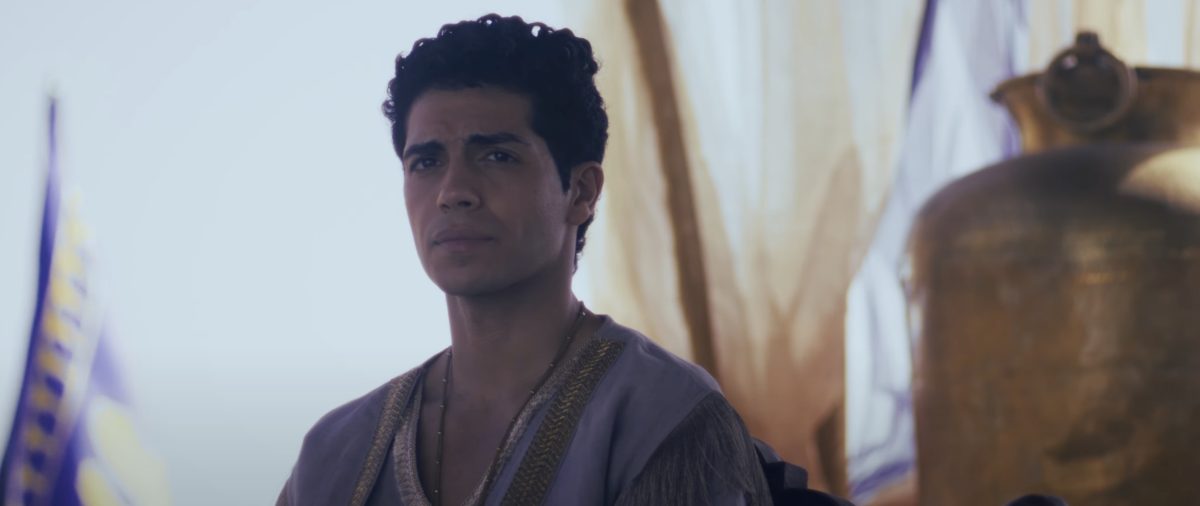
Hayyan: I watched the behind-the-scenes footage, which is available on YouTube, and one of the directors, Daniel Kooman, mentions that filmmaking is “Like climbing a mountain, and independent filmmaking is like climbing Mount Everest”, and despite working with a lower budget on an indie production like this, the film still manages to feels so grand, even just from the trailer. From someone who was able to be present on set, technically, just how much of a marvel was this?
Zaki Ali: Technically, making a film is a marvel in itself. Pure magic. Which is why I love it so. I have the utmost adoration and respect for the work it takes. I am so honoured to be a part of this film; every cast and crew member involved worked so hard, especially Matt and Daniel. The preparation, the precision, the patience, the composure, the willingness, the dedication, the grit, all of these attributes constitute and determine whether a film will get made. A production on the scale of this one is a dream, a delusion of grandeur. But that is what we do, we dream of the impossible and create it. It’s what makes us human.
Hayyan: Thematically, this is a story that is rooted deep in faith. But for anyone who may find themselves without faith in their life, why should they go and see this film?
Zaki Ali: Thank you for asking this question. In life, some of us live with faith and some without. What we feel most in any given moment often brings us to the questions of why, where, and who we are. It’s in those times, when we feel lost, that we ask these questions. In a world that can feel confusing, meaningless, or even cruel, it can be hard to keep going. We can get lost, and we search for understanding everything and anything that makes us feel most alive. At its core, this film, separate from religion, is really about hope.
Azariah, Hananiah, Mishael, and Daniel endure unimaginable suffering. Terrible pain. They are harrowed, their bodies and spirits tested, their homes destroyed, and their lives placed in constant jeopardy. Every choice demands sacrifice, and every moment is a test of courage and endurance. But throughout it all, there is always hope. It’s a testament to resilience, courage, and the human spirit, even in the darkest circumstances.
At its heart, the film reminds us that by understanding one another and through kindness, compassion, and empathy, we truly help each other to survive. There is a lot of pain in the world, and we need to be as loving as we can and celebrate our differences rather than being divided by them.
If the story can give someone even a moment of clarity, hope, or strength to keep going, then it’s done something meaningful, and that’s why I think you should watch this film.
Hayyan: When and where can we expect to see “Daniel”?
Zaki Ali: When? 2026!
Where? In cinemas near you… And once it finishes its global run, it’ll be ready for streaming so everyone can catch it at home, whenever, wherever, forever.