
Lorenzo Ferro and Lucas A. Vignale’s debut feature, “The River Train” (Original Title: El Tren Fluvial, 2026), shoots off the ground as one of the year’s most luminous, enchanting discoveries. It’s a film to keep close as its warmth, beauty, and subtle, piercing truth radiate beyond its lean runtime. There’s a lot to cherish in this intimate, wise, and incandescently tender tale.
Premiering at the Berlinale in the Perspectives section, the film zooms in on the nine-year-old Milo (Milo Barria) dwelling in the Argentine countryside. He lives under the iron grip of his father, who trains him in the Malambo folk dance. It’s a childhood welded with rigour, the pursuit of perfection. There’s no rest as Milo’s father pushes him to practise endlessly, almost as an automaton, without pausing to think or gather himself.
However, things seen on TV, an interview with a boy declaring he’ll be going to Buenos Aires to be an artist, flash life outside Milo’s tightly hemmed routine. He’s quiet and obedient, but we see the frays. He’s lured by what exists beyond his peripheral horizon, aching to move outside curtailment. Milo rebels, pulling off the ultimate mischief. He spikes his family’s lunch with sleeping powder, lending him the ripe opportunity to whisk away.
Barria brings alive a giddying rush of exhilaration. The train becomes a portal to the dreamt-of life, while landscapes shift from verdure. Notice the gentle simplicity with which Ferro and Vignale handle this key scene of transition. The tinkling of a toy monkey, a bird letting off, the train strutting forth, meld into the boy’s tentative, yet surging coming-of-age.
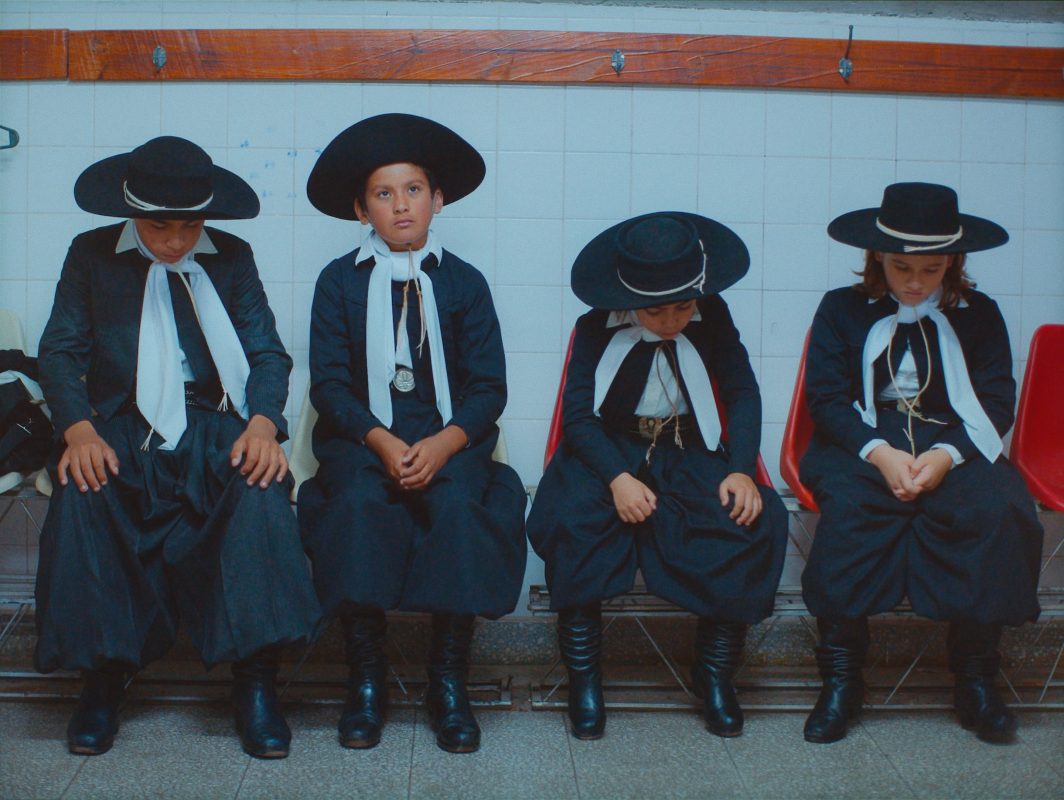
It’s a journey from familiarity to the vast unknown. The city is a playground of rich new thrills, which nevertheless demand a cautious footing. There’s so much to take in. It can be terribly disorienting, Milo’s hunger and anticipation burst in to equal the enormity of newness. He rambles through the streets with no inkling of where to head. The directors infuse the film with such untethered curiosity, a yearning to seek out more sights and sounds in the world.
There’s a vivid sense of the world expanding for Milo, by turns joyous, exciting, and overwhelming. Barria summons that pivotal first flush when innocence strains to unshackle itself from safety. Milo wants to be swept up in it all. Ferro and Vignale are brilliant at capturing the outsized-ness of the world as it appears to the boy, the promise it wields, and the disillusionment. To explore beyond your small pocket is also to come up against everything withheld from you for good and bad.
It’s a humbling, wrenching experience for Milo while he staggers through the urban pell-mell. There’s delight as well as heartbreak and despair. All of a sudden, Milo finds himself auditioning for a theatre production. Overseen by the Professor (Rita Pauls), the task is peculiar. Whichever kid succeeds in hushing a crying baby secures the role. Barria taps confidence and cockiness, shuffling off any receding trace.
Growing up is also about the utter, terrifying, all-encompassing jolt of loneliness. Eluding expectations won’t come so easily or swiftly as hoped for by a big-city move. Milo gradually wakes up to that. Staying rooted to how he earlier perceived himself increasingly seems to slip away. Thomas Gringberg’s camerawork sprinkles the trip with magic dust, a teeming bundle of illusory moments suspended in the fanciful. Ferro and Vignale orchestrate a protracted trespassing sequence with surreal daring. It’s the kind of leap that turns a film transcendent, exquisitely floating into a reverie-like space.
“The River Train” is lit by a sense of wonder at life dissolving beyond youthful restlessness. But Milo also pines for the reassurance of home and family, the worn but vital anchorage it buttresses. It’s this precise angst the film understands and transmits with superb, sneaky empathy. Milo is reckless but also learns to move on when things don’t pan out as planned. Not tied to finite narrative compulsions, “The River Train” is more interested in errant impulses, a taste for escapades that don’t appear conventionally conceivable.
There’s an airy looseness to it while it swims through a dream, slowly withering. It’s a film of lovely waywardness, suggesting both the bliss in it and sudden traps. “The River Train” is a sublime marvel, illumining the wide world as a kid’s gaze absorbs and evolves. To be privy to its transforming perspective feels like a rare gift.





![Paddington 2 [2018] Review: A Cuddly, Cushy & Comfortable Bear Hug For Anyone & Everyone](https://www.highonfilms.com/wp-content/uploads/2018/12/paddington-2-screenshot-1-768x320.png)
![Memoria [2021]: ‘HIFF’ Review – Tilda Swinton-led Mystery Isn’t Bothered With Answers](https://www.highonfilms.com/wp-content/uploads/2021/09/Memoria-1-highonfilms-768x512.jpg)
![Muddy River [1981] Review – A Haunting Portrait of Childhood and Friendship in Post-War Japan](https://www.highonfilms.com/wp-content/uploads/2020/08/Muddy-River-1981-768x432.jpg)
