
Jukka Kärkkäinen’s “The Beauty of Errors” (2026) is a deeply affecting portrait of a family grappling with shifting roles. How a father perceives himself vis-à-vis his son and his parents is fundamental to the film’s unhurried tracing of familial anxieties and crushing predicaments. Tero became a single father fifteen years ago.
What he teaches and how he handles his son Henri don’t follow the cut-and-dried paternal roadmap. He shapes Henri in the rhythms of forging a mind of his own with values to remember. The two live quietly in a remote village, tucked far from the community, a social world. But Henri wants other things that need not fit in with his father’s view of the future.
Henri gets a girlfriend and wants his father to hand over the house so the couple can move in. This declaration arrives as a profoundly dislodging moment that will wholly alter the foundations of his perceptions. There’s a gleaming candour and reflectiveness that keeps the documentary firmly embedded in poignant ache.
There is a whole emotional maelstrom at work, arcing between guilt, regret, and the unbearable grief in a relationship seemingly slipping out of grasp. How do we cope when those we love also need to make their own lives? We think we can have them by our side forever until reality rudely jabs and we reckon with the fallout of necessary decisions that bring abundant dilemmas.
“The Beauty of Errors” is about the fragility and insecurities around love, the terror of losing the most intimate bonds with the vicissitudes of time and shifting equations. Nothing remains stable, unchanged. Life is about growing with dynamic demands, the mobility with which various crises and expectations are thrown at us, and we have to reassemble ourselves with dignity and tenderness. Tero takes several relationships for granted, believing those will stay immured in their present circumstances just as they have been for years. The film leans into those moments when we are finally compelled to wake up and reckon with the mutations.
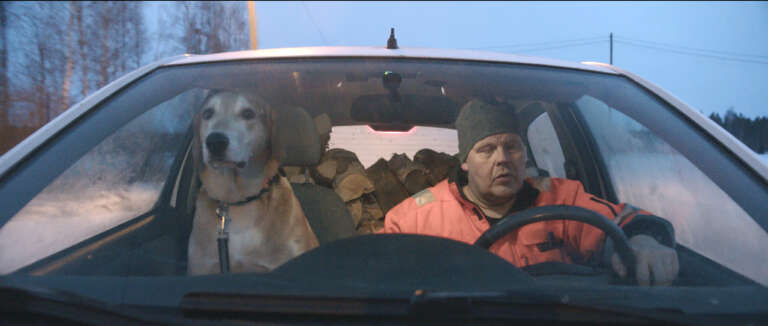
So much of life goes by in circling the same patterns, the constantly prevailing relationships. We don’t really prepare for dramatic shifts. When they do strike, propulsion arises from having to grow and confront new situations quickly. There’s a fleetness demanded, which is what impresses on Tero. For the longest time, he has been stuck in the confines of family. He sees them as his whole world. So, when Henri gestures, he must get a start on his life, it’s shocking on an elemental level. This realigns him with a much-need focusing of perspective. He might be the most dependent in his family, held up time and again by his parents. But they are getting older, and he must step up.
Kärkkäinen casts an unobtrusive, observant eye over the secret yawning wretchedness of ourselves that we put away and don’t utter. The film recognises this with earnest appeal and keening emotional insistence. There’s a quiet realisation of the ground beneath the feet churning as relationships reveal far more impulses than the father had initially envisaged. So much seems suddenly pulled apart and beckoning to be re-examined in the fresh light of a relationship turning at an unseen angle.
“The Beauty of Errors” is deeply, desperately human in its enquiries and assertions. We encounter a family steadying itself to accept and process great change. Roles assumed for years begin to move afresh in unexpected directions. Responsibilities are to be taken on with greater imperative. There’s no time for taking things as they have been. We must strut forth and revise ourselves according to the winds of change, not run away from them. Life is about adapting and renewing, not being hemmed in by stasis.
The documentary courses with real affection and reverence for its people, quietly echoing delineations of grievances and emotional needs one has for the other. There’s an expansion that has long eluded the family in moving forward by entrusting Tero to finally take the lead, supplanting his parents, who have always been the driving engine of seeing that everything is in its place. His son’s independence hones his own maturity.
“The Beauty of Errors” shows the alcoholism Tero struggles with, but refreshingly refuses to reduce him to a merely miserable being. There’s agency affirmed, even if flawed and bumbling and unsure. The gaze remains respectful, situated alongside the characters and not patronising of their misjudgements or foibles. Shot with vast reserves of pure, emotional truth, this film slowly claims our heart and never lets go.



![Bali: The Victim [2021] Review: This Vishal Furia film stumbles to make an impact](https://www.highonfilms.com/wp-content/uploads/2021/12/Bali-Vishal-Furia-768x432.png)
![Maria Netflix [2019] Review – Another soulless fillipino action film](https://www.highonfilms.com/wp-content/uploads/2019/06/Maria-Netflix-768x321.jpg)