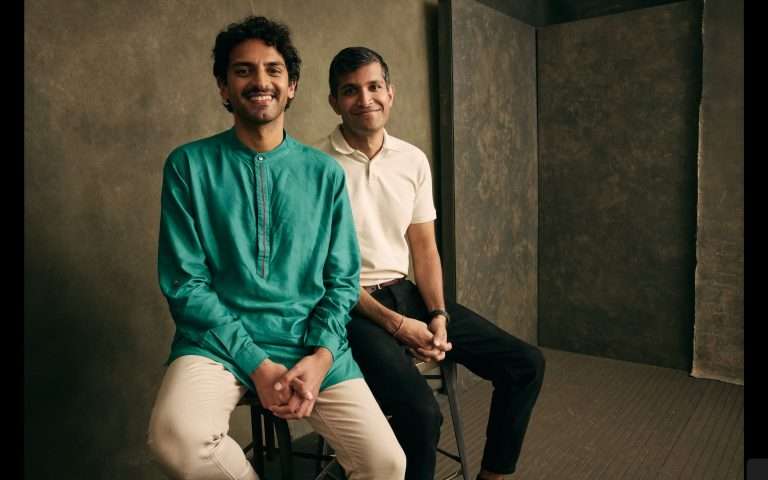
Grace Passô is a playwright and theatre director from Belo Horizonte. “Nosso Segredo” is her debut feature film. It premiered in the Perspectives section at the 76th Berlinale, and it announces a filmmaker who already knows exactly what she wants from the medium, and what she doesn’t. The film follows a family in the days after a death. Most of it unfolds inside the house. What builds slowly underneath is a secret about the family’s racial ancestry. Passô holds her characters’ grief with rare restraint, and the performances carry the weight of a working-class family who never quite had the time to stop and mourn.
I caught the premiere and spoke to her afterwards, through a translator, in Portuguese. We spoke about the film’s spiritual architecture, the sounds of memory, what it means to live alongside unresolved hatred, and why some things can never be fully explained in a single evening.
Shubham Sharma: First of all, congratulations on the film. The opening scene really took me by surprise. A stranger in the back of a taxi says something profound to the main character. It feels intimate and almost prophetic, setting up the grief that lingers throughout the film. And then we never see him again. What was the intention behind beginning the film that way?
Grace Passô: At the beginning of the film, two characters appear briefly and are never seen again. The man in the back of the taxi, and the woman in the bar who speaks with the protagonist. In the tradition of classical narrative storytelling, these figures function as archetypes: mentors or advisors in the hero’s journey. They appear to guide the main character, almost preparing them for something that will come later. But they also come from somewhere more specific. I wanted to open the film with a figure from Afro-Brazilian religious tradition, an entity that exists to advise people. So, these characters carry that spiritual weight too. There is something magical about them, as if they are ancestors who have come alive to offer counsel at a particular moment.
And yet it is also very realistic. Sometimes people come into our lives most ordinarily. We are in an Uber, a stranger says something, and it stays with us. They have an impact, and then they are gone. The character in the taxi is played by a celebrated and culturally important singer and musician from Brazil, someone I held in great reverence while writing.
On a personal note: the character in the taxi is named Marcelo. Grace had an uncle by that name who lived in São Paulo. Once a year, he would drive to Belo Horizonte in his Beetle, the car packed full of school books and materials for the children. She only saw him once a year, always arriving with that car full of books. He arrived like a magical figure from somewhere else. That’s why she gave the character his name.
Shubham: The film has a very strong sensorial quality. I could almost touch the skin and texture of the people on screen. The sound especially seemed to guide me between perspectives, into whose head I was in at any given moment. How did you craft that experience, where the body and all the senses are invited in, not only the mind?
Grace Passô: It comes from memory. I grew up in a big family house, and the sounds of that kind of living are very present for me. They are very particular about certain family homes in Brazil, in certain parts of cities, where there is this constant ambient sound. The salesman passing in the street, the birds coming in, all of these layered sounds. That is the living space itself.
So, it was very important for me to have those sounds present throughout the house in the film. There is one moment, for example, when the mother is climbing the stairs toward a discovery, I won’t say what (no spoilers!), but at that moment, the dogs in the neighbourhood begin to bark. The outside is constantly heard within the home.
As for the image, she worked closely with her DOP, keeping the camera handheld and asking it to breathe; to move the way a body moves, in and out with the cuts. So that feeling you describe, of touching the skin of the characters, comes from exactly that: the camera breathes with them.
Shubham: The acting feels very natural and organic throughout. Which makes the rupture at the end, when the secret is revealed, all the more surprising. Casting must have been crucial for that. How did you find people who could hold those dynamics, the grief, the insecurities, and the way different personalities collide in a family? And how did you prepare them for it?
Grace Passô: The family in the film is all from Belo Horizonte, and they are all artists, though not all professional actors. Jessica, who plays the daughter, is a singer. The hardest character to cast was the child, “Tutu.” That took a long time and many rounds of casting to find the right person.
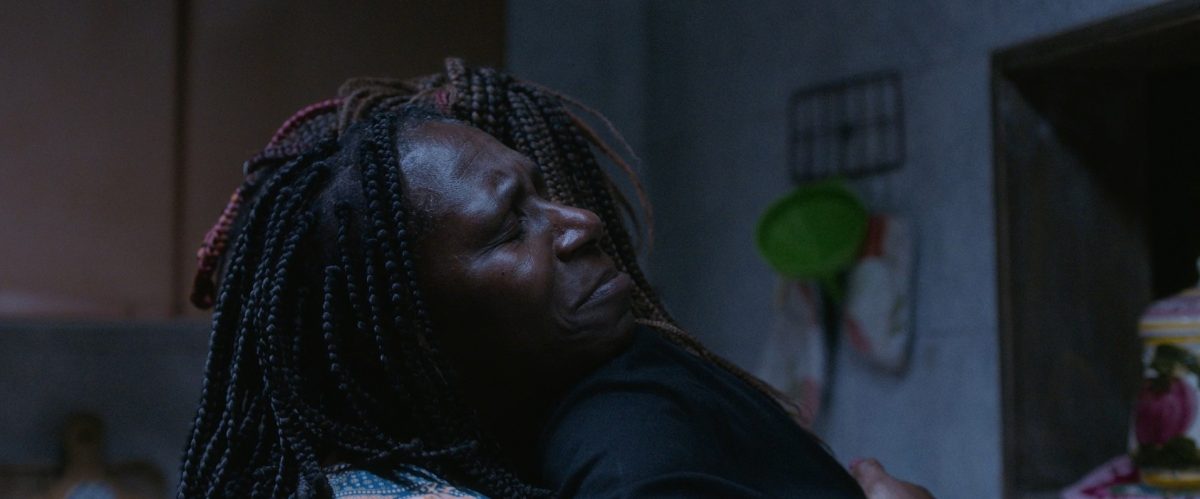
Once the ensemble was together, it was about technique. Working with them directly on the acting, and then doing a great deal of work to build the intimacy of the family unit. They read the script together and worked on finding a unified tone for the film. There were exercises and scenarios, scenes they played together that are not in the film at all, just to create the texture of a family who have lived together for years. It was fewer rehearsals than I wanted, but what they built was genuine. My background in theatre, as both actress and director, shaped the whole approach. She brought those techniques directly into the process of making the film.
Shubham: The film also has a strong sense of community around the family: the neighbour, the aunts, the friends who take one of the characters out. What role do those outside figures play?
Grace Passô: The characters outside the house serve a particular function: they are the ones who can see that something is not quite right inside. They are the outside observers who, whether deliberately or not, push at the walls and reveal things that need to be revealed. The story is fundamentally enclosed within the four walls of the household, but the outside world traverses those walls. It brings another perspective. It is what helps the secret to move toward the surface.
Shubham: Race feels central to this film, even though it is never directly named for much of it. That heaviness is what made me feel so connected to the characters. When the secret is revealed, it might seem absurd at first, but then you start projecting your own weight onto it. What pushed you to make something like this, the secret at the heart of the film, and to give it that much importance?
Grace Passô: The film has a lot to do with what is not said. What cannot be expressed. From the beginning, we see the family members living with something they don’t know how to name or articulate. There is a moment where an aunt says to a neighbour: “Our family is very complicated. It would take more than one evening to explain.” The racial tensions are there, they are lived, but they are not easy to express. I wanted to hold that difficulty honestly in the film.
And then there is the hippopotamus, which is a spoiler, so I will be careful. But what happens at the end is a metaphor for something that never goes away. A historical, ancestral resentment. A hatred that has been built up over generations and cannot simply be resolved. When the family decides not to kill the hippopotamus, but to live with it, that is the film’s central gesture: we have to learn to live with this in a way that is possible.