Dongnan Chen’s documentary “Whispers In May” listens keenly and with abundant empathy to children cloven within the interstices of an adult world. What remains of their identity when pushed up against demanding, punishing, and grotesquely unfair reality? More precisely, what happens to the girls who are left starkly undesired in the quest for male prerogatives? Ambition in women is dreaded and skirted. The social expectation strongly inclines to bearing kids and serving husbands.
Set in a remote mountainous Chinese village, “Whispers In May” follows the 14-year-old Qihuo wrestling with her coming of age. Her friends only discover much later that she’s begun menstruating. She underplays it, but she’s met with an emphatic assertion of the rite of passage being marked as something significant. But Qihuo stays alone, her parents being migrant workers not around. She’s frequently instructed by her distant mother to be disciplined. The coming of age indicates a heavier onus socially ordained that naturally doesn’t sit with her own desires and feelings.
Thus, the pursuit of a skirt to wear for the traditional ritual marking menstruation ensues. On the suggestion by a local shopkeeper, Qihuo and her friends take off on foot to a place that’s dauntingly far but doesn’t dampen their spirits. They might have undermined how far it actually is. As they hike and meet passers-by, there’s surprise at their admission of the journey being taken on foot. But they persist, banding together to support their friend. But family, that’s a tricky sore point for all, intervenes with the same casual ruthlessness with which it otherwise leaves the girls forsaken.
Assumptions hurled at the girls are random until they reveal a conservative tendency to throw them towards marriage, child-rearing, and carrying the lineage forward. Chen’s stance freely moulds itself in keeping with the girls. There’s a receptiveness to their quivering aches, dashed hopes, and expansive ability to conquer the world without fear or hesitation. Occasional tentativeness is quickly sanded over by greater resolve to make it to the end. Yet, Qihuo and her friends also know well to pause and absorb the staggering beauty of flowers on the path, which they might not have seen back home.
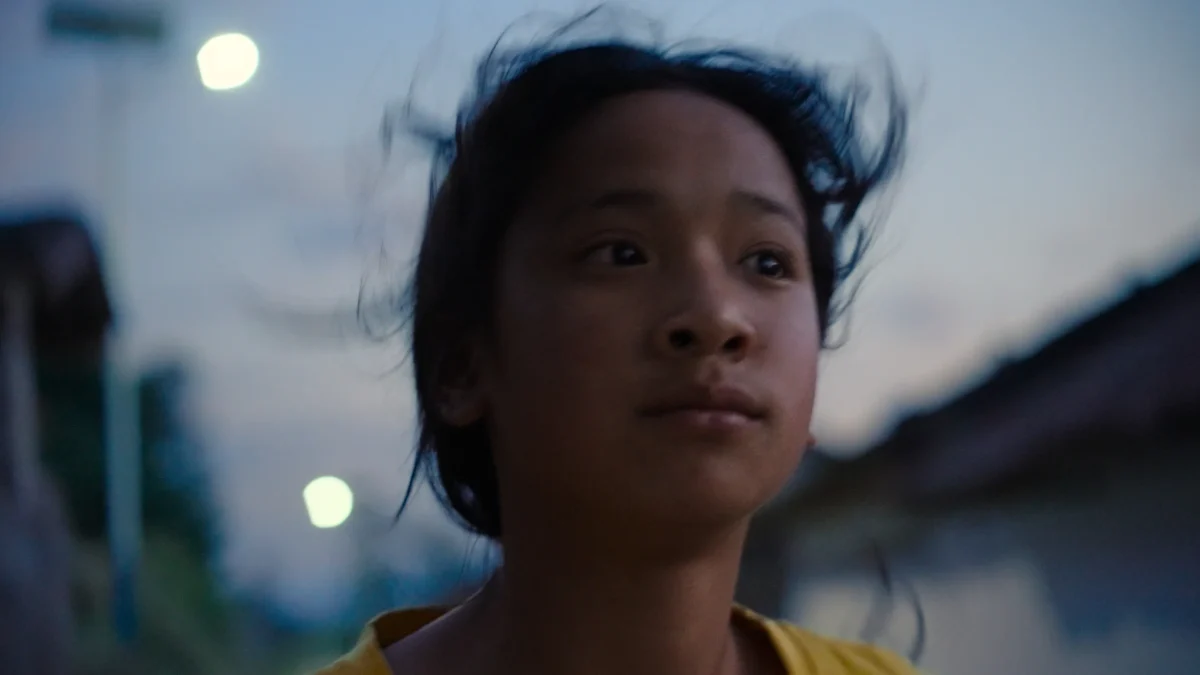
The film finds its tender, shivering heartbeat in the folds between innocence and maturity, the precipice where the brutality of the world demands an equal fighting partner. The girls at the film’s centre grapple to discover how far their hearts and bodies can endure disappointment and a gruelling journey’s impositions.
This expedition might have started as a search for ritual clothes, but it gains profound, elemental inner reckonings. Amidst parental abandonment and scars of being consigned to being disposable so that their brothers’ future can be sealed, the girls yearn for connection, belonging, and care. It’s a trajectory of earning agency and learning to lean in and smell the flowers. How can joy arrive when there’s despair ambushing? Can the girls recover and reinstate the beauty and pleasure of childhood that seems so perilously struck down by the sadness of circumstances?
It’s a difficult ask, wherein they have to get past the rejection and heartbreak, muster will and fortitude to put on their best front, and confront a deeply skewed world that is determined to put them down. Their mothers perpetuate the hierarchies, dumping baggage of duty and snuffing dreams. How can hope survive and bloom when it’s clenched tight within reminders of one’s unwantedness? How does the lifeforce prevail despite a continual barrage of being ignored and cast adrift by one’s own family? In such situations, friends become chosen family, the anchor to keeping the heart nurtured and nourished and lifted with grace.
Qihuo and her friends are vestiges of a deeply patriarchal climate. They are shunted time and again. One even faced a possible fate of being sold off by their own family member. Friends hold all the residual trust. When there are farewells, the world itself seems to snap. Chen tells the story with unsentimental emotional fluidity, pulling reserves of meaning from the unsaid.
When the girls do share accounts of their families, it’s devastating. But “Whispers In May” never loses sight of the sheer beauty and freedom the girls mine in the journey. Despite the overbearing circumstances, they have the fortitude to power through it. There’s daring and rebellion in the film that encrusts its heroines with, rendering their enormous appetite for cutting through the most trying straits.




![Dragged Across Concrete Review [2019]- Taste the Pavement](https://www.highonfilms.com/wp-content/uploads/2019/04/DAC_D27_04417-768x502.jpg)