There is something quietly unsettling about Peter Weir’s “The Truman Show” that seeps in through the ordinariness of its world, a world so meticulously constructed that its artificiality becomes almost indistinguishable from the texture of everyday life. It is perhaps this very subtlety that allows the film to endure as more than just a clever premise.
What unfolds is not merely the story of a man unknowingly living inside a television program, but a gradual, almost imperceptible inquiry into the conditions under which reality itself is accepted, trusted, and performed, where routine becomes reassurance and repetition begins to resemble truth. The film allows the viewer to inhabit this carefully curated environment long enough for its rhythms to feel natural and almost comforting, before gently introducing fractures that disturb that sense of stability.
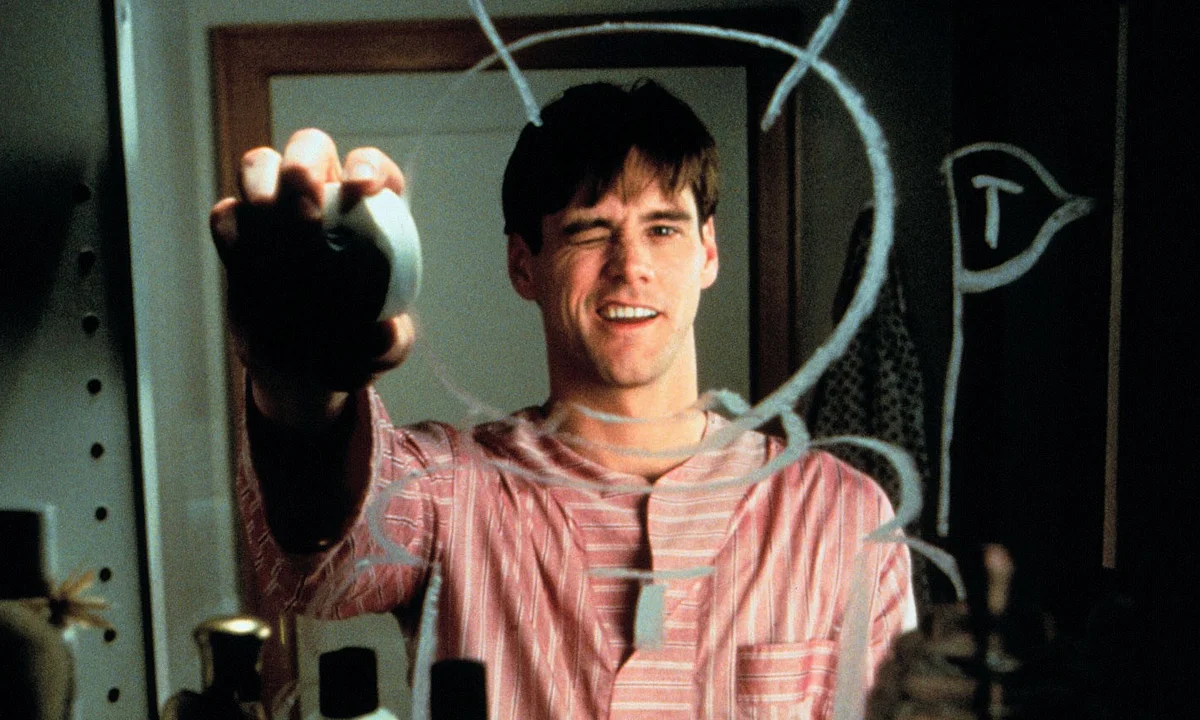
Truman’s life, with its pastel skies and unwavering routines, appears at first glance to be a satire of media culture. The film resists the temptation to remain at that surface level, choosing instead to linger on the emotional and psychological implications of such a constructed existence. Here, authenticity is curated, rehearsed, and filtered through layers of control that remain invisible to the one who inhabits it.
As the narrative progresses, what becomes striking is the audience’s complicity within the film. Their passive consumption mirrors a broader cultural habit of watching and deriving comfort from the predictability of another person’s life, even when that life is stripped of genuine autonomy. This complicity is never framed in overtly accusatory terms, which allows it to resonate more deeply, almost uncomfortably, because it does not position itself as a moral lesson. This complicity is a reflection that quietly invites recognition.
Also Read: Did These Films Predict the Future? How Sci-Fi (And Other) Cinema Made Curiously Real Assumptions
Truman himself, portrayed with a kind of disarming sincerity, does not initially embody rebellion or awareness. This is crucial because his awakening emerges through a series of small, disruptive, dramatic revelations and inconsistencies that accumulate. This shows that the process of questioning reality is about a slow erosion of certainty. The film seems more invested in the fragility of belief, examining how easily a constructed world can be sustained as long as it remains coherent, providing emotional continuity.
Perhaps this is where the film’s ethos lies. The realisation that even a fabricated life can hold genuine attachments and memories complicates the notion of escape, because leaving also entails abandoning a world that, despite its artificiality, has been lived in fully. This tension is never resolved in simplistic terms, as the film does not rush to declare one reality as more authentic than the other. And it is within this ambiguity that the film finds its depth, because it refrains from romanticizing either state, presenting both as incomplete in different ways.
The figure of Christof, the architect of Truman’s world, further complicates the narrative by embodying a form of control that is not entirely devoid of care. His justification is rooted in the belief that he is providing Truman with a safer, more stable life. While this rationale is undeniably problematic, the film does not reduce him to a caricature of villainy.
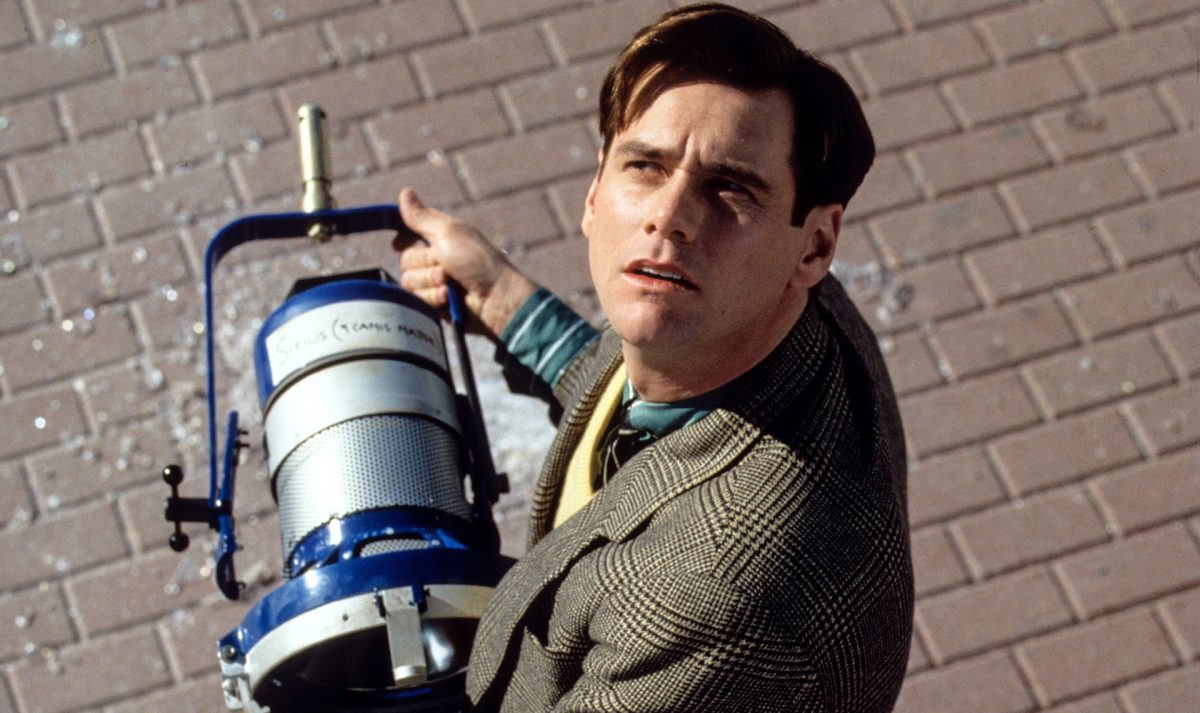
This reinforces its reluctance to impose a singular moral framework. This nuance extends to the film’s visual language, where the artificiality of the set is gradually revealed through subtle visual cues. In moments where the frame itself seems to betray its constructed nature, as if the world Truman inhabits cannot fully contain the inconsistencies that sustain it.
These moments accumulate into a quiet destabilisation that parallels Truman’s internal shift, creating a sense of alignment between form and content that feels almost seamless. The film engages with the idea of spectatorship, as something deeply embedded within the act of watching itself.
The audience outside the film becomes voyeuristically aware of their own position as observers, mirroring the viewers within the narrative who consume Truman’s life as entertainment. This layering does not feel forced or didactic, because it emerges organically from the structure of the story, allowing the film to function simultaneously as narrative and reflection.
Perhaps this is why its conclusion does not seek to provide closure in a conventional sense. Truman’s decision to step beyond the constructed horizon defies a framing as a triumphant resolution and takes the form of a continuation into uncertainty. It is a gesture that acknowledges the limits of the world he leaves behind without claiming to fully understand the one he enters.
More Related: 10 Great Movies about Making a Fresh Start
In the end, “The Truman Show” seems to arrive at a space that resists neat emotional resolution. It is perhaps within this refusal that its impact continues to linger, because the film does not insist on presenting Truman’s escape as an uncomplicated victory, nor does it attempt to frame the world he leaves behind as entirely devoid of meaning.
This balance allows the closing moments to feel like an opening into something uncertain yet necessary. It can appear that the film’s lasting strength lies in how it holds together two seemingly opposing truths: that a life shaped by illusion can still carry genuine feeling, and that the desire to step beyond that illusion does not erase what has been lived within it, but instead reconfigures it.
There is a quiet recognition that freedom, as it is often imagined, is not purely liberating, but carries with it a sense of dislocation, an awareness of everything that must be left behind in order to claim it, and this awareness prevents the ending from becoming overtly triumphant or sentimental. At the same time, the act of walking toward the unknown is not diminished. It is rendered with a kind of restrained dignity, one that acknowledges uncertainty without collapsing into fear.
The film, in this sense, appears to suggest that authenticity is not a stable destination but an ongoing process, something that must be continually negotiated rather than definitively attained. It is this idea that seems to resonate most strongly, because it extends beyond the narrative itself into a broader reflection on how reality is experienced and understood.
Without demanding agreement or prescribing interpretation, the film leaves behind a set of questions that remain quietly persistent, inviting consideration rather than closure, and it is perhaps in this openness, this willingness to remain unresolved, that its conclusion finds its most enduring form.